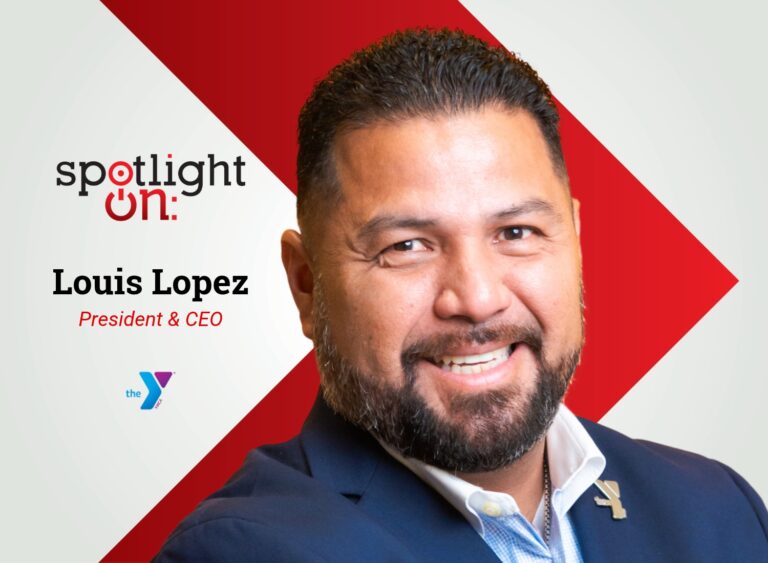

Spotlight On: Louis Lopez, President & CEO, YMCA of Greater San Antonio
Key points:
- • The Hartman Family YMCA will be the first Ultra-Accessible™ YMCA.
- • On-site childcare at Northwest Vista College helps parents pursue degrees and certificates.
- • Partnerships let the YMCA expand services despite rising labor and operating costs.
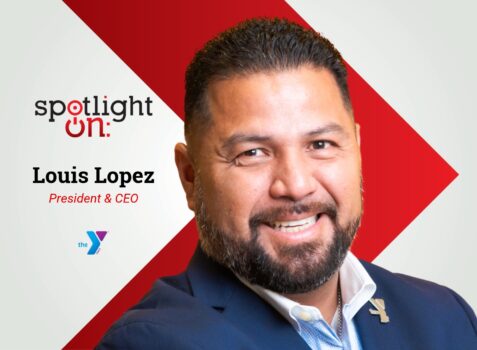 November 2026 — Louis Lopez, president & CEO of the YMCA of Greater San Antonio, spoke with Invest: about accessible facilities, childcare as workforce infrastructure, and partnerships that expand community services. “We want to move beyond welcoming people to making them feel expected,” Lopez said.
Join us at the Invest: San Antonio 5th Edition Leadership Summit! This premier event brings together hundreds of San Antonio’s business and regional leaders to discuss the challenges and opportunities for businesses and investors. Buy your ticket now!
As the YMCA marks 150 years in San Antonio, how has its mission evolved?
We’ve served San Antonio since 1876, and our anniversary theme was Uniting Generations. That captures our mission and what we do well. Our legacy has been listening, learning, and evolving to remain relevant. As community needs change, we have to adapt. What made us successful yesterday won’t necessarily be relevant tomorrow. We’re proud of our history, and we recognize the need to evolve remains a priority. Investing in our people matters regardless of the initiative. We also have to keep listening and responding so we remain relevant to the communities we serve.
How is regional growth changing demand and creating opportunities for the YMCA?
Our greatest opportunity is to be a third place beyond home and school or work. Cities are expanding, but I’m not sure places where people feel they belong are keeping pace. We want to move beyond welcoming people to making them feel expected. That means designing spaces, experiences, and programs so that people walking in feel we’ve been waiting for them. I believe we’re well positioned to provide that for families and individuals, including older adults seeking social connections and trying to avoid isolation. We can be a place where people find belonging and know we’re prepared for them.
What makes the Hartman Family YMCA important to your investment plans?
The Hartman Family YMCA is designed for people with and without disabilities. It will be the first Ultra-Accessible™ YMCA, where everyone can feel the facility was designed with them in mind. We’re relying on our partnership with Morgan’s to better understand how to anticipate the needs of people with disabilities. Our North Star goes beyond one facility: We want to integrate what we learn about principles, practices, policies, and culture across our entire organization.
The larger vision is to create a model other YMCAs and organizations can use. We don’t want to modify a space only after someone arrives. We want people of all abilities to know they were considered from the design stage. There’s a great deal for us to learn, but Morgan’s and Morgan’s Institute are strong partners. Together, I think we’re developing something neither organization could have achieved independently. That’s partnership at its best.
How does your childcare work support workforce development?
Childcare is part of workforce development. It supports children’s development, relationships, and sense of belonging, but it also enables parents to pursue careers, education, and certificates. We need to be part of that conversation. At Northwest Vista College, we’re piloting on-site childcare during weekday evenings and Saturdays for parents pursuing a degree or certificate. A parent can have dinner with their child and then go to class. They can also meet a professor or counselor or study in the library. While they do that, we help their children with homework, provide activities, and support relationships. We’re removing a barrier for parents who want to return to school.
I earned my degree at 39 while raising a family, so I know how challenging it can be. With Alamo College District, we’re designing programs around those parents. Working together, we can help reduce barriers and improve families’ lives.
How are you adapting programs to different community needs?
Communities and individuals aren’t all alike. We work hard to stay curious rather than prescriptive and ask what people need. That might be childcare for a parent advancing a career or social connections for an older adult whose circle has become smaller. We now have 10 licensed counselors on staff and offer mental health services in every YMCA, both for the community and for our employees.
I believe the nonclinical setting is important. People receive services at their Y, in their own community. We’re seeing more men, families, and people of color using those services. Stigma can create a barrier. We encourage people to understand that they don’t have to be in crisis to seek support; services can also help with ordinary challenges in life. It’s another way to meet people where they are and turn a gap into an opportunity.
What makes a partnership effective in expanding your reach?
We seek partners with aligned missions and shared goals, where we can identify and address a need together. Collective impact allows each organization to bring its expertise to the table for the benefit of residents. The Y doesn’t always have to lead. A good partner comes with a collaborative spirit and recognizes what each organization does well. Morgan’s and the Y both do valuable work independently, but together we can reach more people and increase our impact. I think partnerships like that can help create systemic change for the people who need us most.
How are you balancing affordability, rising costs, and growth?
Labor and other expenses are rising, and earned revenue struggles to keep pace. That’s a challenge for both nonprofits and for-profit businesses. Partnerships help us operate more efficiently and expand without building new YMCAs. With the Alamo College District, for example, we offer summer day camps and other services in communities where building a new Y would be difficult to sustain.
We also connect donors with work they care about. There are still people deeply committed to improving lives, and we need to connect them with the specific work that matters to them. Donors and foundations have helped advance mental health services for veterans, older adults, and young people. Our work with Morgan’s and the Hartman Family YMCA similarly resonates with people who want facilities designed for individuals with and without disabilities.
I see us as a social enterprise. We have to run a smart nonprofit business, continually examine our practices, offer quality services, avoid waste, and be good stewards. If we don’t get the financial stewardship right, the service suffers.
What are your priorities for the next two to three years?
I would summarize them as people and relevance. Internally, we need employees to feel valued, seen, happy in their roles, and able to advance. Our policies and culture should make them feel expected, just as we want our members to feel. If we do that well, I believe members and communities will have better experiences. A strategic plan goes nowhere without the right people in the right places. People are the most important pillar of Vision 2030.
Relevance means listening, asking questions, and adapting as needs change. Success this year doesn’t guarantee relevance tomorrow. That’s challenging, but it’s also exciting to help make an impact on people we care about.
What principle should guide the YMCA’s next chapter?
I don’t want people to feel they have to come to the Y and fit in. I want them to feel the Y was designed to be ready for them. That means considering our community and people of all abilities in how we design programs and everything we offer. It’s bold, but it’s also part of who we’ve been for 150 years and what matters as we move into the next 150.
Want more? Read the Invest: San Antonio report.