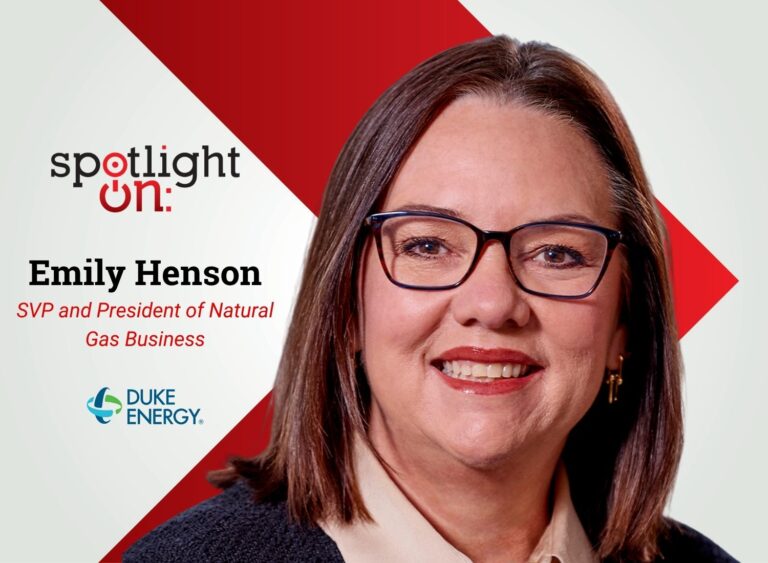


Spotlight On: Emily Henson, SVP and President of Natural Gas Business, Duke Energy
Key points:
- • South Carolina’s growth is driving greater demand for energy infrastructure.
- • Technology is strengthening reliability, safety, and affordability.
- • Community engagement remains central to long-term infrastructure planning.
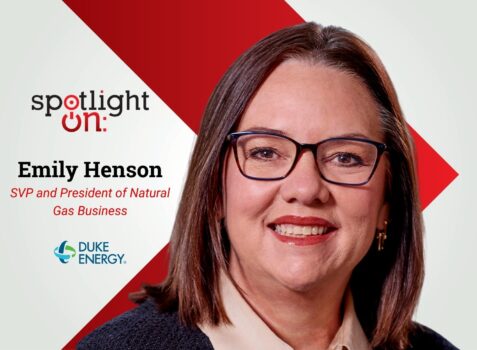 September 2026 — In an interview with Invest:, Emily Henson, SVP and president of Natural Gas Business at Duke Energy Corporation, discussed South Carolina’s growth, infrastructure planning, reliability, affordability, and community engagement. “We want our states, we want our communities to thrive as we move forward,” Henson said.
Join us at the Invest: Houston 3rd Edition Leadership Summit! This premier event brings together hundreds of Houston’s business and regional leaders to discuss the challenges and opportunities for businesses and investors. Buy your ticket now!
How has growth in South Carolina shaped Duke Energy’s natural gas business over the past year?
I started in the gas industry on April 1 after coming from the electric sector, and I have been with Duke Energy for 30 years. Over that time, I have seen significant change.
Looking back over roughly the past 18 months, one of the biggest developments has been the volume of growth we are seeing and the need for more energy, gas, infrastructure, and capability to serve that growth in South Carolina.
Over the past five years, we have added a little more than 20,000 customers in the Greenville, Spartanburg, and Anderson areas that make up our Piedmont Natural Gas service territory in South Carolina. For us, that represents significant growth compared with what we had seen previously.
That growth also means we have to plan accordingly. As a gas utility, we spend a significant amount of time on our five-year planning and resource planning processes.
What does that planning process involve as demand continues to increase?
Planning is about ensuring we have a system infrastructure that is safe and reliable, and much more. As we see growth occur in different areas across the state, it is important for us to stay actively involved with those communities and understand what our customers need.
We cannot simply make investments in our infrastructure without understanding customer needs. That means a significant amount of customer engagement, local and state government engagement, and conversations with industries moving into South Carolina and the larger Carolinas. We need to understand their specific needs and their timing.
Industries moving into the state are evaluating the risks associated with bringing their operations and growth here. They are looking for reliable infrastructure that is already in place so they do not have to wait to be connected, as well as reliable energy that can serve their operations.
Understanding those needs and how we can meet them is a critical part of our planning process.
How is Piedmont Natural Gas using technology and modernization to strengthen reliability and infrastructure?
Modernization has several components. First, we have to understand what growth looks like so we have the appropriate amount of supply. We predominantly receive our gas supply from the Gulf region, and we must plan accordingly to transport that gas across the Southeast and into the state.
We take the data we receive from our customers and the usage we are seeing on our system and use technology to develop the right forecasts. This helps us ensure we have adequate supply for the future and can build system infrastructure to meet the growing needs of our customers and the state.
Modernization involves looking at data, technology, and processes all together to help us become more efficient. We continually evaluate how we perform our operations, which processes need to mature, and what we need to do differently to serve customers efficiently.
How do operational excellence and safety fit into that approach?
Our customers are a priority, but our foundation is that we have to operate safely and with excellence. Whether we are talking about Piedmont’s gas infrastructure or Duke Energy’s electric grid, the reliable operation of our system is at the center of everything we do.
Safety is also at the forefront; it is the first thing I talk about when I meet with employees. How we perform our work, the procedures and methods we use, and how safely we perform tasks are all about protecting our employees and communities.
Safety is extremely important to our employees and to how we operate the gas pipeline system. It’s built into our daily work, not addressed after the fact.
How are you balancing affordability with reliability and operational needs?
Our role and responsibility as the utility is to manage costs so we can serve customers with reliable and affordable gas. Reasonable rates are something we spend a good amount of time discussing, and data efficiencies and artificial intelligence are helping us improve operations.
One example is the 811 system. It is important that customers and builders use 811 because we want to protect our pipeline system from dig-ins. We can take those 811 tickets and overlay them across our pipeline system.
That helps us determine which parts of the pipeline system are most at risk and review those tickets so we can dispatch resources and perform damage-prevention activities early, particularly around critical assets. That not only protects the safety of our communities and the reliability of our system, it also helps us reduce costs. Avoiding a dig-in on the gas infrastructure or damage to the system ultimately saves money for our customers.
We are also continuing to mature our route optimization. We use customer demand data to understand when and where customers need us and pair that demand with the right resources in the right locations.
That allows us to minimize travel time and duplication while making sure employees have the right tools, materials, and equipment to perform the job the first time we arrive. Those efforts all connect back to affordability, reliability, and operational excellence.
What role do renewable and compressed natural gas play in sustainability efforts?
Incorporating RNG into our natural gas supply for customers provides an added source of affordable, reliable energy that also helps reduce greenhouse gas emissions.
We also have compressed natural gas, which powers a significant portion of Piedmont’s fleet. We serve many transportation and fleet customers with compressed natural gas, which helps them reduce their own emissions. In the Upstate, you can find four of Piedmont’s 12 publicly accessible CNG fueling stations, where we also offer RNG.
It is another way for us to think about sustainability and programs that can match customers’ sustainability needs, while providing a service to our communities.
How does liquefied natural gas support reliability and affordability?
Liquefied natural gas is a storage option, similar to battery storage. We have multiple LNG facilities across the Carolinas that support our ability to serve customers.
We purchase gas and transport it into liquefied natural gas plants. That allows us to protect the reliability and costs to our customers when gas demand is high at various times of the year. We purchase gas when supply is plentiful and at lower price points.
We store that gas and keep it available for peak days or periods of higher usage. We then convert the liquid back into gas and push it back into the system when it is needed.
That gives us another reliability asset because we know we have supply available to put back into the pipeline system and serve our customers. It also supports affordability because we can purchase gas during lower-price periods and maintain that supply for future needs.
What does Duke Energy’s Power of Giving campaign mean to the company and its communities?
Duke Energy’s purpose statement is to power the lives of our customers and the vitality of our communities. It is a simple statement for us.
There is a feeling you get when you think about what we provide to customers and communities. Whether it is air conditioning in the summer or heat in the winter, what we provide is part of protecting and connecting our communities.
As you grow within the company, you begin to understand the significance of the vitality of our communities and what that means for our states.
That is what the annual Power of Giving campaign is about. We encourage employees to find ways they can serve their communities. That may be monetarily, through a particular skill they have, or simply through their time. Employees also have the opportunity to receive a match from the company.
We want our communities to thrive as we move forward. The campaign is one way we support that, and it is a powerful part of our company.
Looking ahead, what are your key priorities for the natural gas business?
Our focus is to continue helping our communities grow, compete, and thrive by serving our customers with reliable, safe, long-term, sustainable natural gas at a reasonable rate. We will continue to be a provider and energy partner focused on those priorities for the communities we serve.
Our employees are central to our priorities. Our technicians are in the field every day talking with and helping customers, whether they smell gas or want to connect a service, or if we are moving a pipeline for an industry project.
It is wonderful to highlight how our employees care about their communities and their work. When you think about the gas system we operate, monitor, maintain, and build, our employees are the heart of it all.
Want more? Read the Invest: South Carolina report.