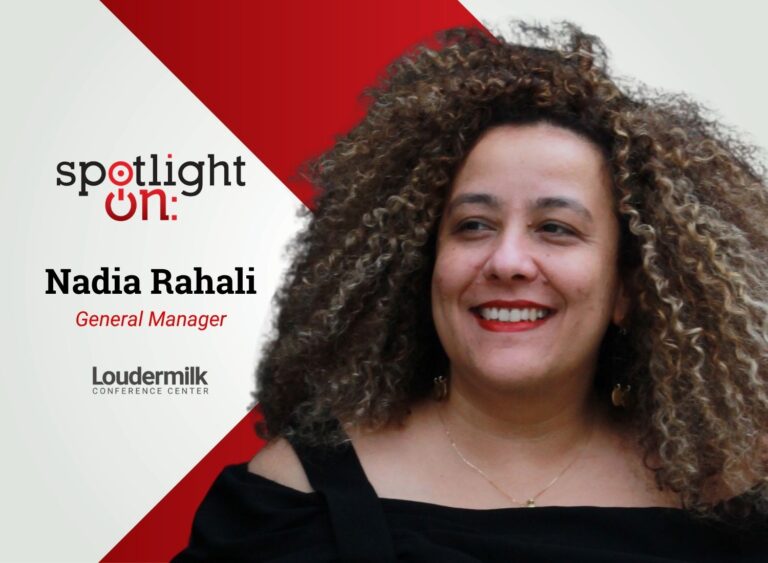

Spotlight On: Nadia Rahali, General Manager, Loudermilk Center
Key points:
- • The Loudermilk Center has evolved into a national hub for collaboration and community impact.
- • AI is improving event operations while reinforcing the importance of human connection.
- • Renovations and strategic partnerships are supporting expansion and long-term community engagement.
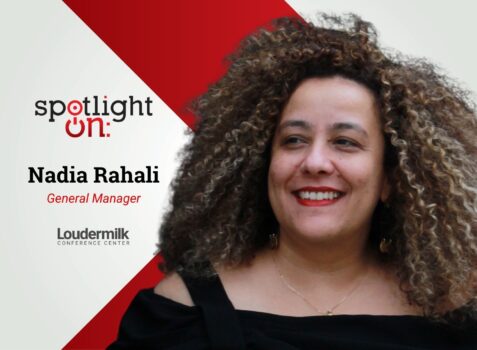 October 2026 — Nadia Rahali, general manager of the Loudermilk Center, spoke with Focus: about the center’s evolution from a local convening space into a nationally recognized institution, the importance of human connection in an increasingly digital world, and the role partnerships play in advancing community impact. “We empower leaders who empower organizations that make a difference in the world,” Rahali said.
Join us at caa’s upcoming leadership summits! These premier events bring together hundreds of public and private sector leaders to discuss the challenges and opportunities for businesses and investors. Find the next summit in a city near you!
How would you describe the core mission of the Loudermilk Center, and how has it evolved since its founding?
The center was created in 2000 by United Way for Greater Atlanta, which was forward-thinking about finding an opportunity to bring together civic, philanthropic, and corporate communities to solve and address the issues of the city. Typically, nonprofits and organizations had to meet in basements, and the environment did not really elicit creativity or collaboration. The community came together with local CEOs and said, “Let’s build a convening space in downtown Atlanta, in the heart of the Martin Luther King District, where we can bring leaders together to create the future of the city.”
A lot of what you see today in Atlanta started within the walls of the Loudermilk Center. The Beltline was once just an idea. There were conversations around tax allocation districts, Centennial Yards, and everything you see at the airport.
It went from being a convening place for local Atlanta issues to becoming a national institution. We convene national foundations and organizations, from the Rocky Mountain Institute to the Foundation for Social Connection, and others that come to Atlanta to create the future of the country, whether that is economic justice, climate change, housing and economic stability, or guaranteed income.
We started with local issues and now work locally and nationally to advance what is possible when people come together. What I love about the Loudermilk Center is that people from different points of view and perspectives can come together, put their differences aside, and focus on what is possible for our city.
What unique community needs does the Loudermilk Center aim to address, and how do you measure success?
We contribute to the United Nations Sustainable Development Goals. In the realm of events and bringing people together, we have a responsibility to the planet and to people. We contribute to Sustainable Development Goals 8 and 12, which are decent work and economic growth, and responsible consumption and production.
That means we work with local vendors and minority vendors, whether it is bottled water, food, or other services. We also make sure that when people hold events here, we are designing experiences that not only make a difference for the planet but also inspire them.
We also have a commitment to decent wages and quality of life. We employ people who live in the community around the center, or who are one stop or one train away. We subsidize transportation, including the train and parking, and we pay the highest wages in the industry. That is our contribution to the local economy.
How is the Loudermilk Center leveraging technology, innovation, and new approaches to enhance engagement and outcomes for participants?
We use AI every day at the Loudermilk Center. It helps us train staff, design experiences, think through challenges, and create better events.
But the more we use AI, the more one thing becomes clear: people are hungry for human connection.
Anthropologists believe Homo sapiens survived and flourished because of our ability to share stories. Long before boardrooms and conference centers, we gathered around fires, told stories, built trust, and created meaning together. That hasn’t changed.
A guest once walked into the Loudermilk Center and said, “I feel at home here.” That’s what people are really looking for. Not another transaction. Not another screen. They want to belong. They want to be seen. They want to connect with another human being.
AI can help us work smarter behind the scenes. But it can’t replace what happens when people share a meal, tell a story, or meet a stranger who becomes a collaborator or friend.
The future belongs to organizations that embrace both: the efficiency of technology and the timeless human need for connection.
After all, we’re still gathering around the fire. The fire just looks a little different now.
How do you identify and cultivate partnerships that align with your mission?
Partnerships are a whole world. In our growth, we have discovered what it means to create a partnership from possibility. What is the possibility of this partnership? How is this partnership going to make a difference at the level of the world? What are we co-creating together?
For us, it is a you-and-me world, a world where you and I and all of us win. When you come from that perspective, rather than asking what you are going to get, it becomes expansive.
I always ask, what is the possibility? I am always open to exploring opportunities. But when it comes only from utility, functionality, or usefulness, it is not enlightening, it is not exciting, and it does not call you to be bigger.
What are some of the biggest challenges facing the communities you serve today, and how is the center adapting?
One of the biggest factors is the lens through which we view life, whether you are at the top of the food chain or at the bottom. There is this context that it is not enough, that we do not have enough, and we need more. People come from what they do not have.
In the world of events and programs, especially with nonprofit partners, people come in and say they are not for profit. Energetically, when you start with what you are not, it puts limits and barriers in place. I ask, what are you here for?
I work with people on articulating their vision and having conversations with sponsors, donors, and their boards. Many leaders find themselves constrained from having those conversations.
We empower leaders who empower organizations that make a difference in the world. Coming from that, it is all about empowerment. Yes, we sell meeting space, and we host events, but at the heart of the matter, we exist to empower leaders to be the best at what they do and to make a difference in the world.
Looking ahead, what are your top priorities for the Loudermilk Center?
We are looking at expanding our team. We are also looking at expanding our footprint in our location. Right now, we are taking on a massive renovation so that we are first-class and continue to be the space, the container, for these conversations to keep going for the next 15 to 20 years.
We want to be a business and organization that leads with soul and heart, making sure that the people in and around our community benefit from our growth and expansion. That includes the capital investment we are making in technology, meeting space, and a full renovation. It also includes expanding our team and helping people in our neighborhood thrive. We are connected to the streetcar, and we are about a mile and a half away from the Beltline and Centennial Yards. We can become a connector between one side of the city and the other side of the city.
Are there any other important themes you would like to highlight?
One of my personal commitments in the world is to connect resources to people who make a difference. I am interested in the conversation around generosity. What does it mean to live from enough? What does it mean to have conversations that unlock people’s hearts and allow them to become generous, whether that is with a smile, giving to charities, or something else?
I am really interested in this world of generosity beyond the holiday season. How do we live from a space of generosity?
Want more? Read the Focus: Atlanta report.