Atlanta businesses eye $1B World Cup economic impact
Key points:
- • Atlanta is projected to absorb a $1 billion economic impact from the FIFA World Cup 2026.
- • The federal government has committed $625 million in safety and security funding and $100 million in transportation grants across 11 U.S. host cities.
- • Investment in Atlanta’s South Downtown corridor is positioning the World Cup as a catalyst for long-term urban redevelopment.
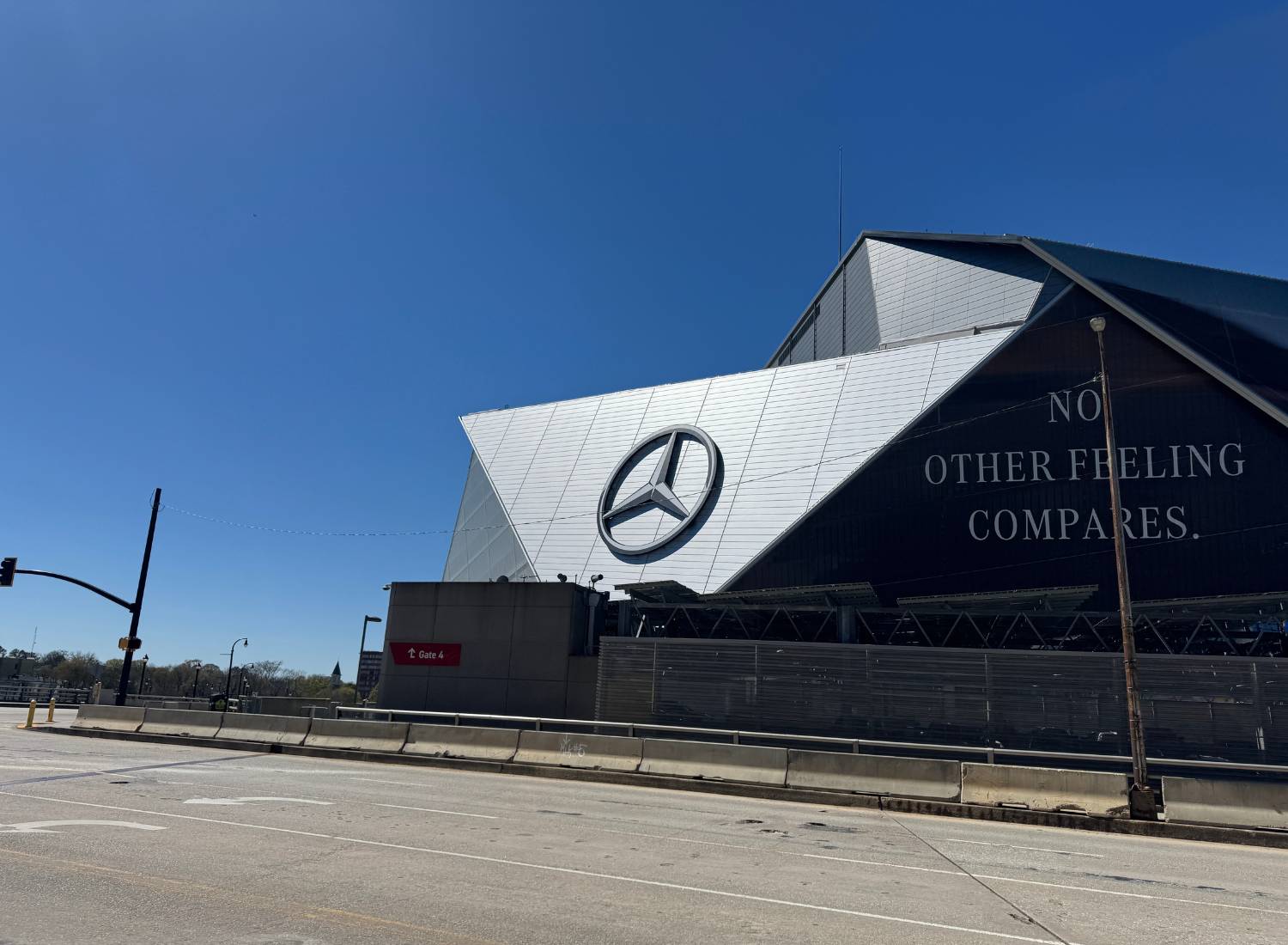 June 2026 — Atlanta is set to host eight FIFA World Cup 2026 matches at Mercedes-Benz Stadium — including a semifinal — delivering an estimated $1 billion World Cup economic impact for the metro area, with the city’s first match kicking off June 15. The scale of preparation, investment, and federal commitment signals a pivotal moment for the region’s economy.
Join us at caa’s upcoming leadership summits! These premier events bring together hundreds of public and private sector leaders to discuss the challenges and opportunities for businesses and investors. Find the next summit in a city near you!
“How can we make sure the Atlanta brand and reputation continue to shine while also being ready from a physical perspective for these games?” said Michael Russell, CEO of H.J. Russell, at the Focus: Atlanta 7th Edition Leadership Summit. “We are helping bring this to life, which will be the epicenter of the World Cup in this region for several months. We are working with MARTA and preparing ourselves for what is ahead. Atlanta is not a rookie city when it comes to major events, but this is an international audience, and I think we will learn from and embrace that experience.”
Join us at caa’s upcoming leadership summits! These premier events bring together hundreds of public and private sector leaders to discuss the challenges and opportunities for businesses and investors. Find the next summit in a city near you!
A billion-dollar stage
Atlanta has already recorded more than 200,000 hotel room nights booked for the tournament, with bookings running at roughly 10,000 per week as FIFA begins distributing tickets to purchasers. Demand is accelerating, according to Dan Corso, president of the Atlanta Sports Council, who noted that hotel inventory remains available for all eight match days, separating Atlanta from several peer host cities where capacity has tightened more severely.
Showcase Atlanta, the city’s economic leadership initiative, has created more than 200 vending opportunities distributed across tournament festivals and activation zones. The 18-day fan festival at Centennial Olympic Park will feature a 50-foot jumbotron, daily rotating food and entertainment programming, and a dedicated platform for local vendors during the finals watch party. Lamar Stewart, interim executive director of the organization, framed the effort as a deliberate strategy to ensure Atlanta’s small-business community captures a meaningful share of the incoming spending surge, not just the city’s established hospitality chains.
“We want to make sure our small businesses are engaged, and kind of know that there is a litany of engagements they all have moving forward,” Stewart said, as cited by WABE.
Several initiatives are being launched to help local entrepreneurs and aspiring business owners participate in World Cup-related activity. “We are sharing information on the World Cup to help small businesses leverage FIFA opportunities. If someone wants to start a business close to the center, we have a pop-up program to help business owners launch during the World Cup,” said Eloisa Klementich, president and CEO of Invest Atlanta, at the Focus: Atlanta’s recent leadership summit.
Infrastructure as legacy
Federal dollars have flowed in the lead up to the games. FEMA’s FIFA World Cup Grant Program has awarded the city more than $52 million for staffing, communications infrastructure, emergency equipment, and public safety inspections as part of a broader $73.4 million allocation to the Atlanta World Cup Host Committee. The White House Task Force on the FIFA World Cup committed $625 million in safety and security funding across the tournament, covering stadium operations, fan festivals, and public gathering spaces. An additional $100 million in federal transportation grants has been distributed to the 11 U.S. host cities.
Atlanta’s transit network could provide an advantage during the tournament, particularly with MARTA maintaining a flat $2.50 single-trip fare throughout the event. The city’s walkable downtown core, linking the stadium to Centennial Olympic Park and surrounding hotel districts, has drawn repeated attention from federal planners as a logistical asset other markets cannot match.
Transit improvements are also extending beyond rail and road infrastructure. “We’ll have 70 miles of continuous Beltline trail completed before the World Cup. You’ll be able to ride a bike from Piedmont Park all the way to Mercedes-Benz. The ability to ride downtown from the Beltline will be game-changing,” said Clyde Higgs, president and CEO of Atlanta Beltline.
MARTA and Hartsfield-Jackson International Airport have both been integrated into Atlanta’s readiness strategy, alongside the Atlanta Police Department’s newly expanded Special Events Division, created specifically to manage World Cup operations. Security planning draws on lessons from the city’s 2019 Super Bowl and includes coordination among federal, state, and local agencies, as well as the other U.S. host cities.
The long-game argument
The trilateral dimension of the 2026 tournament — co-hosted by the United States, Canada, and Mexico — gives Atlanta a geopolitical as well as economic profile. Canada’s Consul General to the Southeastern United States, Rosaline Kwan identifies Atlanta as central to the tournament’s North American ambition, as cited in an Atlanta Journal-Constitution op-ed. Canada is Georgia’s leading export market, and the relationships forged through a shared hosting structure carry trade and investment implications well beyond June and July. The presence of the U.S. Soccer Federation’s new national headquarters and training center in the Atlanta metro area, which opened in 2026, further cements the city’s long-term positioning within the sport’s governance infrastructure.
The American Hotel & Lodging Association’s April 2026 industry report found that roughly 50% of hotels surveyed were seeing booking pace at or ahead of expectations for the World Cup period. The findings suggest demand remains strong while leaving room for additional bookings as the tournament approaches.
Want more? Read the Focus: Atlanta report.