
Spotlight On: Kay Ehas, CEO, Groundwork Jacksonville
Key points:
- • The 34-mile Emerald Trail will connect 14 Jacksonville neighborhoods and downtown.
- • Restoring McCoys and Hogans creeks targets the city’s top flooding priorities.
- • The planned trail is already attracting private redevelopment near downtown.
 October 2026 — In an interview with Invest:, Kay Ehas, CEO of Groundwork Jacksonville, discussed the Emerald Trail’s role in reconnecting neighborhoods, restoring urban creeks, attracting investment, and supporting community-led revitalization. Ehas said, “We also think beauty matters as much as function.”
Join us at the Invest: Jacksonville 5th Edition Leadership Summit! This premier event brings together hundreds of Jacksonville’s business and regional leaders to discuss the challenges and opportunities for businesses and investors. Buy your ticket now!
What impact is the Emerald Trail having on Jacksonville?
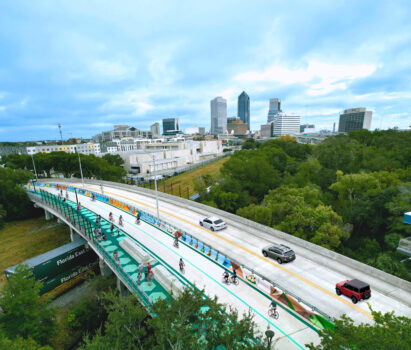
We are building a 34-mile trail and linear park system that connects 14 neighborhoods and downtown. It is reconnecting neighborhoods divided by I-95 and making infrastructure investments in communities that have not seen that level of investment for decades.
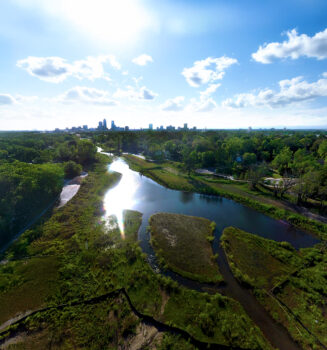
Part of the work is restoring McCoys Creek and Hogans Creek, which have been the city’s top two flooding priorities for decades. These creeks were hardened and straightened in the 1920s, and we are turning them back into natural streams. That will give them more room and keep flooding within the floodplain being created. Both creeks will have six miles of trails. One mile of McCoys Creek has been restored, another mile is under construction, and people touring the completed restoration say they feel as though they are in a state park, even though they are just outside downtown.
How does the project support equitable neighborhood revitalization?
The 34 miles of connectivity will create social connections between wealthier and less wealthy neighborhoods and give people access to parts of the city they may never have visited. It will also give lower-income neighborhoods access to amenities they may not have. Our goal is for these neighborhoods to revitalize without displacing long-term residents and small businesses, allowing them to stay and prosper. There is enough vacant land and enough abandoned buildings to add economic diversity and stabilize neighborhoods without displacement if the work is intentional.
We have started developing neighborhood revitalization implementation plans for five neighborhoods. Three leaders from each neighborhood are going through a leadership academy where they learn about planning, organizing, community engagement, and implementation. They will also meet city staff and elected officials they may need to engage. Steering committees of residents and small businesses will guide the plans, and we are paying participants for their expertise and time. The neighborhoods should be the architects of their own revitalization.
What progress has been made on the trail and creek restorations?
We have started construction on another one-mile segment of McCoys Creek. The city should soon put the trail for the restored mile out to bid. One block of Segment 2 is under construction, and the rest of that design is scheduled to be finished by March of next year. The Hogans Creek restoration design is at 90%, and we are applying with the city for a state resilience grant to construct one of its four phases.
Groundwork makes strategic investments to keep the project moving. Private funding allows us to share design costs, and we secured $9 million for the Hogans Creek design. The city has been an incredible partner. Groundwork plays a significant role in advancing the project and getting it done.
What have you learned about sustaining momentum on a project of this scale?
You have to be willing to work hard, remain persistent, and stay in it for the long haul. It does not happen overnight. You can take two steps forward and then one step back. We were awarded a $147 million grant and then lost it under the Trump administration. Our response was to keep moving forward and identify other ways to advance the work. We are determined to complete the project.
When we developed the Emerald Trail Master Plan, we included an implementation plan, a timeline, and a cost estimate. Costs have risen since 2018, but that level of planning was important for building support. We have always viewed this as a community project and a public-private partnership, not simply a city or government project. Government funding is essential because the undertaking is expensive, but trail systems built the right way can produce a substantial return on investment.
How is the trail already influencing development?
Trail systems such as the Atlanta Beltline have spurred significant development. Here, the Union Terminal just outside downtown was redeveloped by an Atlanta developer who had worked along the Beltline. He told me the trail was the reason he closed the deal. The building now includes residential and retail uses, and the trail will pass through one of its historic horse-and-buggy tunnels and run in front of the property.
Developers have bought properties to renovate or expand because the trail is coming, even before we completed the first mile. The neighborhoods have significant infill opportunities because many homes were demolished over the years. Vacant commercial and industrial structures can also be brought back into use. Downtown and the neighborhoods surrounding it can reinforce one another. The trail connects to the Riverwalk and the St. Johns River in four places, allowing people to bike or walk downtown and reach new parks.
What are the biggest funding challenges ahead?
Our existing agreement with the city called for Groundwork to pay half of trail design costs, with the city contributing the other half and handling construction. In 2020, the city adopted a local-option gas tax expected to generate $1 billion, and the proceeds would be split between the Jacksonville Transportation Authority and the city. A compromise directed $132 million from an autonomous vehicle initiative to five Emerald Trail segments.
The challenge is that the gas tax pays out over 30 years, and we do not want construction to take that long. Our original completion goal was 2029, and we would like to finish no more than three years after that. The federal grant mattered because gas-tax dollars could provide the required 20% match, and $132 million was not enough for all five segments.
Our current push is to complete designs so projects are shovel-ready and more competitive for federal and state grants. JTA has committed gas-tax dollars to complete the next two segments under its responsibility. Of the 28 new miles we are building to connect with an existing 5-mile segment, 14.5 miles are constructed, under construction, or in design. Planning, development, and engineering studies are complete for four other segments, preparing them for design or federal funding.
What makes Groundwork’s partnerships successful?
Private investment shows elected officials that the project matters to the community. Our most important partners, however, are the neighborhoods we connect. Residents are experts on their communities, and the trail belongs to them; they helped create it;they use and care for it.
Trails are used most by people who live closest to them, and many of the neighborhoods along this route have poor health outcomes. Multiple studies have shown that every dollar invested in trails reduces direct medical costs by $3. We also think beauty matters as much as function. Beauty creates neighborhood pride and encourages people to care for a place. We are not simply building a 14-foot-wide sidewalk. We need shade trees in Jacksonville’s heat, and we have added butterfly gardens, bioswales, and rain gardens that capture stormwater runoff and support wildlife. This is an environmental, transportation, health, recreational, and social project.
What would long-term success look like?
Success means residents and tourists using the trail and neighborhoods revitalizing under residents’ leadership. It means infill housing, sufficient affordable housing, existing small businesses thriving, and new small businesses opening. It also means finding shared solutions for needs such as food deserts, because a grocery store will not have a location in every neighborhood.
The trail should reduce flooding, add shade, and provide habitat. We want people fishing in restored creeks and seeing abundant wildlife; someone recently saw manatees at the mouth of McCoys Creek. We also want enough funding to maintain the trail at a high level, employ neighborhood residents in horticultural maintenance, and have residents activate and steward their sections. We aim to create a nationally renowned trail system that is recognized for doing all of those things well.
Want more? Read the Invest: Jacksonville report.