How trail networks are reshaping Jacksonville’s real estate map

Key points:
- • Jacksonville’s Emerald Trail will span more than 30 miles and link 14 historic neighborhoods to Downtown, schools, hospitals, and transit.
- • The city has committed $12.6 million to acquire 16 parcels for the Hogans Creek-to-Riverwalk portion of the Emerald Trail.
- • Private investment is expanding near the corridor even as the Emerald Trail adjusts to the loss of $147 million in federal funding.
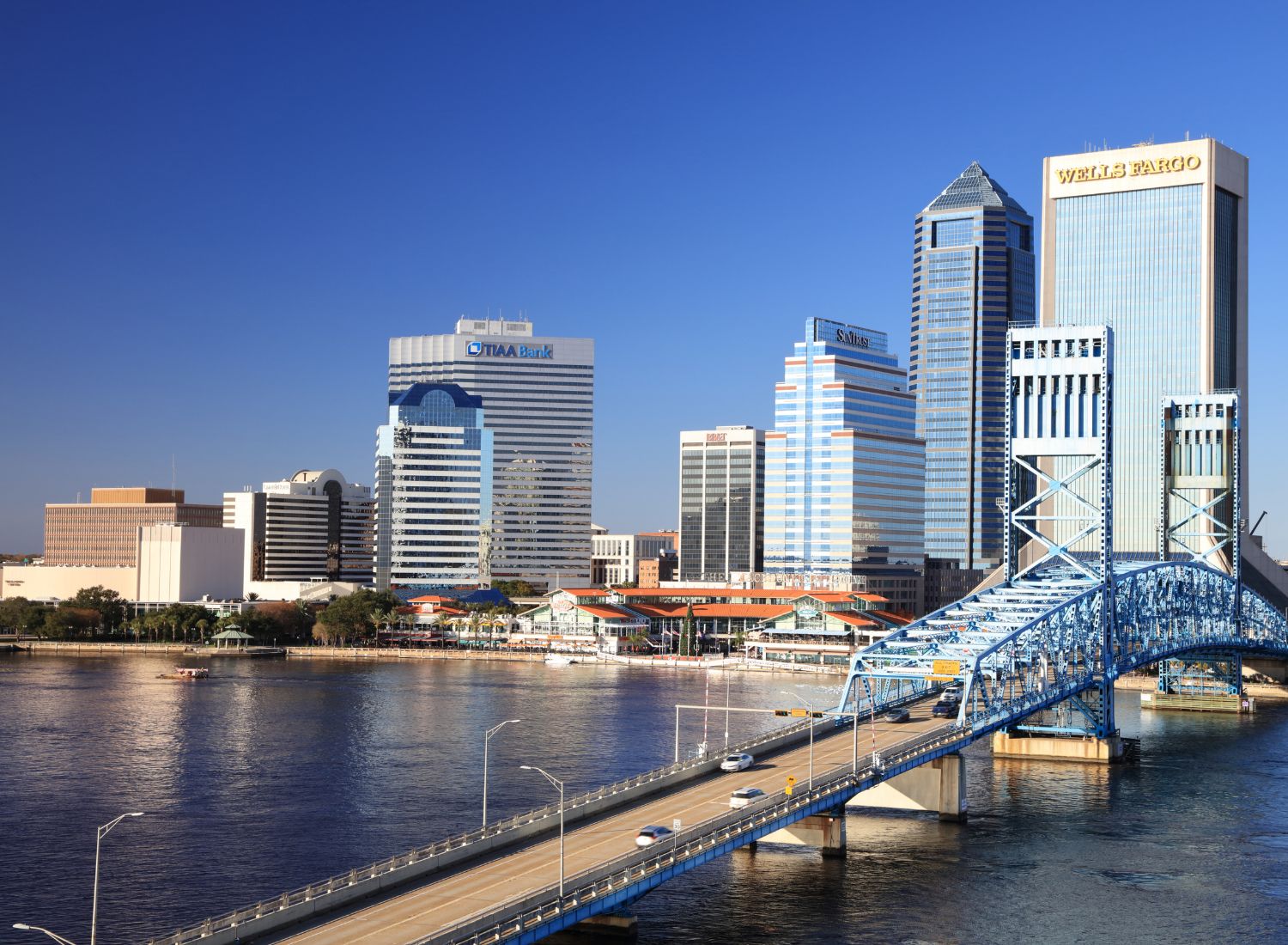 August 2026 — Jacksonville is spending $12.59 million to buy 16 parcels for the Emerald Trail, the 30-mile network that will connect 14 historic neighborhoods to Downtown. Trail networks have reshaped real estate markets in cities like Atlanta, and developers and builders are already moving on projects near Jacksonville’s corridor.
Join us at caa’s upcoming leadership summits! These premier events bring together hundreds of public and private sector leaders to discuss the challenges and opportunities for businesses and investors. Find the next summit in a city near you!
A connected urban network
City Council approved the purchase in June for the Hogans Creek-to-Riverwalk segment, which extends the trail toward the Northbank Riverwalk and the Sports and Entertainment District. According to the city of Jacksonville, the completed Emerald Trail will link trails, greenways, and parks across the urban core. The network will connect 16 schools, two colleges, three hospitals, 21 parks, and the Regional Transportation Center, while another 13 schools and 17 parks are located within three blocks of the route.
It is designed to provide pedestrian and bicycle connections to schools, healthcare facilities, parks, transit, businesses, and other destinations across Jacksonville’s urban core.
The project originated with a 2019 master plan developed by the PATH Foundation, which has built more than 260 miles of trails across Georgia. Groundwork Jacksonville has since worked with the city and community partners to advance the vision through individual trail segments and neighborhood connections.
Transportation access is one consideration along the corridor. A Florida Department of Transportation analysis found that about 25% of households within a quarter-mile of the project did not have access to a vehicle, compared with 7% of households countywide. The trail also adds a nonvehicle transportation option across the urban core, connecting residents with schools, healthcare facilities, parks, transit, businesses, and other destinations.
Infrastructure creates opportunity
The Emerald Trail is advancing alongside efforts to address housing, economic development, and environmental conditions in neighborhoods along the route. Groundwork Jacksonville has developed programs focused on home repair and community engagement efforts as public investment moves forward across the corridor.
The project also includes measures intended to help existing residents remain in their neighborhoods as development accelerates. The North Riverside Community Development Coalition, working with Groundwork Jacksonville, United Way of Northeast Florida, and other partners, secured $1.2 million for a program to rehabilitate 46 homes in neighborhoods near the corridor.
Community input has influenced individual segments. The LaVilla Link, which is now complete, emerged after residents in Durkeeville and Newtown requested a direct connection to Downtown. The Emerald Trail Stewards program adds a workforce component by training and employing residents from surrounding neighborhoods to maintain the completed trail.
In June, Jacksonville City Council approved Ordinance 2026-0327, transferring $12.6 million into land acquisition for the Hogans Creek-to-Riverwalk portion of the Emerald Trail. The legislation allows the city to negotiate offers of up to 25% above appraised value and up to $100,000 in business damages. The final acquisition list includes 16 parcels, none of which contained residences or active businesses, according to Public Works Director Nina Sickler.
The property acquisitions are intended to support restoration, decontamination, and flood mitigation along Hogans Creek while extending the Emerald Trail toward the Northbank Riverwalk and venues in the Sports and Entertainment District.
Private sector joins the vision
The Emerald Trail is advancing as private investment continues in and around Jacksonville’s urban core. One example is PHXJAX, a development focused on bringing housing, culture, and innovation together in Downtown Jacksonville. In March, Live Oak Contracting and Live Oak Estates Group joined the project to support development planning and preconstruction for its next phase.
“Projects like this have the potential to create lasting impact for a city by blending housing, culture, and innovation into a vibrant urban environment,” said Paul Bertozzi, CEO of Live Oak Contracting and Live Oak Estates Group.
That approach has precedent in other U.S. cities. Atlanta’s BeltLine, for example, has demonstrated how a large-scale trail and greenway network can become part of a broader urban-development strategy connecting neighborhoods with housing, businesses, parks, and public infrastructure. Jacksonville is developing the Emerald Trail at its own scale, but they both use connectivity to strengthen the economic and social relationships between neighborhoods.
“When we talk to other cities, we ask them to find something that authentically represents their city”, said Clyde Higgs, CEO of Atlanta Beltline. “Another important piece is creating a special-purpose entity focused on delivering that vision.”
The Emerald Trail’s financing has faced challenges, including the loss of a $147 million federal grant awarded to Groundwork Jacksonville and the Jacksonville Transportation Authority in 2025. City and Groundwork officials have continued pursuing federal funding and private sponsorship to advance individual segments.
With portions of the Emerald Trail complete and others under construction, the project is moving forward despite the loss of federal funding. Its next stages will show how quickly Jacksonville can complete additional connections and how development responds around the expanding network.
Want more? Read the Invest: Jacksonville report.