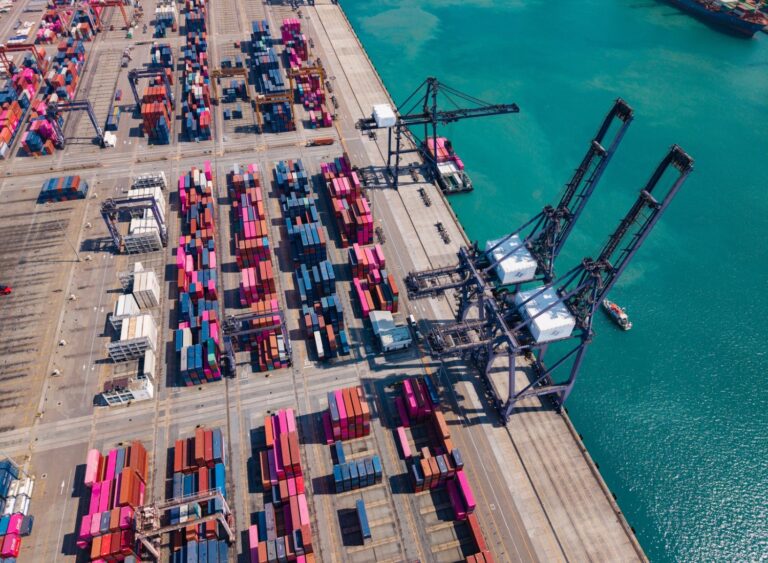

Port infrastructure investment puts readiness to the test

Key points:
- • Houston-area ports are deepening channels and readying dock, rail, and industrial land for energy and petrochemical cargo.
- • JAXPORT’s $250 million Blount Island overhaul expanded its container and auto capacity, though more capacity doesn’t guarantee more cargo.
- • South Carolina is moving container capacity inland by rail, but its 1-million-lift Charleston rail yard still has no opening date.
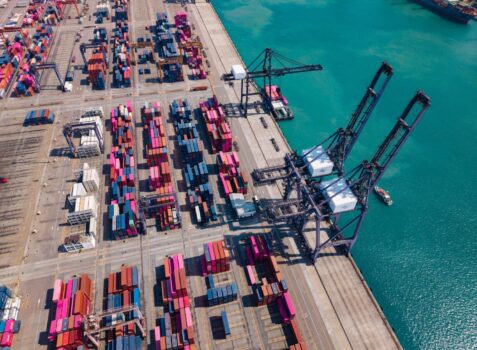 November 2026 — A deeper shipping channel, a larger container terminal, or a faster rail connection can influence where companies invest and how they move goods. From Houston to Jacksonville and South Carolina, ports are spending hundreds of millions of dollars on infrastructure that could determine which regions capture the next wave of industrial growth.
Join us at caa’s upcoming leadership summits! These premier events bring together hundreds of public and private sector leaders to discuss the challenges and opportunities for businesses and investors. Find the next summit in a city near you!
Ports handled about 41% of U.S. imports and exports by value in 2024, according to the Bureau of Transportation Statistics’ 2026 port performance report. With so much trade moving through these gateways, the ability to connect ships with rail, highways, and industrial customers has become an important consideration for businesses choosing where to operate.
In Houston, the investment challenge extends well beyond the waterfront. Port Houston’s public terminals handled about 4.3 million TEUs in 2025, up 4%, with September 2026 volumes rising 11% year over year to 376,419 TEUs. The broader Houston Ship Channel complex supports roughly $987 billion in annual U.S. economic value, according to a Martin Associates study. To keep freight moving, Port Houston has outlined approximately $2.1 billion in landside infrastructure investments over five years.
At caa’s Nov. 5 Invest: Houston Leadership Summit, Jason Miura, director of business and economic development at Port Freeport, said the port has invested about $650 million over the past decade across its channel, terminals, and rail. In July, the U.S. Army Corps of Engineers marked a major milestone on the Freeport Harbor Channel Improvement Project, completing Reach 3 at 51 feet. Work continues on deeper main channel reaches.
Miura tied that port infrastructure investment to customer decisions. He said it helped Port Freeport retain Volkswagen Group of America and drew Del Monte’s fresh fruit operations from Galveston because the infrastructure was ready. Port Freeport and its port community handled 39.3 million tons of foreign waterborne cargo in 2025, up 8.7%.
Tyson Moeller, president of the Port of Texas City and Texas City Terminal Railway Co., focused on rail. He said a $60 million investment will add space for 400 railcars. “That rail car represents three to four trucks on the road,” Moeller said, pointing to congestion on I-10 and I-45.
Moeller said a $30 million award will let the port complete $60 million in projects within about two years rather than five to 10. In an interview with Invest:, he put the port’s capital improvement needs at about $700 million over 10 years, ahead of a $3 billion MPLX-ONEOK LPG project expected to bring new product in 2028.
Modernizing the waterfront
In Jacksonville, the focus has been on making room for more cargo. JAXPORT completed a $250 million modernization of Blount Island’s container and vehicle-handling facilities, including a new container terminal and vehicle processing facility, according to its 2026 State of the Port address.
Terminal upgrades let SSA Jacksonville handle more than 650,000 TEUs a year. JAXPORT moved nearly 1.4 million TEUs and 506,000 vehicle units in fiscal 2025. It also targeted year-end 2026 to finish raising operational air draft to 205 feet, opening its 47-foot harbor to more vessels.
A 2024 Martin Associates study credits Jacksonville’s seaport cargo with supporting more than 258,800 Florida jobs and $44 billion in annual statewide economic output. It counts 30,764 port-dependent jobs in the Jacksonville area.
Connecting inland markets
South Carolina Ports treats rail as an extension of the waterfront. The system handled 2.6 million TEUs in fiscal 2025, up 3%, and rail moves set a record. Inland Port Greer logged 205,523 rail moves, up nearly 10%, after a $55 million expansion completed in March 2025 added about 9,000 feet of rail and equipped it for roughly 300,000 rail lifts a year.
That connection gives upstate manufacturers and distributors ocean access without relying entirely on long truck hauls to Charleston.
A larger project in North Charleston shows how difficult it can be to turn investment into operating capacity. The Navy Base Intermodal Facility, designed for 1 million annual rail lifts, is approximately 80% complete but has missed its original July 2025 opening. According to the Charleston Business Report, the facility recorded no rail movements through September 2026 as SC Ports worked to finalize operating agreements with CSX and Norfolk Southern. The authority currently spends about $39 million annually trucking containers to off-site rail yards.
The South Carolina Council on Competitiveness estimates the state’s logistics industry — not port operations alone — generates about $50 billion annually and supports roughly 150,000 jobs, based on a 2023 study.
What executives should watch
Houston’s energy and petrochemical shippers need draft and dock space. Jacksonville’s container and auto customers need terminal throughput. South Carolina’s manufacturers need inland rail.
Moeller framed the common test as speed to market. Surveys, engineering, permitting, and Army Corps coordination can take three to four years, he said, and industrial prospects “don’t want to start from ground zero.”
The next 18 months will test whether those investments deliver: completion of Freeport’s remaining channel improvements, Texas City’s accelerated infrastructure projects, increased use of Jacksonville’s expanded terminals, and progress on Charleston’s rail agreements. For companies choosing where to invest, the difference will be how quickly those projects translate into reliable access to markets.
Want more? Read the Invest: reports.