10 reasons to invest in South Carolina
Key points:
- • South Carolina outpaced its regional neighbors on year-over-year GDP and personal income growth in 2025.
- • The state topped U-Haul’s national inbound migration ranking for the first time in 2024, drawing the workforce that employers and developers need.
- • A manufacturing base anchored by BMW, Boeing, and a new wave of SCRA-funded innovation hubs positions the state for the next decade of capital deployment.
 June 2026 — South Carolina is increasingly being chosen among a competitive landscape across the United States. As companies and leaders reassess where they want to operate over the long term, the state is showing up more than ever. Decisions to relocate, expand, or invest in South Carolina are driven by its economic trajectory.
Join us at caa’s upcoming leadership summits! These premier events bring together hundreds of public and private sector leaders to discuss the challenges and opportunities for businesses and investors. Find the next summit in a city near you!
A combination of output growth, inbound migration, a deep manufacturing base, and coordinated infrastructure investment has built momentum across multiple sectors. State labor economists reported that the Palmetto State led its neighbors on GDP and personal income growth in 3Q25, and that trend is likely to continue through 2026.
Below are 10 reasons executives, entrepreneurs, and investors continue to choose South Carolina as their next expansion or relocation.
1.- Output that outpaces the region
South Carolina outgrew its Southeastern neighbors in both GDP and personal income in 3Q25, posting year-over-year annualized gains of 3.5% and 6%, respectively. With the Southeast already among the fastest-growing U.S. regions, outpacing a strong field signals advantages that businesses can capitalize on.
2.- The nation’s top inbound state
South Carolina topped U-Haul’s Growth States ranking for the first time in 2024, leading the country in net one-way inbound moves. Texas returned to the No. 1 spot in 2025, but South Carolina remained firmly in the top five, underscoring that its inbound momentum was not a one-year spike. Workers follow jobs, and jobs follow workers — and South Carolina continues to capture both sides of that loop.
READ MORE: caa launches inaugural Invest: South Carolina report
3.- teady growth in midsized cities
South Carolina’s major cities continued to add residents in the latest Census estimates. From July 2024 to July 2025, Columbia grew by 2,247 residents to 147,035, Charleston added 1,758 residents to reach 159,423, and Greenville added 939 residents to reach 75,310. Since the 2020 estimates base, all three have posted solid growth: Columbia is up 7.5%, Greenville 5.9%, and Charleston 5.8%. That pattern points to durable demand in the state’s core urban markets, where housing, retail, services, and infrastructure are positioned to scale alongside population growth.
4.- A deep manufacturing base
Manufacturing drives the South Carolina economy to a degree few states match. The South Carolina Manufacturers and Commerce’s 2026 report estimates the sector’s annual economic impact at between $294 billion and $313 billion, supporting roughly 734,000 to 783,000 jobs statewide when direct, indirect, and induced activity are included. Overall, manufacturing supports more than 30% of South Carolina’s employment base, giving new entrants a built-in foundation rather than a standing start. Its reach is magnified by one of the state’s highest multiplier effects: for every 10 jobs supported directly by South Carolina manufacturing, an additional 15 jobs are created elsewhere in the state.
5.- Anchor employers with reach
BMW, Boeing, Michelin, and Bosch rank among the state’s largest businesses. BMW builds more vehicles in Spartanburg than at any other plant it operates worldwide — and exports the majority of them, making the state a net contributor to U.S. vehicle exports rather than a domestic-only assembler. Each anchor sustains a supplier network that multiplies the investment opportunity for everyone downstream.
6.- Automotive and aerospace clusters
Automotive and aerospace companies cluster in South Carolina because the fundamentals reinforce one another. A deep supplier base, trained industrial workforce, and direct access to global markets through the Port of Charleston give new entrants an operating platform from day one. Boeing’s 787 presence in North Charleston and the automotive network anchored by BMW in the Upstate show how that ecosystem compounds over time. According to the South Carolina Department of Commerce and SouthernCarolina Alliance, there are more than 400 aerospace companies and 500 automotive companies in the state. For manufacturers, that density can shorten ramp-up periods, reduce supply-chain friction, and lower execution risk in ways that are difficult to replicate in less-developed markets.
7.- A funded innovation pipeline
The South Carolina Research Authority is putting funding behind the state’s technology growth. In April 2026, SCRA announced a statewide network of Innovation Hubs in six markets — Columbia, Charleston, Greenville, Aiken, Rock Hill, and Florence — designed to connect high-potential tech companies with capital, mentorship, technical support, investor matchmaking, and commercialization resources. The initiative targets gaps in the state’s technology ecosystem depth. By funding entrepreneurial support organizations, including accelerators, incubators, colleges, universities, and industry associations, SCRA is building the connective tissue that peer Southeastern markets such as Atlanta and the Research Triangle have used to pull ahead.
8.- Infrastructure that moves freight
South Carolina’s highway system is one of the state’s clearest logistics advantages. Reason Foundation’s latest Annual Highway Report ranked South Carolina No. 3 nationally for overall highway performance and cost-effectiveness, behind only Virginia and Georgia. The report weighs road and bridge conditions against spending, and South Carolina’s high ranking shows that the state moves people and freight efficiently relative to what it spends.
9.- A working trade gateway
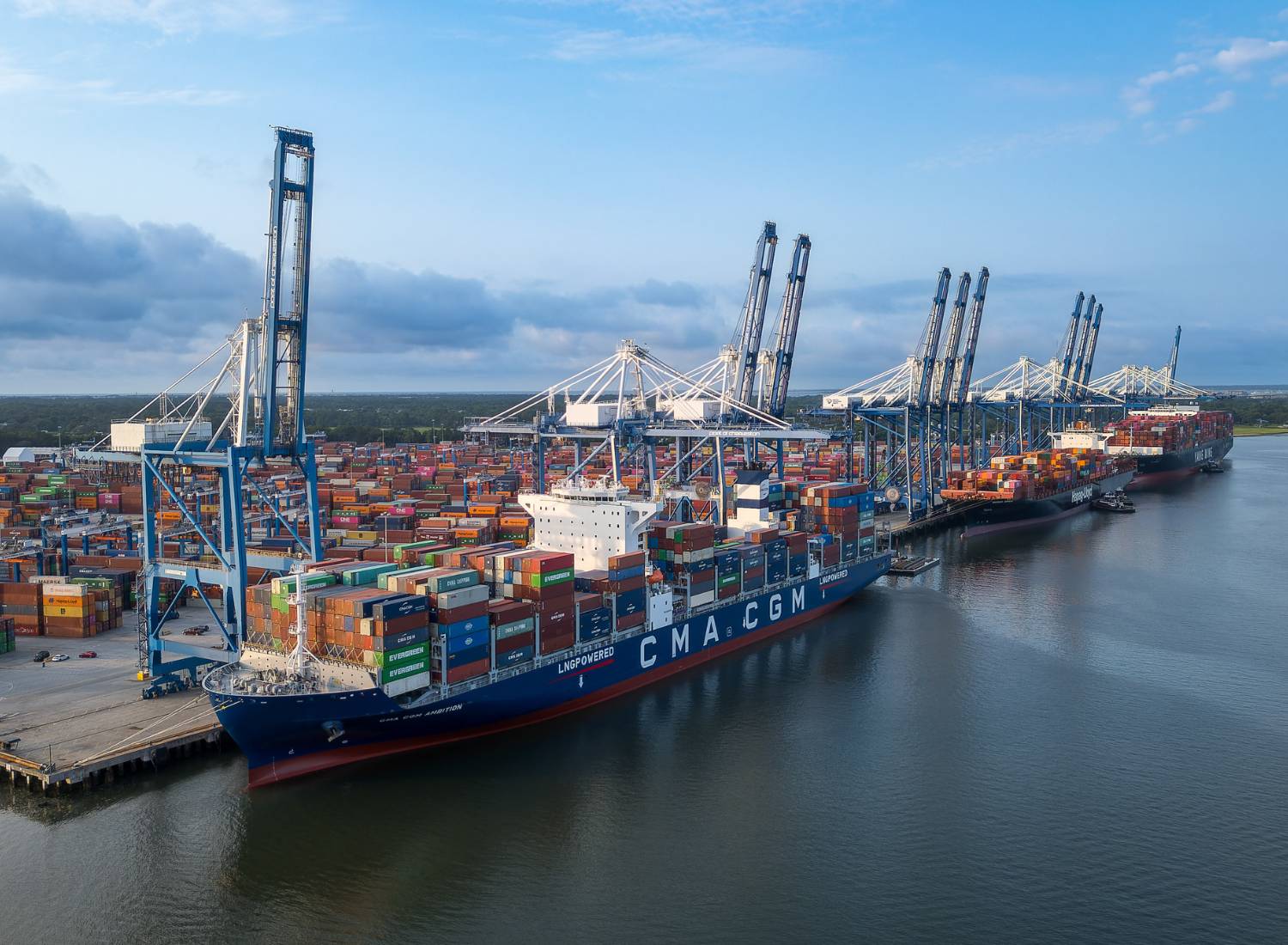
The Port of Charleston connects South Carolina manufacturers to global markets with scale and reliability. Its 52-foot harbor is the second-deepest on the East Coast, allowing the largest vessels calling the region to access terminals any time, any tide. That capacity is already translating into volume: South Carolina Ports handled 2.6 million TEUs in FY25, up 3% from the prior year, while rail cargo moving between Charleston and the state’s inland ports rose 4%.
10.- Investment in resilience
South Carolina’s coastal growth also depends on resilience, and the return on preparedness is measurable. In the Charleston region, the U.S. Chamber of Commerce found that every $1 invested in resilience and preparedness reduces future economic costs by more than $16 compared with a decreased-investment scenario — and yields more than $22 in total savings when damage and cleanup are included.
The downside is equally clear: in a modeled $1 billion flood scenario in 2035, a $1 million reduction in preparedness investment over 10 years would result in more than 3,700 jobs lost, more than 1,100 people permanently relocated, and roughly $640 million in local GDP losses. Resilience spending is a tool for protecting long-term asset value along one of the state’s most important economic corridors.
Top image via SC Ports/Walter Lagarenne
Want to add to the conversation? reach out to Senior Executive Director Shain Collins at scollins@capitalaa.com to contribute to the inaugural Invest: South Carolina publication.
Want more? Read the Invest: South Carolina report.