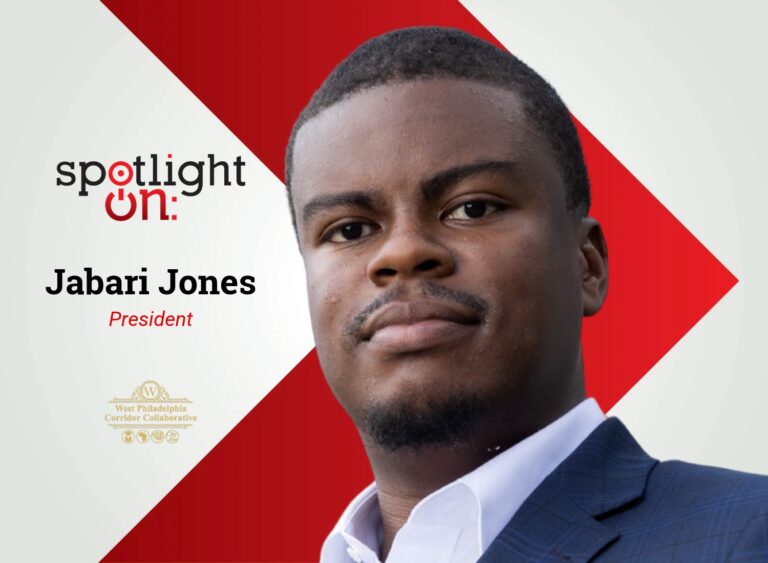

Spotlight On: Jabari Jones, President, West Philadelphia Corridor Collaborative
Key points:
- • Safe Corridors Grant program added cameras and lighting for 2026 events.
- • Burlington Stores Inc. will move its headquarters to Schuylkill Yards.
- • Africatown and Schuylkill Yards are expected to grow within three years.
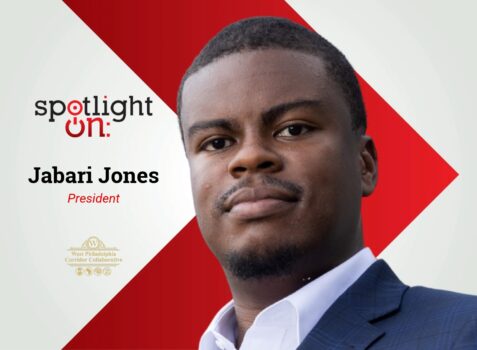 November 2026 — In an interview with Invest:, Jabari Jones, president of the West Philadelphia Corridor Collaborative, discussed turning tourism gains into lasting business activity, attracting investment without displacement, and strengthening neighborhood commercial districts. “Tourism brings first-time visitors and sales, but sustainable sales require businesses to ask what makes their experience and products unique and what will bring customers back every week,” Jones said.
Join us at caa’s upcoming leadership summits! These premier events bring together hundreds of public and private sector leaders to discuss the challenges and opportunities for businesses and investors. Find the next summit in a city near you!
How did major events in 2026 affect businesses in your district?
It has been a great year. Our district includes 30th Street Station and Philadelphia’s airport, so we saw the effects of increased international visitation around the World Cup, the MLB All-Star Game, and events tied to the nation’s 250th anniversary. Those institutions saw more foot traffic, and businesses were able to pursue contracts and other opportunities connected with the events. Organizers did a strong job of making those opportunities available to local businesses. The benefits went beyond bars and restaurants to car services, professional services firms, construction, and food service companies. It’s important to recognize the wider economic impact rather than focus only on entertainment.
What priorities helped neighborhood businesses capitalize on that activity?
Public safety is my biggest priority. We represent businesses outside downtown, and businesses need to feel safe to stay open, employees need to feel safe at work, and visitors need to feel comfortable exploring neighborhoods. We expanded our Safe Corridors Grant program, which we founded in 2021 to provide high-grade security cameras to residents and businesses, particularly in high-crime areas. The cameras assist investigations and give people peace of mind about operating a business and staying open longer. This year, we added lighting in darker areas near restaurants and bars so people could feel comfortable returning to hotels or exploring after evening games.
We also supported the African and Caribbean communities in the southwest part of our district, including watch parties and cultural activities along Woodland Avenue and Elmwood Avenue. We wanted those communities to have safe spaces and the resources to celebrate in their own way.
Another initiative was The Welcome Standard, which we endorsed to show international visitors that Philadelphia is welcoming despite international rhetoric that can suggest otherwise. Businesses could pledge to welcome people regardless of their country of origin. They received materials on language barriers, cultural customs, and city resources, along with a storefront decal. Visitors looked for those welcoming spaces, and participating businesses benefited from that traffic.
What support do small businesses need after a strong year?
Some businesses made significant revenue during the past year. We’re providing educational opportunities to help them reinvest in their businesses, retain some of that money, and stabilize their growth. We’re also discussing how to sustain the momentum. The international events went well, and we’re considering what other international conferences or opportunities the city or organizations like ours might pursue to bring people here.
We’re looking honestly at areas where we did well but could improve. Transit is one of them. We’ve been lobbying state and local lawmakers to provide the resources public transit needs to be safe, clean, reliable, and accessible. That helps visitors feel comfortable using it during major events and exploring beyond the downtown areas where much of the traffic is concentrated. Educating business owners about managing their profits and preparing for the next opportunities is a central part of our work now.
What challenges do neighborhood commercial corridors face?
Public safety remains a challenge, but so does the perception of safety. A report can show crime declining without residents or visitors feeling safer. Lighting, cameras, police presence, beautification, and addressing vacant buildings, trash, and empty lots can make a difference in that experience. Those visible changes can sometimes communicate safety more effectively than a statistical report.
Businesses also have to give people a reason to visit rather than buy online. With some e-commerce platforms offering same-day delivery, that can be difficult. We’re seeing interest in boutique businesses, specialty products, and distinctive experiences that aren’t generic. Refreshing the product selection gives people a reason to return and see what’s new. Tourism brings first-time visitors and sales, but sustainable sales require businesses to ask what makes their experience and products unique and what will bring customers back every week. Many are still working through that.
How can West Philadelphia attract investment without displacing existing businesses?
Preparing underused sites is one approach. Our governor has helped create resources to remediate brownfields and improve large, blighted buildings so expanding companies have somewhere to locate. That can prevent a company from buying an occupied commercial building and removing its tenants. University City has also been expanding its life sciences and corporate real estate. Two months ago, we announced that Burlington Stores Inc. would move its headquarters from New Jersey to West Philadelphia. It’s going into a space that was developed on underused land, including a former parking lot, rather than displacing existing businesses. That gives the company flexibility to design its space and brings hundreds of jobs.
We also need to show decision-makers that Philadelphia is open for business. That means traveling to places such as New York and Miami, attending corporate conferences, meeting the people responsible for real estate decisions, and presenting our offerings and growth information. Inviting them for tours is part of the behind-the-scenes work that can lead to a corporate location announcement. Colleagues representing other parts of Philadelphia do that work as well.
Which developments should people watch over the next two to three years?
Africatown in Southwest Philadelphia is one. Partners are building on a historic African and Caribbean community, with gateway signage, placemaking, and business organizations that highlight the neighborhood’s culture. I presented on heritage tourism at an Organization of World Heritage Cities conference a few years ago. It can help build an economy around a community that invests in its identity and attracts people interested in that heritage. Millions of dollars are being invested, and I expect it to become an important new business district over the next two or three years.
The other development is Schuylkill Yards in University City, developed by Brandywine Realty and Drexel University. It’s where Burlington Stores plans to locate. Underused parking lots and garages are being reimagined for corporations, housing, and life sciences. Proximity to 30th Street Station matters because people can reach New York or Washington, D.C. within two hours. Transit investment has helped support the area’s value. We expect more buildings and hope to see more corporate headquarters announcements over the next few years.
What other investments are strengthening the district’s business opportunities?
Amtrak’s 30th Street Station is receiving major renovations, from facade improvements and historic column preservation to new restaurants and a redesigned South Concourse. For the first time in many years, the interior scaffolding was power-washed, revealing beautiful, distinctive architecture that hadn’t been well maintained. Amtrak and master developer Plenary Infrastructure Philadelphia have done strong work on that project. The airport has received significant investment as well, supported by advocacy from us and others in the city.
Both places have expanded leasing opportunities for local businesses. Visitors with a short connection can experience Philadelphia products, such as cheesesteaks, pretzels, and water ice, while businesses gain another revenue opportunity. The renovations have also helped these transit hubs offer more connections, including newer direct flight destinations and new rail lines that create new connections for our city. Our education and healthcare institutions are also significant strengths. The University of Pennsylvania, Drexel University, and the University City Science Center drive innovation and billions of dollars in annual economic impact in research and life sciences. For a life sciences company that wants access to a major transit network, this district is worth considering.
Want more? Read the Invest: Philadelphia report.