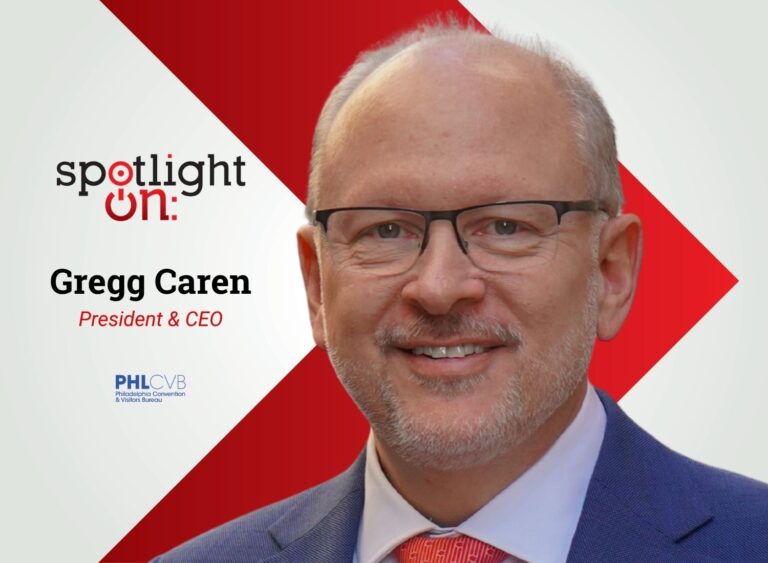

Spotlight On: Gregg Caren, President & CEO, Philadelphia Convention and Visitors Bureau
Key points:
- • Major international events are strengthening Philadelphia’s global tourism appeal.
- • Life sciences, education, and medicine are driving convention demand.
- • Regional collaboration and accessibility are reinforcing Philadelphia’s competitive advantages.
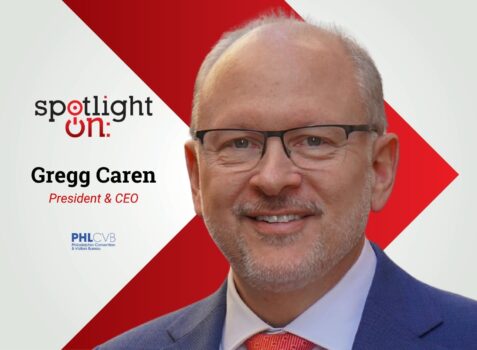 October 2026 — In an interview with Invest:, Gregg Caren, president and CEO of the Philadelphia Convention and Visitors Bureau, discussed the city’s major-event performance, meetings market, and competitive advantages. “The city’s growth in life sciences and cell and gene therapy, in neighborhoods of University City and the Navy Yard, is drawing even more development. Success begets success,” Caren said.
Join us at caa’s upcoming leadership summits! These premier events bring together hundreds of public and private sector leaders to discuss the challenges and opportunities for businesses and investors. Find the next summit in a city near you!
How did Philadelphia’s major-event calendar shape the past year?
I started in this role just over six years ago, and for nearly every day of the five-and-a-half years leading up to this year, there wasn’t a local conversation that did not include the year 2026. It was a huge focus for tourism, hospitality, and all aspects of our public and private sectors. On Jan. 1, we stopped talking about 2026 and started living it.
We began with two rounds of NCAA March Madness, followed by the PGA Championship at Aronimink Golf Club, six FIFA World Cup matches, and July Fourth celebrations, when Philadelphia was on the world stage as the birthplace of America. Less than a week later, we turned the city over for the Major League Baseball All-Star Game, making baseball fans feel that they owned the city just as international soccer fans had.
Philadelphia has been building its major-event pedigree for more than 25 years, from the 2000 Republican National Convention and the 2016 Democratic National Convention to the 2015 World Meeting of Families, the papal visit, and the first outdoor NFL Draft in 2017. That history gave organizers the confidence to book so many events here in 2026.
What did the year prove about Philadelphia’s capacity and long-term appeal?
The city shone and delivered on the promise for each event and each visitor. We proved not only that Philadelphia is a big-event town, but also that we can manage major public events while continuing to serve our bread-and-butter conventions at the Pennsylvania Convention Center. We always keep an eye on what could go wrong, whether it is safety or logistics, so the best news was that there was no negative news story. Philadelphia and the region performed on national and global stages throughout the year, from the televised PGA Championship to the FIFA World Cup soccer matches and MLB All-Star Week.
That exposure was the best love letter to the world and advertising campaign we could have hoped for. The most important outcome is how 2026 will affect 2027 and beyond. Our organization plays a long game: the first FIFA World Cup conversations began in 2017, and today, we are booking business into the mid-2030s and almost into 2040. In 2026, about 400,000 international fans came through Lincoln Financial Field (dubbed “Philadelphia Stadium”), the FIFA Fan Festival at Lemon Hill, and our streets. The media coverage and social stories created an opportunity that will extend well beyond the events themselves.
Where are the strongest opportunities in meetings and conventions?
In January, we hosted PCMA Convening Leaders, which we call the World Cup for meeting and convention planners. About 4,500 event organizers from around the country and the world came for their own professional development and experienced Philadelphia as a destination to consider for their organization’s future conventions. For us, it was one large familiarization tour. Along with the coverage from our public events, that experience is generating greater interest in bringing our bread-and-butter business here.
The Pennsylvania Convention Center is the hub for meetings, conventions, and special events. About 43% of the meetings and conventions we bring to Philadelphia are in life sciences, education, and medicine. These scientific, medical, and academic organizations range from global medical congresses to professional conferences. Recently, the Alzheimer’s Association International Conference (AAIC) brought about 8,000 medical professionals from 70 or 80 countries. We also host social organizations, including all of the Divine Nine historically Black fraternities and sororities. These gatherings drive our economy, and we are seeing the exposure of the past nine months prime the pump for future bookings for our convention center and our hotel community.
How did the World Cup help convert international attention into visitor demand?
More than 400,000 people from 190 countries attended matches at Lincoln Financial Field. We also broke the norm for North American host cities by operating the only completely free FIFA Fan Festival that remained open for all 39 days of the tournament, whether or not a match was being played in Philadelphia. We wanted a gathering place for Philadelphians, regional residents, and international travelers who might also be attending matches in other Northeast cities.
Philadelphia International Airport is American Airlines’ largest transatlantic gateway, giving us a strong foundation for that role. The fan festival was walkable from Center City and offered match screenings, concerts, activations, and games. The most revealing results were the stories visitors shared through social media about how warm and welcoming Philadelphia is. One group of international soccer fans joined a wedding photo shoot in front of City Hall and spontaneously danced with the bride and groom and their wedding party. There were thousands of moments like that. Those stories will help generate interest in tourism and events for the next decade.
What strengthens Philadelphia’s position amid growing competition among destinations?
Twenty or 30 years ago, Philadelphia was sometimes viewed as a stopover between New York City and Washington, D.C. This has changed dramatically over the past two decades. We are a stand-alone, first-tier destination. That applies to tourism, B2B activity, and broader business opportunities. The city’s growth in life sciences and cell and gene therapy, in neighborhoods of University City and the Navy Yard, is drawing even more development. Success begets success.
Our location on the I-95 and Amtrak corridors, Philadelphia International Airport, walkability, and affordability all work together. A river-to-river walk across the core of the city takes less than an hour, connecting places such as the Philadelphia Museum of Art, the historic district, the convention center, and Reading Terminal Market — which is more than 125 years old, with some vendors being operated by fourth- and fifth-generation families.
The cost of living and doing business is often 15% to 30% below peer cities along the Northeast Corridor. Visitors can use Philadelphia as a hub for the region, including Valley Forge and King of Prussia, while businesses benefit from access to other Northeast markets and the world. Investors continue to validate the market: five new hotels opened during the pandemic, other properties were renovated, and companies are choosing to locate here.
How does regional collaboration support Philadelphia’s tourism strategy?
Our collaborative spirit is part of our secret sauce. It includes the City of Philadelphia, the surrounding five-county region, and the Commonwealth. Gov. Josh Shapiro and Mayor Cherelle Parker understand economic development, tourism, jobs, investment, and tax revenue. The alignment between their administrations positions us better than ever. Shapiro previously served on the Pennsylvania Convention Center Authority board, giving him a direct view of how major events affect the city and region. Parker, Philadelphia’s first woman mayor, has been deeply engaged with our community and brings energy to getting things done.
We also work with destination marketing organizations and chambers of commerce throughout the region. Our interests overlap, and we recognize that we are not competing with one another. Tourists do not think about city or county lines; they think about the airport and the region they are visiting. Someone coming to Philadelphia may also visit King of Prussia, Bucks County, or Longwood Gardens. Those attractions are important to how we promote the destination, and that collaborative spirit is stronger here than in many other parts of the country.
Want more? Read the Invest: Philadelphia report.