
Christian Harden, Chief Executive Officer, NAI Hallmark
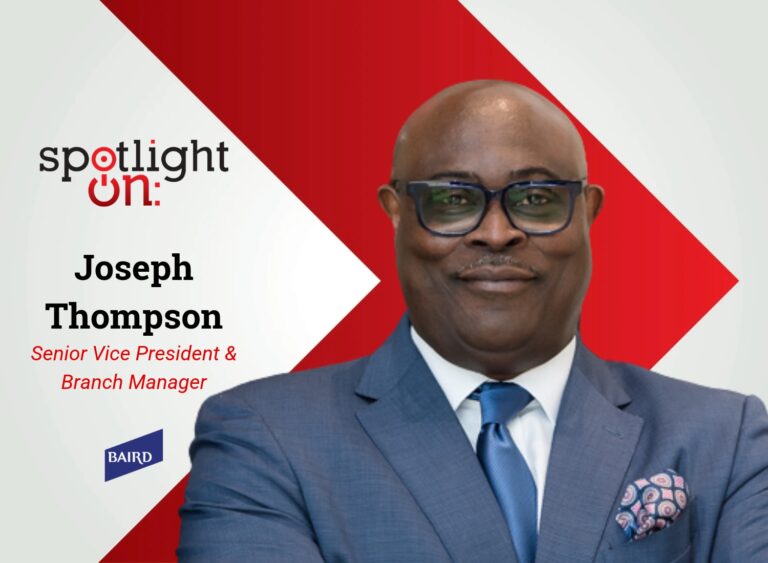
 In an interview with Invest:, Christian Harden, Chief Executive Officer at NAI Hallmark, discussed the shifting dynamics of Northeast Florida’s commercial real estate market, from improving industrial absorption and renewed office demand to continued retail strength. “Our people treat every property as if it is their own, and advise their clients as if it were their own capital,” Harden said, highlighting the firm’s emphasis on value creation, local expertise, and trusted relationships.
How would you describe Northeast Florida’s commercial real estate market and the most significant trends across asset classes?
Every asset class has its own nuanced scenario based on broader macroeconomic conditions, making it challenging to describe the market as a whole. In industrial, roughly 7 million square feet came to market over a relatively short period, which was a large amount for Jacksonville. Combined with uncertainty surrounding tariffs, that contributed to a slowdown. Industrial had been a hot commodity for a long time, and people were waiting for it to become overbuilt. I think we finally reached that inflection point.
We are starting to see the market come back. There is greater certainty in manufacturing and the supply chain, and absorption happened more quickly during the last quarter than at any other point this year. That is a positive sign.
One of the most encouraging developments is the return of office users. Businesses have been expanding for the past five years with virtually no new office construction in Northeast Florida. As companies require people to return to the office, they are realizing there is not enough space available. Users looking for Class A office space are finding the market surprisingly competitive.
There is a flight to quality and a K-shaped market in which good office space is performing well while lower-quality office space is performing poorly. The cost of building out office space has also surprised users, making relocation decisions more difficult.
Downtown Jacksonville is entering a new phase. Conversations about renderings are beginning to convert into actual construction and cranes. Over the next couple of years, I think we will see that process accelerate and change happen faster than people realize.
Retail has continued to thrive. People in Florida continue to spend money, and when retailers are expanding, they want to be in our market. We are seeing many new concepts enter the region. Vacancy in St. Johns County, where demand is particularly strong, is below 2%, which is striking.
What are NAI Hallmark’s strategic priorities, and how does the firm differentiate itself from competitors?
Our company has been successful in investment sales and commercial property management. There are relatively few firms selling investment product locally. Many firms sell investment products regionally rather than locally, and having a boots-on-the-ground team has given us an edge.
Our team has a strong understanding of the local economy, buyer profiles, and how to create value. We are actively in the market, which allows us to advise clients from a local perspective rather than relying only on a broader regional view.
On the property management side, we have been able to provide institutional-quality execution and create significant value for clients. As more people have experienced success with our services, that reputation has spread. Our property management team has grown dramatically over the past couple of years as a result.
What recent milestone best reflects the growth of the firm’s property management business?
Our property management portfolio has grown by 2 million square feet over the last year and a half, which is really exciting. That is an important milestone for the business and one that reflects the growth of our team.
How are higher interest rates, constrained capital, and economic uncertainty changing investor behavior?
Buyers are certainly more disciplined than they used to be. They are coming to the table with debt instead of waiting until after they have gone under contract to determine whether financing is available.
Owners are also becoming more patient with their existing assets. Multifamily owners, in particular, have had to let properties season, and expectations have shifted for that product type.
We have also seen significant capital deployment from local and unique buyers, including people making their first investment in commercial real estate. Some of those buyers have a great deal of conviction about office space and its continued use, particularly when a property is well located and has strong fundamentals.
Development has slowed, but demand remains. That creates opportunities to reuse existing assets and generate value. Investors who have a good team, strong construction relationships, design expertise, and a clear understanding of what users need can identify where capital should be deployed most effectively.
We use the phrase trying to squeeze a dollar out of a dime because that is what investors are looking for. They want teams that can use capital efficiently and find ways to create value in a more challenging environment.
How is artificial intelligence changing the way NAI Hallmark operates and advises clients?
One of the benefits of being locally owned and operated is that we can be agile in how we manage our systems and use technology. We are adapting and evolving literally every day.
AI models each have their own strengths and weaknesses, and our different teams are using them not only to modify processes but to improve them dramatically. I do not think we are replacing people with this technology. Instead, it is making our people faster, stronger, and smarter.
The comparison I use is that AI does not replace people in our business. It gives our people almost a robotic exoskeleton of tools they can use in different scenarios. That allows them to respond with more thoughtful and informed solutions more quickly than ever before.
It also helps us make processes repeatable and increase the consistency of the service we provide to clients. Another major benefit is information-sharing. These tools allow teams to collaborate and share their knowledge more effectively.
That is especially important in property management because every property is different. Each property presents its own situations and scenarios, and every property manager develops unique experiences. These tools allow those experiences to be shared across the team without slowing anyone down.
Why is active value creation becoming more important in today’s commercial real estate environment?
In a world where capital is constrained and the regulatory environment is challenging, it is more important than ever to have a good team that is not just performing a service but actively driving value for its clients.
Our people treat every property as if it is their own, and advise their clients as if it were their own capital. That is a powerful competitive advantage. We have seen a lot of success from that approach, and for clients looking for value creation, we are increasingly becoming the people to talk to.
How important is building trusted relationships before a client has an immediate real estate need?
I have always subscribed to the belief that people want to work with people they trust. We are not transactional. We are relationship-minded, and when someone has a need for us, they know they can come to us.
If we consistently build trust with clients and prove that trust through our actions, they will share those experiences with their own relationships. In an increasingly technology-based world, people seek human relationships more than ever. They want people they can trust and advisers with a track record of proving that trust.
That is a key differentiator for us. We are continually building relationships, and much of the time we are simply paying it forward to help somebody, whether it involves our product or not.
We have worked to become known as a high-integrity, high-character organization. When people need advice, whether it relates to real estate or something else, they come to us. That is a powerful position and one we are proud to hold.