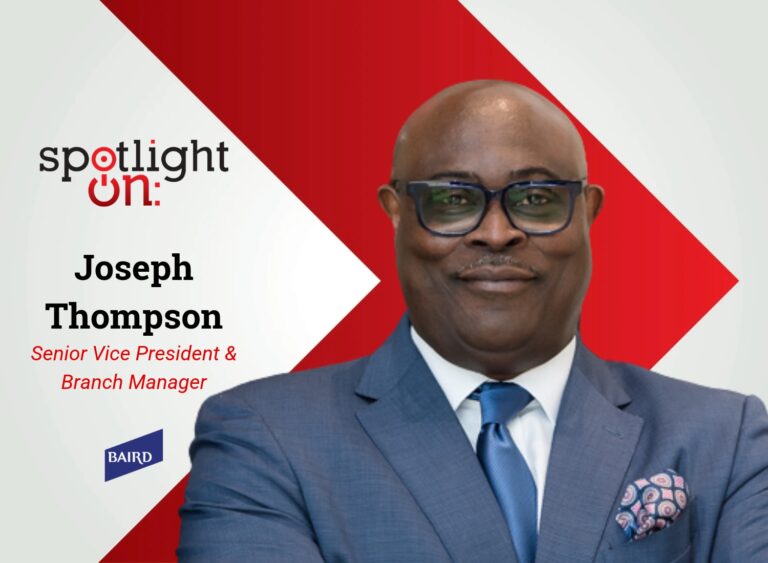

Doug Brendel, President, Residential Lending, First Federal Bank
 Invest: spoke with Doug Brendel, president of residential lending at First Federal Bank, about the organization’s expansion strategy, residential lending trends, and the role of technology in the mortgage experience. “Our priority is to stay focused on local markets and be a stable place for people to work and a stable place for people to bank,” Brendel said.
What have been the key milestones and strategic developments for First Federal Bank over the past year?
The bank continues to focus on serving local clients and the markets where we operate. Over the past year, we added two branches to our network, including one in Jacksonville. While First Federal Bank has long been a leading bank in Nassau County, this was our first full-service branch in Jacksonville proper. We also opened a branch in Starke, Florida.
Our priority is to stay focused on local markets and remain a stable place for people to work and bank. The bank ended 2025 at $4.3 billion in assets, and last year we helped 4,684 families finance homes through residential mortgage loans.
We also received several recognitions over the past year, including America’s Best Customer Service 2026 by USA Today, America’s Best Regional Banks and Credit Unions 2026 by Newsweek, Top Community Lender by the SBA North Florida District Office, and a Top 10 customer satisfaction ranking from LendingTree.
How has population growth across Florida influenced housing demand and lending activity across your markets?
We have been growing the residential portion of our business. We are also growing our mortgage service beyond Florida. We completed a major acquisition of NOLA Lending Group, which was based out of Louisiana and owned by Fidelity Bank in New Orleans.
That acquisition about doubled our retail footprint for residential lenders, which is a current focus.
What were the strategic reasons behind the acquisition of NOLA Lending Group?
Our focus is growing our retail mortgage footprint, meaning loan officers in local markets working directly with realtors and borrowers. That is also what NOLA Lending Group specializes in. Most of their business is within the Louisiana market, largely around New Orleans. It is a group of experienced loan officers working directly with realtors and borrowers in the local market, and that is what got our attention.
It is also in the Southeast, where our bank is focused on growth. Once we met each other and realized our cultures were aligned, it made complete sense.
How important is culture in an acquisition?
Culture might be the most important factor in any acquisition. All the other things have to work, including common beliefs and common goals, but if the cultures do not work, it does not matter how well everything else lines up. In this case, it was a good fit.
Because we have operations centers across several markets, including Kansas City, Atlanta, and Madison, our teams have learned how to work well together, even when in different geographies. We regularly bring groups together in person to facilitate teamwork.
How does scale help banks compete in the fintech and mortgage environment?
When it comes to fintech and mortgages, getting to scale is incredibly important. Technology costs have increased substantially over the past five to 10 years. Technology can help you become more efficient, but there are fixed costs involved.
The more business you have, the lower your cost is to deliver a loan to the borrower. Ultimately, that lowers costs for customers because you can produce loans more efficiently.
What trends are you seeing in residential lending, particularly around affordability and refinancing?
Affordability is a challenge across the country. Demand has not slowed down, and inventory has not grown enough to bring costs down for buyers. Different municipalities are trying to lower the cost for developers to build homes through zoning and faster approvals.
When mortgage rates decline, we see interest pick up quickly. During periods when rates came down, we saw increased activity on purchases. The same applies to refinancing. If someone completed a loan at 7% and can refinance at 6%, that saves them real money, so refinance activity increases.
How do you view Jacksonville’s opportunity for housing and residential lending?
Housing costs in Jacksonville depend on where someone wants to live and what fits their budget. Living in the core of Jacksonville typically costs more than areas farther north or west.
There is affordable housing being built throughout the region, but developers can only build where land prices make it feasible. Since land in the center of town is limited and more expensive, most new affordable housing ends up in areas where land is more available and affordable.
How is First Federal Bank using technology to improve the lending process?
Technology is a key area where we have picked up efficiencies in residential lending. We acquired a mortgage division in 2023 from BNC National Bank, and part of that acquisition included their technology stack, including Encompass, which brought a lot of efficiencies to the bank.
We are also moving to nCino on both the bank and mortgage sides. It provides a great deal of automation and efficiency for customers, making it easier to apply, upload documents, and track where their loan is in the process.
The goal is to make the journey smoother and more informative for borrowers.
How do you balance digital tools with the personal relationships many customers still want?
A lot of people still want a personal touch. They want to sit down with a loan officer, hand over their documents, and talk through the transaction. It could be their first home or their eighth home.
At the same time, some customers prefer digital tools, uploading documents online and communicating by text or email. We work hard to deliver what the borrower wants and what experience they need. We can deliver that process through both our consumer direct and retail channels.
Some borrowers want a fully digital process, while others want direct interaction with a loan officer. We support both approaches. The same applies in the branches. Some customers simply value having a local person they know and trust.
What are the biggest challenges facing residential lenders today?
With low inventory, pre-approval has become an essential tool. Many borrowers and realtors prefer to have a loan completely underwritten before finding a property. That allows buyers to compete more effectively with cash offers because sellers have confidence in the borrower’s ability to close quickly.
Another important factor is having experienced loan officers available to answer questions from both borrowers and realtors. Some fintech companies have created strong digital channels, but not everyone wants that experience. Borrowers and realtors still want someone they can talk to directly, especially when the situation is unique or timelines are tight.
How will First Federal Bank continue differentiating itself in the marketplace?
With good stewardship, to remain a stable place to bank and for employees to work, First Federal will continue to support local communities
And when the right opportunities come in the right markets, we will pursue them. Focusing on our core business and markets remains our top priority so that customers are well served
Where do you see First Federal Bank growing over the next three to five years?
For residential lending, we will continue focusing on experienced retail loans. More broadly, as opportunities come up, if they are the right opportunities, we will pursue them.
We are going to continue growing in our local markets in the best, safest, and soundest ways that we can.