Invest: Pittsburgh 4th report: The region’s economy powers ahead

Key points:
- • Pittsburgh is strengthening its position as a robotics and AI hub, backed by research, investment, and talent.
- • Healthcare, finance, and universities continue to anchor the region’s economy and innovation pipeline.
- • The fourth edition of Invest: Pittsburgh will highlight the opportunities driving the region’s next phase of growth.
 July 2026 — Pittsburgh returns to the spotlight with the release of the fourth edition of Invest: Pittsburgh, the latest installment in caa’s annual business and economic reviews. The report and accompanying leadership summit will examine how the region’s legacy strengths in healthcare and finance are now converging with a fast-maturing robotics and artificial intelligence sector, alongside the research engines of two major universities.
Join us at caa’s upcoming leadership summits! These premier events bring together hundreds of public and private sector leaders to discuss the challenges and opportunities for businesses and investors. Find the next summit in a city near you!
“Pittsburgh is a city that went from steel mills to robotics labs. From industrial backbone to innovation hub. This city doesn’t just reinvent — it rebuilds, and the whole business and government community does it together,” said Abby Lindenberg, founder and CEO of caa.
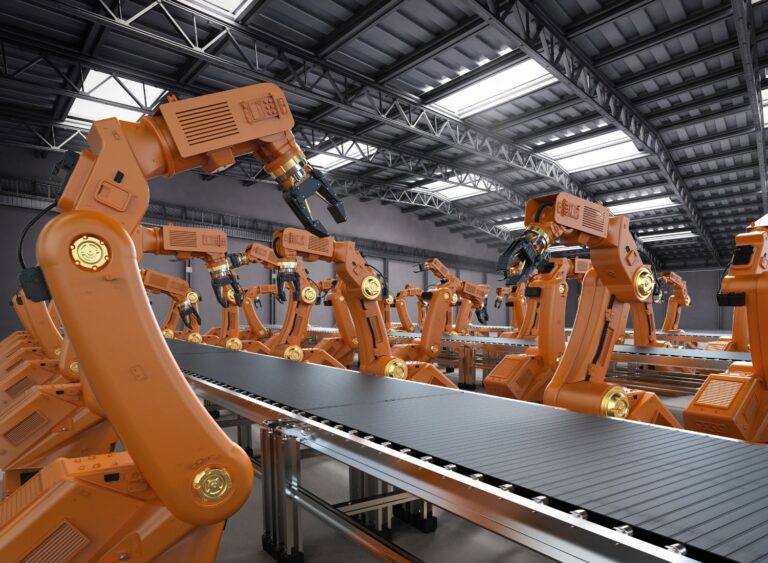
Robotics and AI hub built on hard tech
Pittsburgh’s identity as a center for applied robotics and AI continued to solidify this year. Carnegie Mellon University opened its Robotics Innovation Center at Hazelwood Green in February, with Governor Josh Shapiro on hand to call the region “poised for explosive growth in technology and innovation.”
In June, Pennsylvania’s Department of Community and Economic Development toured AlphaLab Health, an accelerator backed by Innovation Works and Allegheny Health Network, while detailing Governor Shapiro’s proposed Innovate in PA 2.0 program — nearly $100 million earmarked for innovation-economy startups. And according to Technical.ly, a January 2026 Nasdaq Entrepreneurial Center analysis named the Pittsburgh region one of the country’s five best at supporting fast-growth entrepreneurs, citing its track record of translating federal and state dollars and academic research into commercial robotics and AI ventures.
The momentum has been reinforced by capital. Gecko Robotics became the region’s eighth unicorn in the past decade in June 2025, and Amazon pledged $20 billion that same month for new “innovation centers” and data centers in the region, according to GovTech. Pittsburgh’s AI Strike Team, coordinating with government and private industry, has also set a goal of bringing 100,000 AI-related jobs to the region by 2028. Additionally, the Pittsburgh Technology Council’s State of the Industry report counts 37,580 technology workers already embedded across the region’s traditional industries.
Finance drives Downtown’s daytime recovery
PNC Financial Services, one of the region’s largest employers, mandated a five-day return-to-office policy beginning May 4, 2026. According to CBS News, thousands of returning workers were credited with reviving Downtown’s lunch and retail economy, which had recovered only about half its pre-pandemic weekday workforce.
PNC has also underwritten $5 million to support Downtown small businesses, part of a broader effort tied to the office return. According to AXIOS, Pittsburgh Downtown Partnership data shows 24 new businesses opened in the neighborhood last year, more than in any of the previous three years combined.
Universities sustain the talent and research pipeline
The University of Pittsburgh maintained a top-20 national ranking in research expenditures, with FY2024 spending reaching $1.5 billion, a 7.6% annual increase, according to the National Science Foundation’s HERD Survey. In April 2026, Pitt and CMU jointly opened a Federal Statistical Research Data Center to support economic and public-policy research using secure federal datasets.
Federal research funding has remained a point of negotiation nationally, and Pitt secured an agreement with the Department of Health and Human Services in 2025 to maintain its indirect-cost reimbursement rate at 59% through 2029, according to WESA. That would sheild the university from steep cuts that threatened clinical trial operations. In comparison, CMU’s rate stands at 52%, also above the national average.
Steady trajectory
The Pittsburgh metro’s unemployment rate stood at 3.5% in April 2026, below the national rate of 4.3%, per Pennsylvania Department of Labor and Industry data. Total nonfarm employment in the metro area measured roughly 1.18 million as of February 2026. With robotics and AI accelerating alongside steady healthcare, finance, and education anchors, Invest: Pittsburgh will give regional leaders a platform to share that story with a national and global audience.
Nationally, labor market conditions have been described as resilient heading into mid-2026, with average hourly earnings up 3.5% year-over-year as of March 2026 and job openings ticking higher early in the year, according to the U.S. Treasury Department — a backdrop that has helped sustain hiring even as Pittsburgh’s own unemployment rate edged upward from its 2024 lows.
About caa & Invest: Pittsburgh
caa is an integrated media platform that produces in-depth business intelligence through its annual print and digital economic reviews, high-impact conferences and events, and top-level interviews via its video platform, Invest:Insights.
Invest: Pittsburgh 4th Edition is an in-depth economic review of the key issues facing the Western Pennsylvania economy, featuring exclusive insights from more than 200 economic leaders, sector insiders, elected officials, and institutional heads. The publication dives deep into sectors including healthcare, technology, real estate and construction, banking and finance, legal, education, infrastructure, and tourism. It aims to 1) equip local, national, and international investors with comprehensive insights on the region and 2) promote Pittsburgh as a competitive, innovative, and collaborative place to do business. It analyzes the leading challenges facing the market and uncovers emerging opportunities for investors, entrepreneurs and innovators.
The caa team is currently connecting with stakeholders across the region to gather perspectives and analysis that will define this year’s edition. Invest: Pittsburgh is a unique opportunity for the business community to share its story with a national and global audience.
For more information, contact:
Danielle Karlinsky
Executive Director
dkarlinsky@capitalaa.com
Pablo Marquez
Content Manager
pmarquez@capitalaa.com
Want more? Read the Invest: Pittsburgh report.