
Spotlight On: James Chappell, President & CEO, SCbio
Key points:
- • South Carolina’s life sciences industry is experiencing rapid investment and job growth.
- • Universities are driving commercialization and early-stage company development.
- • Talent, capital, and lab infrastructure are critical to sustaining momentum.
 October 2026 — In an interview with Invest:, James Chappell, president and CEO of SCbio, discussed the momentum behind South Carolina’s life sciences industry and the work needed to sustain it. “The momentum that we have for SCbio and the life sciences is off the charts,” Chappell said.
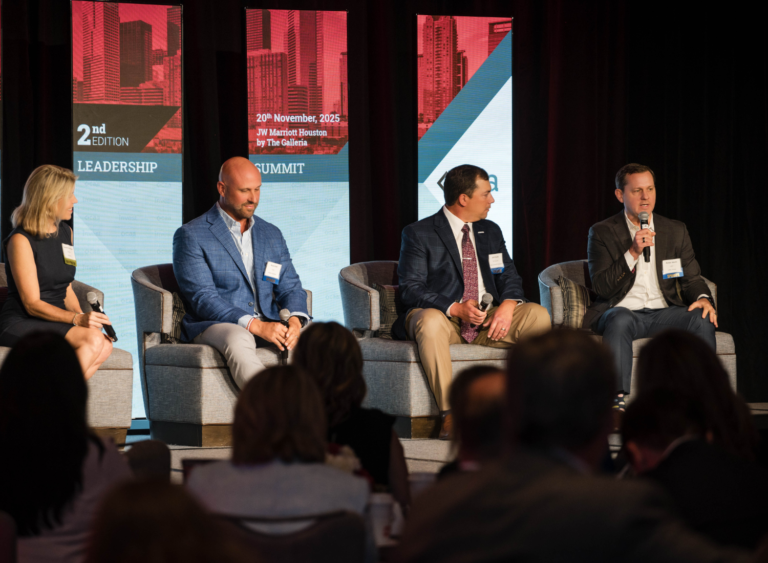
Join us at caa’s upcoming leadership summits! These premier events bring together hundreds of public and private sector leaders to discuss the challenges and opportunities for businesses and investors. Find the next summit in a city near you!
How would you describe the past year for SCbio and South Carolina’s life sciences industry?
I think this has been the best year the state has ever had. The momentum that we have for SCbio and the life sciences is off the charts. We are one of the fastest-growing life sciences industries in the country. This past year has revealed that many of the early signals we were getting about the opportunity are real. If we are thoughtful and strategic, we are at the beginning of the growth of this industry in South Carolina, not at the end.
What are the main factors driving the industry’s growth?
I wish there were one magic silver bullet, but a lot of things are driving it. South Carolina’s in-migration is off the charts. People want to be here for the quality of life, cost of living, and cost of doing business, which makes it easier to recruit people and talent. Once a company invests and establishes a footprint here, it often continues to expand.
PAI Pharma in Greenville has been here a long time and continues to reinvest and expand. Arthrex opened in South Carolina a few years ago and went from zero employees to about 2,000. Companies see that the state will work with them to hire talent, the cost of doing business is great, and there is a collaborative ecosystem.
We are also seeing more early-stage and growth-stage life sciences companies form in South Carolina, often out of our universities. Universities are becoming more sophisticated at commercializing research. Taking a life sciences idea to a patient is a difficult road; nine out of 10 fail. The science is hard, and companies may have to navigate the FDA and reimbursement. A brilliant scientist may know nothing about hiring or raising money. We are focused on adding the components that make it easier for a company to establish and grow. We want the next big IPO or billion-dollar acquisition to be a South Carolina life sciences company, and we want teams to grow from two people to hundreds here.
What do life sciences companies seek when deciding where to invest or expand?
It depends largely on the kind of company. A large biomanufacturer will look for talent from our technical colleges and research universities, along with the cost of doing business and quality of life. Earlier-stage companies also ask whether they can be as successful in South Carolina as in a traditional market. They want to know whether they can raise capital, find investors, join a network of like-minded people, access infrastructure and lab space, and find mentors who have built companies or had successful exits. The question is whether the pieces are here to scale a company as easily as in a traditional market.
How can major investments support a broader life sciences ecosystem?
We recently had a $1.5 billion investment in Rock Hill from Octapharma, which works in blood therapeutics. Its first U.S. manufacturing site will be in Rock Hill, and it is moving its headquarters from Charlotte, bringing 1,500 jobs. That is a strong signal, especially as tariffs and reshoring lead companies to consider doing more in the United States. It shows that South Carolina will be aggressive in pursuing this industry and is a great place to do business.
South Carolina also offers close, cost-effective locations for different parts of the industry. A company can have a wet lab in Charleston and place manufacturing 20 or 30 minutes away, where it is less expensive. Rock Hill is close to Charlotte, international airports, and strong school districts while maintaining a reasonable cost of doing business. Large investments plant a flag and show other suppliers and companies what is possible. Whether a company is doing R&D, biomanufacturing, or logistics, we have a place for it near the people it needs.
What role do universities play in turning research into companies and products?
They are the role. The vast majority of life sciences companies come out of universities. Our universities are making commercialization part of their culture and helping faculty understand that forming a company is a viable option with a clear pathway. MUSC has launched two funds to provide seed and initial venture capital to university companies. It has programs that teach people how to grow a company and design a pitch deck, and it is developing a venture studio that can prepare strong ideas for investment and match them with a potential CEO or someone who knows how to scale a company.
We are also working with the South Carolina Research Authority and our R1 universities — Clemson, the University of South Carolina, and MUSC — to identify promising early-stage companies and match them with experienced mentors. MUSC has strengths in neuroscience, oncology, and medical devices. USC is making a $350 million investment in a neuroscience research hospital. Clemson is strong in bioengineering and genomics. Each has expertise that can spin out companies. You cannot have a great life sciences ecosystem without amazing research universities.
How are AI and other emerging technologies affecting life sciences?
They play a massive role. GNQ Insilico moved its North American headquarters from Silicon Valley to Greenville in June. The company uses AI, quantum, and high-performance computing to identify, long before a drug reaches a clinical trial, whether it is likely to work in humans and why. It can also identify the population in which a drug may work, including people with a particular gene or protein expression.
That can save an enormous amount of money, shorten timelines, and allow a company to abandon or modify drugs that do not work. It can also help companies recruit the right patients for clinical trials. Most importantly, it can save lives and improve patient outcomes. It can help drugs reach the market faster and be designed for specific populations. We are proud that this work is happening in South Carolina, and it is one example of how AI and the computing side of TechBio will affect life sciences.
What must happen for South Carolina to become a nationally recognized life sciences hub?
That is our goal, and it is not wishful thinking. If we are strategic about investment and aggressive, it will happen. We must continue investing in infrastructure, including the right amount and type of lab space. Charleston’s incubator options are nearly full, but we should not simply build and assume companies will come. We must decide how much to build and whether it should focus on oncology, diagnostics, genomics, or another area.
Talent is also critical. Our universities and technical colleges have adapted to graduate students who are ready for the workforce. We bring academia and industry together to ask what companies need, and we introduce students to local companies so they understand they can find strong jobs and remain in South Carolina. We also need more early-stage companies to grow into major companies with roots here. A company should fail because the science is not right or the timing is wrong, not because it could not raise capital, find lab space, or access an experienced mentor. We need thoughtful, aggressive partners and must keep doubling down because other regions are pursuing the same companies.
What else should people understand about the industry’s momentum?
Even those of us who are most bullish are surprised by the success. Life sciences jobs grew 83% over the past decade, and over the last five years, South Carolina has grown the fastest of all states in the Southeast, almost two percentage points faster than North Carolina and Florida, which were tied for second in growth. Prominent life sciences publications are mentioning the state in a way they were not two years ago. Genetic Engineering News named South Carolina among the next emerging biotech hubs to watch; BioCentury featured our growth, and BioSpace has featured our accelerator program that we run in partnership with MassBio.
People are also surprised by the collaboration here. We are a small state, and it is easy to bring people to the table. The industry feels like an early-stage company, with people excited and rowing in the same direction rather than protecting old rivalries or turf. Life sciences is a top-three priority for the state, the governor, and the Commerce Department. Universities are launching initiatives, and established companies are willing to help. I do not want us to look back and wish we had done more with this opportunity. I have no doubt our ecosystem will continue to flourish and be recognized as a leading life sciences hub and ideal place to innovate and grow a company.
Want more? Read the Invest: South Carolina report.