
Spotlight On: Balpreet Grewal-Virk, New Jersey Commissioner & Co-Chair, Gateway Development Commission
Key points:
- • The Hudson Tunnel Project launched its first tunnel boring machine in 2026.
- • Construction is creating hundreds of union jobs and regional supplier opportunities.
- • The tunnel will boost rail reliability for a region generating 20% of U.S. GDP.
 November 2026 — Balpreet Grewal-Virk, New Jersey commissioner and co-chair of the Gateway Development Commission, spoke with Invest: about the Hudson Tunnel Project construction, funding, and opportunities for local workers and businesses. “Investing in local talent and our economy matters to us,” Grewal-Virk said.
Join us at caa’s upcoming leadership summits! These premier events bring together hundreds of public and private sector leaders to discuss the challenges and opportunities for businesses and investors. Find the next summit in a city near you!
What progress over the past year has been most significant for Gateway?
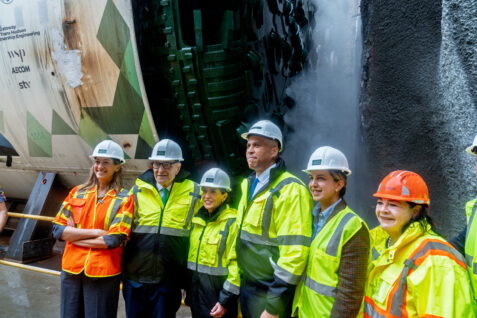
We’ve made a lot of progress. I joined the board of the Gateway Development Commission almost six years ago, and I think the most significant construction progress has occurred in 2026 across seven major construction sites. Launching the first tunnel boring machine for the Hudson Tunnel Project was one of the most exciting things I’ve seen. We watched it being assembled and welded over many months, and now it’s finally starting its journey through the hard rock of the Palisades Cliffs.
Once the Hudson Tunnel Project is finished, it will provide much-needed, reliable rail transportation for New York, New Jersey, and the wider Northeast Corridor.
We haven’t undertaken a new rail tunnel under the Hudson River since 1910 — and the progress we see today didn’t happen overnight. The Gateway Development Commission board and leadership, together with the states and our project partners, have spent years planning and working towards this moment. These milestones reflect daily work, rather than simply showing up at launches and ribbon cuttings.
What did the funding pause teach you about managing a project of this scale?
As one of the country’s largest and most complex infrastructure projects, the Hudson Tunnel Project will have its ups and downs. We’ve remained committed to working with our federal partners to keep funding flowing and our workers on the job.
Gateway has received all expected disbursements since funding resumed in February. As soon as it resumed, we spoke with contractors and got people back to work immediately.
Keeping workers on the job to deliver this rail system is our priority. When you visit the sites, their dedication to the work is clear. Our whole team is committed, and we’re back on track.
What opportunities is construction creating for New Jersey workers and businesses?
The Hudson Tunnel Project is creating jobs and opportunities for suppliers and contractors across the region and beyond. Investing in local talent and our economy is a top priority for us.
Hundreds of well-paid union construction jobs are being created at active sites, from the connection to the existing Northeast Corridor to preparations for the next phase in Hoboken. The project is creating opportunities for suppliers, manufacturers, engineering firms, architects, and other local businesses on both sides of the river.
The Northeast Corridor serves a region that generates 20% of the nation’s GDP. Looking at the data, it would be the world’s third-largest economy if it were its own country. The ten-mile stretch of the Northeast Corridor between Newark and New York Penn Station supports about 450 trains carrying 200,000 passengers every day. Those are significant numbers, and the infrastructure is more than 100 years old.
Delays aren’t simply inconvenient for people trying to reach work or home. Disruptions and extended shutdowns threaten the economy. The project’s impact during the construction phase is already significant, and it will be even more significant when the project is completed, and we can reliably get people where they need to go.
What is happening across the other construction sites?
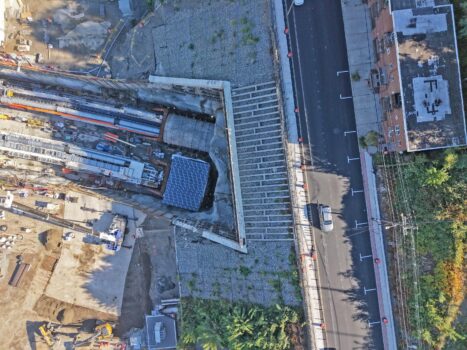
The Tonnelle Avenue Bridge and Utility Relocation work was completed in 2026. It was essential early work for the Hudson Tunnel Project, creating a bridge that enabled the tunnel boring machines to be assembled and will allow trains to pass under Tonnelle Avenue as they enter and leave the tunnel.
The Palisades Tunnel work is underway. The first boring machine has launched, and the second is expected to follow in the coming weeks, excavating the tunnel’s parallel tube. About a mile east of the portal, crews are building a 120-foot-deep access shaft. The first pair of tunnel boring machines will be removed from the access shaft and replaced by a second pair of machines optimized to bore through the different ground conditions under the river.
Ground stabilization in the Hudson River is nearly complete over a section about 1,200 feet long and 100 feet wide. Crews will next remove submerged wooden piles closer to New York to reduce the chance that the boring machines encounter obstructions. The scale is impressive when you’re out on the river looking at both states.
On the Manhattan side, work is underway near Hudson Yards, including the section of the new tunnel that will run beneath West 30th Street, work to clear a path for the tunnel boring machines under 12th Avenue, and access shaft excavation. Ground improvement is a major part of that work.
At Hudson Yards, the first two concrete casing sections are built, and work on the walls and roof of the remaining tunnel box under the High Line is underway. Once the roof is installed, the High Line will be resupported as one of the final milestones for this package of work.
What will the New Jersey Surface Alignment work contribute?
The New Jersey Surface Alignment contract was awarded in June 2026.
The surface alignment is where the existing tracks will connect to the new system. Our workers will be joining the old and new infrastructure to provide access to the tunnel. It’s an important part of completing the project.
The contract covers about 1.5 miles of new infrastructure and includes retaining walls, a viaduct carrying tracks over wetlands, and two new bridges over the existing freight rail tracks. It’s the Hudson Tunnel Project’s only construction contract that is completely above-ground, and will create opportunities for firms that specialize in surface construction.
What are the next milestones and the project’s longer-term priorities?
We want to maintain our strong track record and keep advancing both our active sites and upcoming contracts in the procurement pipeline. Construction will ramp up as new work starts and contracts are awarded in the year ahead. We’re focused on launching the second boring machine on time and keeping both machines advancing consistently and safely, at 30 feet a day.
Beyond construction, transportation helps keep New Jersey and New York, and the country as a whole, economically competitive. We’re addressing causes of delays affecting hundreds of thousands of commuters. Reliable modern transit can attract growing businesses, and improve the quality of life for families across the region.
That can spark growth and innovation that creates new jobs and expands the economy. People move closer, travel more conveniently, and do more with their day. A project undertaken after a century will affect generations beyond us. From raising property values to reducing vehicle congestion, I see it as a win for the region and the country.
We’re also mindful of what transportation means within a family. People need to get home, make dinner, and see their children after work. In my capacity at RWJBarnabas, I see this project through a community health lens. In the field of healthcare, we look at whether transportation allows someone to reach a doctor’s office or a job, because those circumstances affect health too. The new tunnel’s impact extends well beyond the journey itself.
Images provided by Gateway Development Commission
Want more? Read the Invest: New Jersey report.