
Miami becomes newest testbed as waymo deploys driverless robotaxi fleet

Writer: Pablo Marquez
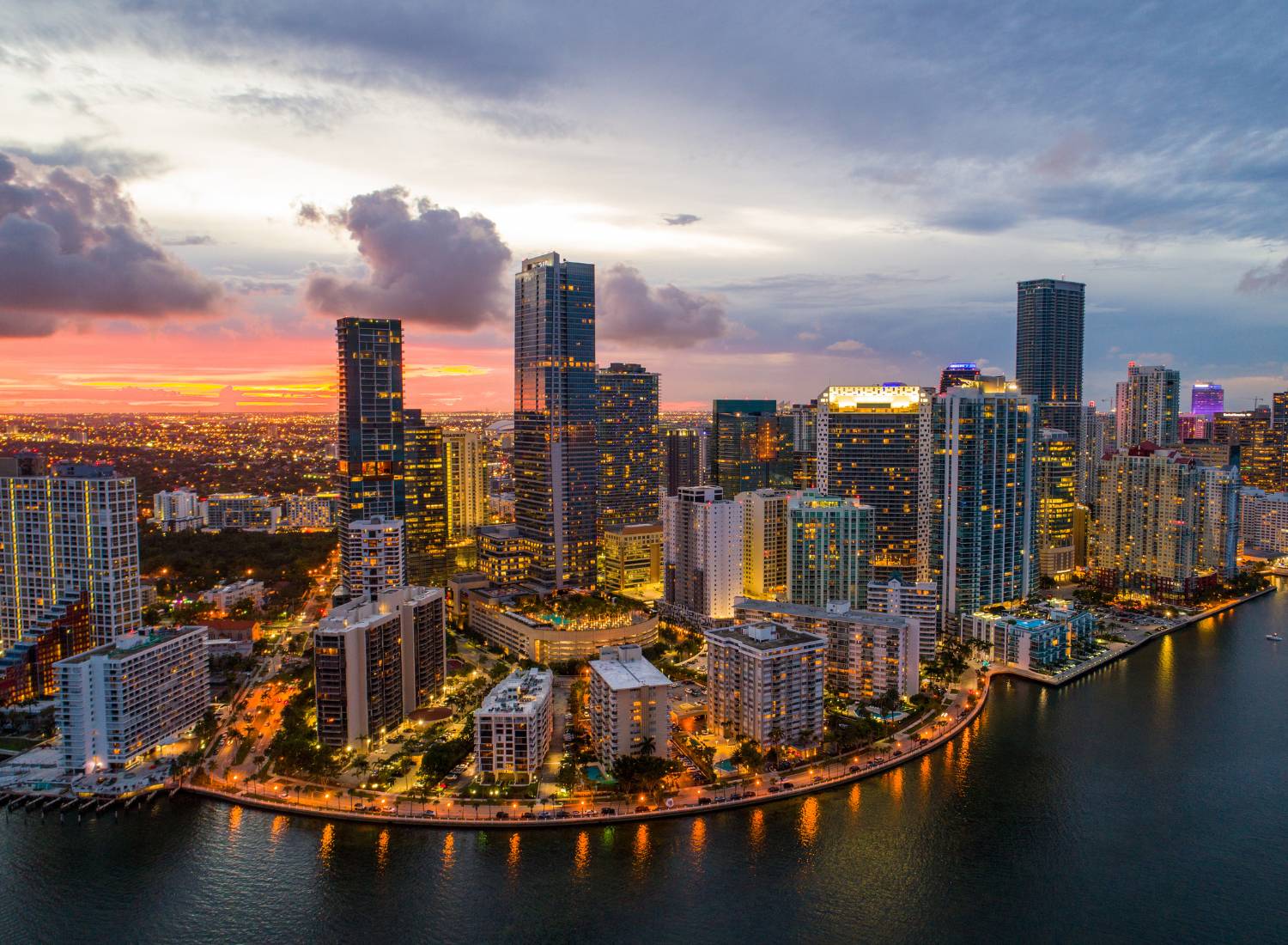
MiamiDecember 2025 — Waymo has begun operating fully autonomous robotaxis in Miami, marking a significant step in its national expansion. The driverless phase begins with employee-only rides and is expected to open to the public in 2026.


Join us at caa’s upcoming leadership summits! These premier events bring together hundreds of public and private sector leaders to discuss the challenges and opportunities for businesses and investors. Find the next summit in a city near you!


Waymo says its new generalizable Driver, powered by the company’s AI platform, has reached the level of maturity needed to scale into five new cities: Miami, Dallas, Houston, San Antonio, and Orlando. The company emphasized its “safety- and community-first approach,” including a standardized playbook designed to ensure a smooth transition to driverless vehicles.

The rollout in Miami is notable because the vehicles operate without safety drivers or in-vehicle monitors, a capability that now sets Waymo apart among U.S. robotaxi operators. According to Reuters, Waymo’s fleet exceeds 1,500 vehicles nationwide.

Local media outlets have already documented fully autonomous Waymo vehicles moving through Miami.

In December 2024, Waymo announced it would redeploy its all-electric Jaguar I-PACE fleet on local streets in early 2025 ahead of the commercial launch. Waymo also reaffirmed its partnership with mobility fintech Moove, which will manage fleet operations, maintenance, charging logistics, and depot oversight for the Miami service. The company has framed its Miami expansion as both a technological advance and a climate-conscious move aligned with the city’s clean-energy goals.

“Fully autonomous driving technology offers a safe and convenient option to the people of Miami. I’m so pleased to welcome Waymo to our city. Waymo’s commitment to sustainability with their all-electric fleet is the perfect mobility option to our city as we continue to prioritize low cost, clean energy,” said Francis Suarez, mayor of Miami, back in Dec. 2024.

Waymo leadership has also set ambitious growth targets. At TechCrunch Disrupt, co-CEO Tekedra Mawakana said the company expects to offer 1 million trips per week across its network by the end of 2026. 

The expansion comes amid intensifying competition. Tesla has signaled plans for a robotaxi service in Miami, though a timeline has not been released.

Want more? Read the Invest: reports.

Subscribe to Our Newsletters

"*" indicates required fields
Address*
Would You Like To Receive Our National Newsletter?*
Interests
Markets
This field is hidden when viewing the form

Gratitude in leadership: 3 traits of resilient teams

Gratitude
Abby Lindenberg is the founder and CEO of media platform caa.

As we enter the season of giving, I’m reminded that gratitude remains one of the most underrated yet powerful tools in a leader’s toolkit. Thanksgiving naturally encourages reflection, but for those of us guiding teams and organizations, it becomes more than a momentary pause — it becomes an invitation to reconnect with purpose.

In the rush of quarterly goals, client meetings, deadlines, and constant change, it’s easy for leaders to overlook the everyday wins that move us forward. This season nudges us to slow down, look beyond the metrics, and recognize the people, values, and experiences that shape our success. At caa, where our mission centers on thoughtful business reporting and meaningful engagement with local leadership across key markets, this reflection feels especially timely.

When I look back on our journey, the challenges we’ve faced and the resilience we’ve built, there are three qualities I’m most grateful for in my team and in our culture: adaptability, curiosity, and dedication. These traits have not only enabled us to grow as a company but have strengthened the way we deliver insights to the communities we serve.

Adaptability

Any company approaching its first decade knows that the early years can feel like riding a roller coaster. For us, that roller coaster included a global pandemic that reshaped how business is done, the rapid emergence of AI transforming how information is gathered and shared, and the usual growing pains of building something new in a fast-moving world. 

Yet, whenever I speak with fellow CEOs and business leaders across the cities we cover, I’m reminded that our version of the ride has been far gentler than many. The difference — the stabilizing force — has been our team’s adaptability.

Adaptability is more than reaction. It’s a mindset. It is the willingness to welcome new ideas without fear, to pivot when the market demands it, to evolve alongside technology rather than resist it. This flexibility allows us to stay competitive in the economic-development and business-intelligence space. It empowers us to innovate how we conduct interviews, analyze data, and present trends to our global readership. I’m profoundly grateful that adaptability is baked into our company’s DNA. It keeps us resilient, creative, and open to the next opportunity.

Curiosity

Curiosity is a value that has shaped my personal and professional life. I didn’t grow up with a strong culture of travel, but something in me was always drawn to the wider world. That drive led me to study abroad, and eventually to spend 10 years living overseas after college. Curiosity pushed me to experience the world’s tallest towers and its most remote islands. It taught me to ask questions, seek context, and embrace perspectives different from my own.

At caa, I see that same passion in my team every day. Curiosity is essential in our line of work. It guides the interviews our content managers conduct with local government officials, CEOs, industry experts, and community leaders. It ensures the articles and annual reports we produce offer depth, relevance, and clarity for readers making investment decisions or exploring regional business trends. It shows up in brainstorming sessions when everyone is leaning in, debating ideas, and scratching that itch to understand more.

Curiosity is also what allows us to stay ahead in a rapidly evolving business landscape. It keeps us engaged with new economic developments, policy shifts, innovation trends, and community priorities. I’m grateful to lead a team that approaches every conversation and every market with a genuine desire to learn.

Dedication

If adaptability drives agility and curiosity sparks innovation, dedication is what grounds all of it. I’ve always believed that if you’re going to do something, do it right. That philosophy runs deep within our organization. Dedication is visible in the way our content managers prepare for each interview, ensuring they understand the industries and leaders they’re engaging. It’s seen in the tireless work of our executive directors who build relationships in the cities we cover and bring entire communities together at our events. It’s demonstrated daily by our managers who lead with consistency, reliability, and heart.

One of the proudest moments for any leader is realizing the team can operate seamlessly without you in the room. That’s when you know dedication is not just a value, it’s a culture. At caa, that culture is powerful, and it’s something that fills me with pride and gratitude.

Of course, my gratitude list extends far beyond these three qualities. I’m thankful for the support we receive from business communities across our markets, for the thoughtful feedback our readers share, and for the future we are building together. But gratitude isn’t a once-a-year exercise for me, it’s a daily practice. Every day offers something to acknowledge, whether large or small.

Gratitude

So here is my challenge to leaders reading this: Take this season to reflect deeply on what you’re grateful for, but don’t wait until next Thanksgiving to do it again. Build gratitude into the rhythm of how you lead. Notice the people, the progress, and the small moments that shape your organization. Because when gratitude becomes part of your leadership routine, everything else becomes a little clearer, steadier, and more meaningful.

Research underway for the latest edition of Invest: Miami

CAA25_Conexio_Banner

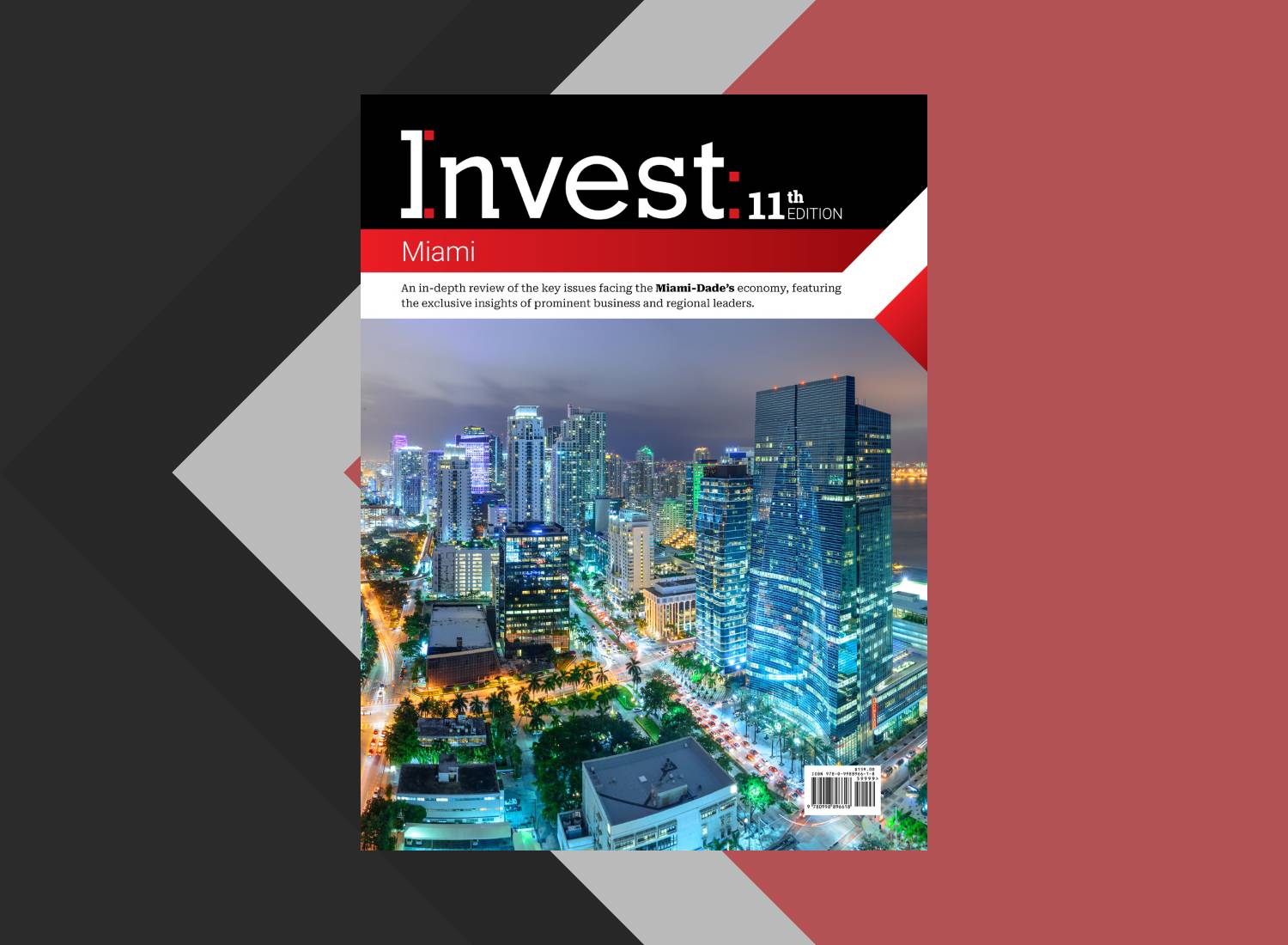
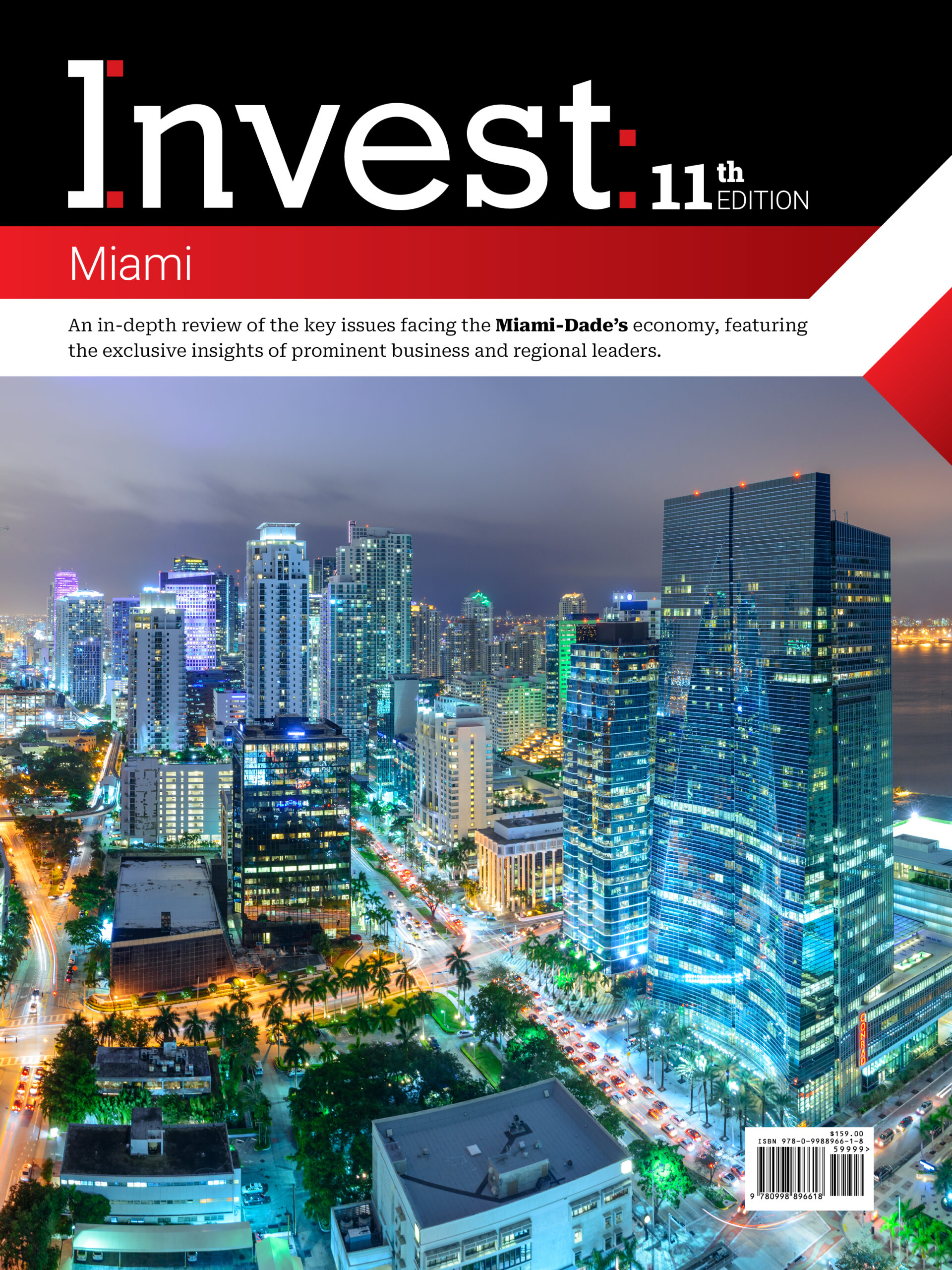
IMIAe11_Cover_Miami November 2025 — While Miami is lauded primarily for its tourism industry, touting miles of beaches, top-tier hotels and restaurants for every palate, it also continues to evolve as one of the Southeast’s most business-driven economies. As the gateway into South America, many industries have planted their flags in Miami, and that strategy has paid off. A strong banking and finance sector, a steady influx of skilled professionals, and growing investment across healthcare, technology, real estate, and aviation drive South Florida. As national and global forces reshape economies, Miami holds steady in its role as a model for regional growth and development.


Join us at caa’s upcoming leadership summits! These premier events bring together hundreds of public and private sector leaders to discuss the challenges and opportunities for businesses and investors. Find the next summit in a city near you!


Currently in production, the eleventh edition of Invest: Miami will bring together insights from more than 200 voices spanning business, government, and education, along with caa’s in-depth analysis of the market’s most attractive industries and emerging economic trends across South Florida.

“As we step into our eleventh year in Miami, our goal to bring real insights to the business and political decision-makers shaping the region’s future hasn’t changed, but it has developed into much more,” said Abby Lindenberg, founder and CEO of caa. “We are becoming a trusted platform at the intersection of business intelligence and strategic collaboration. South Florida is a market where collaboration between research institutions, industry, and government continues to translate ideas into impact.”

According to the U.S. Bureau of Labor Statistics, preliminary data for August 2025 show unemployment rates of 3.7% in the Miami-Fort Lauderdale-West Palm Beach, FL metro area. Meanwhile, according to the Florida Chamber of Commerce, the state anticipated 1.00% to 1.25% annual job growth this year. While a bit on the low side, the projected range fell in line with Florida’s annual job growth pre-pandemic, indicating stabilization after a peak in 2021.

While the region holds steady as the most populous county in Florida with 2.8 million residents, additional data from the Miami-Dade Beacon Council also suggests that the population will decrease to 2.6 million by 2030. That decrease will also impact the workforce, with the number of unemployed residents nearly doubling from 35,629 in 2025 to an estimated 61,198 in 2030.

As Miami looks to balance all aspects of life moving forward, there are also challenges regarding childcare, as 15% of parents in Florida with young children have left the workforce in the past six months, according to the Florida Chamber of Commerce. Additionally, there are also 267,000 disconnected youth, ages 16-24, who are not in school or working. The state is also actively working to tackle education challenges with initiatives such as Future of Work Florida, which is focused on strengthening the talent pipeline, which will enable the workforce to land the high-paying, high-demand jobs of the future.

Invest: Miami will explore these themes and more through exclusive insights from key stakeholders and in‑depth analysis of the challenges and opportunities shaping the Triangle’s economy.

About caa & Invest: Miami

caa is an integrated media platform that produces in-depth business intelligence through its annual print and digital economic reviews, high-impact conferences and events, and top-level interviews via its video platform, Invest:Insights.

Invest: Miami 11th Edition is an in-depth economic review of the key issues facing South Florida, featuring exclusive insights from more than 200 economic leaders, sector insiders, elected officials, and institutional heads. The publication aims to 1) equip local, national, and international investors with comprehensive insights on the region and 2) promote South Florida as a competitive, innovative, and collaborative place to do business.

The report conducts a deep dive into the top economic sectors in the region, including real estate, construction, infrastructure, banking and finance, legal, healthcare, education, and tourism. The publication analyzes the leading challenges facing the market and uncovers emerging opportunities for investors, entrepreneurs, and innovators.

The caa team is currently connecting with stakeholders across the region to gather perspectives and analysis that will define this year’s edition. Invest: Miami is a unique opportunity for the business community to share its story with a national and global audience.

For more information, contact:

Sergio Sandoval

Executive Director

[email protected]

Jerrica DuBois

Senior Editor
[email protected]

Want more? Read the Invest: Miami report.

Subscribe to Our Newsletters

"*" indicates required fields
Address*
Would You Like To Receive Our National Newsletter?*
Interests
Markets
This field is hidden when viewing the form

Hospitals turn to culture and wellbeing as workforce shortages deepen

Writer: Melis Turku Topa

Healthcare_workforce_wellbeingNovember 2025 — Hospitals across the U.S. are beginning to treat the wellbeing of healthcare employees not as a benefit, but as a strategic asset. As labor shortages intensify, culture has become a direct response to risk.


Join us at caa’s upcoming leadership summits! These premier events bring together hundreds of public and private sector leaders to discuss the challenges and opportunities for businesses and investors. Find the next summit in a city near you!


“One of the best ways to win in recruitment is to effectively retain our current employees,” said Nick Barcellona, CFO of WVU Health System, in an interview with Invest:.

Turnover rates show why retention is vital. According to the 2025 NSI Nursing Solutions report, hospital turnover was 18.3% and registered nurse (RN) turnover was 16.4% in 2024. Each 1% increase in RN turnover can cost a hospital about $289,000 a year. That pressure is driving systemwide change.

Workforce shift

The U.S. healthcare workforce is sounding an alarm. Surveys show that over half of healthcare workers plan to change jobs by 2026, while 76% report at least one mental health symptom. In an environment where expertise equals care quality, the retention challenge becomes both financial and operational.

Barcellona highlights the issue across the clinical spectrum:  “We prioritize culture to energize and retain our employees, but the future pipeline is a daunting challenge that will persist across the clinical enterprise — physicians, where the pipeline is acutely strained, nursing, allied health professionals, and administrators. At the same time, employee benefit costs are also rising across all sectors.”

Culture into action

Some health systems are embedding wellbeing into policy and culture. At Empath Health, colleague support is placed at a premium.

“Beyond professional growth, we prioritize colleague well-being. After hurricanes Helene and Milton, we deployed over $500,000 in assistance to help employees with housing, transportation, and emergency needs,” said Jonathan Fleece, president and CEO of Empath Health, in the latest edition of Invest: Tampa Bay.

Support systems like these are becoming models for resilience. They move wellbeing from benefit packages into real-world responses that protect the workforce when it matters most.

Culture as a retention strategy

A growing number of providers treat culture as infrastructure. At Universal Health Services, retention and growth are intentionally linked.

As Marc Miller, president and CEO of Universal Health Services, told Invest:, “Our employee retention and longevity with UHS are a testament to our commitment to meeting them where they are and fostering their professional growth. Promoting from within has been a cornerstone of our success.”

Their approach mirrors national findings. The 2025 Press Ganey Employee Experience report — based on 2.3 million healthcare workers — shows turnover highest among Gen Z at 38%, followed by millennials at 22%. Generational expectations are shifting. Culture, growth-pathways and flexibility are now central to workforce stability.

Investment focus

Employee support research shows workers who feel culturally supported report over 50% higher engagement and are 34% more likely to stay.

Investors and executives are beginning to evaluate culture as part of operational health. The question is shifting away from “do you have wellbeing programs?” to “are wellbeing and culture embedded in daily operations, scheduling, decision-making and leadership models?”

This topic and others were covered on the final panel of Invest: Tampa Bay 6th Edition Leadership Summit, with examples of Tampa Bay’s academic institutions and healthcare systems teaming up to address critical workforce shortages and evolving skill-demands.

Want more? Read Invest: reports.

Subscribe to Our Newsletters

"*" indicates required fields

Address*
Would You Like To Receive Our National Newsletter?*
Interests
Markets
This field is hidden when viewing the form

US trade shifts signal broad economic impacts

IPITe3_Banner_Pittsburgh Zoo & Aquarium

Writer: Mirella Franzese

US_TradeNovember 2025 — When the U.S. introduced major tariffs in April, economists warned it would disrupt global trade norms and weaken growth prospects. But the actual impact on the American economy remains complex, with consequences expected to vary widely across regions.


Join us at caa’s upcoming leadership summits! These premier events bring together hundreds of public and private sector leaders to discuss the challenges and opportunities for businesses and investors. Find the next summit in a city near you!


The U.S. economy is closely tied to trade, and its benefits reach deep into local communities. Expanding the production of goods and services for exports raises American incomes, which make up roughly 20% of the global total, and jobs supported by exports pay up to an estimated 18% more than the national average.

Exports also help lower average production costs through scale, while imports expand consumer choice, keep prices competitive, and increase purchasing power. With 75% of global purchasing power and 95% of consumers located outside U.S. borders, removing trade barriers could boost economic benefits to the nation by an estimated 50%, according to the Peterson Institute.

Regional impact

Trade’s influence is especially visible at the regional level.

In Texas, exports account for nearly 20% of state GDP.  The Lone Star State exported $455 billion in goods in 2024, more than any other state — the Houston-Pasadena-The Woodlands metro contributing $175.5 billion.

In North Carolina, exports sustain thousands of businesses, 87% of which are small and midsize enterprises (SME). As the 15th-largest exporting state, North Carolina shipped $42.8 billion in goods in 2024, including $40.2 billion in manufactured products. 

Florida also depends heavily on global markets. With 16 ports in Florida, the state has access to 96% of the global market, including Brazil – its largest export destination. In 2024, Florida exported $6.1 billion in goods to Brazil, followed by $5.3 billion to Canada, $4.5 billion to Mexico, $3.8 billion to the United Kingdom, and $2.5 billion to the UAE. 

Overall, the state exported a record $72.2 billion of goods, supporting 4.5% of state GDP.  

On the import side, Florida remains the largest consumer market in the country, accounting for 40% of total demand. Imports destined for Florida reached $117.2 billion in 2024, a 4.2% increase compared to the previous year. Key imports included electrical machinery, vehicles, industrial machinery, petroleum products, and medical supplies — inputs that support major sectors such as transportation, construction, manufacturing, and healthcare. 

In Pennsylvania, foreign direct investment is a major source of employment. According to the latest available data from 2022, foreign companies employed 343,600 workers, or 6.4% of the state’s total private sector workforce.

In Tennessee, strong tech-sector growth has driven cross-industry expansion. Manufacturing accounted for $36.4 billion of the state’s $38.9 billion in exported goods in 2024, including significant output in computer and electronic products.

Lingering effects

This year’s tariff policies have disrupted trade flows and discouraged international commerce, as exports have not kept pace with the surge of front-loaded imports. From January through July, U.S. imports increased as companies rushed to place orders early ahead of tariff implementation.

According to the U.S. Bureau of Economic Analysis (BEA), the goods and services trade deficit increased 30.9%, to $154.3 billion, year-to-date, as compared to the same period in 2024. Exports rose 5.5%, to $103.1 billion, and imports grew 10.9%, to $257.5 billion.

The Peterson Institute notes that this reflects a widening gap between national expenditure and national production. 

The overall trade landscape remains volatile. According to the IMF, “temporary factors that supported activity in the first half of 2025—such as front-loading—are fading.”

Imports are expected to decline in the near-term – dropping 22%, or $742 billion – and the average effective tariff rate is likely to reach its highest rate since 1941, according to the Tax Foundation.

For small businesses, tariffs have created barriers to entering foreign markets, said Sandra Marin Ruiz, regional director of the Florida Small Business Development Center (SBDC) at FAU.

“What we have noticed…is a significant gap in awareness,” Ruiz told Invest: “Many businesses do not consider international trade as a viable avenue for growth.”

Trade agreements, product restrictions, and logistics costs often discourage companies from pursuing international expansion.

“For newcomers, navigating these complexities can be expensive and challenging,” added Ruiz.

In response to rising economic pressures, the U.S. has begun adjusting parts of its trade policy.

“I found that conditions reflected in large and persistent annual U.S. goods trade deficits, including the consequences of those deficits, constitute an unusual and extraordinary threat to the national security and economy of the United States that has its source in whole or substantial part outside the United States,” announced President Donald Trump in a White House press release.

Still, even with recent shifts, earlier tariff actions have already set off major economic shifts in motion expected to continue through 2026. 

“The tariff shock is further dimming already lackluster growth prospects,” said the IMF in a report. “We expect a slowdown in the second half of this year, with only a partial recovery in 2026… Even in the United States, growth is weaker and inflation higher than we projected last year — hallmarks of a negative supply shock.”

Want more? Read the Invest: reports.

Subscribe to Our Newsletters

"*" indicates required fields
Address*
Would You Like To Receive Our National Newsletter?*
Interests
Markets
This field is hidden when viewing the form

Adapting care models to rising pressures in Philadelphia

IPHLe6_Banner_Philadelphia_Marriott_Old_City_Hotel

Writer: Eleana Teran

Healthcare_PhiladelphiaNovember 2025 — Greater Philadelphia’s health systems are adapting to rising costs, shifting patient expectations, and workforce pressures. Providers are expanding community-based access, modernizing care sites, and leveraging technology to stay efficient while keeping quality and affordability at the forefront.


Join us at the Invest: Philadelphia 6th Edition Leadership Summit! This premier event brings together hundreds of Southeast Pennsylvania and South Jersey’s regional leaders to discuss the challenges and opportunities for businesses and investors. This year’s theme centers on the regional strengths of the eds and meds. Click here to learn more.


The move toward smaller, more flexible care environments is accelerating nationwide. The ambulatory surgery center market is projected to increase to $155 billion by 2034, up from $105 billion today, as outpatient services continue to expand into diverse settings driven by demand for lower-cost and community-based care.

Meanwhile, hospital finances remain strained. Median hospital operating margins, at 3.3% earlier this year, remain below pre-pandemic levels. Hospital performance is improving modestly. The National Hospital Flash Report shows that adjusted discharges, ED visits, and operating room minutes all increased in April 2025 compared to the same period in 2024, but the gains are driven largely by larger hospitals. Facilities with 300 to 499 beds saw margin growth of more than 30%, while the smallest hospitals, those with fewer than 25 beds, experienced continued financial declines. The Northeast and Mid-Atlantic region recorded a 6% and 7% year-over-year margin decrease, signaling persistent structural pressure in this market.

Affordability remains a major concern for both patients and providers. National out-of-pocket health spending averaged $1,514 per person in 2023, in a market where even insured consumers are bearing increasing financial burdens. Employers expect healthcare costs to rise by 6.7% in 2025, driven by wage inflation and higher care volumes. Delivering care that is closer, faster, and less expensive is becoming a competitive necessity.

Join us at the Philadelphia 6th Edition Leadership Summit! This premier event brings together hundreds of Southeast Pennsylvania and South Jersey’s regional leaders to discuss the challenges and opportunities for businesses and investors. This year’s theme centers on the regional strengths of the eds and meds. Click here to learn more.

Health-system leaders are turning to digital tools and artificial intelligence to bridge the gap. Grant Thornton’s State of Work in America survey found that 93% of respondents in healthcare organizations reported that technology has a positive or slightly positive impact on their day-to-day roles.

Healthcare providers are stepping up efforts to improve efficiency and patient access amid pressures. According to Philips’ 2025 Future Health Index survey, 84% of healthcare professionals believe AI can reduce administrative burden by automating repetitive tasks, 78% see it expanding capacity to serve more patients, and 84% believe it can improve access to clinical research.

Invest: spoke with regional leaders in healthcare delivery to hear insights on how institutions are responding to costs and workforce challenges while innovating care models and operational efficiency.

Kert_Anzilotti_Quote_Stack_PhiladelphiaKert Anzilotti, chief physician executive of ChristianaCare and president of ChristianaCare Medical Group

We are thoughtful about creating a healthcare ecosystem that is sustainable. The two most important things are creating access points closer to where patients live and work and making healthcare affordable. We recently opened a neighborhood hospital, a small-footprint inpatient facility with ancillaries and diagnostics, with only 10 inpatient and 10 emergency department beds. Patients don’t have to travel to a large hospital to get the care they need. This is a sustainable model that becomes part of the community, and we think this is the future of creating health care access points. 

We have a large initiative around ambulatory surgery centers. Our operating rooms at our main hospital are in high demand, and a number of those surgeries can be performed at a lower cost, and in a more sustainable way, at a smaller location convenient to where people live and work. We have significantly increased our urgent care footprint, up to 14 locations, spanning across Delaware, Maryland and Pennsylvania. All these access points are less congested, easier to access, and provide care at a lower cost and in a more sustainable way.

Shelly_Buck_Quote_Stack_PhiladelphiaShelly Buck, president of Riddle Hospital

Over the past year, there have been significant changes in the region’s healthcare landscape. A local healthcare system closed its doors, and about two years ago it had already begun to decrease access. In response, we started preparing for a possible closure, even as we moved forward with a master campus modernization plan that aimed to transition care into our newer facilities. As part of that plan, we built a new pavilion with 78 private acuity-adaptable beds, 10 new operating rooms, a new labor and delivery suite, and two new C-section rooms.

The future of healthcare is changing. Sites of care will continue to evolve and move outside of acute care hospitals. As care delivery and processes improve, I believe it is important to keep finding ways to help people heal in spaces outside of the hospital. At the same time, we need to advance care for higher-acuity and sicker patients, particularly in community hospitals.

As I look across the healthcare sector and the many opportunities we have to do things differently, I get really excited. People want to heal at home, and most of them don’t want to come to the hospital. There is real value there that has yet to be fully tapped into.

Marc_Miller_Quote_Stack_PhiladelphiaMarc Miller, president & CEO of Universal Health Services

For us, it’s about meeting patients where they are or where they want to be. We are actively pursuing various expansion opportunities, particularly in outpatient settings.

We are also expanding our inpatient care offerings due to continued growth and demand. UHS recently opened a new hospital (West Henderson Hospital) in southern Nevada, its largest U.S. market, which has had a strong start. Another hospital (Cedar Hill Regional Medical Center GW Health), the first new one in Washington, D.C. in 25 years, is also performing well and meeting a significant community need. UHS plans to open its latest acute care hospital (Alan B. Miller Medical Center) in Palm Beach Gardens, Florida, in April 2026. This expansion reflects a commitment to meeting inpatient consumer needs and demand in various locations. 

On the behavioral health side, UHS is not only adding new beds in some of its 200+ U.S. facilities and over 100 U.K. facilities but also expanding outpatient programs. These programs include various types of group therapies, intensive outpatient programs, and substance use disorder treatments. There is a continuous need for increased services, and UHS is committed to enhancing its long-standing presence and offerings in this area.

Arsen_Ustayev_Quote_Stack_PhiladelphiaArsen Ustayev, CEO of CareChoice

One of the biggest challenges is funding. The rates we are reimbursed by insurance companies have barely changed over the past 10 years, while the cost of living keeps rising. We want to pay caregivers more, offer strong health insurance, retirement plans, dental coverage, paid time off, and sick time. All of that creates a significant overhead burden, and shrinking margins make it harder to run a high-quality business.

Pennsylvania faces an additional issue. Reimbursement rates here are roughly 20–30% lower than in neighboring states like New Jersey, New York, and Ohio. That puts companies like ours at a disadvantage and makes it more challenging to sustain a strong caregiver workforce. Through state associations, we have been pushing for rate increases so we can continue to invest in our teams and maintain quality care.

We are leaning into technology to respond to these pressures. We have moved to electronic onboarding so caregivers no longer have to come into the office to complete stacks of paperwork. Training and orientations are increasingly remote and digital, which speeds things up. We are also implementing AI for after-hours call answering so our staff can go home at the end of the day and spend time with their families, while clients still receive support around the clock. These tools help us stay resilient and efficient despite the economic and workforce challenges.

Want more? Read the latest Invest: Philadelphia report.

Subscribe to Our Newsletters

"*" indicates required fields

Address*
Would You Like To Receive Our National Newsletter?*
Interests
Markets
This field is hidden when viewing the form

Spotlight On: Jennifer Wehring, Executive Director, Morristown Partnership

Jennifer_Wehring_Spotlight_OnNovember 2025 — The Morristown Partnership’s proactive approach aims to adapt the city’s infrastructure to meet the changing needs of its workforce, said Executive Director Jennifer Wehring. In an interview with Invest:, Wehring also touched on the top goals for the Partnership in the coming years. “It’s about building on Morristown’s strengths and pursuing new opportunities,” she said.


Join us at caa’s upcoming leadership summits! These premier events bring together hundreds of public and private sector leaders to discuss the challenges and opportunities for businesses and investors. Find the next summit in a city near you!


What changes over the past year have most impacted the Morristown Partnership?

Over the past year, the greatest change impacting the Morristown Partnership SID has been the increase in growth throughout downtown, which has created a clear rise in demand for services. As new residents, employees, and visitors continue to choose Morristown, the SID has updated its membership to reflect new development and is delivering visible improvements such as sidewalk cleaning, light pole repainting, and beautification projects. We are also developing new programs to meet this growing demand, from enhanced services to event programming, while supporting quality of life through initiatives in partnership with the Town and the Morristown Bureau of Police.

At the same time, hybrid work schedules and corporate relocations have reshaped weekday traffic patterns and changed how people move around downtown. Because more employees and visitors are walking, biking, and using transit, the Partnership is investing in the downtown experience to ensure that streets, sidewalks, and public spaces feel safe, welcoming, and accessible. Infrastructure changes, including traffic pattern adjustments near NJDOT 287, have supported these habits, and our focus is on matching that evolution with services that make navigating and enjoying Morristown better for everyone.

Today, Morristown is home to approximately 20,000 residents, 21,000 employees, and nearly 3 million annual visitors, creating a combined daily population of nearly 45,000. This continued growth reinforces the vitality of the district and underscores the Partnership’s role in ensuring that Morristown remains a thriving destination for residents, businesses, and visitors alike.

How are the private and public sectors working together to achieve common goals?

Our community, businesses, local government, and administration have been at the forefront of making sure projects move forward in Morristown. The local planning and zoning process ensures that investments meet community needs. An affordable housing trust fund applies to all projects, requiring developers to contribute to new affordable housing in town. Through redevelopment projects, 1% is allocated to the arts, funding public art installations downtown.

When appropriate, PILOT programs are considered to create additional resources for Morristown. Developers and the town also partner on infrastructure improvements like sidewalks and utilities that benefit residents, employees, and visitors. Corporate partners give back by volunteering and supporting the nonprofit community, which strengthens the quality of life. When these incentives are used appropriately, they help bring new resources into Morristown that are reinvested locally in the arts, housing, and infrastructure. These efforts also align with regional priorities, strengthening Morristown’s role as a hub that supports the county and state.

What is the main goal of your organization?

Our role in Morristown is to create and sustain strong connections among local stakeholders, including property owners, businesses, residents, and community organizations. We bring people together through events, initiatives, and partnerships that directly strengthen downtown. The strength of the Partnership comes from these relationships, whether it is working with the town on public improvements, supporting local nonprofits, or collaborating with property managers and business owners to address shared challenges.

While our focus is Morristown, we recognize that our downtown’s success is closely tied to the region. We maintain strong ties with Morris County’s economic development agency, the chamber, and statewide networks such as Downtown New Jersey because activity in nearby communities has a direct impact on our own. Ultimately, our goal is to connect people and organizations in Morristown while leveraging regional partnerships to ensure our downtown continues to grow and thrive.

What would you consider to be the top priorities or goals for Morristown over the next two to three years?

We focus on preserving our historic community while embracing new investment. George Washington spent two winters here, and that history remains deeply valued even as significant corporate investment has made Morristown increasingly attractive to new residents from Manhattan, the boroughs, and beyond.

Our top goals for the next two to three years include targeted recruitment for vacancies, closer collaboration with property owners and brokers, and enhancing the downtown experience through activation, beautification and quality-of-life improvements. Retail and office activity are closely connected: a lively retail and entertainment scene supports the daytime workforce, and a strong office presence sustains local businesses in return. Morristown offers office solutions for every user, from corporate to shared and creative spaces, and that strength creates opportunity for continued growth.

The Partnership’s role as a connector will remain essential to ensuring retail, office, and community priorities move forward together. Downtown Morristown delivers workforce access, transit, culture, and amenities within steps of the historic Green, positioning us strongly for the future.

Want more? Read the Invest: New Jersey report.

Subscribe to Our Newsletters

"*" indicates required fields

Address*
Would You Like To Receive Our National Newsletter?*
Interests
Markets
This field is hidden when viewing the form

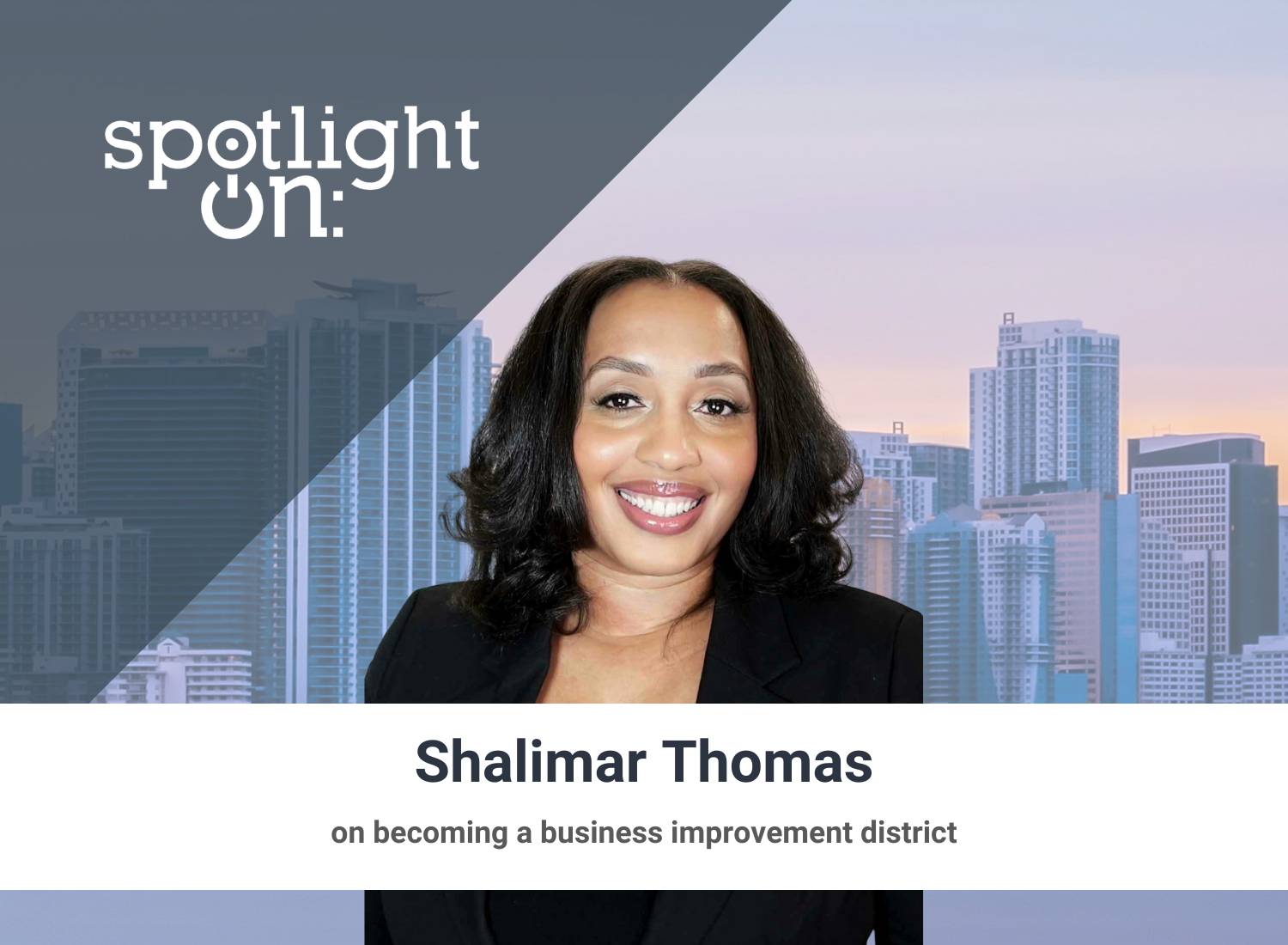
Spotlight On: Shalimar Thomas, Executive Director, The North Broad Renaissance

Shalimar_Thomas_Spotlight_OnNovember 2025 — In an interview with Invest:, Shalimar Thomas, executive director of nonprofit The North Broad Renaissance, said that securing a Business Improvement District (BID) designation has been a transformative development for the organization. Thomas also discussed the impact of economic shifts on its programs and priorities. “North Broad is in a unique position because our coverage area spans from very affluent neighborhoods to areas that are heavily impacted by poverty. What we’re seeing right now feels very similar to the early days of the pandemic: a sense of uncertainty,” she said.


Join us at the Invest: Philadelphia 6th Edition Leadership Summit! This premier event brings together hundreds of Southeast Pennsylvania and South Jersey’s regional leaders to discuss the challenges and opportunities for businesses and investors. This year’s theme centers on the regional strengths of the eds and meds. Click here to learn more.


What changes over the past year have most impacted your work, and how, if at all, have those changes influenced your day-to-day decisions?

The most significant change was getting the Business Improvement District (BID) approved and the ordinance passed. Before becoming a BID, we operated as a Special Service District (SSD). As an SSD, we still followed the same model: putting the community first, staying engaged, seeking feedback, and implementing what residents asked of us. However, the key difference was how we funded our work. As an SSD, all expenses were on us, covered through fundraising, grants, and sponsorships. About three years in, we began exploring the BID model, where property owners within a defined boundary pay an assessment based on property value to help fund our work.

We finally got it passed in November 2022. Now, with those assessments coming in, we have a more solid financial foundation to support our programs. We intentionally started the BID small to avoid overwhelming stakeholders who may not yet fully understand what a BID is. It currently sits in the center of our service area, with plans to expand.

This base funding has taken a load off me as executive director. I can now shift from constantly focusing on fundraising to developing our strategy and building out our five-year plan. That’s been the biggest and most impactful change.

How have the current economic conditions shaped the way you prioritize programs and allocate resources along the corridor?

North Broad is in a unique position because our coverage area spans from very affluent neighborhoods to areas that are heavily impacted by poverty. What we’re seeing right now feels very similar to the early days of the pandemic: a sense of uncertainty.

Organizations like Invest Philly have the privilege of daily conversations with finance experts who understand Wall Street. But in our community, people are in survival mode, trying to understand how these economic shifts impact them directly.

For example, we buy t-shirts locally for our summer events. When we approached our vendor this year, he was affected by new tariffs, so we negotiated pre-tariff pricing. We know that next year might be different, but we’re committed to supporting him. So now we are asking ourselves: How can we adjust our budget to continue supporting local vendors who need to raise prices because of these real economic pressures?

For nonprofits like ours, it all comes down to funding and how we bring in more of it. Our opportunities lie in sponsorships and grants, particularly state-level, since many federal grants have been cut. Fortunately, we weren’t heavily dependent on federal grants, so the blow wasn’t as severe.

Right now, we’re in problem-solving mode — figuring out how to stay afloat while remaining impactful and compliant. That might mean adjusting how we run our programs next year. For example, our “Summer Abroad” series aims to increase foot traffic and engage businesses, but we may need to rethink how we deliver that impact more cost-effectively.

At the core, our focus is staying mindful of real issues like rising costs due to tariffs or development delays due to funding shortages, rather than perceived ones. We’re also seeing some wins, like new businesses opening. So we’re constantly assessing what’s truly happening, and where we should focus our energy.

How is the BID adjusting its business retention and attraction strategies, and where have you seen the most traction in stabilizing or growing commercial activity?

This really connects to our founding purpose. North Broad has historically been a pass-through corridor, not a destination. We were working toward changing that narrative, trying to make it a place where people intentionally come to live, work, or visit.

Business attraction and retention are fairly new focus areas for us. And I’ll be honest, there’s a learning curve. One example: We were working with Temple University to bring in Iron Hill Brewery, which aligned with our goals to increase foot traffic and vibrancy. Then suddenly, Iron Hill announced it was closing all its locations. I was shocked. How did no one see this coming? How were we having conversations about opening a location while the business was shutting down? What I’ve learned is that businesses often don’t feel comfortable talking about their financial struggles. There’s a stigma or fear that prevents transparency, and we’re trying to break that barrier.

Our biggest challenge is getting in front of businesses before they choose a location. Too often, we see a business move in, and we know the location isn’t ideal. But someone convinced them to take it, and soon after, they’re gone. We want to shift that.

We need businesses to see us as a resource, not just to keep the corridor clean and safe, but to help them succeed. That might mean connecting them to organizations that can offset build-out costs or offer marketing support. But to do that, we need honest conversations early on.

Many just don’t know what a BID is or what we can offer. So we’re working to raise awareness. We want to create a culture where businesses trust us enough to say, “Here’s what we’re struggling with,” so we can support them.

How are residents and neighborhood voices shaping your initiatives, and where have their insights helped shift or strengthen your strategy?

Our work is entirely community-driven. Before launching anything, we engage with the community. Even when updating our five-year plan, we held committee meetings and invited residents to participate based on their interests.

We said, “Here’s our goal — creating more green space, for example — what does this look like to you?” The input we received shaped our strategic direction. When you see goals like safety, beautification, or marketing, it’s all grounded in resident feedback.

That said, our biggest challenge is engagement. It’s similar to voter turnout: Despite all the outreach, sometimes only a small percentage show up, and yet they influence the entire direction. We’re constantly thinking about how to increase participation.

We go door to door, we follow up, we leave materials — whatever it takes. One of my favorite stories is Tropical Smoothie. We couldn’t get past the staff to the owners, but we didn’t give up. Once we finally made that connection, it led to one of our strongest partnerships.

Sometimes, people just say they’re not interested, and that’s OK, too. At least they know we exist, and if they change their minds, we’re here. We also engage through newsletters, social media, and in-person outreach. Our goal is to make sure that if someone needs us, they know how to reach us.

What feels most urgent to get right now in order to realize the long-term vision for the corridor?

When people ask about my five-year goals, my answer is simple: to complete this five-year plan. Our current plan runs through 2029. In 2028, we’ll revisit what we accomplished and what we didn’t, then go back out to the community to start the process again.

From my own perspective, I want to see North Broad benefit not just from foot traffic, but from people actually going into the businesses. I’ve seen crowds out on the street, but watched them walk right past stores. Why is that happening? How do we change that?

Ultimately, I want to see a corridor where anchor institutions, local businesses, and nonprofits — everyone — grow together, recognizing each other’s contributions and working in partnership.

Want more? Read the Invest: Philadelphia report.

Subscribe to Our Newsletters

"*" indicates required fields

Address*
Would You Like To Receive Our National Newsletter?*
Interests
Markets
This field is hidden when viewing the form

Invest: Houston Summit highlights innovation shaping the city’s future

Writer: Andrea Teran

Invest Houston summit cover

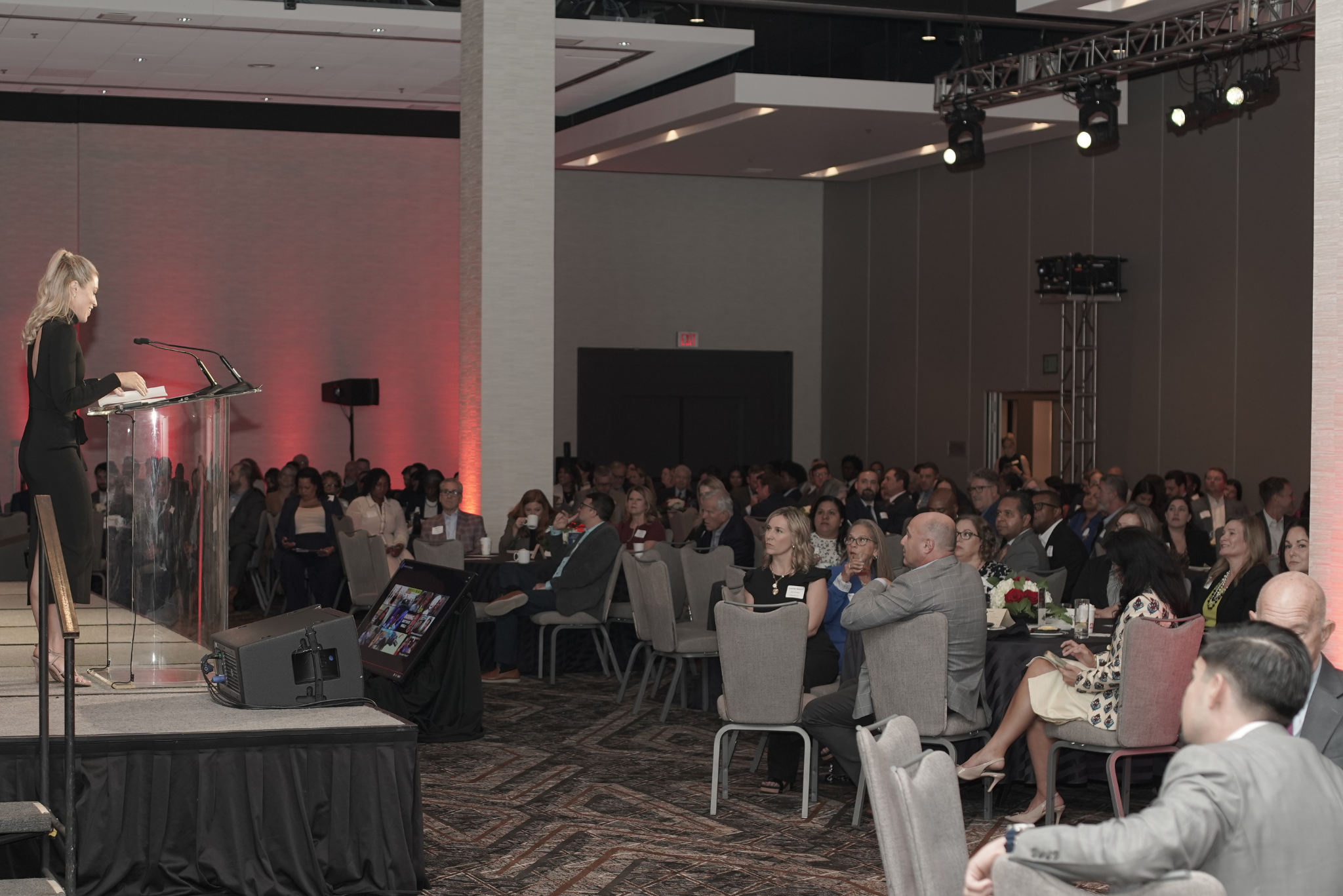
November 2025 — Houston leaders gathered for a morning of direct conversation about the region’s future at the Invest: Houston Leadership Summit on Thursday, Nov. 20. The event was hosted by caa at the JW Marriott Houston by The Galleria.

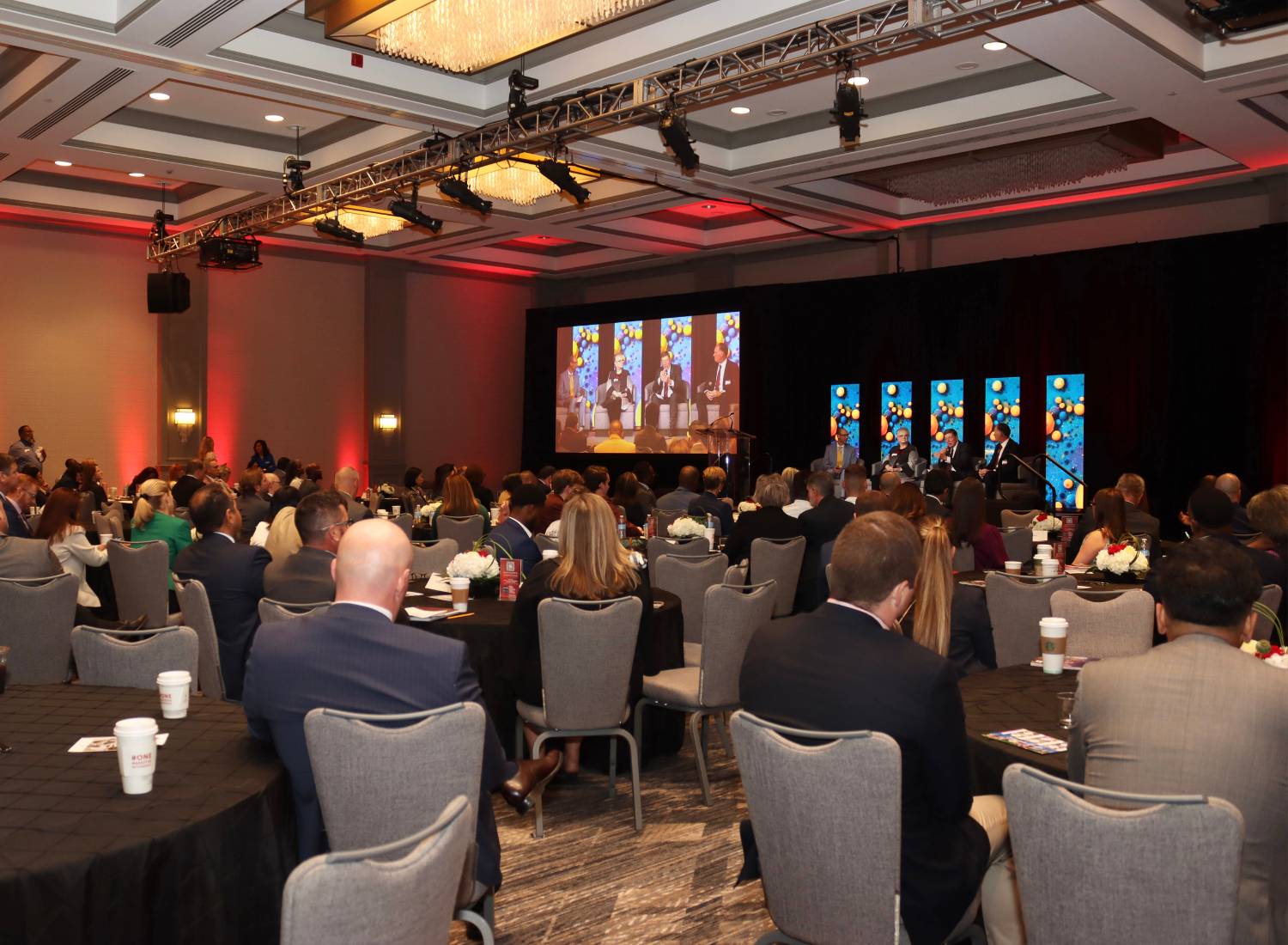
More than 300 executives, educators, and public officials attended, gathering for conversations focused on strengthening Houston’s talent pipeline, expanding its innovation capacity, and advancing sustainable development across the region’s major industries.

Opening the day

caa Founder and CEO Abby Lindenberg opened the program by reflecting on the company’s 10-year anniversary and its growth into nearly 20 markets.

“What makes Houston special to me is how clearly it reflects the possibilities of the American Dream,” she said. “Few regions combine innovation, economic diversity, and a deeply supportive business ecosystem the way Greater Houston does.”

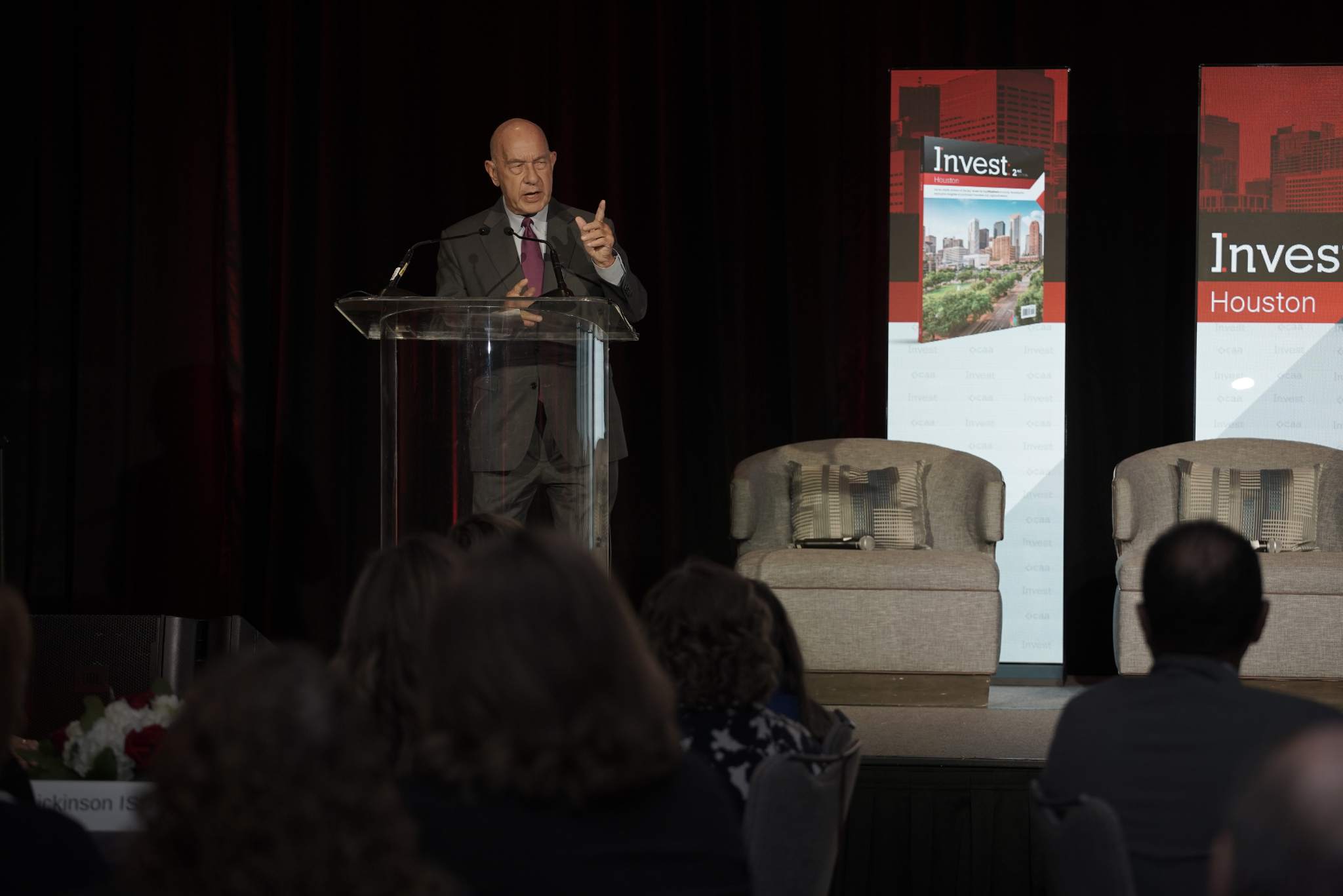
Houston Mayor John Whitmire followed with a keynote emphasizing Houston’s momentum and the importance of civic leadership.

“I could be at a hundred locations this morning. But I wanted to be here… because I understood that there was a gathering of leaders, and I wanted to participate. Because I want you to realize Houston is open for business,” said Whitmore.

He also emphsized the attendees themselves reflect the region’s strength.

“You’re showing your dedication to our region, our state, our country by being here,” he added.

Invest Houston summit mayor keynote

Education as Houston’s foundation

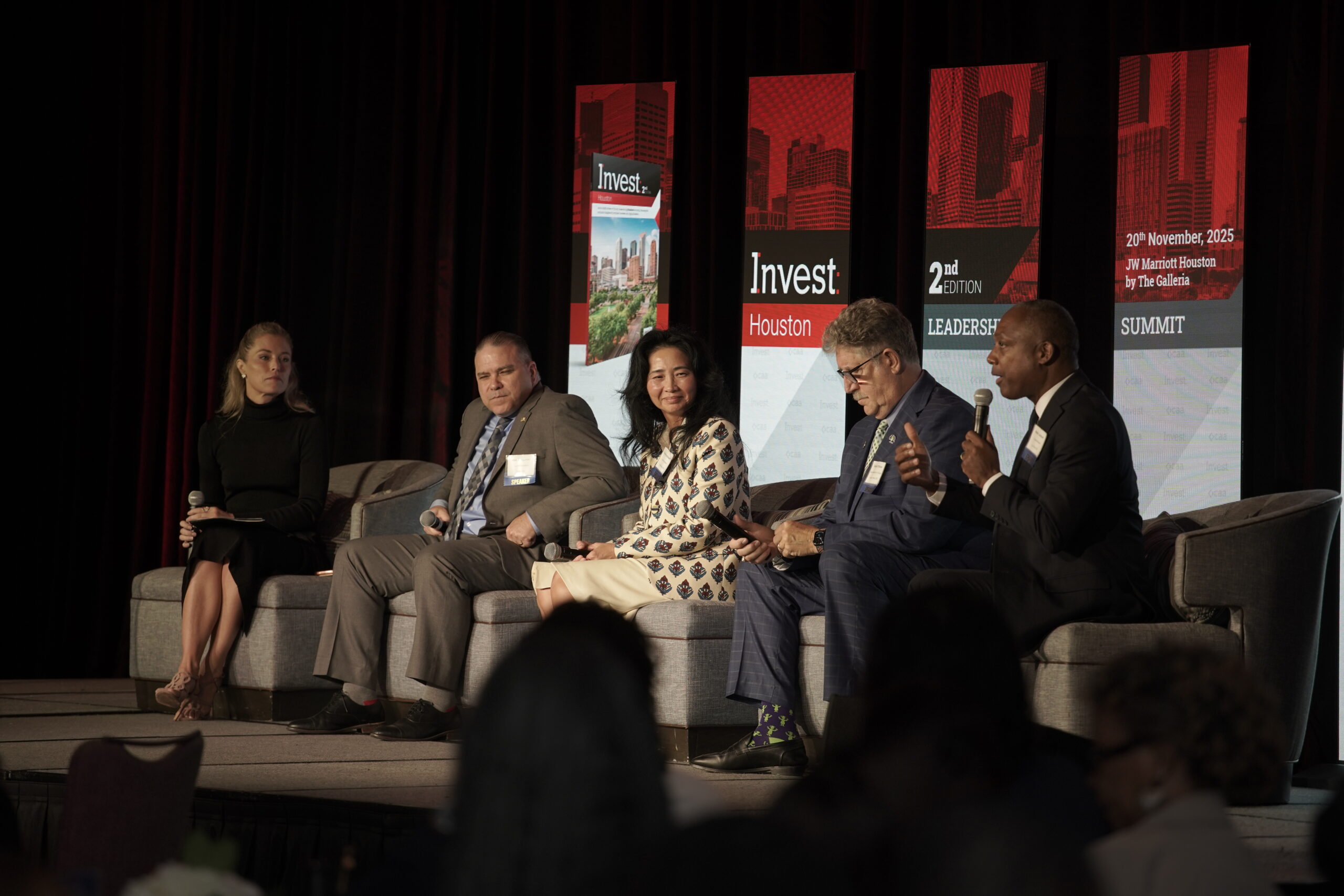
The morning’s first panel, “Inspiring the Next Generation: How Houston’s K–12 system is cultivating future innovators,” focused on how schools are preparing students for a fast-changing economy shaped by STEM, AI, and industry partnerships. 

Rebecca Brown of Dickinson ISD underscored the district’s commitment to early, intentional planning and career exposure. 

“Our goal in Dickinson… is to ensure that our students have a plan,” she said. “And it starts early… we start instilling in our students early as a Gator that ‘what’s next? What’s your plan after high school?’”

Goose Creek CISD Superintendent Randal O’Brien emphasized listening to students and aligning pathways to real workforce needs.

“It’s making the connections for the child about who they will become as an adult one day and what their role will be in this life,” O’Brien added.

La Porte ISD Superintendent Walter Jackson highlighted the importance of strong educators in driving innovation.

“I still strongly believe in making certain that we select and hire and nurture teachers, because teachers… are going to be the people that inspire our children to aspire to these roles,” said Jackson.

He also pointed to the district’s industry partnerships with the surrounding petrochemical corridor. 

Katy ISD Superintendent Ken Gregorski spoke about equalizing access to technology across a large and diverse district.

“We’re going to equalize this… and standardize this for every 3rd through 12th grader in Katy ISD,” said Gregorski. “We’re going to put them on a Chromebook… and equalize that learning.”

Together, the panelists emphasized that Houston’s future workforce is being shaped long before graduation — through early exposure, strong teacher development, real industry alignment, and technology access designed to ensure every student can participate in the region’s innovation economy.

Advancing science innovation

Dr. Vineet Gupta, vice president for innovation and technology development and transfer at UTMB Health, delivered a special address on the region’s accelerating biomedical ecosystem. He emphasized UTMB’s commitment to advancing research across brain health, kidney science, and AI-driven patient care.

“At UTMB, we are really trying to drive discoveries into innovation and innovative products that can be closer to patients and help patient lives,” Dr. Gupta said.

He described the opportunity facing the region, stating, “I believe this is a defining moment for biotech innovation in this country. It’s a defining moment for Houston, where we can lead.”

Dr. Gupta also pointed to Houston’s emerging global leadership in neuroscience. 

“We also know that Houston will be the capital for brain economy… We really think this is the moment for Houston, and at UTMB, we are prepared and committed and ready to lead alongside all of you,” he added.

Technology and the future of sustainability

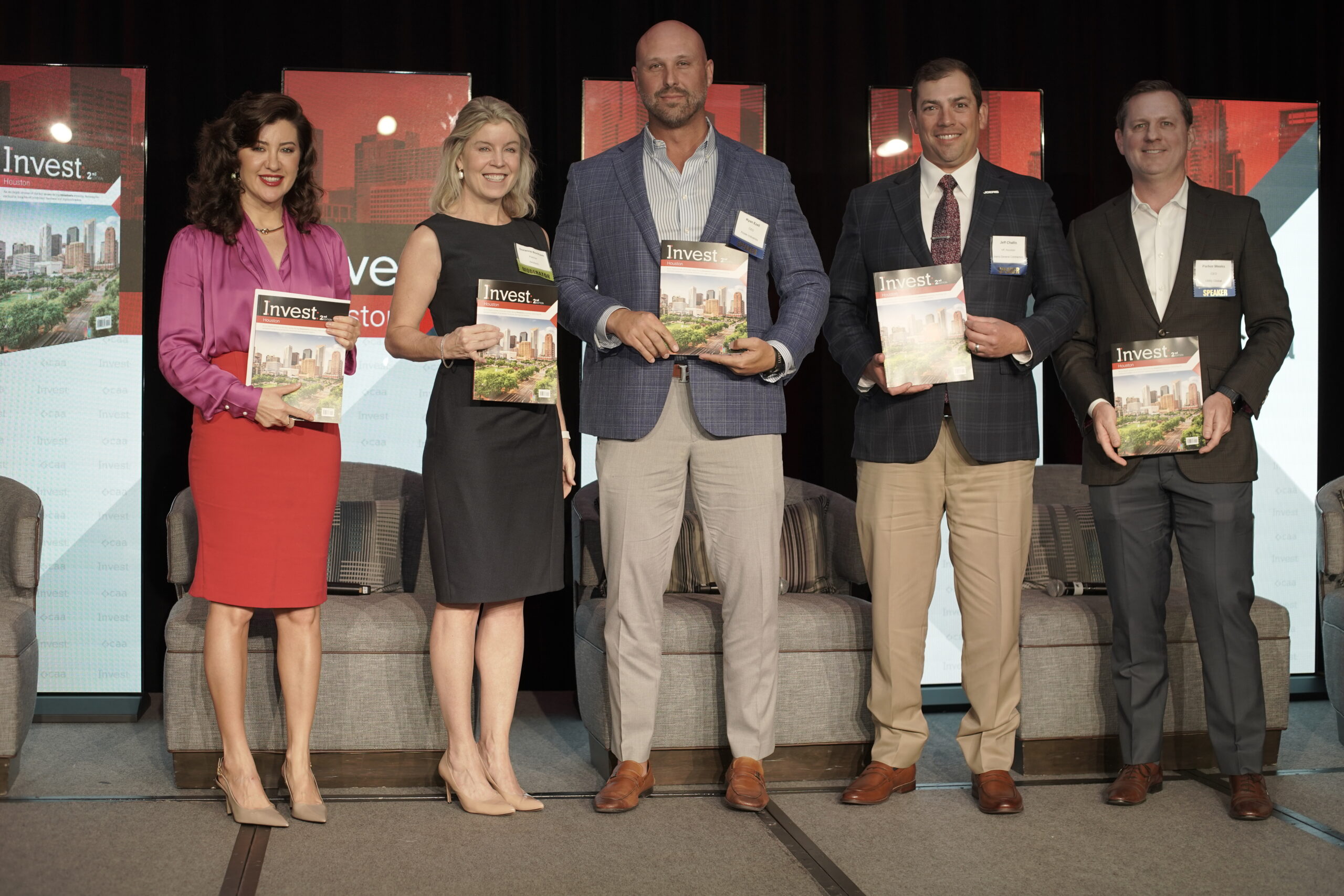
The second panel, “Laying the Groundwork: How technology is reshaping sustainability to fuel Houston’s next chapter,” examined how industry leaders are adopting advanced tools to support both economic growth and environmental responsibility. Moderator Suzanna Bonham of Seyfarth Shaw opened by noting the region’s dual challenge.

“Balancing innovation and sustainability is challenging for regions across the country, and Houston leaders keep that top of mind as they look at future projects and planning.”

Panelist Ryan Ezell of Flotek Industries demonstrated how rapidly new technologies are transforming industrial operations. He highlighted the power of near-instant analytics.

“We can do near-infrared measurements every 1/8 of a second and cut transmix time from 12 seconds to four — and for each second, this saves over $50,000 in operational costs,” Ezell said. 

Jeff Challis of Joeris General Contractors spoke to the balance between development pressure and community identity.

“Gone are the days where you build a strip center that’s just painted boxes and real boring,” he said. “People want experience… and it takes technology and cost analytics to bring confidence to developers from day one.”

Parker Meeks of Utility Global highlighted the complexity of decarbonizing long-established assets and the need for cross-industry cooperation. Meeks also pointed to Port Houston’s leadership in convening energy, logistics, and technology players.

“Port Houston has continuously engaged in every way they can to promote pathways for Houston to be the epicenter of sustainability in a way that actually makes sense,” he added.

Closing the event

The summit concluded with closing remarks from Alina Manac, senior executive director at caa. 

“This year has shown me just how committed Houston’s leaders are to building a future that is innovative, inclusive, and resilient — and it is that commitment that makes this region impossible to overlook,” Manac concluded.

For more information, visit: https://www.capitalanalyticsassociates.com/

To watch the panel discussions from our Invest: Houston Leadership Summit, stay tuned to our Youtube Channel.

***

About caa & Invest: Houston

caa is an integrated media platform that produces in-depth business intelligence through its annual print and digital economic reviews, high-impact conferences and events and top-level interviews via its video platform, Invest:Insights.

The Invest: Houston report provides an in-depth look at what makes the region’s economy tick and the challenges that remain from the perspective of over 200 local leaders and elected officials. 

Invest: Houston looks at greater Houston’s key industries, including healthcare and life sciences, financial services, real estate, technology, tourism and infrastructure, that drive the local economy. The area has enjoyed continuous growth and economic expansion in recent years, fueled by business friendly policies and a number of business relocations and expansions during and after the pandemic. Based on this solid foundation, the region is poised to continue its robust growth in the years to come. 

Want more? Read the Invest: Houston report.

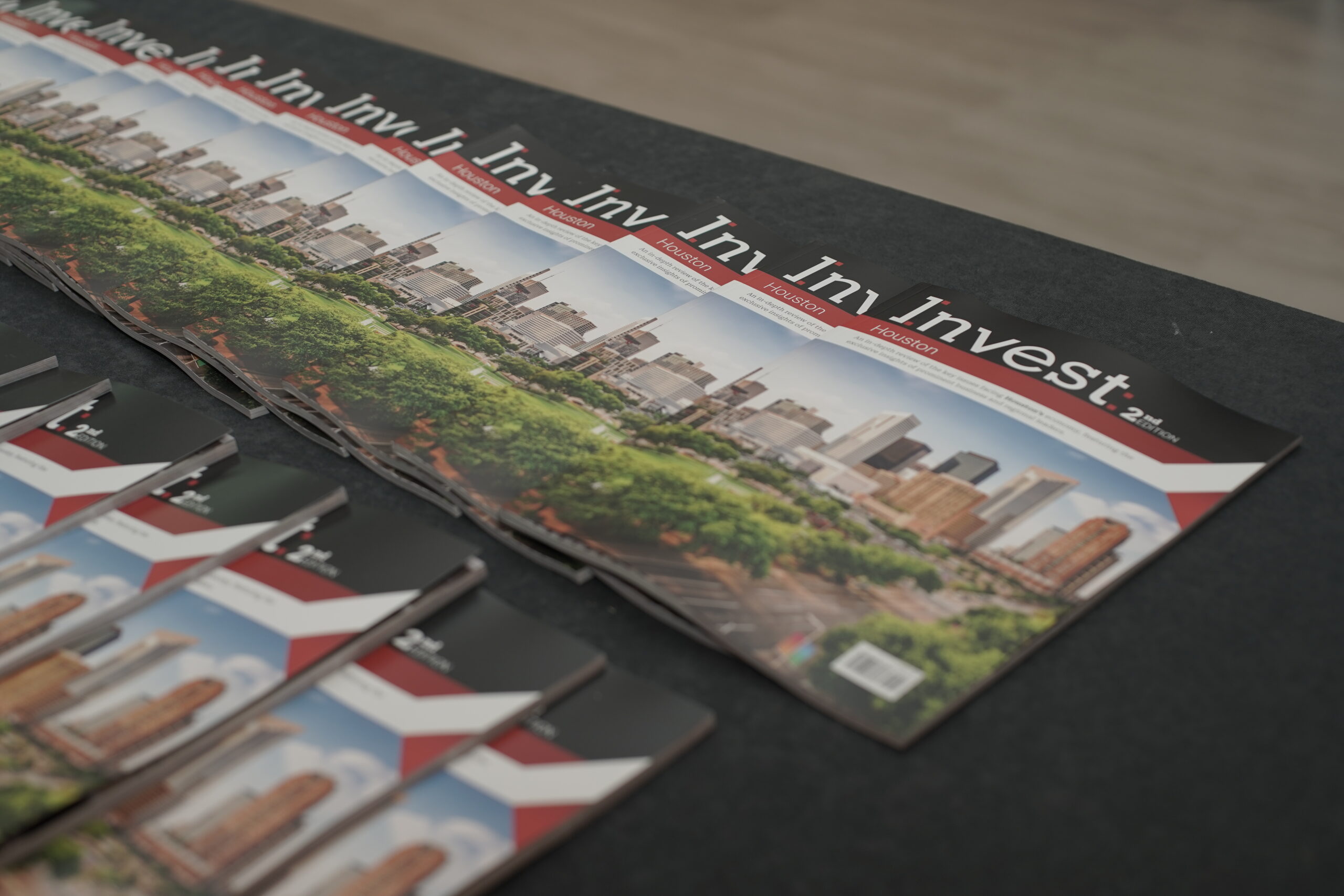
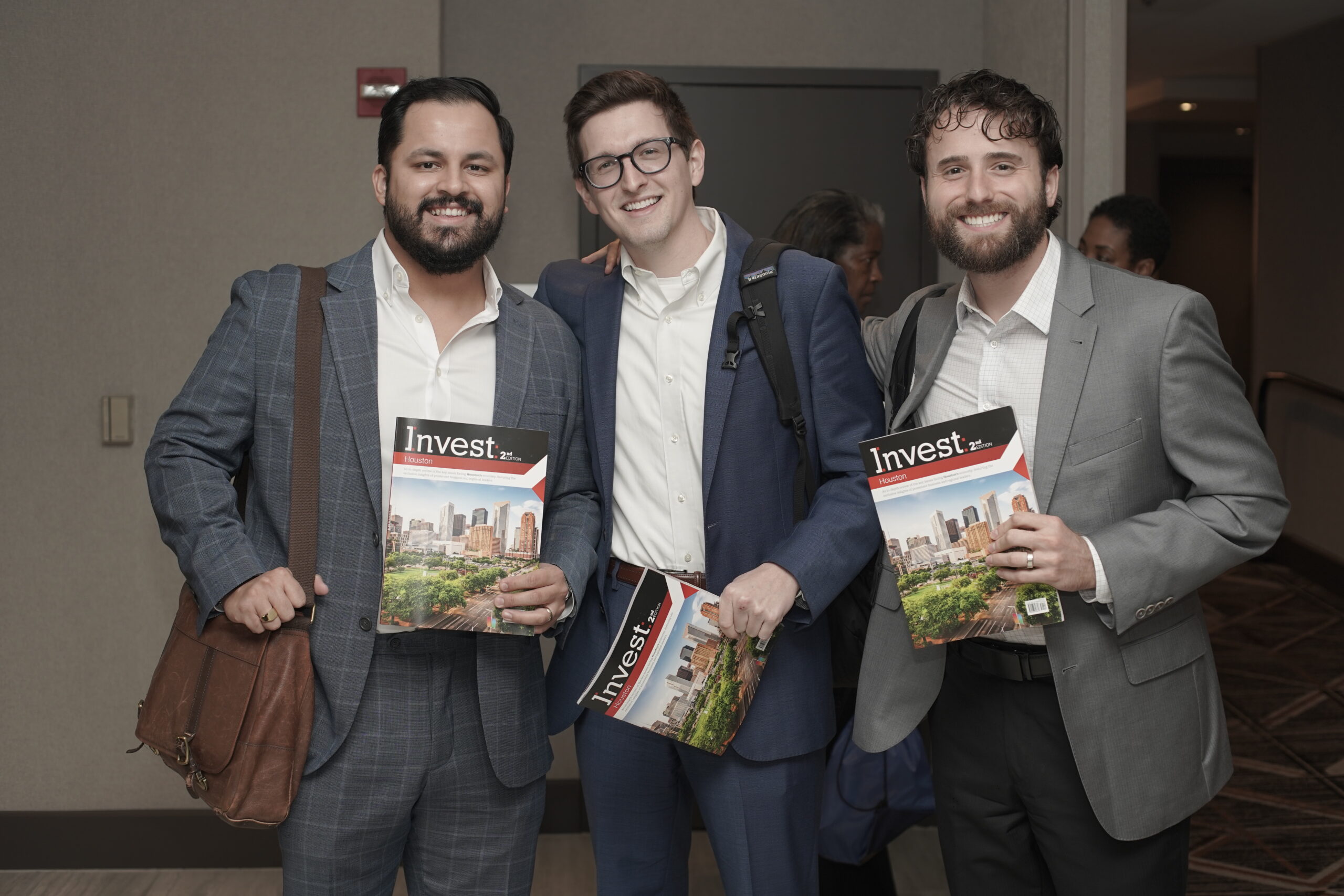
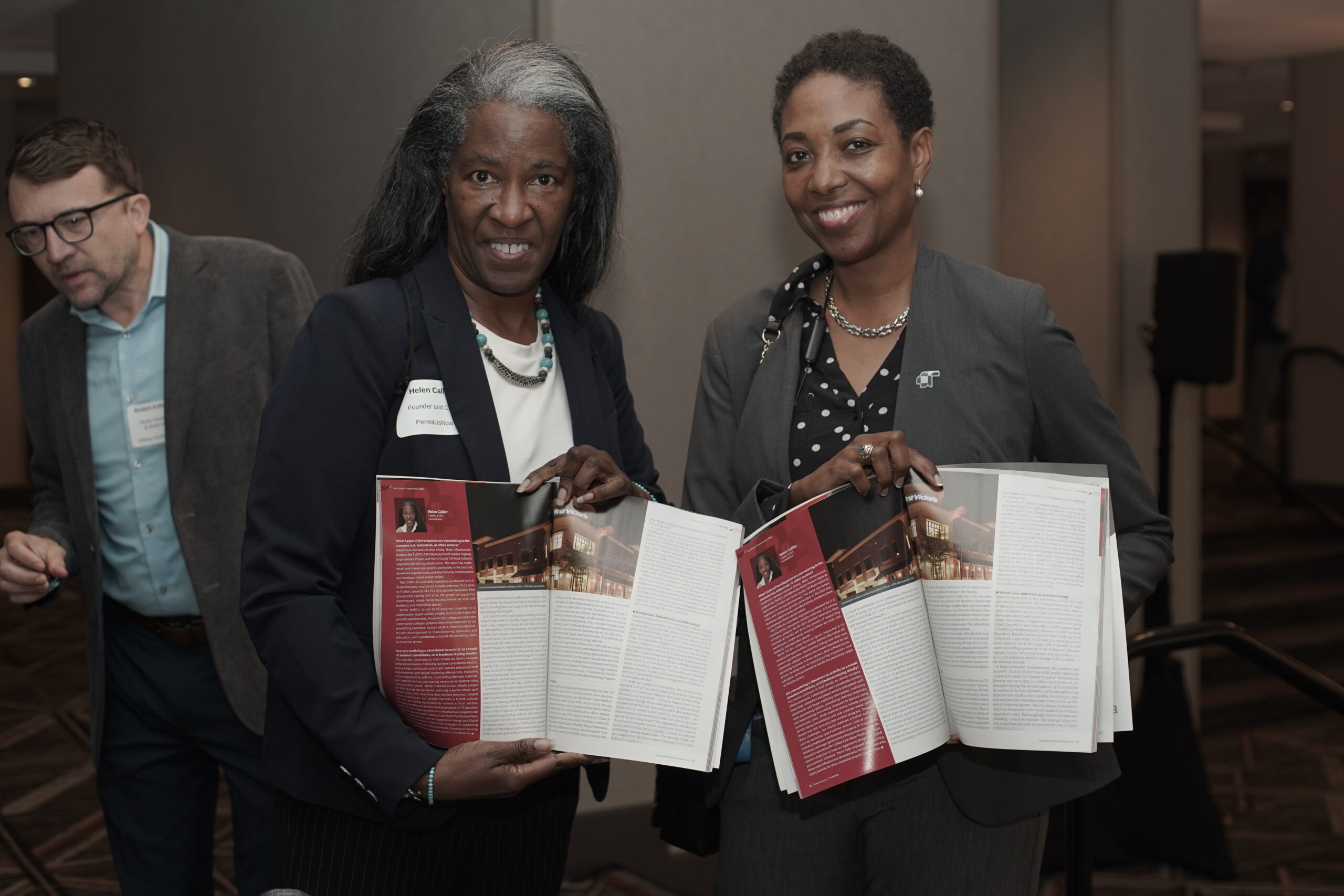
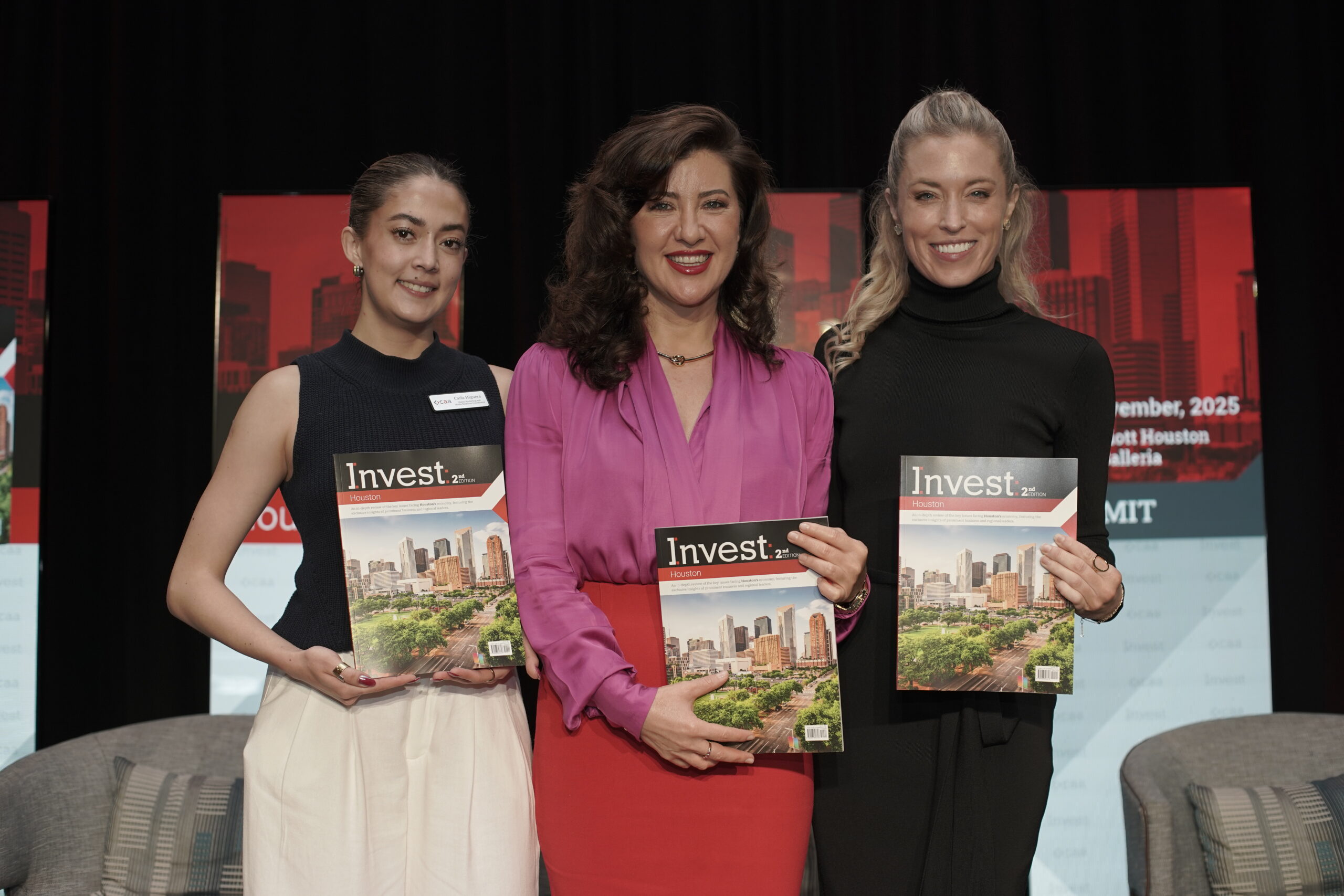
Invest Houston Summit Mayor Invest Houston summit Panel Invest Houston summit Panel Photo Invest Houston summit Books Invest Houston summit networking Invest Houston summit networking Invest Houston summit team

For more information, contact: 

Jerrica DuBois
Senior Editor
305-523-9708 Ext 261

How Miami’s music festivals are driving tourism and economic growth

Writer: Pablo Marquez

MiamiNovember 2025 — Miami’s festival calendar has long been a global entertainment draw. And now, it’s an increasingly important contributor to the local economy. As the region’s tourism sector grows, large-scale events such as Ultra Music Festival prove to be valuable economic drivers.


Join us at caa’s upcoming leadership summits! These premier events bring together hundreds of public and private sector leaders to discuss the challenges and opportunities for businesses and investors. Find the next summit in a city near you!


Miami‑Dade County set records in 2024 with more than 28 million visitors who spent roughly $22 billion, according to the county. Tourism activity generated an estimated $31 billion in total economic impact, creating a strong baseline from which major events can amplify spending.

Few events do so as consistently as Ultra. Over its 24-year run, the electronic music festival has generated more than $1 billion in economic activity for Miami, said the city’s mayor Francis Suarez in 2024. A recent study estimated that Ultra contributes about $79 million annually to Miami-Dade, including $32 million in labor income and $50 million in GDP. The beneficiaries vary from hotels and restaurants to retail businesses.

“Miami has evolved dramatically over the years,” said Sebastian Vallejo, managing director for Miami Beach at Brown Harris Stevens, in the latest edition of Invest: Miami

“Over time, the city has expanded its appeal beyond leisure to offer a more sophisticated and well-rounded lifestyle … that perception has shifted as Miami developed world-class dining, cultural institutions, and high-profile events like Formula 1 and Ultra Music Festival,” Vallejo said. 

Attendance trends help explain the scale. About 75% of Ultra attendees come from outside Miami, according to the Biscayne Times, injecting millions of dollars into lodging, food, transportation and nightlife. One analysis estimated festival-goers spend about $40 million at local bars and restaurants during the event. Ultra also hires more than 1,800 workers each year and generates substantial tax revenue for the county, further extending its economic footprint.

The impact of live music extends beyond Miami. Nationally, independent venues and festivals contributed $86.2 billion directly to U.S. GDP in 2024, and roughly $153 billion including indirect spending.

For Miami, music festivals help diversify the local visitor base and concentrate spending during key travel periods — Ultra, for instance, anchors spring tourism. They help lift hotel occupancy, attract international and domestic travelers and drive activity in sectors outside tourism.

The benefits aren’t without tensions. Large festivals strain public services, intensify traffic and noise, and can test the patience of residents in surrounding neighborhoods. And while major events thrive, some smaller venues across Florida report financial pressures despite broader sector growth.

Still, Miami’s experience shows that music festivals are more than large parties. They have become reliable economic catalysts, drawing visitors, generating jobs and supporting a wide range of local businesses.

Want more? Read the Invest: Miami report.

Subscribe to Our Newsletters

"*" indicates required fields

Address*
Would You Like To Receive Our National Newsletter?*
Interests
Markets
This field is hidden when viewing the form