Spotlight On: Amy Davis, CFO, RS&H Inc
Key points:
- • RS&H is expanding its focus on transportation and aviation as infrastructure investment drives growth.
- • The firm is using AI and digital tools to improve project delivery while keeping people at the center of decision-making.
- • Long-term growth is centered on strategic projects, employee ownership, and building more resilient communities.
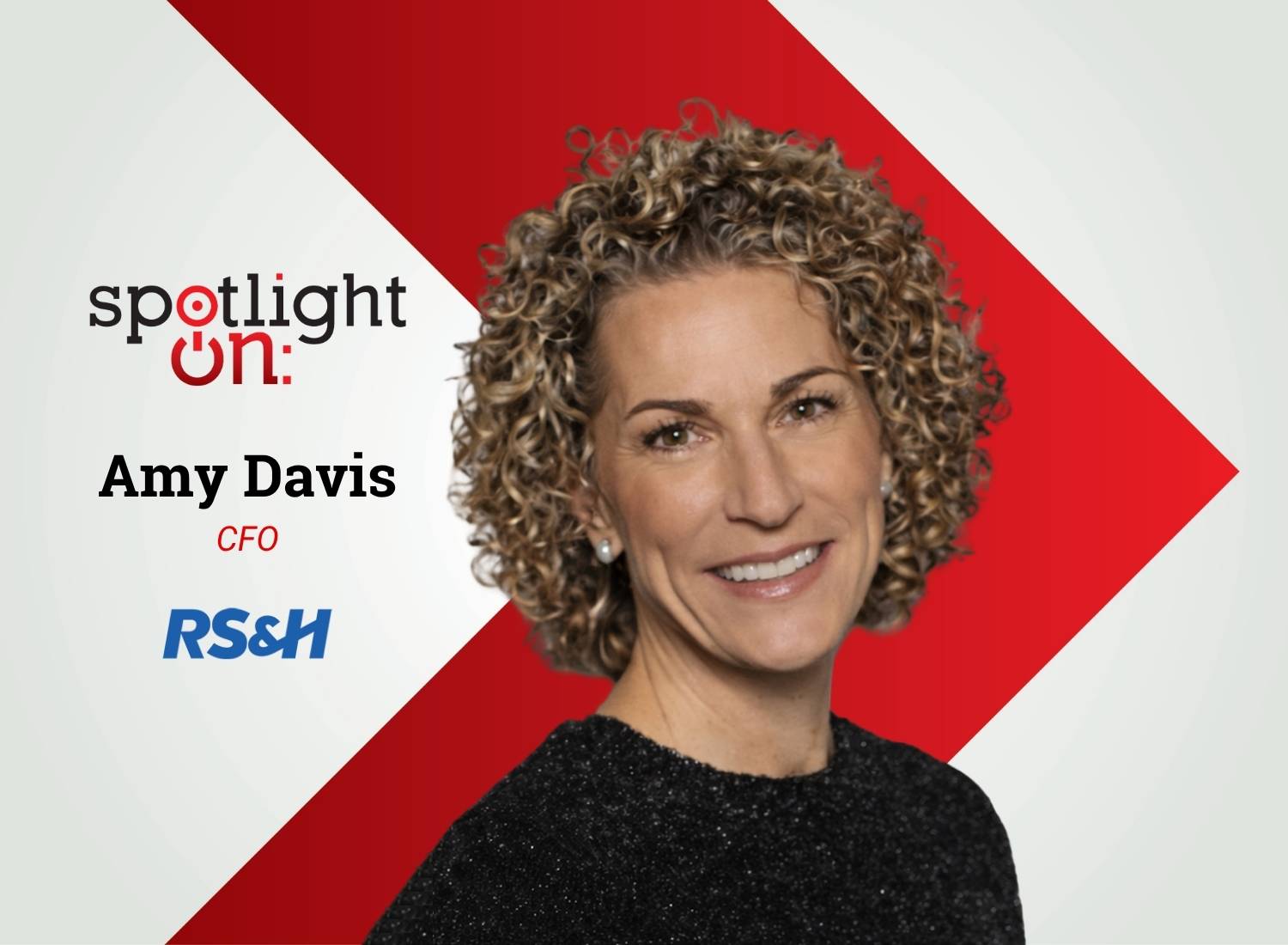 July 2026 — In an interview with Invest:, Amy Davis, CFO of RS&H, discussed the company’s growth priorities, technology investments, and role in major infrastructure projects across Florida and the United States. “Our focus is on creating tomorrow together by expanding our impact in the communities we serve,” Davis said.
Join us at caa’s upcoming leadership summits! These premier events bring together hundreds of public and private sector leaders to discuss the challenges and opportunities for businesses and investors. Find the next summit in a city near you!
From a CFO’s perspective, which sectors do you see driving RS&H’s next phase of growth, and what investment priorities are supporting that vision?
We have multi-market coverage across federal, transportation, aviation, corporate, health, and science, which has been helpful because those markets move through different cycles. Looking ahead, our biggest growth opportunities are in core transportation infrastructure and aviation. Those sectors have strong funding and demand, not only in this region but across the United States.
Transportation funding is expected to continue through a likely IIJA reauthorization or a similar bill. The challenge will be delivering projects despite workforce shortages and inflation, which reduce the purchasing power of those dollars. Our role is to help clients maximize their investment by incorporating resilience and AI-enabled design to deliver projects more efficiently.
Infrastructure is driving economies. Our people take pride in knowing their work improves the communities where they live and work. Aviation is another major growth area for us. We are part of the design team for Concourse B at Jacksonville International Airport and are working at the Cecil Airport, and we see advanced air mobility becoming an important opportunity alongside aerospace.
What have been some of the main highlights and milestones for RS&H over the past year, especially in Jacksonville?
The past year has been one of intentional evolution. We are an 85-year-old company founded in Jacksonville, and we remain deeply committed to this community.
One of the biggest milestones was our CEO transition. Lisa Robert, PE, succeeded our longtime CEO after serving as COO, while Dave [Sweeney, PE,] moved into the chairman role, allowing us to maintain continuity and preserve institutional knowledge. Lisa has recently relocated back to Jacksonville, reinforcing our commitment to the area.
We also launched our five-year strategic plan, Amplify 2030, which focuses on intentional growth and doubling our impact across the country. Florida remains our largest market, with more than half of our employees based here.
A major achievement has been serving as program manager for Moving I-4 Forward, a key component of Moving Florida Forward, Florida’s largest transportation program undertaken to date. Although the program is centered in Central Florida, it has expanded activity across the state, including Jacksonville.
Locally, we continue to work on transformative projects. We are involved in the final segment of the First Coast Expressway, completing the corridor connecting I-95 and I-10. We are also involved with Jacksonville International Airport’s Concourse B and the accompanying parking garage, supporting mission-critical work for NAVFAC and NAS Jacksonville, and contributing to projects such as the VyStar Credit Union headquarters and the Nemours Children’s Specialty Clinic.
We also received two 2026 ACEC Florida Outstanding Project Awards for transportation work completed with the Florida Department of Transportation. Those projects demonstrate the role we continue to play in improving Florida’s infrastructure.
Jacksonville and Florida are well positioned for growth, and RS&H intends to continue to be a driving force in that story, just as we have been for more than eight decades.
How does RS&H evaluate investments in emerging technologies, and what metrics determine whether those investments are successful?
Everyone is still figuring AI out, but we approach it from two perspectives.
Internally, AI is about improving productivity and efficiency. Workforce shortages among engineers, architects, and other STEM professionals are real, so AI is meant to supplement people, not replace them.
Externally, we are looking at how AI creates additional value for clients and generates new revenue opportunities.
To support that effort, we have built a dedicated digital delivery organization with experts across the country, complemented by communities of practice working on technologies such as BIM and digital twins. That structure gives us both centralized leadership and practical expertise throughout the company.
We also place significant emphasis on governance because AI introduces risk. People ask whether AI can design a bridge. The answer may be yes, but the human element remains essential. Our professionals must always remain part of the decision-making process.
AI allows engineers to evaluate more design alternatives in less time, giving clients more options while improving efficiency. As a result, we are measuring success through revenue per full-time employee rather than simply hours billed. The value comes from producing more through greater efficiency, not just increasing billable time.
What characteristics do you look for when evaluating whether a project aligns with RS&H’s long-term strategic advantages?
We have to be deliberate because workforce shortages require us to be selective about the clients and projects we pursue. Every opportunity needs to align with our core markets and expertise.
More than 95% of our work comes from repeat clients, and our client net promoter score is 72, compared with an industry average of 32. Those long-standing relationships allow us to focus on delivering value while also pursuing projects that provide meaningful opportunities for our employees.
We want our people to work on exciting projects that help communities and advance their careers. We also evaluate projects through the lens of sustainability, resilience, and innovation.
Advanced air mobility is one example. We have completed our first integration plan in that area, and we believe it will develop much faster than many people expect. We also work with NASA and private-sector aerospace organizations, and want to continue leading in emerging technologies where it makes strategic sense while being thoughtful in areas where it is better to be a fast follower.
Looking ahead, what will be RS&H’s main financial and operational priorities?
Our focus is on creating tomorrow together by expanding our impact in the communities we serve. Growth is financially important for RS&H, but it also allows us to increase the positive influence we have through the projects we deliver.
Everything we do is guided by our values of integrity, accountability, curiosity, and teamwork. One of our greatest differentiators is broad-based employee ownership. Every employee has the opportunity to become an owner and share in the value the company creates.
We believe growth creates a generational company that endures for our people, not only through equity ownership and the financial freedom it creates, but also through career advancement, leadership opportunities, and the chance to work on meaningful projects. Our five-year strategy is centered on amplifying the impact we make through intentional and focused growth that benefits both our employees and the communities we serve. We take pride in knowing we are acting as stewards for generations to come.
Are there any additional industry trends you would like to highlight?
Several trends are shaping our industry. Smart infrastructure and digital delivery—AI, digital twins, and connected infrastructure are reshaping how projects get designed and maintained.
Sustainability and resilience remain especially important in Florida, where clients increasingly seek energy-efficient and resilient designs. Advanced air mobility is another area we expect to accelerate significantly.
Healthcare is also evolving as more care moves closer to where people live, creating demand for flexible, accessible, community-embedded facilities.
While talent shortages will continue, we believe AI will help the industry become more productive. It is not a replacement for architects, engineers, or designers, but an enabler and accelerator that helps deliver the built environment more efficiently.
Want more? Read the Invest: Jacksonville report.