Spotlight On: Darrin Brust, Campus President, Universal Technical Institute-Houston
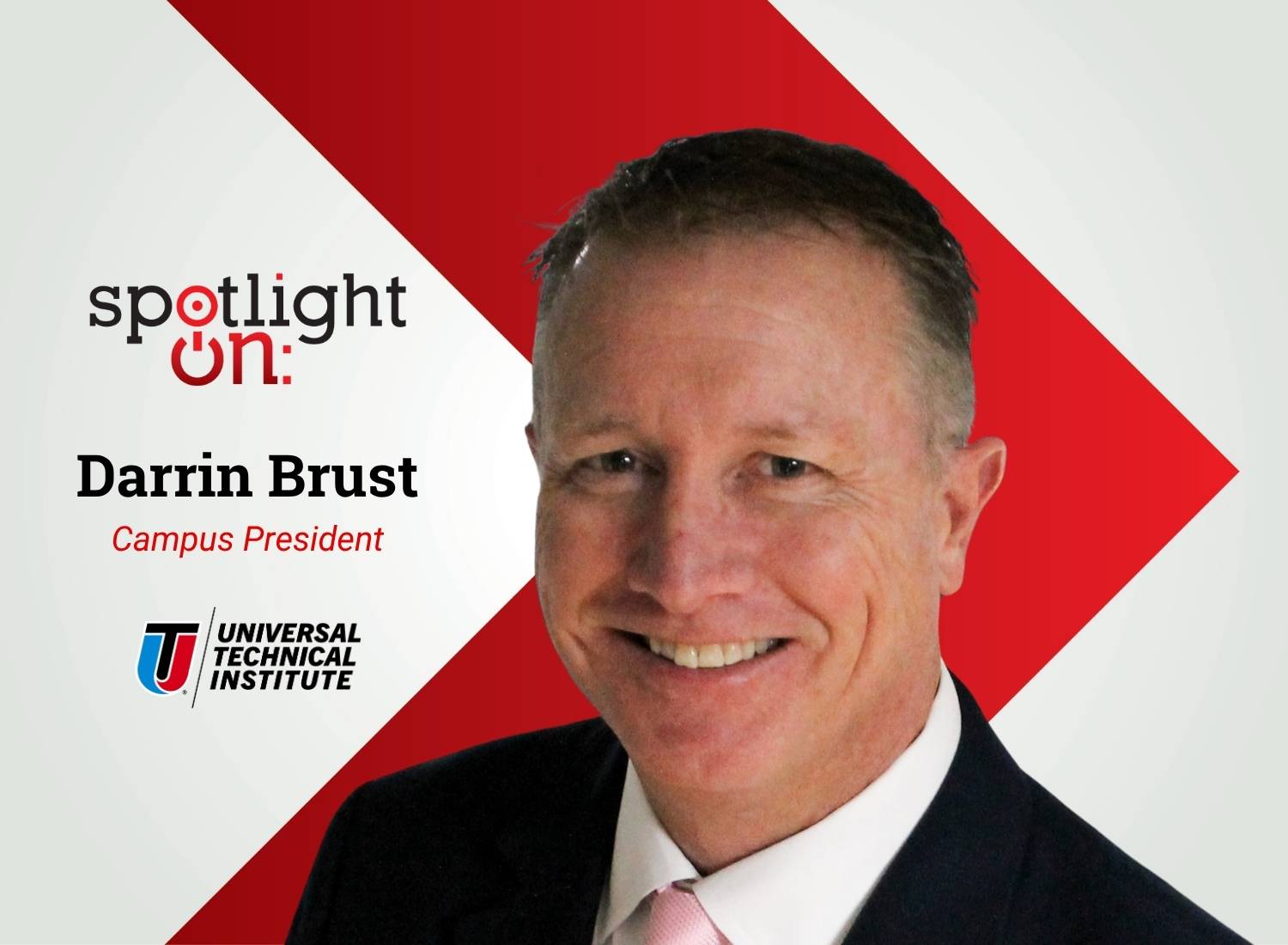 June 2026 — In an interview with Invest: Houston, Darrin Brust, campus president of UTI-Houston, discussed how the campus aligns technical education with industry needs, expands training in emerging technologies, and helps close the skilled trades gap. “Skilled trades are vital to our economy and our way of life,” Brust said.
Join us at caa’s upcoming leadership summits! These premier events bring together hundreds of public and private sector leaders to discuss the challenges and opportunities for businesses and investors. Find the next summit in a city near you!
How is UTI-Houston evolving its mission to meet changing workforce demands in transportation, energy, and the skilled trades?
The biggest thing is aligning our programs to industry needs so that the graduates we provide are also aligned with those needs. We do that by making sure we listen to our employer partners across all fields.
Universal Technical Institute is proud of the partnerships we have had historically in automotive with OEM manufacturers who have contributed to our programs and curriculum. Because of those partnerships, we are able to teach and train students on what industry needs.
Understanding what the market needs and building our training around that allows us to deliver graduates who are ready for the workforce. Our mission is to serve students, partners, and communities by providing quality education and training for in-demand careers. The key word is in-demand.
How do you decide which programs to expand as industry needs continue to shift?
It starts with understanding where the demand is from students and also staying close to industry.
Program advisory committees, where industry leaders review our curriculum, share where industry is heading, and help guide adjustments to our programs, are one of the many ways we stay aligned with industry demand.
What opportunities does the consolidation with MIAT-Houston create for students?
UTI was a larger organization, so naturally we had larger student support departments and broader employer outreach that MIAT students now have access to. It also helped create a larger combined admissions force that was able to reach more prospective students and expose them to the wide range of pathways available to them in the skilled trades and transportation areas.
How important are manufacturer-specific partnerships in helping graduates transition into the workforce?
If we had a graduate program, those partnerships would be the closest thing to it. Students who complete core training can pursue manufacturer-specific programs, such as Ford, to gain additional focused training leading them to valuable manufacturer-specific credentials before they ever leave school, putting them on the fast-track for advancement in their careers.
These partnerships put students ahead and give them credentials and creates a pipeline to employers.
What role does UTI-Houston play in closing the skilled trades talent gap?
That is exactly why we are here. There is growing recognition that a four-year degree is not the only path, and more conversations are taking place about trade schools as a viable option.
Our role is to be part of that conversation so students understand these opportunities. These are AI-resistant careers with strong earning potential.
The challenge is continuing to build awareness among students, parents, and counselors that these are highly skilled, technical, and rewarding careers. These are skills technology can enhance, but never replace.
How is the curriculum evolving to reflect emerging technologies?
We have transitioned our core program to automotive and EV technology. Previously, hybrid technology was just part of a broader course. Now, we have dedicated classes for hybrid and electric vehicles.
Students learn diagnostics and safety related to EV systems, including battery work. Across automotive programs, multiple courses now focus on electrical systems and diagnostics, from foundational to advanced levels.
How do you position technical education as a strong long-term career pathway?
It is important not to frame it as an alternative route, but as a critical career path. These careers are resistant to AI-driven job loss because they require a hands-on physical presence, human judgement, and decision-making that can’t be replicated by an algorithm.
They are also technologically advanced and evolving alongside AI, which serves as a tool rather than a replacement. For example, AI can monitor equipment performance, but technicians are still needed to carry out the work. These roles are essential and not going away.
What is your strategic vision for the Houston campus over the next few years?
The focus is on building on the current foundation, growing existing programs, and identifying new areas where training is needed.
Many industries are facing a retirement cliff, with experienced workers leaving the workforce and not enough trained replacements entering. We will continue evolving and expanding to help meet those needs locally and nationally.
I see us continuing to build on our industry partnerships, expanding them into our other programs like Aviation and HVAC, and adding to our advanced training options.
We have to prepare graduates with not only technical skills, but with the ability to work with technology and AI. The future of the skilled trades workforce is to be AI-ready.
Confidence in a four-year degree has dropped dramatically over the last few years, and that is a signal that students are not seeing the return on their investment for that degree and rejecting the outdated career narrative. Counselors are coming around and increasingly championing technical training that offers a clear path to high earnings with minimal debt. That lines up directly with our mission and purpose, and we will need to continue to flex and expand where the demand takes us in order to help close the skills gap.
Are there any additional points you would like to highlight?
Skilled trades are vital to our economy and our way of life. They are the backbone of infrastructure, technology, and industry, and they offer meaningful opportunities for growth.
The work our graduates are trained to do is essential to solving major challenges. Without trained technicians, systems do not function, and the economy does not move.
Students should understand that trade education aligns with today’s labor market realities. It is a pathway that reflects where demand truly exists, and that is where we aim to contribute to the conversation.
Want more? Read the Invest: Houston report.