Spotlight On: David Ellis, County Manager, Wake County
Key points:
- • Wake County is prioritizing housing, transportation, and education to keep pace with rapid population growth.
- • Strong schools, higher education, and regional partnerships continue to attract businesses, investment, and new residents.
- • Long-term competitiveness depends on expanding affordable housing, public transit, and cross-sector collaboration.
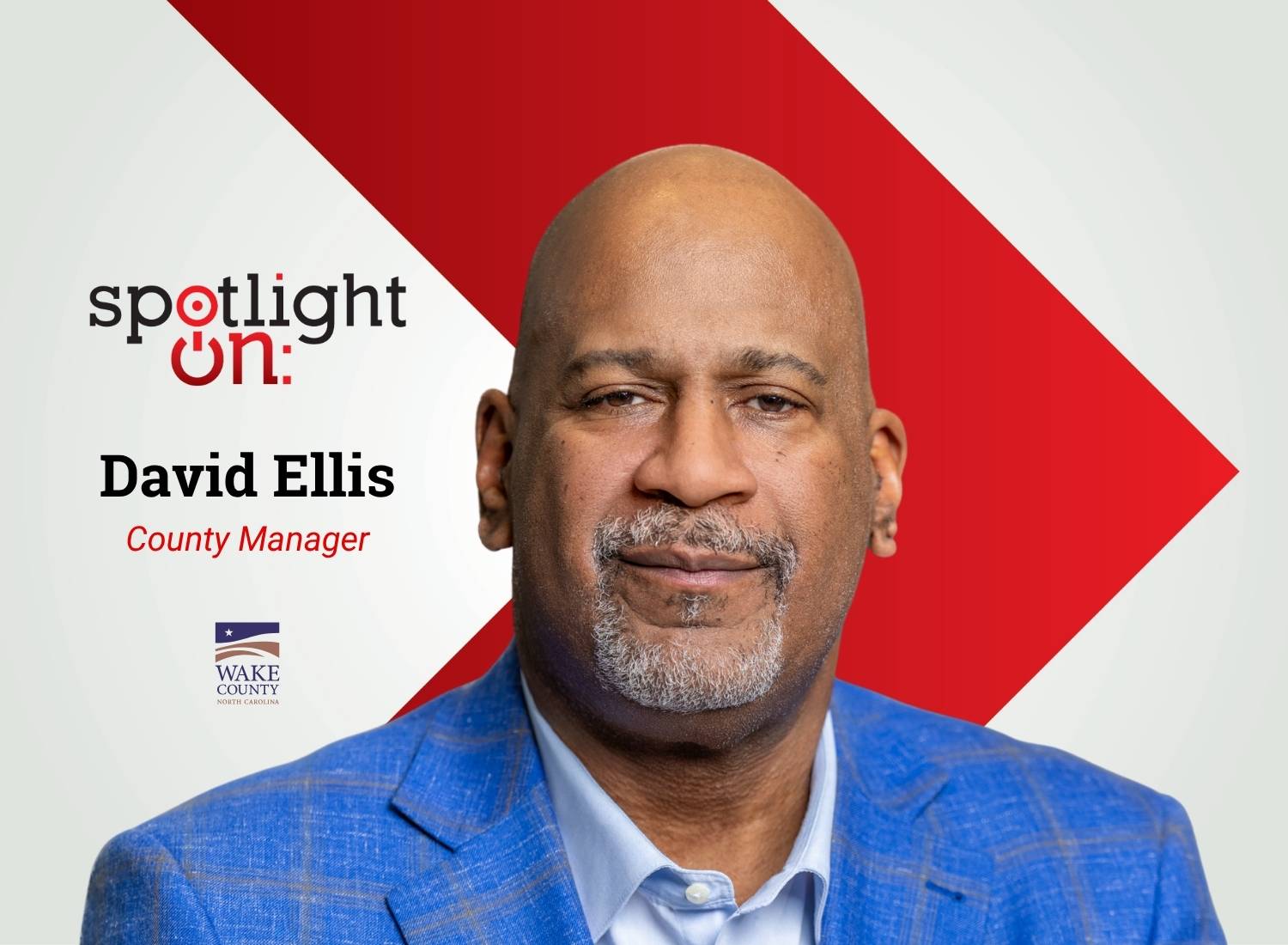 June 2026 — Invest: spoke with David Ellis, county manager of Wake County, about the county’s rapid growth, focus on housing, transportation, education, and the partnerships shaping its long-term competitiveness. “We try to make Wake County a place for everyone,” Ellis said.
Join us at the Invest: Raleigh-Durham 4th Edition Leadership Summit! This premier event brings together hundreds of Raleigh-Durham’s business and regional leaders to discuss the challenges and opportunities for businesses and investors. Buy your ticket now!
What changes over the past year have most influenced Wake County’s priorities?
Growth continues to be the biggest driver of Wake County’s priorities. We are growing by about 66 people a day, which equates to roughly 24,000 new residents each year. Wake County is the third-fastest-growing county with more than 1 million people in the United States, so we are constantly looking at those numbers and adjusting our core programs to make sure we are meeting the needs of our residents.
Housing affordability is one of the major areas we are focused on. The county has a 20-year affordable housing plan, and many of our municipalities have plans as well. We are working with them to address housing needs across the county.
Transportation is another key priority. The more people we have, the more cars we have on the road. We do not want to become Northern Virginia when it comes to traffic. That means we have to continue working with GoTriangle and other partners to develop a strong public transportation system in Wake County.
What are Wake County’s biggest competitive advantages in attracting companies, investment, and families?
I believe the biggest advantage is quality of life. That includes the Wake County Public School System, which is the largest public school system in North Carolina and produces outstanding graduates. Then you have Wake Tech Community College, which is also the largest community college in the state and does phenomenal work.
Beyond that, we have a tremendous higher education ecosystem, including North Carolina State University, Shaw University, St. Augustine’s University, William Peace University, Meredith College, and others. A lot of talent comes here for education and then stays here. When companies are looking to relocate, they see not only a strong public school system but also an entire education continuum that supports talent development.
Wake County also invests in early education. The county provides funding for schools for eligible 3-year-olds to help them get an excellent start, and we subsidize pre-K for the same reason. That full education continuum is attractive to companies because they know they will find talent here, and the employees they bring here will have strong education options for their children.
Our parks and amenities are another advantage. Between the county and our municipalities, residents have access to parks, trails, and places to bike and walk. We try to make Wake County a place for everyone. When you combine education, transportation, amenities, and overall quality of life, those are the driving factors behind why people want to live here.
What infrastructure investments are most critical to maintaining that quality of life and long-term competitiveness?
Transportation is at the forefront. We are in the midst of developing our first bus rapid transit line, which will run along New Bern Avenue, with the city of Raleigh taking the lead. What is important is thatFF municipalities, the county, GoTriangle, and other partners are working together so we are not developing transit plans in a vacuum. We are creating plans that help move people not only across Wake County but also into adjoining counties such as Durham and Orange.
We are all excited to see how bus rapid transit functions. One of the challenges with bus ridership is that people do not want to wait half an hour at a bus stop. Increasing frequency and having dedicated bus lanes will make a big difference. The ability to hop on a bus and move directly down New Bern Avenue without getting caught in regular traffic will be a game changer.
These buses are not the buses our parents took. They are comfortable, and many will have Wi-Fi and other amenities. We all have to give it a shot, and I think people will be pleasantly surprised.
How is the county approaching housing and community development to support residents and employers amid cost constraints?
When I became county manager, one of the first things I established was a housing department because I recognized that we were facing, and would continue to face, significant housing affordability challenges in Wake County. We developed a 20-year plan that looks at housing across a continuum, from homelessness to first-time homeownership. That gives people the ability to enter and leave the continuum at different points depending on their circumstances.
Back in 2018, only the county and the city of Raleigh had affordable housing plans. Since then, we have had excellent housing directors who have worked with our municipalities. Today, I believe 10 of the 12 municipalities in Wake County have affordable housing plans. People are recognizing the need to do things differently.
It is not just about building new units. It is also about preserving existing affordable housing. Our housing department has worked with banks and partners to create programs that help nonprofits and others with gap financing, allowing them to purchase units that may be going up for sale and remain competitive in that process. That preservation side is important.
We are also working with developers through low-income housing tax credits and other programs to build more units. As a county, our goal is to add and preserve more than 500 affordable units a year. We did not get into this housing affordability challenge in one year, and it will take time to address it. But if we can stay in the range of 500 to 600 units each year, we feel like we are making a difference.
The municipalities getting on board will also help us address these challenges. When I first moved here, the median home price was around $288,000. Now it is around $450,000 or higher. For people coming out of college or younger residents trying to purchase a home, that is a real stretch. We need to help people find affordable rentals and housing opportunities.
If we do not, we risk losing people to adjoining counties where housing may be less expensive. If the jobs remain here, that means people will spend more time on the roads. The more time people spend commuting, the lower their quality of life becomes. Most people do not want to spend an hour each way in the car every day.
What will define Wake County’s success over the next five years?
I would point to three areas, and we have touched on all of them. The first is developing the foundation of a strong public transportation system and getting that off the ground. That is critical as we continue to grow.
The second is housing affordability. We need to continue adding and preserving existing affordable housing throughout Wake County. It cannot be concentrated in one municipality. It needs to be spread across the county so that residents have opportunities in different communities.
The third is education. The county contributes a significant amount of funding toward education, mainly for the Wake County Public School System and Wake Tech Community College. We are filling a gap that the state of North Carolina is responsible for funding because we recognize that education is so important to Wake County’s future.
At some point, that becomes a challenge. We continue to ask the state to step in and fulfill those responsibilities so that we can provide some relief to our residents. Right now, they are providing additional funding for the public school system and Wake Tech through county dollars, and education remains central to the county’s continued success.
What other factors are important to understand regarding Wake County’s momentum?
One of the things that makes this area unique is the partnerships between all the stakeholders in Wake County. When you have 12 municipalities, a large school system, a community college, and multiple universities, it can be easy to operate in silos and only focus on what is best for one stakeholder group.
Every day, I am amazed by how partnerships are ingrained in everyone’s DNA here. People are looking at what is in the best interest of the county as a whole. That is not true everywhere I have worked, and it is one of the things that sets Wake County apart.
Those partnerships are the underpinning of the success of this region. It is the ability to work together and focus on what is best for the county as a whole, not just one specific stakeholder group. That same spirit extends beyond the county as well. We work closely with Durham County and Orange County, and there is something about the Triangle where people focus on the greater good. That is what really sets this region apart from others.
Want more? Read the Invest: Raleigh-Durham report.