Spotlight On: Francisco Cigarroa, Senior Executive Vice President for Health Affairs and Health System, The University of Texas at San Antonio | UT Health San Antonio
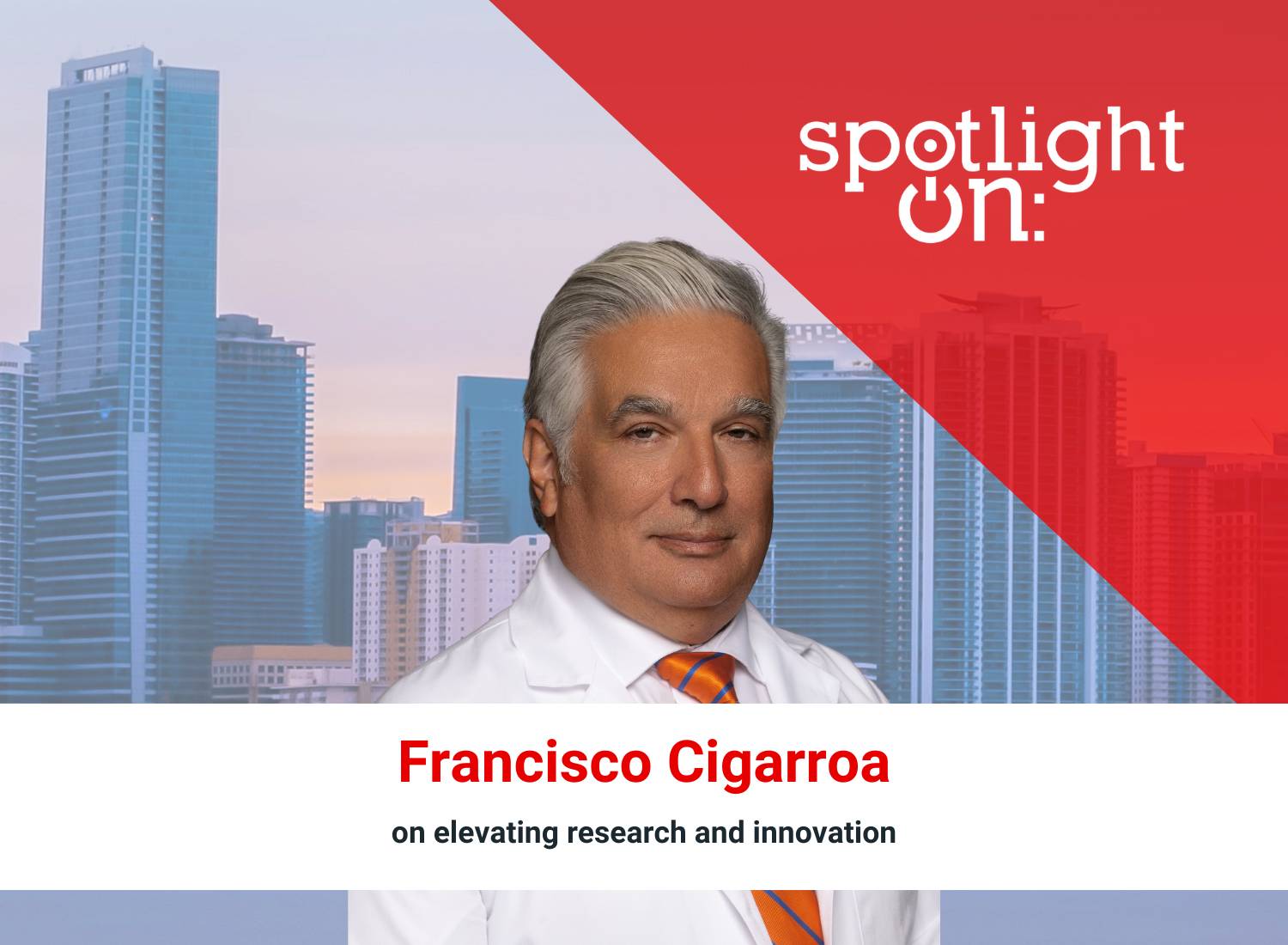 October 2025 — In an interview with Invest:, Francisco Cigarroa at UT Health San Antonio, called the merger with UTSA “an inflection point” for the region, positioning the combined institution to become Texas’ third-largest public university and a future member of the Association of American Universities (AAU). He emphasized the merger’s potential to elevate research and innovation without sacrificing access. “We can pursue the highest excellence while ensuring education remains accessible,” Cigarroa said.
How do you see UT Health San Antonio’s mission evolving through the merger with UT San Antonio?
The merger with UT San Antonio is an inflection point for our city, South Texas, and the entire state. Together, we will become the third-largest public university in Texas, and we’re on a trajectory to become the fourth Association of American Universities (AAU) member in the state. That designation, held by only 69 universities in the United States and two in Canada, represents the highest level of academic excellence.
This will elevate our scholarship, research, and innovation, bringing tremendous economic impact to San Antonio and Texas. At the same time, we will not compromise on access or social mobility, both of which are critical to our community. I firmly believe we can pursue the highest excellence while ensuring that education remains accessible.
Join us at the San Antonio 4th Edition Leadership Conference! This premier event brings together hundreds of San Antonio’s business and regional leaders to discuss the challenges and opportunities for businesses and investors. This year’s theme centers on how the region is balancing economic growth and authenticity. Buy your ticket now
The synergies with UT San Antonio are extraordinary. Their strengths in engineering, chemistry, artificial intelligence, and business will blend with our focus on healthcare to improve lives in countless ways. Artificial intelligence is not a passing trend — it is a transformative force that is here to stay. We view it as a powerful tool to augment and elevate care, not replace the essential bond between physician and patient. By enabling greater efficiency and precision, AI strengthens the human connection at the heart of medicine, ensuring that technology advances the personal relationship rather than diminishes it.
Biomedical engineering is another area of promise. San Antonio already has a track record of innovations that changed the world, including the Palmaz stent, which dramatically improved treatment for heart disease without major surgery, and the titanium rib, which corrected life-threatening chest wall deformities in children. Both originated here. With UTSA as a partner, the cross-pollination of ideas will only accelerate, leading to new devices and therapies that improve health, attract investment, and create a discovery park to rival other top research hubs in the nation.
This merger is one of the most important decisions the UT System Board of Regents has made in the past 100 years. It’s why I took this role, because I know the profound impact it will have on the region I love.
Why is San Antonio a strategic hub for academic medicine, and why is this the right moment?
My answer is, why not? San Antonio reflects the rich diversity of America: a beautiful population with different backgrounds, cultures, and experiences. It is truly inspiring to serve this community.
Geographically, we’re in a strategic corridor that connects Austin, San Antonio, and Laredo, with direct ties into Latin America through Monterrey Tech and other leading Mexican universities. That makes San Antonio a gateway city with enormous potential for international collaboration.
Our population is also growing rapidly, and people see San Antonio as a wonderful place to raise a family and build a life. With that growth comes greater responsibility for healthcare. Our region struggles with higher rates of diabetes, obesity, metabolic disease, and certain cancers than much of the country. For example, obesity can lead to fatty liver, which increases the risk of cirrhosis and liver cancer.
We are fortunate to have an NCI-designated cancer center, which allows us to offer prevention programs and life-saving clinical trials that are otherwise unavailable in many communities. We also face rising rates of Alzheimer’s Disease and dementia, which many people fear more than cancer. Our Biggs Institute for Alzheimer’s & Neurodegenerative Diseases is world-class, and with state support for a dementia prevention research institute, San Antonio is poised to become a national leader in brain health.
What sets San Antonio apart is our spirit of collaboration. Our healthcare systems, from University Health and the Veterans Health Care System to Brooke Army Medical Center and private networks like Methodist and Baptist, communicate and work together instead of building silos. That cooperation and collaboration are a big part of the magic of San Antonio.
How is UT Health San Antonio expanding the pipeline for healthcare professionals, and how will the merger support this?
UTSA is a large research university, and many of its students aspire to have careers in healthcare. By creating a seamless pathway into our medical, dental, nursing, allied health, biomedical sciences, and public health programs, we can help more students achieve those aspirations.
Residency programs are just as important. Research shows that students who complete both medical school and residency in Texas have an 80% chance of staying here to practice. With San Antonio’s growing population, retention is critical.
We already have outstanding clinical training sites: University Health, which is a premier teaching hospital; the Veterans Health Care System; Brooke Army Medical Center; and our new UT Health San Antonio Multispecialty and Research Hospital. These, combined with strong private healthcare systems, give us a critical mass of exceptional training opportunities that will grow even stronger through the merger.
What motivated you personally to take on this role, and what do you hope this merger achieves for future generations?
I come from a long line of physicians — I’m a third-generation doctor, and my grandfather and great-grandfather studied medicine at UNAM in Mexico City. I grew up in Laredo, right on the U.S.-Mexico border, and those experiences drew me to San Antonio to build my career. This is a region I love deeply.
After years in administration, I had planned to focus solely on being a transplant surgeon, a role I treasure. But when this opportunity arose, I felt it was too important to pass up. I stepped away from my surgical practice to take on this responsibility because the impact of this merger will be felt for generations.
For me, it’s about more than building a great university. It’s about making healthcare more compassionate, more innovative, and more effective — not just for patients, but for their families as well. Complex diseases like dementia, cancer, or those requiring transplants affect entire families, not just individuals. A great academic health center must care for the whole family unit with compassion and understanding.
Our responsibility is to make life better for those who come after us. Education saves lives. This merger sets the stage for generations of students, physicians, researchers, and patients to have a better future. That’s why I took this role.
Want more? Read the Invest: San Antonio report.