Spotlight On: Gil Prado, Executive Director, Boulevard Community Improvement District
Key points:
- • Infrastructure, public safety, and redevelopment are driving the district’s growth.
- • Logistics, data centers, and electrification are changing the corridor.
- • The CID is focused on long-term competitiveness and future-ready infrastructure.
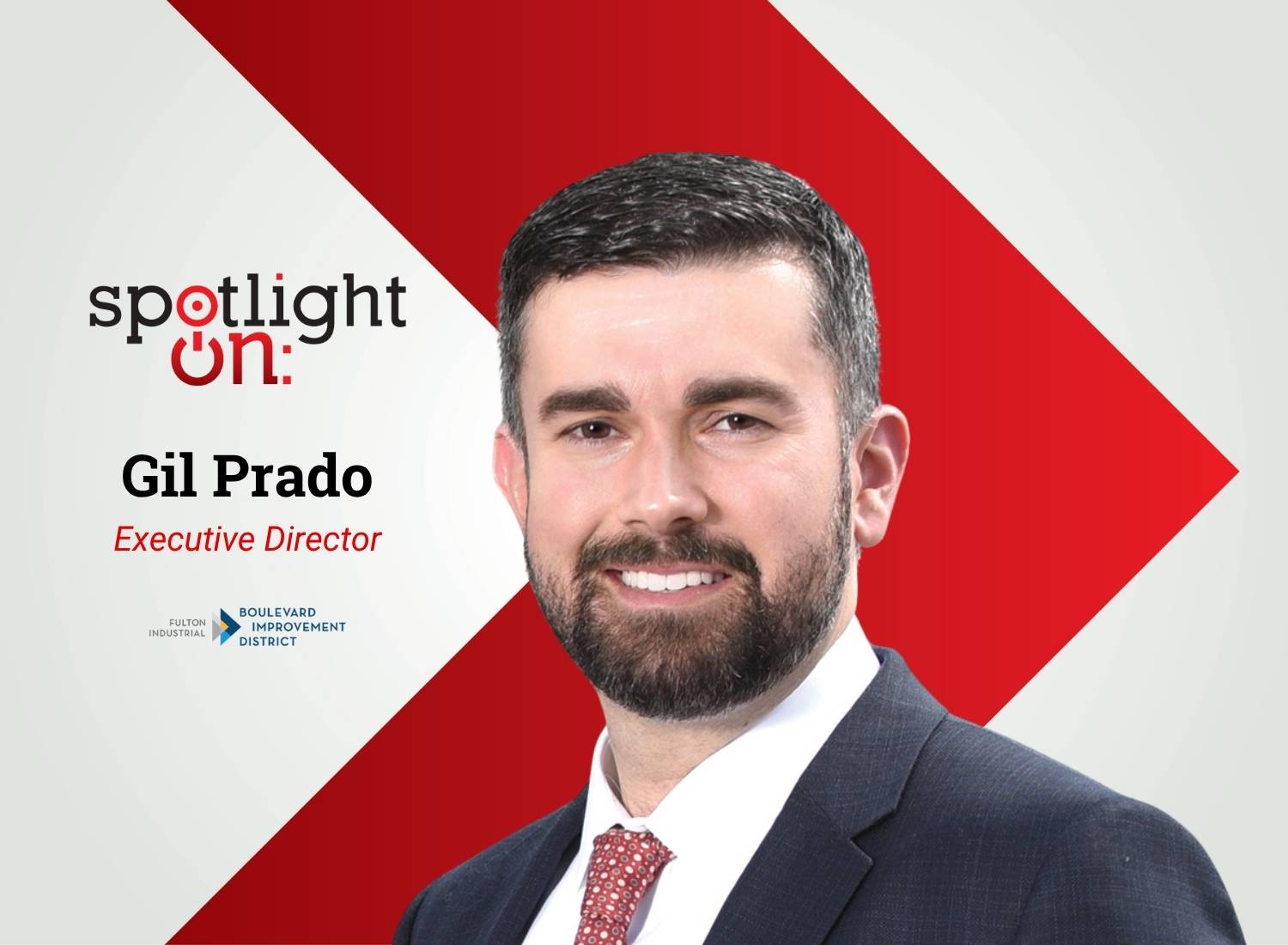 June 2026 — Gil Prado, executive director of Boulevard Community Improvement District, spoke with Focus: about transportation infrastructure projects, public safety, redevelopment, and the future of one of Atlanta’s major industrial corridors. “We’re well-positioned to anticipate what’s coming and to usher the district into this new generation,” Prado said.
Join us at caa’s upcoming leadership summits! These premier events bring together hundreds of public and private sector leaders to discuss the challenges and opportunities for businesses and investors. Find the next summit in a city near you!
How would you describe the past year for Fulton Industrial CID, and what have been some of the most important changes or milestones?
We always have a lot of projects and programs in place. Many of them are multiyear efforts, so it is a continuous workflow. Currently, we have about six transportation infrastructure projects underway. The most exciting is the Cascade and Fulton Industrial operational improvement and streetscapes project, which has been under design for six years and will begin construction this summer. It is funded through federal, CID, and GDOT funds and is a partnership with the city of South Fulton.
We also have several gateway enhancement projects at key intersections, including MLK and Fulton Industrial, Campbellton and Fulton Industrial, and another project from Donald Lee Hollowell to Sandy Creek in partnership with the city of Atlanta. These projects include landscaping, streetlights, signage, public art, and other improvements designed to create welcoming entrances into the district. We are also enhancing medians along Fulton Industrial Boulevard.
How important have public safety and district improvements been in supporting businesses and investment?
The priorities for the district have always been public safety and economic development. Even when I talk about streetscapes and landscaping, the focus is on strengthening the district’s competitive position. Fulton Industrial works as a spine road that connects all the different industrial parks.
We operate a public safety program with dedicated staff. We fund license plate readers. We purchased a drone for the city of South Fulton, and we support additional patrols by South Fulton and Fulton County police beyond standard public safety resources.
We also produce public safety bulletins that employers can share with workers. We are a busy industrial district in the middle of Atlanta, so we try to provide resources that are relevant to the people working in the district and help create a safer environment.
Across logistics, warehousing, manufacturing, and distribution, what trends are you noticing in Fulton Industrial?
The district is always evolving. The first warehouses were built in the late 1950s and early 1960s, and as you move through the corridor, you can see the history of development reflected in the buildings.
One of the biggest changes is scale. Older warehouses might be around 50,000 square feet, while newer facilities are much larger. The Amazon facility is 1.2 million square feet, and the UPS Smart Hub is also 1.2 million square feet and currently expanding by another 600,000 square feet.
Amazon recently purchased its facility and is investing $500 million in facility upgrades and robotics. They expect to employ 750 people, and the scale of that investment is impressive. It is the kind of project that demonstrates how industrial operations continue to evolve.
How are electrification, alternative fuels, and sustainability planning shaping the future of Fulton Industrial?
Electrification and energy are subjects we pay close attention to because they will play a significant role in the district’s future competitiveness.
We see companies like Amazon operating electric delivery vans, while UPS uses both electricity and natural gas. We also have one data center that recently opened and another under construction by Vantage Data Centers.
Our sustainability planning has focused on understanding these trends and preparing for them. I recently toured the Toyota Material Handling Systems plant, where many forklifts now operate on electricity rather than traditional fuels. We are seeing this transition across equipment, vehicles, and facilities. Our goal is to help position the district to accommodate future growth and changing energy needs.
How will the Renew the District initiative impact the competitiveness of the Fulton Industrial Corridor?
Economic development and redevelopment have always been priorities for us. The Renew the District initiative focuses on the I-20 and Fulton Industrial area, where several properties had become associated with crime and disinvestment.
Fulton County acquired several hotel properties and adjacent parcels, demolished them, and is now seeking redevelopment proposals for approximately 17 acres. The initial goal was public safety. Enforcement efforts helped, but ultimately removing the properties and creating opportunities for redevelopment made the biggest difference.
The county is seeking proposals from developers for new uses that can bring fresh investment and activity to the area.
What new sectors or businesses are paying attention to Fulton Industrial?
Fulton Industrial has always supported a wide variety of industries. We have legacy companies such as Coca-Cola, PepsiCo, Gatorade, Frito-Lay, Quaker Oats, Publix, and other food-related operations. We also have cold storage facilities, logistics companies, and transportation firms.
At the same time, we continue to attract new investment. There is a proposal for nine new warehouses totaling about 1.8 million square feet in the southern portion of the district. We are also seeing growth in data centers.
One of the strengths of Fulton Industrial is its ability to serve a wide range of users. Some companies require newer facilities, while others continue to thrive in existing facilities. Because the district is close to both downtown Atlanta and Hartsfield-Jackson Atlanta International Airport, it remains attractive to a wide range of industries.
Looking ahead, what are the top priorities for the Fulton Industrial Corridor over the next three to five years?
There is not a single answer to that question. We have long-established companies that will continue to thrive, while newer industries, such as data centers and highly automated logistics facilities, are creating new opportunities.
From the CID perspective, we are focused on preserving what we have while attracting new investment. Transportation infrastructure remains a major priority. Trucks today are much larger than they were decades ago, and we are working to retrofit roads and intersections to meet modern freight needs.
We are also focused on maintaining the district through beautification, litter removal, landscaping, and public safety initiatives. We want the approximately 26,000 people who work in the district every day to have a professional, safe, and well-maintained environment.
The district will continue to evolve, just as it has over the last several decades. Whether it is new industries, new energy technologies, or new transportation needs, we’re well-positioned to anticipate what’s coming and to usher the district into this new generation.
What opportunities are you most excited about as you look toward the future?
Every day brings a new topic. I was speaking with the manager of the Fulton County Executive Airport about electric vertical takeoff aircraft. It is essentially a flying car, and we were discussing how that technology could become part of the airport’s future transportation network.
Those are the kinds of conversations we are having. New technologies continue to emerge, and we will evolve alongside them.
Want more? Read the Focus: Atlanta report.