
Spotlight On: Jerad Bachar, President & CEO, VisitPITTSBURGH
Key points:
- • Forge On highlights Pittsburgh’s evolution while honoring its industrial roots.
- • Tourism strategy is focused on long-term competitiveness, major events, and authentic experiences.
- • Pittsburgh’s culture, neighborhoods, and recreation strengthen tourism and quality of life.
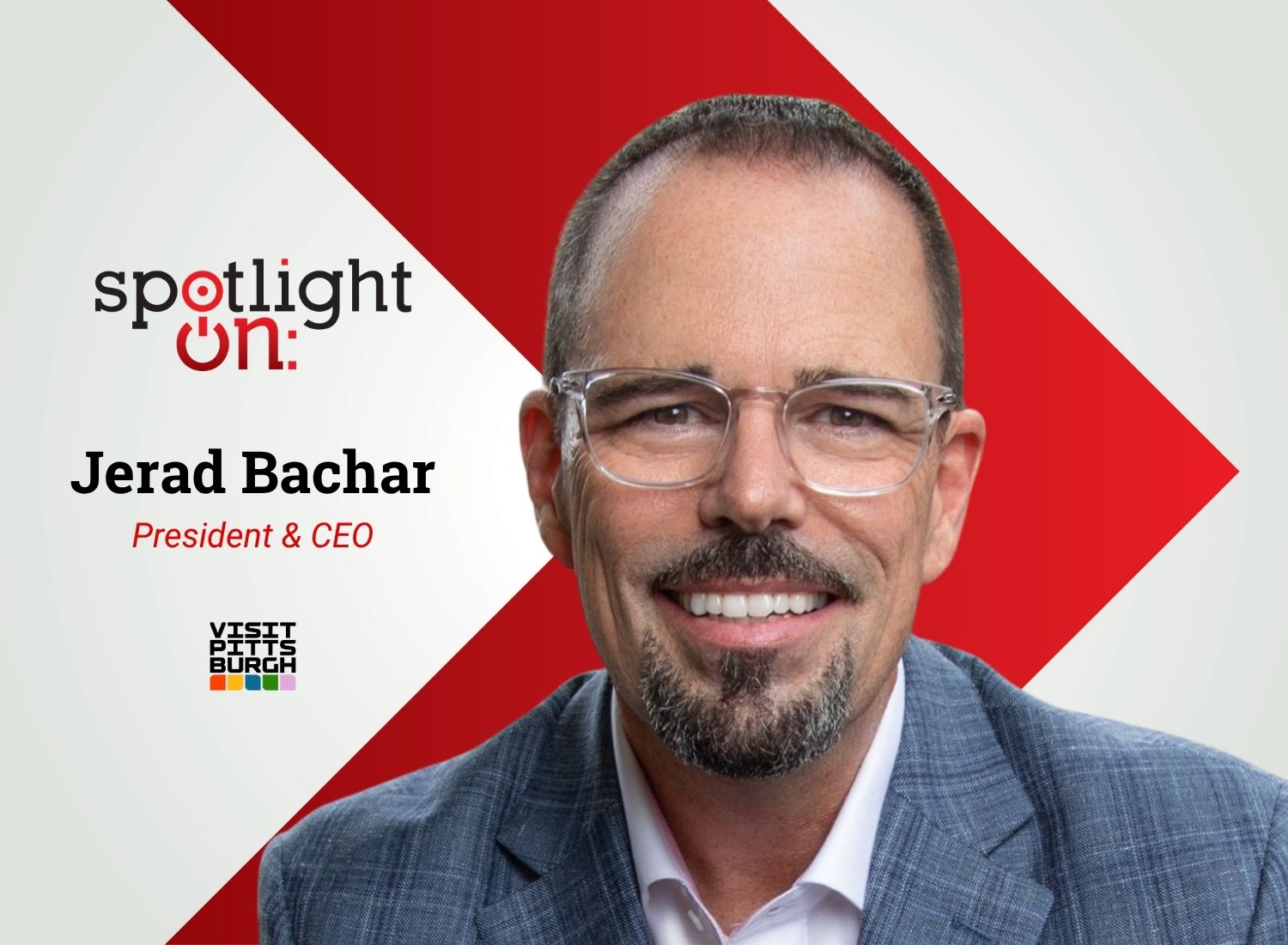 August 2026 —In an interview with Invest:, Jerad Bachar discussed VisitPITTSBURGH’s Forge On campaign, the organization’s long-term tourism strategy, and Pittsburgh’s evolving identity. He explained how the campaign acknowledges the city’s industrial legacy while highlighting its reinvention through technology, healthcare, arts, culture, and recreation. The conversation also emphasized the broader role tourism assets play in strengthening the region’s quality of life and economic competitiveness. “The depth of the city will surprise you,” Bachar said.
Join us at caa’s upcoming leadership summits! These premier events bring together hundreds of public and private sector leaders to discuss the challenges and opportunities for businesses and investors. Find the next summit in a city near you!
What inspired the Forge On campaign, and how do you expect it to reshape perceptions of Pittsburgh?
Forge On launched in March 2026 as an 18-month campaign that will run through the start of the 2027 travel season. After that, we will review the performance metrics and determine whether to extend or amend it.
The multi-faceted campaign features out-of-home advertising, co-op opportunities for our local partners, and targeted activations in both growth and drive markets.
We spent about 12 months on research and discovery, consumer engagement, and stakeholder engagement to understand our opportunities. We wanted to acknowledge Pittsburgh’s industrial history because many people still think of the Steel City and our manufacturing past. That has not been the foundation of Pittsburgh’s economy for more than 50 years, but it remains part of the city’s identity.
Forge On allows us to respect that legacy while presenting the contemporary story and future of Pittsburgh. It reflects the tenacity of reinvention and the city’s evolution into a center for IT, robotics, AI, universities, and healthcare. We see it as a rallying cry for the community. It is about forging experiences and encouraging visitors to build a relationship with the city and region.
Why was it important to develop a 10-year tourism development plan that goes beyond marketing?
We need to shape tourism development through the lens of competitiveness. We compete for conventions, trade shows, sporting events, and individual travelers, so we must understand what other destinations are doing, where they are investing, and how they are positioning themselves.
The 10-year tourism development plan helps ensure that Pittsburgh remains competitive not only today but 10, 15, and 20 years from now. It connects to our shorter-term three-year strategy, which then feeds into our annual business plans. There is a cascading effect from long-term planning to the work we carry out each year.
How do you attract first-time visitors while preserving the authenticity that repeat travelers value?
Authenticity serves Pittsburgh well. The community has a great deal of natural depth and character, including its history, art, culture, and music.
Pittsburgh has 90 distinct neighborhoods, and each has its own look, feel, and character. That breadth gives both new and repeat travelers the opportunity to experience things that are uniquely Pittsburgh. Even as tourism grows, authenticity remains central to why people visit for the first time and why they return. I do not believe we are at risk of losing it. It is part of who we are.
How do you tell Pittsburgh’s evolving story without losing sight of its heritage?
That balance is at the core of the Forge On campaign. We highlight authentic experiences across culinary offerings, arts, craft beverages, festivals, and outdoor recreation.
Visitors often want several different experiences during one trip. They may explore the arts, walk the trails around downtown and the riverfronts, and visit local restaurants. Pittsburgh offers that range.
These tourism assets are also quality-of-life assets. The arts and culture, outdoor recreation, airport, festivals, and concerts are among the reasons people choose to live, invest, start a business, or attend school here. Those same assets strengthen the region’s overall appeal.
How can major events create long-term value beyond a short-term tourism increase?
The NFL Draft is a strong example. It required three years of planning and became the largest NFL event ever hosted, the largest event Pittsburgh has hosted, and the largest sporting event hosted in Pennsylvania.
We launched Forge On in March to build on the public relations, marketing, and brand momentum surrounding the Draft. We are also using the event as a success story while bidding for other large-scale events. It demonstrates that Pittsburgh can succeed with events of that caliber and scale.
The Draft also created legacy impacts. Funding supported the planting of 800 trees, 400 green beds, and 400 community gardens. Arts Landing, a public green space in the heart of our Cultural District with a focus on visual arts, launched before the Draft. Market Square was reimagined, and millions of dollars were invested in Point State Park. Those civic and environmental improvements will benefit residents and impress visitors beyond the event.
How is VisitPITTSBURGH helping visitors experience the city beyond its best-known landmarks?
That is core to what we do because neighborhoods and local communities add depth and character to the destination.
Our current campaign includes content about neighborhoods beyond downtown, including music venues, coffee shops, and mural installations. Pittsburgh has 90 neighborhoods, and Allegheny County has 130 municipalities, creating many opportunities for visitors to experience places outside the city’s core.
We are also exploring a cultural circulator, a public bus system that would connect major cultural institutions. Visitors could travel between locations such as the Andy Warhol Museum, the Mattress Factory, Phipps Conservatory, and the Carnegie Museums of Art and Natural History. The goal is to make it easier for travelers to move through different neighborhoods and experience more of the region.
Why should someone who has never visited Pittsburgh make the trip now?
Pittsburgh is a city that will surprise you. Our research shows that people who have never visited often do not have strong expectations, but, after experiencing Pittsburgh for the first time, they leave with a positive impression and interest in a return visit.
The depth of the city will surprise you. Visitors discover unique restaurants, a strong craft beverage scene, world-class museums, many family-friendly attractions, hands-on crafting experiences that speak to our industrial roots, iconic sports franchises, and nine performance theaters in the downtown area alone. There are also music venues and opportunities to experience different forms of art throughout the region.
Outdoor recreation is another strength. Visitors can cycle on the Great Allegheny Passage, starting in downtown Pittsburgh and traveling 150 miles to Cumberland, MD, through an extensive trail network. There is truly something here for everyone, and people leave with a positive impression of the city once they experience it.
Want more? Read the Invest: Pittsburgh report.