Spotlight On: Lisa Brown, Economic & Urban Development Director, City of Rock Hill
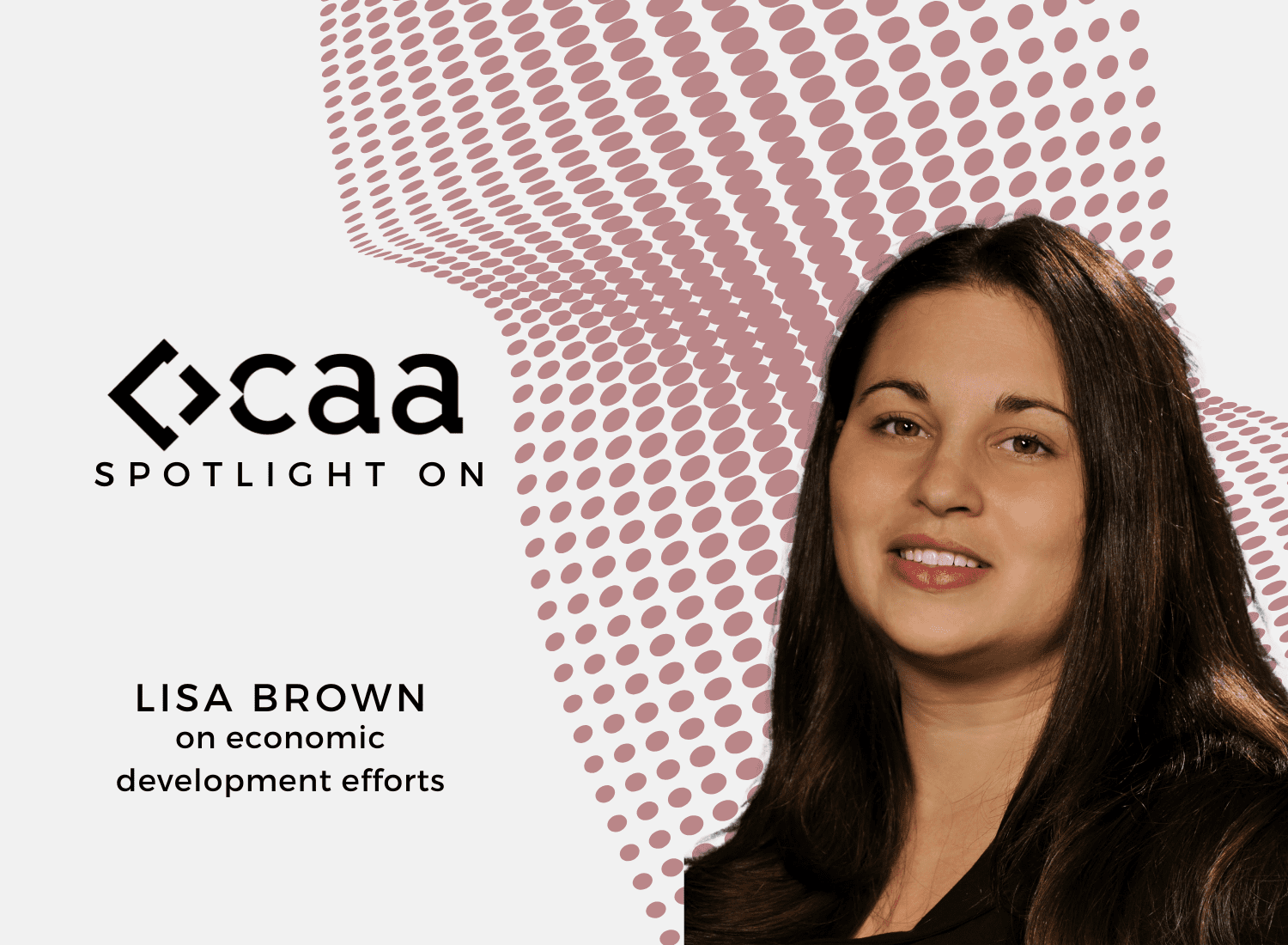 January 2025 — Lisa Brown, economic and urban development director of the City of Rock Hill, talked to Invest: about how the city is working to diversify its economy, leveraging sports tourism to grow, and using tax increment financing (TIF) districts to overcome the racial divide common to southern cities. She also highlighted the advantages that the city offers for businesses and young professionals to relocate there.
What are some of the most significant milestones for the City of Rock Hill in terms of economic development?
When I first came to work for the City of Rock Hill 12 years ago there was nowhere to eat downtown. There were also no residential units or nothing to do downtown. Given the scrappy nature of how Rock Hill operates, we have focused on finding ways to drive traffic and set policy direction to create an urban core. Fortunately, Rock Hill is willing to take a risk.
What steps has the City of Rock Hill taken to create that urban core in its downtown?
It is exciting to see what downtown Rock Hill was in the past and what it has become. A lot of the past 10 years has been about a revitalization of our downtown through the Knowledge Park Action Plan.
There has also been an intentional strategy to get people to live downtown so that they spend money downtown, going to the restaurants which ultimately creates a vibrancy.
We have over 1,000 apartment units that have been built or are being built. For example, The Exchange was the former Good Motor site and is now 229 apartment units with commercial storefronts. The city government also worked with a developer to tear down an old newspaper building to redevelop that site and have more multifamily real estate in the area. We also have the Thread, which is a 400,000-square-foot development. Half of that is still under construction as apartments and the rest is ready for occupancy as office, restaurant, and retail spaces.
The city found a way to reinvent itself through sports tourism as its textile mills closed. Moreover, the University Center development holds our sports and event center and in an adjacent building American Cornhole has their headquarters and social space. University Center has become a live-work place, with apartments, including student housing as it is located beside Winthrop University, and some restaurants. There has been over half a billion dollars in investments, tons of jobs, and a life and a vibrancy that this downtown did not have for a long time.
What challenges and opportunities have high interest rates and inflation brought for the economic development of Rock Hill?
The nice thing about markets is they go down and then they pick back up. The most important part about economic development is timing. With interest rates in the markets, it is all about hitting the right stride and the right timing. A lot of what the City of Rock Hill has done is helping create enough industry across the board to weather those storms.
For instance, sports tourism is a powerful engine because even if people may not want to build new facilities, kids are still playing sports and need places for tournaments. We have also found a good niche in amateur sports. For instance, the UCI BMX Racing World Championship brought about 5,000 riders from 43 different countries to Rock Hill. That is filling our hotels and restaurants and providing a lot of support for our small businesses. The Sports & Event Center hosts tournaments every weekend, and has space available for large corporate events.
Everybody wants the big announcements, but I am a bigger fan of having diversification in our economy. That involves having the restaurants, retail, and hospitality for sports tourism and being proactive on the utility side. As interest rates continue to tick down and people continue building facilities, we need to already have all the utilities on the ground and ready to go.
What kind of projects is the City of Rock Hill implementing to improve the local utility services?
Rock Hill is a full-service city, and is the provider of water and sewer service for the Greater York County area. We have recently upgraded our water treatment plant from 36 to 48 MGD and we are working on the wastewater treatment plant. That is a much more expensive and longer-term project, but it will take us from 20 to 30 million gallons per day of treated water per day.
Challenging markets are the greatest opportunity to get further utility infrastructure completed. As people are ready to develop, this community has utility sites ready and a workforce. Additionally, we have a dedicated ombudsman that supports businesses with any regulatory challenges the development community may face. .
What kind of partnerships is the City of Rock Hill developing to improve its workforce?
We have a community-wide effort centered on enhancing the workforce. We have great working relationships with Winthrop University, Clinton College, and York Technical College. That is a fantastic, nimble group of educational institutions that is willing to do whatever it takes to implement certificate programs and get our workforce to where we need it.
What is the strategy of the City of Rock Hill to address the local transportation needs in a context of growth?
York County has a sales tax called Pennies for Progress that has been crucial in ensuring that we fix a lot of our roads and interchanges. The most recent referendum passed for the fifth consecutive time. The traffic that we have here is not bad compared to a lot of other places. A lot of that is due to the intentionality of zoning and long-range planning of where it makes sense to have industrial compared to residential and mixed-use.
Pennies for Progress has also been super helpful on the utility side. A challenge that we have seen in other communities in North Carolina is their lack of capacity. They need to decide whether residential neighborhoods or industrial areas make more sense.
What are the key advantages of Rock Hill that help the city attract and retain young professionals and businesses?
In York County, Fort Mill School District has the best public schools in SC from a testing perspective. One of the things that I appreciate about the Rock Hill School District is their school of choice program. My kids spend half their days in Spanish, so they learn math and science in Spanish. They have a lot of the flexibility that you see in charter schools but built into the public school system, which is a big selling point.
Additionally, there are tons of parks and sports facilities. Sports tourism is obviously a big component, so we have four cycling facilities in one location here including a velodrome, a BMX supercross track, a criterium course, and mountain bike trails. We also have soccer, softball, and disc golf facilities. We also have 20 different playgrounds within a 15 minutes’ drive, the river, a downtown commercial area, and a lot of murals and public art. Those are other powerful selling points.
How is the City of Rock Hill ensuring diversity, equity, and inclusion in its economic development plans?
Like in many southern cities, there is a racial divide in terms of historical neighborhoods and racial demographics. Rock Hill is about 40% African American, and a lot of our African Americans live south of the downtown area. In 2019, there was a concerted effort to look at that south side and make an economic development strategy for it as many historic neighborhoods, churches, and communities never felt the growth and development that were happening in other parts of Rock Hill.
As part of that community engagement process, the Clinton ConNEXTION Action Plan was created, which then led to a tax increment financing (TIF) district. With that tool, you select a geographic area and specific parcels that are old, blighted, and derelict to help spur redevelopment. Whenever properties redevelop, those taxes go into a bucket that can be later used in public infrastructure.
That TIF district included a fair amount of industrial-zoned land on I-77. When it came to what we wanted to do with the first bit of TIF money, our first project was redoing the auditorium at Emmet Scott Recreation Center, the site of Rock Hill’s Black high school prior to desegregation. The community had a whole action plan where they told us what they wanted. That included green infrastructure, housing, and grocery stores.
How is the City of Rock Hill planning to support the development of public spaces in the city?
We are reinvesting our city resources in a way that we historically had not done as much, which is the first step toward putting more money into our parks and public spaces. We are starting on a small area plan for more of an economic development and planning perspective. People want to see development, but we do not want to kick people out of their homes or make them feel like there is displacement.
We are also looking at key areas such as around Clinton College and finding ways to reinforce that as a commercial node. There are students and residential houses there, but also a lot of vacant land. We aim to find a good balance between supporting and raising income levels and skill sets in a way that is respectful of the communities.
How do you envision or expect Rock Hill to evolve over the next few years?
Looking ahead, a lot of our evolution means ensuring that we maintain our own identity. It is easy for communities to sell themselves and lose sight of who they are as massive employers come in. We are happy to find and work on relationships to attract advanced manufacturing facilities, higher skill sets, and better wages. Nevertheless, the core of it is to maintain what makes Rock Hill a lovely place to live and do business in, which is the fact that we look out for each other.
There was a major hailstorm last April where many houses in limited-income areas were damaged. Nevertheless, we had churches, community groups, and construction and roofing companies donating money and time to fix the houses of people who cannot afford it or do not have insurance. That is what makes Rock Hill a special place. It says lots about who we are as people and what is important to us.
Moreover, we will see a lot of growth in downtown Rock Hill because so much is going on and there is a lot of energy and good vibes. As we work on our south side, we focus on the art and science of long-term communities’ development. We also have the former Panthers property, which is a stellar asset with 245 acres on a new interchange on I-77. We have a lot of opportunities to carve a path forward to a long-term investment.
For more information, please visit:
https://www.rockhillusa.com/home