





Spotlight On: Nate Sharp, Dean, Texas A&M University – Mays Business School
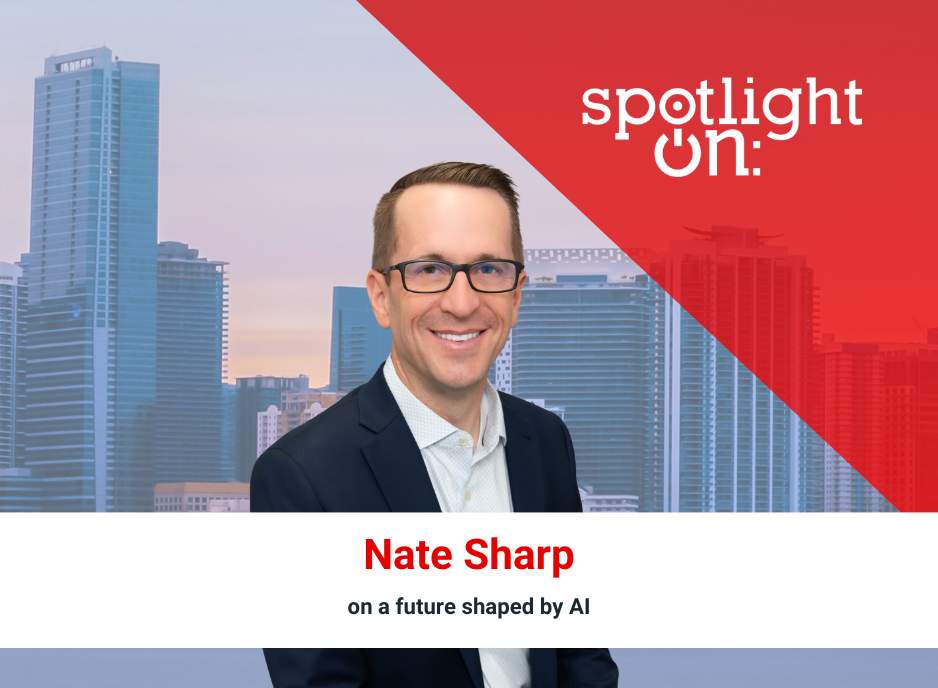 September 2025 — In an interview with Invest:, Nate Sharp, dean of Mays Business School at Texas A&M University, said that preparing students for a future shaped by artificial intelligence, innovation, and strong values is central to the school’s mission. “The most significant change that business schools across the country are grappling with right now is how to effectively harness the power of artificial intelligence while navigating its complex ethical implications.”
What changes have you seen over the past year that have impacted business schools in general, and how is Mays Business School addressing these?
The most significant change that business schools across the country are grappling with right now is how to effectively harness the power of artificial intelligence while navigating its complex ethical implications.
We’re tasked with preparing students to understand the difference between ethical and unethical applications of AI. I recently had a prospective student in my office. His main question was: “What is Mays Business School doing to prepare students for the future in light of AI?” He wasn’t thinking about the job market in 2030 — he wanted to know how we’re preparing students for the jobs of 2040, 2050, and beyond.
We’re seeing more reports, like those in The Wall Street Journal, about recent graduates struggling to secure employment, compared to just a few years ago. Layoffs at major tech companies are also making headlines. The employment landscape is shifting, and employers are refining their expectations.
At Mays Business School, we’re not alarmed by AI. We don’t believe it will replace our graduates. Rather, we align with the notion that it’s not AI itself that will take your job; it’s someone else who knows how to use AI better than you do. Our priority is to equip students with the business-relevant AI skills they’ll need to thrive.
We’re launching a new minor this fall at Mays called Artificial Intelligence and Business. It’s been more than a year in the making. Five of our top AI experts, nationally recognized in both theory and applied AI, have created five specialized courses for this new program. We believe this minor will be a crucial tool for preparing our students for the future. We are also expanding our suite of Flex Online master’s programs to include a new AI and Business certificate.
In parallel, we’ve also undertaken a complete redesign of our undergraduate curriculum, which began 18 months ago. We’re reviewing every required course, both core and major-specific, with input from employers, faculty, and current and former students. Our mission is to produce the most competitive business graduates in the country, not just in Texas. We will see the integration of AI throughout our revised curriculum.
What makes Houston the right environment for Mays to grow and impact the regional economy?
One of Texas A&M University’s greatest assets is its location, including our proximity to Houston. While our main campus is in College Station, we’re strategically placed within the Central Texas triangle: Dallas-Fort Worth, Austin/San Antonio, and Houston.
Houston specifically is vital. It’s not just the largest city in Texas and the fourth-largest city in the United States; it’s also the energy capital of the world. But beyond energy, Houston has emerged as one of the country’s major hubs for innovation and entrepreneurship.
We’re deeply connected to that ecosystem at Mays. Many Mays and Texas A&M alumni lead Houston-based businesses, including CEOs of major public companies. These alumni form a powerful network that supports Mays through mentorship, recruitment, philanthropy, and corporate partnerships.
Houston-based companies, whether headquartered there or with significant operations there, offer internships, hire our graduates, and even guest lecture in our classrooms. This deep integration gives us a competitive advantage over other business schools across the country.
What are companies seeking from graduates, and how are you shaping your curriculum to meet those evolving needs?
Let me begin by talking about something that may sound like a soft skill but is actually our biggest competitive advantage: values. Mays Business School instills and nurtures six core values in every student: excellence, integrity, leadership, loyalty, respect, and selfless service.
Integrity, in particular, is one of the reasons employers love recruiting at Mays. They know that our graduates are not only academically strong but also bring a deep sense of ethics and purpose to their roles. That foundation of character is priceless in today’s business climate.
In addition, we’re building our students’ capabilities in essential areas like artificial intelligence, critical thinking, communication, and executive presence. Employers are looking for graduates who can analyze problems, communicate clearly, in writing and verbally, and lead effectively in a rapidly changing environment.
Our top-ranked MS Analytics program exemplifies this. It’s ranked No. 1 in the nation by U.S. News & World Report and Fortune. It helps students build a data-driven mindset across various domains, from marketing to supply chain. AI and analytics often intersect, but they’re distinct, and we make sure students are fluent in both.
Our focus is on practical readiness. Whether it’s written communication in a professional setting or standing in front of a boardroom to deliver a compelling pitch, we’re preparing students to lead with confidence and competence.
Where do you see the biggest opportunities for business education to support the city’s evolving economy?
At Mays, we’ve always prioritized collaboration with the business community. We don’t want to be a siloed academic institution; we want to be plugged into the real world. That’s why we regularly bring Houston business leaders into our classrooms to speak directly to students about market trends, challenges, and opportunities.
One exciting area of growth is our Trading, Risk, and Investments Program (TRIP). It operates at the intersection of finance and energy, which is central to Houston’s economy. Our students are being placed directly into high-impact trading roles at major energy firms, largely in Houston. Bloomberg recently highlighted our program as the top training ground in the country for this type of work.
I’ll highlight two other programs. One is the Petroleum Ventures Program (PVP). This program allows finance and accounting students to take courses in petroleum engineering and vice versa. The students are among our most highly demanded in Houston and beyond. Then this fall, we launched a new MBA program at Mays called the Anthony Bahr ’91 Engineering MBA program, named for a successful Aggie entrepreneur in Houston. Students who complete a Bachelor of Science in engineering at Texas A&M can enroll in the Bahr Engineering MBA program at Mays to gain the business expertise they need to accelerate their careers and position themselves to lead companies.
We’re also investing heavily in our real estate program at Mays. Texas is booming in commercial development, and Houston is expanding rapidly. Our students are being trained to take on leadership roles in that sector as well.
Banking, consulting, and professional services are also strong in Houston, and our students graduate ready to take positions at the top firms in each of those areas. While Dallas gets a lot of attention for finance, Houston’s commercial and investment banking presence is thriving. Frankly, there are few sectors where Houston isn’t experiencing exciting growth. That bodes well for our students and for Mays’ continued integration in the Houston market.
What are your top priorities moving forward?
First, experiential learning is something we’re proud of at Mays. Our students aren’t just learning from textbooks—they’re managing multimillion-dollar investment funds, including what I believe is the only student-managed hedge fund in the United States. They’re making real decisions using real money and gaining the kind of experience most professionals don’t get until years after graduation.
Second, I’d like to spotlight our Houston campus in CityCentre. We offer a Professional MBA and an Executive MBA, along with our nationally No. 1-ranked MS Analytics program there. We also have executive education offerings that serve the Houston business community directly.
We recently launched our Flex Online master’s programs to make high-quality business education accessible to working professionals. Our Flex Online MBA had the largest first-year MBA cohort in Mays history last year, and it has already grown another 20% this year. We now offer several master’s programs, including Accounting, Human Resource Management, Marketing, Management Information Systems, Entrepreneurial Leadership, and our new AI and Business certificate, all fully online.
U.S. News & World Report gave Mays Business School the No. 1 ranking for Best Online Master’s in Business Programs in 2025. We’re proud of that recognition because it means we’re reaching more professionals who need flexibility without sacrificing quality.
Whether it’s our in-person programs in Houston or our growing suite of Flex Online master’s degrees, we are committed to meeting professionals where they are, especially in a city as important as Houston.
For more information, please visit: