


Spotlight On: Roberto Contreras, CEO, DC Partners
Key points:
- • Houston’s long-term growth continues to support real estate opportunities.
- • Mixed-use projects can create walkable environments that help attract talent.
- • International capital supports projects outside traditional investment models.
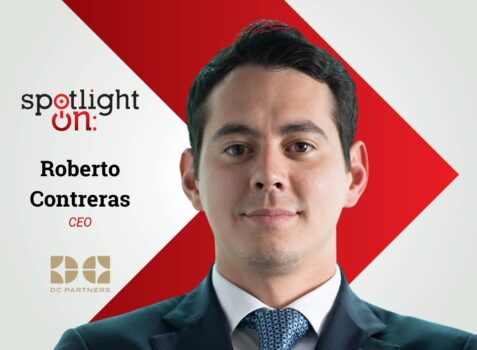 August 2026 — Invest: spoke with Roberto Contreras, CEO of real estate investment firm DC Partners, about Houston’s real estate market, the role of mixed-use development in attracting talent, and how international capital is helping shape the city’s next phase of growth.“We want to push the needle forward for Houston,” Contreras said.
Join us at the Invest: Houston 3rd Edition Leadership Summit! This premier event brings together hundreds of Houston’s business and regional leaders to discuss the challenges and opportunities for businesses and investors. Buy your ticket now!
How has the past year been for DC Partners, and what have been some of the biggest milestones over the past 12 months?
Real estate in general, and commercial real estate development in particular, has been relatively difficult across the United States, especially new construction. We are facing construction costs that are about 35% to 40% higher than they were before COVID, along with higher financing costs because of interest rates.
Houston rebounded early after the 2008 financial crisis and experienced a strong construction boom for nearly a decade. Across the Sun Belt, population growth and institutional capital flowing into real estate made financing more accessible than before. Following COVID, however, higher costs and increased supply have created a different environment. Single-family housing has continued to grow, although at a slower pace. Multifamily has some oversupply, office remains challenging, hospitality is improving because there has been little new supply, and industrial is beginning to face concerns about oversupply.
Despite those short-term challenges, Houston’s medium- and long-term prospects remain strong from a demographic standpoint. We have been waiting for construction pricing to come down, but major investments in manufacturing, data centers, and industrial projects have kept contractors busy. For us, that means being patient, focusing on location, and waiting for the right opportunities.
What trends are driving demand for luxury mixed-use and hospitality developments in Houston and across Texas?
When a city is trying to attract top talent, it competes with places like New York, Chicago, and San Francisco. Houston offers a great cost of living, excellent healthcare, strong education, and outstanding food. One of the challenges, though, is creating places where people can walk, interact, and build a sense of community.
Houston does not have zoning, which limits traditional master planning. As developers, we look for opportunities to create urban infill projects that add density and, when possible, larger mixed-use developments that create walkable nodes throughout the city.
People want those environments. Every time we have pursued that strategy, it has worked well for us. Although there are not always comparable projects to show banks and investors, we take the time to explain why these developments make sense. We believe creating unique projects is both good business and a meaningful way to contribute to Houston.
How is DC Partners adapting to capital challenges while continuing to pursue these developments?
We have been successful over the last decade in attracting international investment. Capital in the United States is highly institutionalized, which makes financing relatively accessible, but institutional investors often have strict investment criteria, timelines, and asset preferences.
Mixed-use developments and condominiums fall outside many of those traditional parameters. International investors are often more familiar with mixed-use projects, appreciate the value of creating walkable environments, and are more comfortable with longer-term investment horizons.
Can you share examples of projects that have helped position DC Partners for future developments?
One of our first mixed-use projects was Arabella, a condominium tower in Houston. Alongside it, we developed 4411 San Felipe, which includes retail and office space. Arabella performed well, reaching about 90% sales by the completion of construction. 4411 was 80% preleased in the early construction phase, and the development was sold before construction was completed. That transaction closed during 2022, when office was under considerable pressure. It demonstrated that boutique, well-located mixed-use environments continue to attract demand. Mixed-use developments often create value that is difficult to capture in a spreadsheet but becomes evident in the quality of tenants and long-term performance.
We also developed The Allen, a mixed-use project combining retail, a hotel, and condominiums. I take a lot of pride in that project because it helped make people more comfortable with branded residences and hotel-condominium concepts in Houston. Projects such as the St. Regis and the Ritz-Carlton residences have followed.
We want to push the needle forward for Houston. The Allen reflects that goal through both its mixed-use concept and its design. Developing a luxury hotel in Houston was not an easy decision because the city has traditionally relied more on business travel than leisure tourism. Nevertheless, the hotel has performed well, benefiting from its location near downtown while remaining closely connected to several of Houston’s most desirable neighborhoods.
What is your outlook for Houston’s real estate market over the next five to 10 years, and what does that mean for DC Partners’ priorities?
Although development is challenging today, Houston is extremely well positioned over the medium and long term. The region has a young population and continues to attract major investments in manufacturing, aerospace, healthcare, and energy. Those industries ultimately support long-term real estate demand.
Houston has developed a diverse economy. Even when energy prices fluctuate, the region continues to grow. The question is no longer whether Houston will grow, but how much it will grow.
That growth depends on continuing to modernize industry and building on existing strengths. For example, Houston has the largest medical center in the world, yet many biotech startups are located elsewhere. There are opportunities to build on assets that already exist and further strengthen the city’s economy.
For DC Partners, that means continuing to develop urban infill projects that make Houston a more attractive place to live while taking advantage of the long-term opportunities we see across the region.
Want more? Read the Invest: Houston report.






