Spotlight On: Ryan Ezell, CEO, Flotek Industries
Key points:
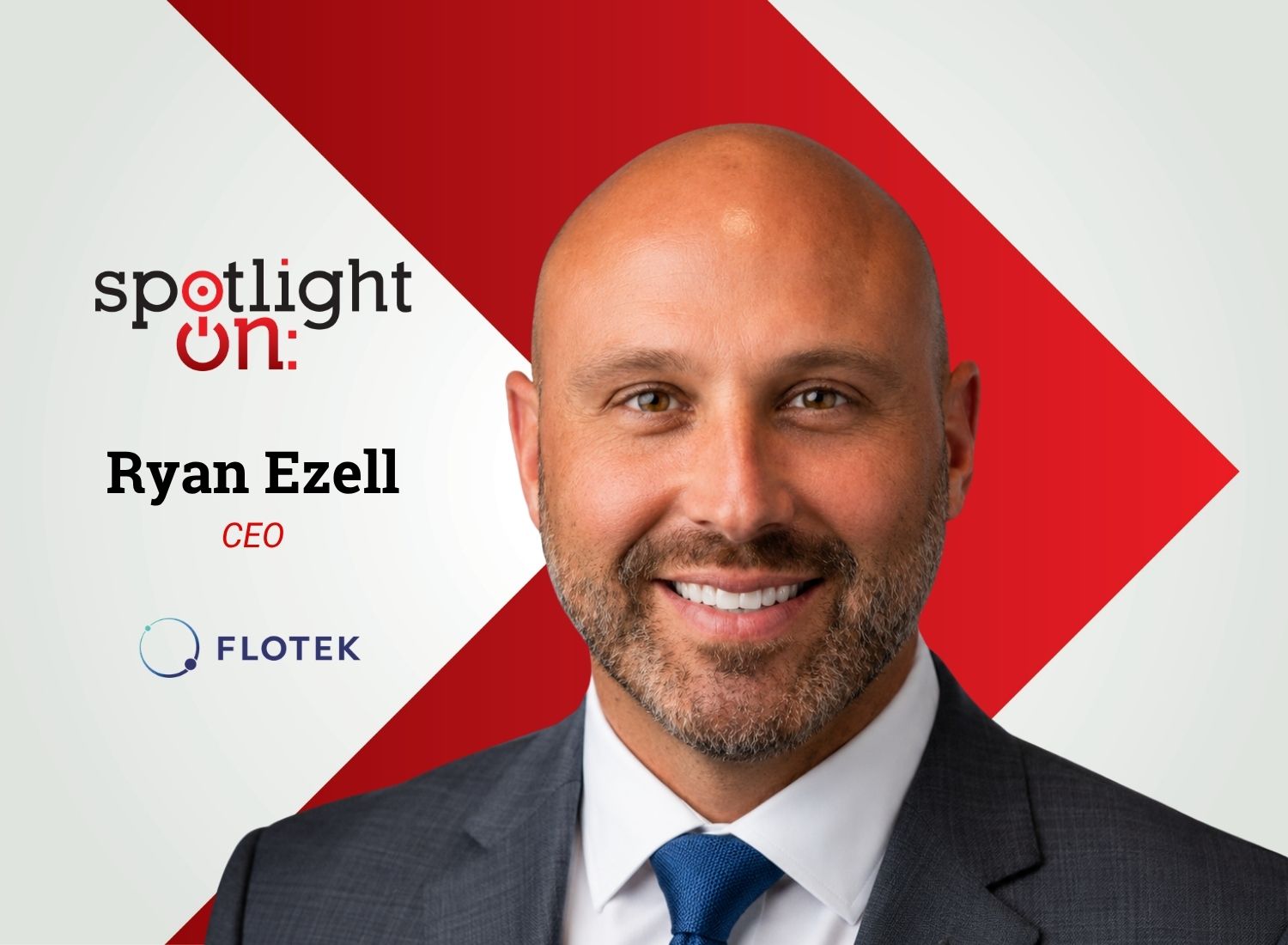 August 2026 — In an interview with Invest:, Ryan Ezell, CEO of Flotek Industries, discussed the company’s transformation from a North American oil-field chemistry business into an industrial platform driven by real-time data analytics. “We are a technology company driven by real-time data analytics. We use data and the velocity of data to guide engineering and chemistry decisions,” Ezell said.
Join us at the Invest: Houston 3rd Edition Leadership Summit! This premier event brings together hundreds of Houston’s business and regional leaders to discuss the challenges and opportunities for businesses and investors. Buy your ticket now!
What were Flotek’s key milestones over the past year?
It has been an extremely exciting period for us. Since the end of April last year, we have taken several significant steps, including beginning to capitalize on our power services division within the data analytics segment. We completed an acquisition that brought in technologies we had helped design and build for field applications involving gas treatment. That business has more than doubled in size year over year and continues to expand.
Because of the market’s growing appreciation for that business and the growth of our data analytics operations, our share price increased 571% over an 18-month period. We also crossed a $1 billion market capitalization and won our first utility contracts, with that pipeline continuing to grow.
These milestones demonstrate the execution of our corporate strategy. We have transitioned from a traditional oil-field services chemistry company into an industrial platform driven by advanced real-time data analytics and engineering and chemistry decisions. Everything we do is supported by our ability to make distinctive, proprietary measurements.
How has the balance between Flotek’s data analytics and chemistry businesses changed?
When we began this transition, data analytics contributed approximately 6% of the company’s gross profit. We exited last year with that figure at 42%. It reached 50% in the first quarter, and we expect data analytics to contribute almost 60% of gross profit by the end of this year.
The data analytics division has grown substantially, but our chemistry business has also continued to outperform the broader market. Global chemistry sales have declined, while our business has grown for 12 consecutive quarters.
Which international markets are most important to Flotek’s growth strategy?
One of the pillars of our strategy was reducing the legacy chemistry business’s dependence on North American activity. That concentration created a business that was less attractive to the investment market because it was entirely tied to oil and gas commodity pricing, transactional in nature, and lacked long-term contracts or recurring revenue backlog.
Our technologies can provide significant value to operators internationally. I spent 15 years working as an expatriate across the Middle East, East Africa, West Africa, and Eurasia, so we established focused pursuits in the United Arab Emirates, Oman, Iraq, Saudi Arabia, and Latin America, particularly where unconventional development was emerging.
We have had strong success in Saudi Arabia and the United Arab Emirates, becoming trusted partners to major national oil companies and large service providers. We are pursuing similar growth in Argentina.
Three years ago, international operations represented less than 1% of the company. By the back half of this year, we expect them to account for approximately 25% to 30% of revenue on a run-rate basis.
By the end of 2026, we will have materially grown our international business, and close to 60% of our profitability should come from data analytics. We will have expanded our addressable market from $2.6 billion in 2021 to $20 billion, with approximately 80% of that market unrelated to commodity pricing. We have also built more than $500 million in recurring revenue backlog. We are a completely transformed company in the eyes of the investment market.
How is Flotek improving environmental and operational performance?
We have maintained our foundation in green chemistry and environmental technology. We continue to offer some of the greenest chemical technologies in the world, while our data analytics work drives efficiency across industrial processes, energy, and infrastructure.
Those efficiencies can reduce operational emissions, fuel costs, and chemical usage. We are also supporting data centers, increased power requirements, and the reshoring of manufacturing capabilities.
Water management is another important area. The impact of water is increasingly visible around the world, whether the issue involves drinking water or the demands associated with data centers. We are bringing real-time analytics and green chemistry technologies to that platform.
Our industrial expansion includes beneficial water reuse and more advanced, smart chemical applications. We are working to connect environmental cost of ownership with operational cost of ownership while helping customers improve performance.
How have Flotek’s artificial intelligence capabilities evolved?
Our use of artificial intelligence has grown exponentially, both in how we apply it and in how Flotek supports the broader use of AI. We have advanced from benchtop chemistry work to field deployments across multiple regions.
When we monitor chemistry in real time, we use agentic systems to improve model accuracy, increase model velocity, and improve chemical control. We have also advanced our prescriptive chemistry management through a process we call reservoir DNA marking.
We design chemistry systems intended to release targeted types of oil from a reservoir. Our technology measures the chemistry coming out of the well and determines whether we are moving the type of crude composition we expected. That gives operators a more accurate understanding of reservoir quality and inventory, enabling better decisions about production and where to send it.
Artificial intelligence is also driving significant demand for electricity. Our power services technology enables more efficient use of hydrocarbons, particularly natural gas from pipelines, wellheads, field gas, or flare gas, to safely support data centers, utility peak-power needs, and oil-field operations.
The last time we discussed this business, we were monitoring approximately 40 megawatts of power. We are now monitoring almost 5 gigawatts. In behind-the-meter power generation, we work with leading suppliers to monitor, protect, and optimize their equipment. That business has a long way to run and will be needed for the next decade or two.
How are Houston and the energy landscape shaping Flotek’s talent strategy?
The momentum around artificial intelligence, electrification, and infrastructure is improving our ability to recruit. After COVID-19, the oil and gas industry lost a generation of talent. There was a significant workforce gap, and it widened as more people left the sector or continued working remotely.
People are becoming more educated about the role natural gas and energy infrastructure play in powering technology and modern life. Data must be processed somewhere, and demand for faster processing continues to grow. Natural gas-fired applications remain a critical part of meeting those needs.
Houston provides an unmatched talent pool. The city has leading medical teaching hospitals, cancer research, oil and gas schools, energy and infrastructure programs, and a highly diverse population. That diversity includes thought and experience, and some people are open-minded and willing to try something different.
Our challenge is that much of our work requires people to be in the office or in the field. We compete with technology companies that often pay well and allow employees to work remotely. What we can offer is the opportunity to see the world, work in different environments, and move beyond a person’s comfort zone.
I grew up in a rural town in South Mississippi, and my father has never been on a plane. I have lived and worked on every continent because I was willing to leave my comfort zone and learn from different cultures. That experience made a significant positive impact on my life, and we encourage people to embrace those opportunities.
What are Flotek’s priorities over the next two to three years?
My primary goal is to deliver maximum returns to our shareholders and employees by continuing to execute a strategy that has significant momentum.
We will remain focused on making a positive impact on the environment, society, and quality of life through our work in energy and infrastructure. That means improving efficiency, reducing emissions, and continuing to drive technological advancement.
In the end, we are a technology company driven by real-time data analytics. We use data and the velocity of data to guide engineering and chemistry decisions. That positions us as an important contributor to the advancement of operations in the United States and globally. Our key priority is execution and driving returns.
Want more? Read the Invest: Houston report.