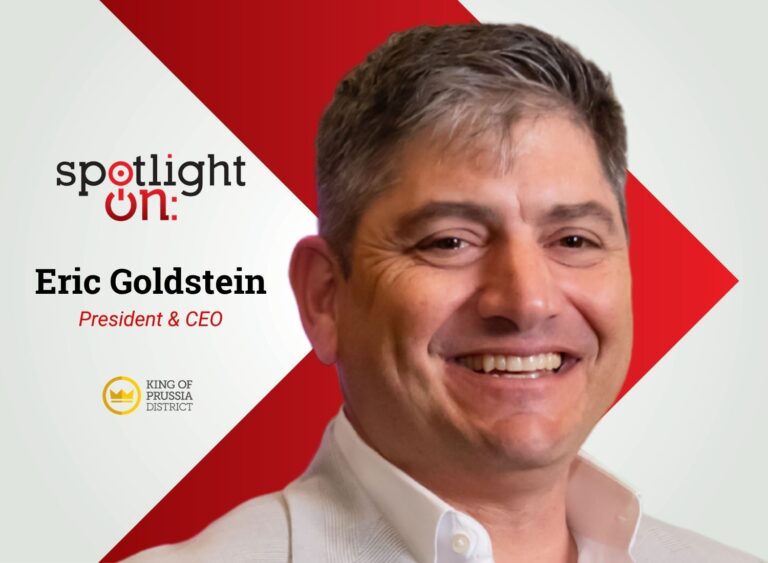
Yoram Izhak, President & CEO, IMC Equity Group
 May 2026 — Invest: spoke with Yoram Izhak, president and CEO of IMC Equity Group, about the strength of Florida’s real estate market, changing dynamics across industrial, multifamily, and retail, and the infrastructure investments needed to sustain growth. “We buy, we buy, and we keep it,” Izhak said.
What changes over the past year have most impacted the industry, and how has that influenced your approach so far?
Things are only happening for the better in the state of Florida because we are getting a lot of people moving here. We are seeing positives in real estate. More people are moving, more people are renting, and more people are investing. More people want to invest in Florida because they see the growth and they see the future that is coming here. Every day, we think that maybe it is not going to get better, but it keeps getting better. That includes all of Florida. We are seeing more increases and more improvement in Miami and Broward as well as across the entire state.
What are some of the trends you are seeing across the different asset classes where you operate, particularly in retail, multifamily, and industrial?
We are involved in warehousing, rental apartments, and retail, and we are seeing rent increases across every sector.
On the industrial side, that is the hardest right now. There are not enough small industrial units for small businesses in Florida. They are building a lot, but they are not building the small units. There is a real need for small-unit warehousing.
In rental apartments, we have seen a lot of units come to market in the last year and a half, so I think we are okay there. Vacancy is running about 5% to 6% — it used to be 2% to 3%, but now we are getting a lot of new units hitting the market. I think they will be building less over the next two years, and we are going to see improvement on that side.
On the retail side, big-box space is shrinking. But the tenants we are renting to are doing business, whether it is restaurants, service uses, or retail. There is an increase in retail activity and income because of the amount of people moving in. Even when there is vacancy on the retail side, we cover it by leasing to tenants who are servicing the local population. A lot of shopping centers that used to be 100% retail now need to be maybe 60% retail and 40% service.
How are higher financing, insurance, and construction costs influencing your acquisition and development decisions?
Development is obviously costing a lot more money. One reason is that land prices are increasing in Florida. The second is the rise in interest rates. Third is the cost of construction materials.
Two or three years ago, we used to say that building the average apartment for $300,000 or $350,000 was too much money. Now we are seeing that it is not so expensive because we are getting it back through rent. A lot of people are still coming here, though some are also moving to other parts of Florida, or other states that are less expensive. But I am not seeing those costs impact us in a major way.
On insurance, we had a tough time over the last three years with increases, but right now, at renewal, I am seeing costs come down by 35%. We are saving a lot of money there as insurance companies want and need more business.
Real estate taxes are measured by income but also by what you paid for the property. When we run our numbers, we already know taxes are going to increase. But rental rates are increasing an average of 3% to 5% a year, and that is covering the expenses.
What role does asset management play in driving performance in the current market environment?
People coming into Florida from Europe, New York, California, Chicago, and other places are used to lower returns than what we used to get here. If we used to buy at a 7% or 8% cap in Florida six or seven years ago, now we have to buy at a lower cap — 5.5% or 6% — because of the competition and the outside money coming in.
Prices are definitely going up, and people are overpaying. Someone comes from New York, where an apartment costs $600,000 or $700,000, and they come to Miami and see something for $200,000 and think it is so cheap. They look at it differently and feel like they are stealing the property, but their point of reference is different.
How do your properties contribute to the surrounding communities, particularly in terms of economic activity and business growth?
We own real estate across the state of Florida, and we got very lucky with that over the last 30 years. Florida is a lot easier to manage and gives us a better return on our money. We bought properties 10, 20, and 30 years ago for very little compared to today, so for us it is easier to handle those properties because the returns are only growing.
Every place, every city, is growing. There are more apartments and more people moving in, so income and business activity are up 25% to 30%. Yes, there is competition, but people are spending and buying. Miami-Dade and Broward are becoming so expensive that not everyone can afford it. But even if some people move out, many more are coming in. We are getting a lot more people who already know this is an expensive place to live.
What investments in infrastructure, transportation, or mobility are needed for the state to continue thriving over the next decade?
We are seeing one issue in Miami-Dade and Broward that is changing the state of Florida. Because of the sheer number of people moving in and the volume of tourists, what used to be a busy season of five months a year is now year-round. With that, the counties and the government have to start thinking more seriously about trains and transit.
This is not what people in Florida are used to. People here are used to driving, but things are changing. I used to drive to Orlando, and today we have a train going from Miami straight to Orlando that takes around two hours and is beautiful. If they do not keep investing in that, there will be a problem. What used to take me five minutes now takes 35 to 40 minutes. You start to feel it in the time you are losing. Parking is also challenging because there is simply not enough of it. People are gravitating towards trains, but we need much more of that.
What are your top priorities for the company over the next three to five years, and where do you see the biggest opportunities?
We bought land seven or eight years ago and are taking advantage of that now to build around 3,000 apartments in the next two years.
If you told me to buy land today, I am not smart enough to know if it would work out or not. Right now, we are not spending money on land. On top of that, it is becoming very tough to be in the construction business — too many details and problems with the cities. The approval processes are getting harder. Projects that we thought would take a year and a half are taking three years. So we are stepping back a little from self-development and getting better at buying finished product instead.
We started developing about 10 years ago and did very well, but we are pulling back because we are better at buying ready assets and letting other developers get involved with construction. Developers build, sell, and own nothing. We buy, buy, and keep for as long as possible. Real estate has its ups and downs, but we stay in the same place.
Is there anything else you would like to add?
I have lived in Florida for 45 years — I came here as a kid. The mix of people in Miami is wonderful. We have people from everywhere, and that is the beautiful thing about living here and in Florida more broadly. It is the blend of cultures that makes you feel good about it.