
Inside a $206B year for South Carolina manufacturing industry
Key points:
- • South Carolina manufacturing industry now supports roughly one in three jobs in the region and directly contributes as much as $206 billion a year to the state’s economy.
- • The workforce behind that output is shifting fast, with AI reshaping some roles even as retirements — not layoffs — absorb most of the change.
- • Recent capital commitments, from BMW’s completed $1.7 billion expansion to a $1.2 billion rare earths project, show why the pattern keeps repeating.
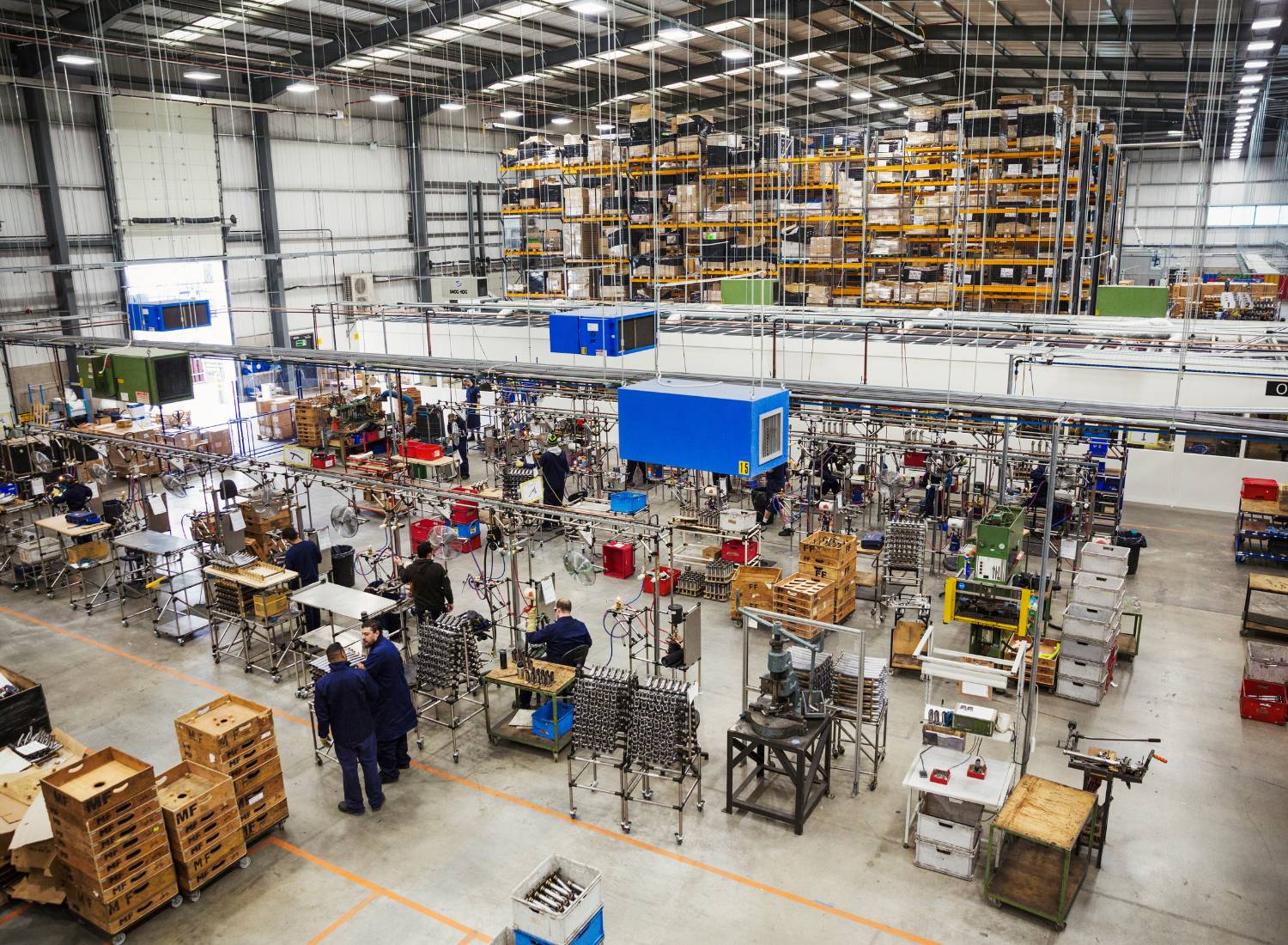 July 2026 — Ask a South Carolinian what their state makes, and the list runs longer than most people expect: fighter jets, wide-body jets, battery packs, tires, home appliances, rare earth materials. Nearly one in three jobs in the state now traces back, directly or indirectly, to a factory floor, and the South Carolina manufacturing industry has quietly become one of the most durable engines in the state’s economy — not because of any single project, but because of how many keep landing at once.
Join us at caa’s upcoming leadership summits! These premier events bring together hundreds of public and private sector leaders to discuss the challenges and opportunities for businesses and investors. Find the next summit in a city near you!
A sector rebuilt from scratch
It wasn’t always this way. South Carolina’s manufacturing identity used to run through textile mills and apparel plants, most of which closed or moved overseas decades ago. What replaced them is almost unrecognizable by comparison: aerospace, automotive assembly, advanced materials, medical devices.
Manufacturing today employs between 290,000 and 310,000 people and directly contributes as much as $206 billion a year to the state’s economy, according to a study commissioned by South Carolina Manufacturers & Commerce. Transportation equipment — cars, tires, aircraft parts — has nearly doubled its share of the state’s manufacturing output over the past twenty years. A report on the sector’s reshoring edge found manufacturing wages now carry a 24% premium over the state average, with an average worker’s salary of $75,698.
The scale shows up in strange, human ways as well. Boeing’s 787 Dreamliner, assembled by more than 9,000 workers in North Charleston, was recently voted the “coolest thing made in South Carolina” by nearly 200,000 people worldwide — a reminder that manufacturing here isn’t an abstraction to most residents. It’s a neighbor’s job, a cousin’s overtime shift, a plant everyone in town has driven past a thousand times.
The workforce question underneath it all
None of that growth is happening without strain. South Carolina manufacturers expect to add roughly 4,800 assembly line workers, 3,500 building maintenance workers, and 2,300 mechanics over the next five years, even as AI-driven automation puts inspection and packaging roles at elevated risk. University of South Carolina economist Joey Von Nessen, who authored the workforce study, expects retiring baby boomers to absorb most of that shift rather than triggering layoffs outright — a bet the state’s technical college system is staffing for now through partnerships with Scout Motors, Isuzu, and BMW.
Population growth is buying the state some room to adjust. According to Greenville Business Magazine, the reshoring-focused reporting notes South Carolina has added roughly 170,000 labor market participants since 2022, a larger gain than North Carolina, Tennessee, or Georgia posted over the same stretch, despite both states being roughly twice its size.
This is the backdrop against which individual investments keep landing — and lately, they’ve landed big. According to Wards Auto, BMW completed a $1.7 billion expansion of its Spartanburg and Woodruff facilities this year, unveiling a redesigned X5 built on a line that can run five different drivetrains, gas or electric, without slowing down. Plant Spartanburg now employs more than 11,000 people and has built over 7.3 million vehicles since 1994; the new Woodruff battery plant, using a space-saving “cell-to-pack” design, sets up BMW to assemble at least six fully electric models in the state by 2030.
“The completion of our investments in Plant Spartanburg and Plant Woodruff demonstrates our confidence in the United States and reinforces South Carolina’s role at the center of BMW Group’s global operations,” said Milan Nedeljković, BMW’s chairman of the board of management, as cited by Wards Auto.
Elsewhere, Duke Energy’s Site Readiness Program helped bring a $1.2 billion USA Rare Earth investment and 490 jobs to the Bailey Industrial Site in Cherokee County — the kind of deal that closes faster because the groundwork, permitting, and utility capacity were already in place before an executive ever toured it. The utility’s readiness work has helped attract $3.5 billion in capital investment and more than 5,200 jobs statewide since 2005.
Executives watching South Carolina should track two things through the rest of 2026: how fast the state’s technical colleges can keep pace with hiring across autos, aerospace, and the emerging rare earths supply chain, and which pre-permitted industrial sites get named in the next round of announcements.
Want more? Read the Invest: South Carolina report.