
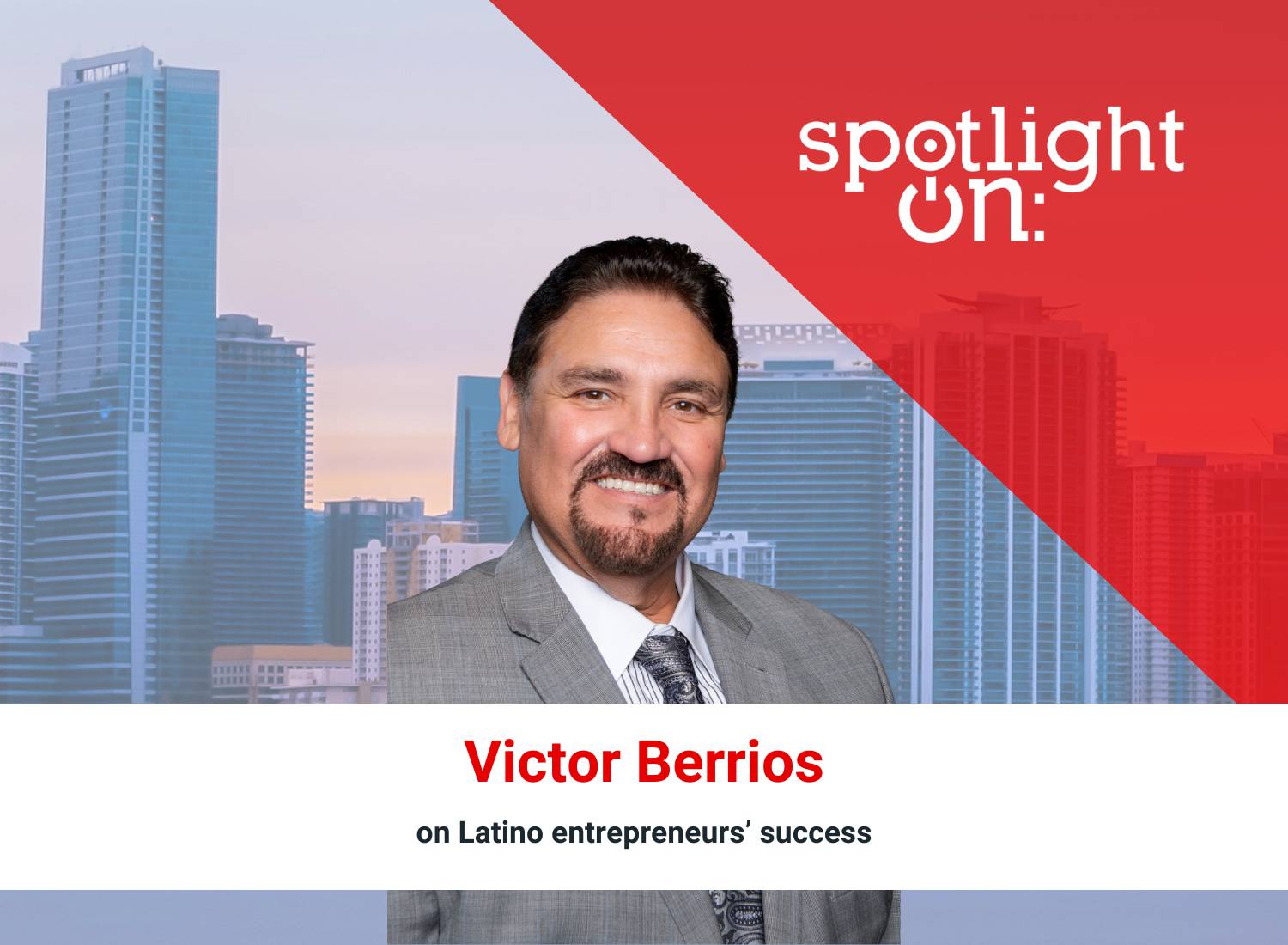
Spotlight On: Victor Berrios, Chairman of the Board/President & Owner, Tennessee Latin American Chamber of Commerce/ Jani-King Nash

Victor_Berrios_Spotlight_onDecember 2025 — In an interview with Invest:, Victor Berrios, chairman of the board of the Tennessee Latin American Chamber of Commerce and president and owner of Jani-King Nashville, discussed expanding access, workforce development, and advocacy, noting, “Building a strong network opens markets and opportunities that may not appear otherwise.”


Join us at caa’s upcoming leadership summits! These premier events bring together hundreds of public and private sector leaders to discuss the challenges and opportunities for businesses and investors. Find the next summit in a city near you!


What developments have most influenced the chamber’s mission to empower Latino entrepreneurs and professionals across Tennessee?

One major milestone for the Tennessee Latin American Chamber of Commerce has been the creation of the Chamber Foundation, known as the Tennessee Latin American Foundation (TLAF). This 501(c)(3) foundation now opens funding avenues that were previously out of reach.

With the Chamber Foundation supporting the chamber’s initiatives, the organization is better positioned to expand services that had been limited by financial constraints. The Foundation’s mission is to help Latino- and minority-owned businesses gain financial literacy, business skills, education, and regulatory compliance at all levels.

This support allows the chamber to run more business seminars, B2B networking events, coaching sessions, and literacy programs, ultimately serving more Latino entrepreneurs across Tennessee.

What is driving growth and opportunity for Latino-owned businesses in Tennessee?

Latino entrepreneurs are playing a major role in Tennessee’s entrepreneurial landscape, contributing fresh ideas and perspectives. These businesses are not just growing as they are a vital engine for job creation, revenue, and economic diversification.

Latino businesses are expanding beyond food and retail into construction, real estate, professional services, technology, and entertainment. This diversification, along with technology adoption and sustainable practices, is boosting growth and resiliency.

The momentum is not just about demographics. It is driven by institutional and cultural factors, too. A rising population, strong community support systems like the chamber and the Chamber Foundation, and favorable policies all help fuel this dynamic growth for the Latino community.

How are chamber members facing challenges that include access to capital and market shifts?

Securing funding remains tough for Latino entrepreneurs starting out, as they have historically faced disparities in loan approvals. Many are exploring alternative funding and seeking programs designed for minority-owned businesses.

Some are partnering with other established Latino business owners to strengthen their footing. Limited English proficiency can also create barriers with customers, partners, and lenders, so many hire bilingual staff and develop bilingual marketing to bridge that gap.

Building a successful business takes time, money, and a strong network. Entrepreneurs who use online tools, manage resources wisely, and take advantage of networking through groups like TLACC position themselves for success.

How is Avanzando 2.0 helping business owners and their employees build skills and stay competitive?

Avanzando, meaning “moving forward,” is one of our most important initiatives. This no-cost business accelerator, launched by TLACC, builds on the original version with a curriculum tailored for established entrepreneurs.

Participants gain strategic business development, sustainability training, networking, one-on-one coaching, and leadership development. The goal is to help Latino business owners grow revenue, set clear goals, and strengthen their organizations.

Avanzando 2.0 delivers culturally relevant training that combines advanced strategies, sustainable practices, and mentoring, driving measurable growth and a stronger Latino business community.

The first version was basic, helping new entrepreneurs get started. The 2.0 version focuses on scaling, financial literacy, and improving creditworthiness with lenders. It reminds entrepreneurs not to get lost working in the business but to step back, plan, and scale wisely.

What role do events, cultural programs, and partnerships play in promoting inclusion and leadership development?

Networking is one of the most powerful tools an entrepreneur can use. Building a strong network opens markets and opportunities that may not appear otherwise.
It is important to take advantage of programs that sharpen leadership skills and help entrepreneurs adapt to Tennessee’s unique business ecosystem, which may be very different from the one they came from. Smart entrepreneurs understand that success depends on immersing themselves in the local business community and embracing opportunities to collaborate and grow.

What lessons have you learned from running your own business that apply to other small businesses?

My personal journey has been one of highs and lows, like just about every other entrepreneur’s. What has carried me through is understanding that these peaks and valleys exist and will always be part of doing business. The key is not to get too high or too low, but to manage expectations reasonably and not overextend resources.

It is very important to have a clear vision of the future and then engineer a path to achieve it. I have always believed in picturing the future and then reverse-engineering the steps to get there.

One of the biggest lessons is discipline. Everything must be done with discipline and moderation. Sometimes people taste success and think they have “made it,” but I never believe I have made it. I keep working, pushing, and growing. Maintaining that mindset ensures there is always room to build, scale, and achieve more.

How can local businesses respond to workforce needs and support employees in essential industries?

Businesses should make sure their employees are well taken care of in ways that other companies are not doing. Everyone works for a paycheck, that is clear, but people also yearn for respect, dignity, and self-worth.

There is no more important task than to speak directly with employees and let them know how valuable they are, not just to the organization but personally as well. Showing genuine concern and valuing employees builds loyalty that is immeasurable.

When that happens, companies thrive because customers reap the benefits of a staff that truly cares about what they do every day. Take care of the people who are taking care of the business. If someone is not servicing the client directly, they are servicing someone who is, so they should give 100% every day. Treat employees with respect and dignity — they are out there making an honest living and deserve that commitment.

What role does advocacy play in removing barriers for small businesses and supporting the Latino community?

Organizations like TLACC must maintain a watchful eye on what is happening at the legislative level that may negatively impact minority-owned businesses, for Latino-owned businesses, and all minority businesses.

If and when a bill reaches the legislative floor that does not favor minority businesses, our collective voices must be raised to ensure lawmakers understand the business community’s perspective. If voices are not raised and the impact of these decisions is not communicated, then advocacy is not being done correctly for our member businesses or any other Latino or minority-owned business out there.

Looking to the future, what are your top priorities for expanding the chamber’s reach over the next few years?

With the Chamber Foundation now established, the chamber will be able to roll out additional programming that helps members access the resources they need. One key priority is partnering with local community colleges and universities to develop strong curricula that prepare young entrepreneurs for the jobs of today and tomorrow. This is an initiative we have been discussing for some time, and the moment has come to move it forward.

We have piloted a couple of very successful programs. Now, with the Foundation’s support, we will be able to offer meaningful scholarships to Latino students that help them through their college years, all the way to graduation, and into becoming productive members of Tennessee’s business ecosystem.

Many organizations offer scholarships to Latinos and other minorities, but too often these amounts are insignificant. Giving $1,000 or $2,000 may not truly change the trajectory of a student’s college experience. What we are looking to do is play a meaningful role in someone’s life by providing support that will genuinely propel them to graduation.

Too many students start college but drop out a year or two later, and finances are the biggest reason why. Programs like the Tennessee Promise help with the first two years, but what happens when a student wants to continue to a four-year degree, a bachelor’s or master’s, but cannot afford it? One of our top goals for the Foundation is to build a robust scholarship system that helps Latino students complete college and reach their full potential.

Want more? Read the Invest: Nashville report.

Subscribe to Our Newsletters

"*" indicates required fields
Address*
Would You Like To Receive Our National Newsletter?*
Interests
Markets
This field is hidden when viewing the form

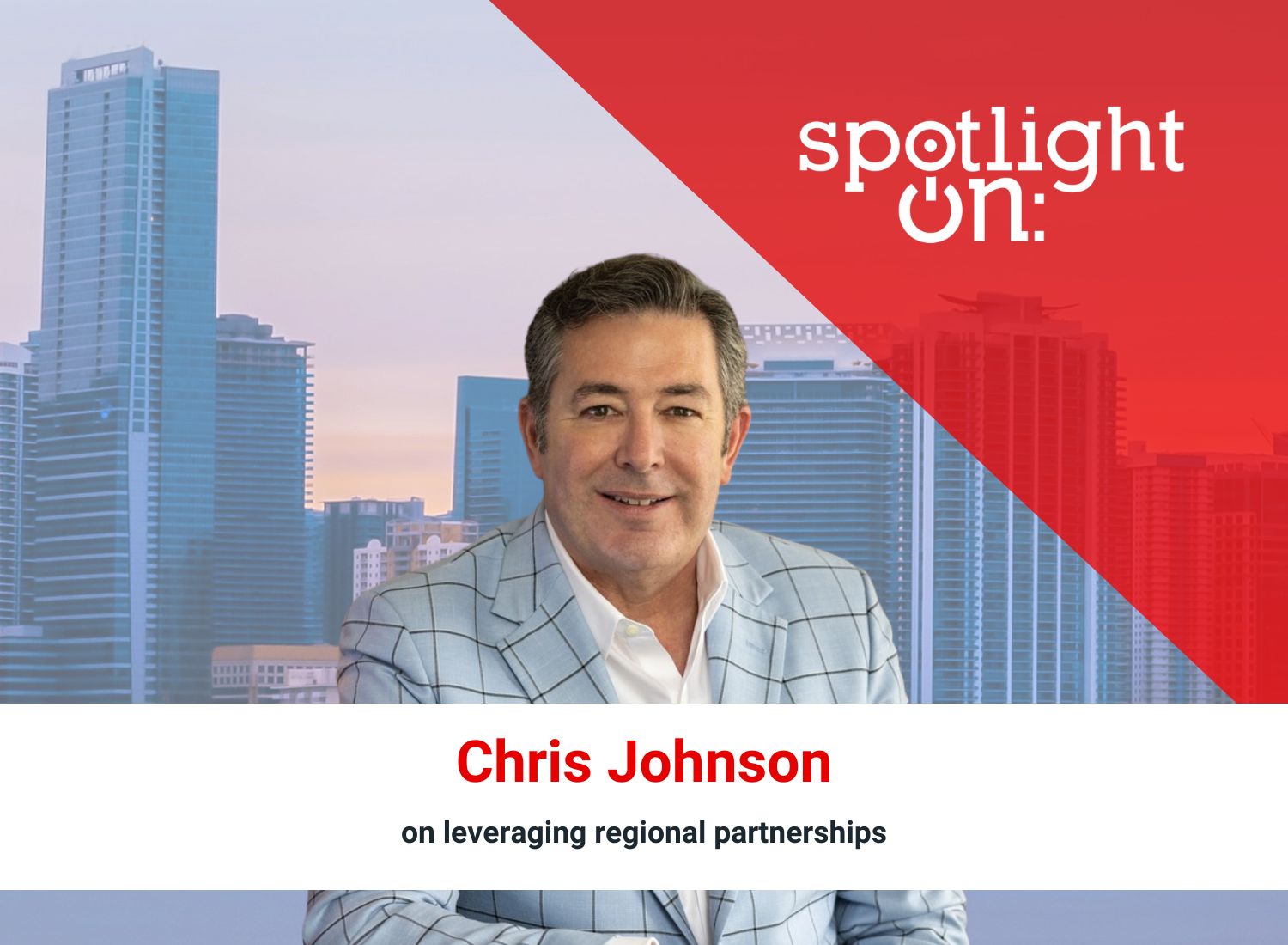
Spotlight On: Chris Johnson, Director, Johnston County Economic Development

Chris_Johnson_Spotlight_onDecember 2025 — Invest: spoke with Chris Johnson, director of Johnston County Economic Development, about how the county is leveraging regional partnerships, transportation assets, and long-term talent strategies to stay competitive in a fast-growing region. “Business knows no boundary. Labor sheds know no boundary. It is all about drive times,” Johnson said.


Join us at caa’s upcoming leadership summits! These premier events bring together hundreds of public and private sector leaders to discuss the challenges and opportunities for businesses and investors. Find the next summit in a city near you!


How would you define the economic development mission for Johnston County, and what long-term goals guide your team’s efforts?

Our mission is to sustain and strengthen Johnston County’s position as a leader in economic development while staying grounded in the character of our community. We’ve built strong momentum, with several projects in the pipeline that, if announced, would further solidify our statewide leadership. But that success isn’t about one office or one person. We’re fortunate to be situated beside one of the country’s hottest regions — the Research Triangle — and regionalism is central to our approach. When the region succeeds, Johnston County succeeds.

At the same time, we know companies have choices across the country, so our long-term strategy focuses on being clearly pro-business and relentlessly committed to speed to market. That means reducing permitting friction, responding quickly, and differentiating Johnston County at the final selection stage.

Another long-term pillar is talent. North Carolina is known for its workforce, and we build on that with programs like the BioWorks curriculum, allowing high-school students to graduate with both a diploma and a certificate that leads directly into well-paying life science and biotech jobs.

Initiatives like JoCoWorks bring nearly 4,000 eighth graders to Johnston Community College for what we call a “career fair on steroids,” giving students — and often their parents — a firsthand look at opportunities inside the facilities they drive by every day. These workforce, education, and regional strategies form the foundation of our long-term vision. Also somewhat unique is our JoCo Commissioners Promise program, which, since 2023, has paid postsecondary tuition and fees for local high school grads who are not eligible for student aid from state or federal programs.

What role do infrastructure and transportation corridors, such as I-95 and US-70, play in site selection and business attraction?

Infrastructure is absolutely central to our competitiveness. For years, economic development was territorial and confined to county boundaries, but that’s not how business or labor markets work. Business knows no boundary. Labor sheds know no boundary. It is all about drive times. Companies want to know how quickly they can move people, goods, and services, and Johnston County is positioned exceptionally well.

I-95 gives us prime north-south connectivity — 850 miles from both Miami and Maine — and Exit 95 is just minutes from my office. I-40 provides a strong east-west connection to port systems, Raleigh, major universities, and Raleigh-Durham International Airport. Prospects often require interstate access and proximity to a major airport within 45 minutes to an hour, and we meet those criteria. The transformation of US Highway 70 into I-42 has made Johnston County one of the few counties in North Carolina served by three interstates.

Similarly, multiple Class A railroads are another advantage, with the CSX main line intersecting the Norfolk Southern east-west connection right here. And our airport, the Johnston County Regional Airport, has grown significantly as general aviation relocates from RDU. Those aircraft are taxed here, buy fuel here, and contribute to our tax base without requiring the same public services as large residential developments.

No discussion of infrastructure is complete without water and sewer. These resources are finite and costly, often requiring regional approaches rather than standalone “super facilities.” Multi-county collaboration has become essential, and that cooperative mindset supports growth across the broader region.

With so many residents commuting out of the county for work, how are you supporting more jobs and talent within Johnston County?

That is the challenge I wake up to every day. Our labor shed is about 125,000 people, and roughly 77% leave the county daily for work, which is around 95,000 to 96,000 commuters. While that presents a challenge, it also represents an opportunity. When prospects ask where their workforce will come from in a tight labor market, I point to the morning traffic on I-40 heading into Wake County. That’s their labor pool.

If employers offer competitive wages, many of those commuters would prefer to work closer to home. A five-minute drive instead of an hour in traffic means more time with family and a higher quality of life — what we refer to as live, work, play.

Historically, Johnston County relied heavily on textiles, light manufacturing, and agriculture. Agriculture remains our No. 1 industry, but the mid-1990s brought huge shifts: offshoring, the tobacco buyout, and the rapid growth of Raleigh and the tech sector. At the same time, I-40 opened into the county, and a significant amount of land became available as farmers reevaluated their futures. Those forces created a perfect storm that attracted many new residents, especially from the Northeast, who saw Johnston County as an affordable place with strong schools, safe streets, and fast access to Triangle jobs.

Today, out-commuting is common across the broader region, but we view it as an asset. By recruiting advanced manufacturing and higher-wage industries, we can give residents more options to stay local. With the county adding roughly 8,000 residents each year, simply maintaining our current commuting ratio would require roughly 8,000 new jobs annually, which is an ambitious target for any county. We continue to see growth in small businesses, retail, and services, but the focus is on primary jobs that sustain households. It’s a steep climb, but we see it as an opportunity, and we’re committed to building a community where people can truly live, work, and play in Johnston County.

Want more? Read the Invest: Raleigh-Durham report.

Subscribe to Our Newsletters

"*" indicates required fields

Address*
Would You Like To Receive Our National Newsletter?*
Interests
Markets
This field is hidden when viewing the form

Regional Review: Miami healthcare market grows amid rising patient demand

Writer: Pablo Marquez

Healthcare_MiamiRegional Review is a year-end series from caa that looks at key developments in a focused industry throughout the year and sets the stage for what’s to come in the near term.

December 2025 — Miami’s healthcare sector sustained strong momentum in 2025, marked by major facility expansions, shifts in care delivery models, and rising demand for community-centered services.


Join us at caa’s upcoming leadership summits! These premier events bring together hundreds of public and private sector leaders to discuss the challenges and opportunities for businesses and investors. Find the next summit in a city near you!


The region’s healthcare landscape remains centered on increased access, technological innovation, and rising outpatient care, reflecting broader demographic trends across South Florida.

Facility expansions and new care hubs

One of the most significant developments this year was the opening of the UHealth SoLé Mia Medical Center in North Miami-Dade. This seven-story, 363,000-square-foot ambulatory care facility is the largest in the University of Miami Health System and introduces a new model of care that integrates specialty services with AI and advanced technology. The center is expected to serve tens of thousands of patients annually and brings oncology, ophthalmology, urology, and other specialty services closer to communities north of downtown Miami.

In parallel, Mount Sinai Medical Center announced expansion into Westchester, with a phased project that begins with a freestanding emergency department in 2026 and will evolve into a full-service hospital campus by 2027. This expansion responds to demand in a densely populated residential neighborhood that had previously lacked a major acute care facility.

Outpatient growth and medical office trends

Miami’s healthcare delivery continues to shift toward outpatient and neighborhood-centered care, aligning with national real estate trends showing increased outpatient volumes and real estate demand. National analyses project double-digit growth in outpatient services, a shift driven by patient preference, demographic change, and cost efficiency. 

Locally, medical office demand has also grown as providers increasingly look to Coral Gables and other submarkets for available space, reflecting expanding service footprints.

In addition to traditional outpatient clinics, retail-based healthcare locations have been on the rise, with health systems and urgent care providers occupying space in shopping centers throughout Miami-Dade. These ‘medtail’ centers, offering walk-in care, testing, and specialty services, are improving convenience and reducing travel time for residents, especially in diverse and car-centric neighborhoods.

“The last couple of years have ushered in a new era in more personalized, patient-centric healthcare with emerging technology; that’s a trend we’ll continue to see. With healthcare systems across the country implementing AI into their patient care models, Mount Sinai is committed to being at the forefront of these advancements,” said Gino Santorio, president and CEO of Mount Sinai, in the latest edition of Invest: Miami.

Innovation and technology in care delivery

Innovation continues to shape Miami’s healthcare identity. The eMerge Americas 2025 Healthtech Innovation Hub, presented by Jackson Health System and UHealth, highlighted cutting-edge advancements such as precision medicine, generative AI, digital health solutions, and virtual care tools that could redefine patient experiences and system efficiencies. Programs like this reinforce Miami’s growing reputation as a site where healthcare and technology intersect.

Efforts to expand equitable access to care were evident in the expansion of Care Resource’s Little Havana Health Center, a 45,000-square-foot facility that more than doubles the center’s capacity and aims to serve up to 20,000 patients annually, addressing gaps in underserved neighborhoods. Local public health planning efforts, such as the Miami-Dade Consortium for a Healthier Miami-Dade, continue to emphasize chronic disease prevention and community wellness as priorities for long-term population health.

Challenges

Despite growth, Miami’s healthcare sector still faces structural challenges, such as maternity ward closures across South Florida, which have raised questions about access to obstetric care. These closures are part of broader conversations about healthcare capacity and service distribution across the region.

Looking ahead, healthcare appears poised for continued expansion through facility growth, outpatient innovation, and technology integration. The blend of academic medicine, real-world access improvements, and community-focused care positioned Miami as a dynamic healthcare hub heading into 2026.

Want more? Read the Invest: Miami report.

Subscribe to Our Newsletters

"*" indicates required fields

Address*
Would You Like To Receive Our National Newsletter?*
Interests
Markets
This field is hidden when viewing the form

Regional Review: Atlanta’s research hubs and startups drive tech sector growth

Writer: Eleana Teran

AtlantaRegional Review is a year-end series from caa that looks at key developments in a focused industry throughout the year and sets the stage for what’s to come in the near term.

December 2025 Atlanta’s tech and innovation economy is on the rise, as startup activity is picking up, corporate investment is widening, and higher education institutions continue to anchor the ecosystem with expanded research space and commercialization programs.


Join us at caa’s upcoming leadership summits! These premier events bring together hundreds of public and private sector leaders to discuss the challenges and opportunities for businesses and investors. Find the next summit in a city near you!


“Atlanta ranks high for Fortune 500 headquarters, making innovation essential for long-term growth. Companies — like people — grow, mature, and either reinvent or decline. Innovation and R&D drive that reinvention,” Eloisa Klementich, president and CEO of Invest Atlanta, told Focus:. 

“Atlanta’s network of corporate innovation centers helps by providing access to talent, housing, diversity, and creative energy. Here, innovation is not only a trend, but a foundation for business sustainability and job creation,” said Klementich.

Strong fundamentals are supporting the region’s progress. The Metro Atlanta chamber ranks the region among the nation’s top markets for data center development and commercial real estate investment. Those assets continue to attract technology and logistics firms seeking room to expand in a cost-effective and connected market.

That physical capacity is matched by a deepening labor market. Georgia’s software, cloud, and cybersecurity employment has grown steadily over the past year. Demand remains the strongest in AI and data-focused roles, while local job postings signal an expanding corporate preference.

With a median tech salary approaching $112,018, the region is now competitive with larger metros due to its strategic location while maintaining a cost advantage that continues to drive both startups and established firms. Its smart tech infrastructure, alongside a healthy tech job market, has earned the city the top spot as America’s Smartest City for 2025. Together, these indicators point to an ecosystem maturing on its own terms, driven as much by practicality and affordability as by ambition.

Institutional anchors

Atlanta’s higher education network is one of the region’s biggest economic assets. Emory University boosts the region’s profile in life sciences and digital health. Its School of Medicine partners with the Centers for Disease Control and Prevention (CDC) and other research institutions, a collaboration that supports a high volume of biomedical research, clinical trials and traditional studies. 

 “Being part of a world-class institution and health system, in a city with so many partners, allows us to lead in research and innovation that improves lives far beyond Georgia,” Suresh Ramalingam, executive director of the Winship Cancer Institute of Emory University, told Focus:.

At Georgia State University (GSU), growth in business analytics, fintech, and research is gaining traction. In 2025, it launched an AI and fintech conference reflecting local demand, and it secured more than $165 million in research grants, a sign its academic resources are mobilizing around emerging tech fields.

Atlanta’s HBCUs, including Clark Atlanta University, Morehouse College, and Spelman College, contribute to diversifying the tech and innovation talent pool. For instance, Morehouse hosts a new STEM education research center aimed at broadening minority representation in science and technology. 

These institutions are ensuring a flow of underrepresented talent into emerging fields through different initiatives, including joint career fairs.

Within this broader ecosystem, Tech Square at Georgia Tech remains a central engine bridging academia and industry. The district hosts more than 100 startups and 25 corporate innovation centers, linking academic discovery with commercialization. The university recently announced plans to convert the historic Biltmore building into the Biltmore Innovation Center, adding over 100,000 square feet of research and startup space.

The project will host Georgia Tech’s CREATE-X Headquarters, which has already launched more than 600 startups with a combined valuation above $2.4 billion and aims to help launch 1,000 new ventures each year. It will also include a Startup Scaling Platform, VentureLab, and Office of Technology Licensing, alongside a new venture investment hub designed to help student and faculty startups scale from prototype to market.

Innovation and investment climate

Georgia’s innovation economy remains among the Southeast’s most mature, channeling steady capital into fewer, stronger companies. Since 2018, the state has seen 3,236 total investments worth $17.7 billion.

After the post-pandemic surge of 2021-2022, Georgia’s venture activity has settled into a more selective but stable phase. According to the State of Startups in the Southeast 2025 report, total deal volume has slowed, yet overall investment levels remain steady as funding concentrates in larger, later-stage rounds. Industry analysts describe the shift as a sign of maturity, with capital flowing to companies demonstrating solid fundamentals and market traction. 

“Global innovators are increasingly drawn to Georgia as leading companies in technology and innovation want to be part of this thriving ecosystem,” Larry Williams, president and CEO of the Technology Association of Georgia, told Focus:. “Our education systems, from K-12 to higher education and technical colleges, play a crucial role in developing the talent that fuels this growth.”

Investors and corporate partners are increasingly looking to Atlanta for early-stage opportunities that balance innovation with affordability. Local funds and accelerators are scaling alongside new entrants from national firms that see long-term potential in the Southeast. According to the Metro Atlanta Chamber, that inflow of venture activity is helping local startups access growth capital while staying rooted in the region’s ecosystem, which in turn supports job creation and commercialization. 

Information technology, including SaaS, continues to attract the most capital, followed by fintech and healthcare, which form the core of Georgia’s innovation economy. Local investors like Tech Square Ventures, BIP Ventures, and Atlanta Ventures, along with programs such as CREATE-X, Georgia State’s seed funds, and Google for Startups, keep early-stage activity moving and help anchor the state’s diverse startup market.

Want more? Read the Focus: Atlanta report.

Subscribe to Our Newsletters

"*" indicates required fields

Address*
Would You Like To Receive Our National Newsletter?*
Interests
Markets
This field is hidden when viewing the form

US travel outlook weakens as a slower recovery takes shape

Writer: Mirella Franzese

US_travelDecember 2025 — This year marked one of the most challenging periods for the US travel economy since the pandemic, underscored by declining international visits, flat travel spending, lower hotel room occupancy, and major federal budget cuts for hospitality groups.


Join us at caa’s upcoming leadership summits! These premier events bring together hundreds of public and private sector leaders to discuss the challenges and opportunities for businesses and investors. Find the next summit in a city near you!


Headwinds are expected to shift in 2026, with major global events like the FIFA World Cup and America250 showing signs of a potential recovery. Yet, the sector still faces persistent challenges — from restrictive travel policies and rising visa costs to inflated prices — which could undercut next year’s growth projections for hospitality and tourism. 

“We previously had a huge market, but we do not see this anymore. Today’s revenues are 10% of what they used to be,” Ehab Mehany, general manager of DoubleTree by Hilton Cherry Hill Philadelphia, told Invest: with regard to changes in the international traveler market. 

According to Travel and Tour World, The Trump administration’s crackdown on immigration continues to give some international visitors pause when planning trips to the U.S. Meanwhile, rising visa application costs and lengthy processing times are barring many travelers from visiting the country. Travel spending is also at risk due to macroeconomic headwinds like inflation and tariffs, which have raised costs around the country, making discretionary purchases more difficult to justify.  

International uncertainty

Under these constraints, the outlook for 2026 remains largely uncertain. Annual international travel to the U.S. is expected to drop for the first time since 2020, after falling for six consecutive months, according to preliminary data from the U.S. Travel Association’s U.S. Travel Insights Dashboard. Projections show a 6.3% decline in the number of overseas international visitors this year.

Canadian inbound travel — which has historically been one of the biggest segments for U.S. tourism in terms of sheer numbers and spending — also continues to extend its near year-long slump, dropping 20% to 30% in October, per the report. 

As a whole, the number of Canadian visitors in the U.S. has declined steeply from January to October in 2025, impacting American businesses in regions along the U.S.-Canada border that have long depended on Canadian tourism dollars. 

“These are more than numbers; they represent missed revenue for local businesses, reduced hotel demand, and fewer dollars supporting jobs and investment in our community,” Shirley Hughes, president and CEO of  Visit Fargo–Moorhead, told Yahoo! Finance.  

 Slower growth

Hotel room demand also continued to slip this year, according to the U.S. Travel Association. Global analytics platforms, CoStar and Tourism Economics, recently downgraded their U.S. hotel performance forecast for the remainder of the year, expecting a “rare” year over year decrease in revenue per available room (RevPAR). This would be the first decline seen since the pandemic in 2020 and the Great Recession in 2009.

“We expect little change in the macroeconomic environment as unemployment and prices continue to rise,” Amanda Hite told CoStar. “As a result, our hotel performance outlook for the remainder of this year and next were lowered once again.”

Despite these difficulties, U.S. hospitality groups continue to grapple with lack of support from the federal government. In July, Brand USA, the nation’s leading destination marketing organization for international inbound travel, experienced an 80% budget cut, dropping from $100 million to $20 million.

Since 2012, Brand USA has attracted 10.3 million additional international visitors to the U.S., generating $76 billion in economic output, and sustaining nearly 40,000 jobs per year, without any cost to taxpayers, according to a statement from the organization following the cuts.

Brand USA’s President and CEO Fred Dixon said this reduction will require a significant recalibration of resources and programming, especially with major global events like America250 and the FIFA World Cup on the immediate horizon.

From a regional perspective, tourism and hospitality leaders who’ve spoken with Invest: have highlighted the importance of tourism revenue as a driver for growth in all community aspects.

“One of the biggest challenges we face is funding,” Jason Johnson, tourism director of Wilson County Convention & Visitors Bureau, told Invest:. “People see government spending and wonder whether the investment in tourism is more important than ambulances, more schools, or better roads. But…tourism brings in new revenue, which ultimately funds those exact things.”

Immigration Woes

Meanwhile, America’s new immigration and visa policies also risk slowing down travel to the U.S., especially from key growth markets in Latin America and Asia. 

Brazil saw the sharpest drop in U.S. visa issuance this year under the Trump administration, according to a survey from Brazilian national news outlet Folha de S.Paulo. 

The U.S. State Department issued 358,000 tourism and business visas to Brazilians in the first five months of President Trump’s second term, compared to 482,000 in the same period of 2024. In 2023 and 2024, the U.S. issued more tourism and business visas to Brazil than any other country.

In October, the U.S. introduced an additional levy on travelers from non-visa waiver nations, including Mexico, Argentina, Brazil, India, and China. The total cost of a U.S. visa reached $442, which is among the most expensive in the world, as cited by Reuters.

Visitors from those markets accounted for most of the growth across U.S. travel at the start of this year. The number of travelers from Argentina jumped 20% in the first half of 2025, while arrivals from Mexico and Brazil rose 14% and 4.6%, respectively. On the other hand, Western European countries such as France, Portugal, and England, saw a 2.3% drop in visits to the U.S. in response to new policies, according to Euronews.  

Additionally, the 2026 FIFA World Cup has some of its biggest fan bases in Brazil, Argentina, England, France, and Portugal. Matches involving these countries are expected to generate above-average travel demand in host cities, according to Tourism Economics economists, as cited by Reuters

For comparison, the standard international traveler is expected to stay for an average 12 days, buy two tickets per person and spend about $416 daily, per a joint report by FIFA and the World Trade Organization.

Want more? Read the Invest: reports.

Subscribe to Our Newsletters

"*" indicates required fields

Address*
Would You Like To Receive Our National Newsletter?*
Interests
Markets
This field is hidden when viewing the form

Spotlight On: Jackie Espinosa, Mayor, City of Kissimmee

Jackie_Espinosa_Spotlight_onDecember 2025 — Invest: sat down with Jackie Espinosa, mayor of the City of Kissimmee, to discuss how the city is aligning rapid growth with prudent, community-focused development. From new hotels and a convention center downtown to reinvestment along the Vine Street corridor and around the executive airport, nearly half a billion dollars in projects are reshaping Kissimmee’s economic profile. “It’s like the Emerald City. Everything’s happening here,” Espinosa said.


Join us at caa’s upcoming leadership summits! These premier events bring together hundreds of public and private sector leaders to discuss the challenges and opportunities for businesses and investors. Find the next summit in a city near you!


Over the past year, what changes have most influenced the city of Kissimmee?

We’ve always been development-friendly, but what has truly defined this year is our focus on prudent development — projects that create long-term value for residents and businesses rather than growth for growth’s sake. You see that in our Kissimmee Complete Street Improvement Project and in how we’re approaching hotels, housing, and mixed-use redevelopment across the city.

On the fiscal side, we just adopted a proposed budget of about $310.3 million for the new fiscal year. For a city with close to 90,000 residents, we’re not the largest, but certainly not the smallest, and we’re operating from a position of strength. Our millage rate has remained at 4.6253 for 17 consecutive years, reflecting the stability of our budget and the discipline of our administration.

From a development perspective, we’ve approved several hotel projects for the first time in a long time. Azure will replace our existing Civic Center site with roughly 300 rooms, and alongside it we’re building a new convention center. We also have a new hotel planned near our executive airport with extended-stay options for students in aviation programs, plus another hotel downtown that will include about 30 residential units.

Add in the redevelopment of the former Kmart site — with 630 residences, about 51,000 square feet of commercial space and a 73,400-square-foot indoor sports facility — and, together with CRA investments, we’re approaching half a billion dollars in public and private investment.

What economic and demographic trends are shaping business attraction and investment in Kissimmee today?

Tourism has long been one of our leading drivers, but what’s changing is the diversification of our economy. We’re seeing strong momentum in advanced and micro-technology due to our proximity to NeoCity. While NeoCity sits just outside our limits, it directly influences our housing market, workforce, schools, and job opportunities. Those high-paying jobs are shifting the income profile of our community.

With that growth, we’ve been intentional about aligning development with public safety. We recently received a $750,000 U.S. Department of Justice grant to expand community policing and support public safety initiatives. Growth and safety must move together — and as our police department has rebuilt trust with the community, this funding allows us to expand that progress. When you combine tourism, innovation, residential growth and stronger public safety, you start to see a more balanced economic base taking shape.

How are revitalization efforts advancing, particularly around housing and redevelopment?

The Vine Street corridor is a 5.5-mile stretch that historically has been viewed primarily as a tourist corridor. Our goal is to reposition it as a vibrant, mixed-use area that serves both residents and visitors. Housing is central to that transformation. The former Kmart site alone will bring 630 new units, and beyond that, various projects along the corridor include a mix of affordable and market-rate housing to reflect the diversity of our community.

Through our two CRAs — Downtown Kissimmee and Vine Street — we’re offering grants for façade improvements and upgrades that elevate the look and feel of the corridor. This ensures we’re not only investing in downtown but also in the gateways that shape the city’s broader image.

How are you supporting the expansion of Kissimmee’s medical corridor?

We’re fortunate to have a strong medical presence, including a major HCA hospital that serves as a Level 2 trauma center. Helicopters fly in from across Central Florida when needed, and having that level of care within the city is a tremendous asset for both residents and employers.

Around that anchor, we’re seeing more medical offices and specialized facilities open or expand. To support them, we offer startup funding, expansion grants, and incentives for businesses creating new jobs. Our fast-track permitting process is especially important for healthcare projects, where timing can be critical.

The medical district sits just before our executive airport, and together they form a growing hub of economic activity. Our next goal is securing a customs unit at the airport to expand import-export opportunities. As I often say, it’s like the Emerald City — everything’s happening here.

How are you working with regional partners to expand multimodal transportation options?

Connectivity is one of our greatest strengths. SunRail runs directly into downtown, and we complement that with Freebee — an on-demand, no-cost service that takes riders anywhere within our expanded medical district. If someone gets off SunRail and needs to reach a hospital or clinic, Freebee gets them there with no fare.

We also partner closely with LYNX and its regional services to ensure transit supports growing corridors and employment centers. And Amtrak runs right through the center of downtown, bringing travelers from across the country. With SunRail, Amtrak, LYNX and local micro-transit working together, Kissimmee is becoming even more accessible as we grow.

Looking ahead to 2026 and beyond, what new economic development strategies and partnerships is the city launching?

One initiative I’m especially proud of is Business Boost 2.0. We allocated $1 million in remaining COVID-era funds to help small businesses that were here before the pandemic. Home-based businesses can receive around $5,000 in grants, while brick-and-mortar businesses can receive up to $20,000 — meaningful support at a critical time.

We’re also focused on attracting and sustaining new businesses. Our CRAs provide a Pioneer Project Incentive Program for residential, innovative commercial and mixed-use development, and our Commercial Property Improvement Program grant offers up to $50,000 for improvements to long-standing businesses, sometimes without requiring a match or repayment. 

When you take everything together — hotel and convention investments, medical and aviation growth, business grants, fast-track permitting and CRA revitalization — Kissimmee is becoming a place where opportunity is tangible. Our job is to make sure that entrepreneurs and employers see the city as a partner in their success.

Want more? Read the Invest: Orlando report.

Subscribe to Our Newsletters

"*" indicates required fields
Address*
Would You Like To Receive Our National Newsletter?*
Interests
Markets
This field is hidden when viewing the form

Spotlight On: Richard Sellwood, Senior Vice President & COO, USF Credit Union

Richard_Sellwood_Spotlight_onDecember 2025 — Richard Sellwood, senior vice president and COO of USF Credit Union, sat down with Invest: to discuss the credit union’s expansion into new markets, its investment in digital innovation and AI, and its strategic efforts to personalize member experiences. “We’re especially interested in how AI can enhance member service, analyze data, and personalize offerings to create a truly exceptional experience,” Sellwood said.


Join us at caa’s upcoming leadership summits! These premier events bring together hundreds of public and private sector leaders to discuss the challenges and opportunities for businesses and investors. Find the next summit in a city near you!


What changes over the past year have most impacted USF, and in what ways?

Two key initiatives are driving the biggest impact for us right now. First is our expansion into business banking. We’re building out a dedicated department with the right competencies, structures and processes to serve business clients effectively. It’s a major growth opportunity for the credit union and a powerful way to fulfill our mission: delivering financial solutions that improve members’ lives. Many of our members are small-business owners, and supporting them means supporting the broader community we live and work in. We’re excited to offer tailored products and services that meet the unique needs of each business, without becoming overly rigid.

The second major focus is exploring the role of AI in our industry. While we’ve begun using AI in limited ways, we’re looking at how it can help us operate more efficiently and reinvest savings back into our members and communities. We’re especially interested in how AI can enhance member service, analyze data, and personalize offerings to create a truly exceptional experience. These two areas, business banking and AI, are central to our strategy moving forward.

How have your recent digital upgrades changed member behavior and operational efficiency?

One of our most recent digital upgrades is the launch of Flex Pay, our version of buy now, pay later. Members have two flexible options, both accessible through our digital platforms. After making a debit card purchase, they may receive an offer to split the payment over time, effectively putting the funds back into their account. Alternatively, they can request funds in advance through our app and choose to repay it over the course of the coming months. This feature provides much-needed financial flexibility, especially as everyday expenses continue to rise.

We’ve also integrated live chat into our mobile app to enhance member support. With two-thirds of our digital activity now happening on mobile devices, we’ve adopted a mobile-first approach across all digital initiatives. Today’s members expect seamless, on-the-go service, and we’re committed to meeting them where they are.

USF Credit Union will expand beyond Tampa Bay with a new Winter Park branch slated for spring 2026. What does that signal about your statewide strategy?


USF Credit Union is opening its first branch outside the Tampa Bay area, marking a major milestone with a new public-facing location in Greater Orlando. We partnered with a site selection firm to identify the best location to serve both existing and prospective members, many of whom live and work in the Orlando region after attending USF. This expansion reflects our commitment to “Better Banking for All,” a tagline that underscores our inclusive approach.

While we’re proud of our USF roots, membership is open to everyone, not just those affiliated with the university. We’re excited to showcase the high-quality service we’ve built, which is consistently reflected in our Net Promoter Scores and overall member satisfaction. Our members love what we do, and we’re proud to bring that experience to a broader community.

You recently launched “Verde,” a cannabis banking program. What kind of demand are you seeing from businesses in this space?

This is a relatively new venture, and like anything innovative, it comes with some inherent risk. That’s why having the right structure and risk controls in place is critical — and I’m fully confident we do. What’s important to understand about credit unions is that we were founded to serve the underserved, including those with limited access to traditional banking services. Many financial institutions won’t touch this space because it requires a strong infrastructure and commitment to compliance. We’re proud to step into that gap.

This initiative involves serving state-licensed medicinal marijuana businesses in Florida, a market that’s often overlooked despite being legal. These businesses frequently struggle to find financial partners, and we’re excited to support them. The demand has been strong, and it’s a meaningful opportunity to expand our business while staying true to our mission of serving those who need it most.

How do you attract, upskill, and retain talent?

We take a multifaceted approach to building and sustaining a strong workplace culture, and we’re incredibly proud of the results. For the past two years, we’ve been recognized as a top workplace by USA Today, the Tampa Bay Times, and the financial services industry, with employee engagement rates exceeding 90%. Communication is at the heart of that success. As a $1.3 billion organization, we still hold monthly staff meetings where leadership shares updates, connects individual roles to our broader strategy, and fosters a sense of belonging. It’s our responsibility to create an environment where people can thrive.

We’ve also launched new development initiatives, including strategic and elevated leadership programs, to keep employees engaged and growing. From a retention standpoint, one of our most impactful efforts is Business College, a program for all first-year employees, regardless of department. Much like college cohorts, it builds lasting connections among peers through shared learning and guest speakers. It weaves new hires into the fabric of our organization and reinforces their sense of purpose. It’s a multipronged strategy, and we’re proud of the culture it continues to cultivate.

How is USF Credit Union engaging with the USF community and Tampa Bay neighborhoods to promote financial wellness and inclusion?

As a Select Employer Group (SEG) credit union, we partner with select employee groups to offer financial wellness clinics and events tailored to their needs. Whether it’s credit scores, budgeting, or auto loan planning, we provide these services to any SEG that wants to engage with us. Wellness is a top priority, and through our partnership with Balance Financial Fitness, we extend a full suite of financial education resources to our members. We’re deeply involved in the community and committed to supporting as many initiatives as we can. At times, the opportunities for financial wellness outreach feel endless, but we’re proud to be out there, making a meaningful impact wherever we’re needed.

What are your key goals and priorities for supporting regional growth while expanding across Central Florida?

We’re operating with a strong growth mindset and have so much to offer our community. One of our top priorities is breaking down the mental barriers that sometimes arise, whether it’s unfamiliarity with what a credit union is or assumptions tied to our close affiliation with the University of South Florida. While we’re proud of that partnership, our mission is to serve the broader community, and we’re committed to doing so. We’re also focused on evolving how we serve our members. As consumer behaviors shift, personalization is key. We’re leveraging our data to create customized offers and experiences that meet individual needs. With the resources we have, we’re well-positioned to deliver a member experience that’s truly tailored and impactful.

Want more? Read the Invest: Tampa Bay report.

Subscribe to Our Newsletters

"*" indicates required fields

Address*
Would You Like To Receive Our National Newsletter?*
Interests
Markets
This field is hidden when viewing the form

Strategic megadeals drive M&A recovery heading into 2026

INASe4_Banner_United Community Bank - Nashville

Writer: Mirella Franzese

DealsDecember 2025 — This year’s economy bent, but didn’t break. The same was true for dealmaking in 2025, according to J.P. Morgan experts. While the first half of the year saw a significant dip in activity due to economic pressures, U.S. mergers and acquisitions made a sharp turn in Q3, driven by a shift toward larger deals and more strategic transactions.


Join us at caa’s upcoming leadership summits! These premier events bring together hundreds of public and private sector leaders to discuss the challenges and opportunities for businesses and investors. Find the next summit in a city near you!


President Donald Trump’s second term initially ushered in high hopes for capital markets. M&A activity surged by 43% year over year in the first quarter, buoyed by the announcement of several mega deals above $5 billion. 

Yet, the following quarters fell short of expectations as higher rates, taxes and tariffs significantly stalled M&A, initial public offerings (IPOs) and buyouts. These factors combined to push many private equity sponsors to hold assets longer, limiting both fundraising and deal flow, according to Dan Sarver, managing director at the Pennsylvania-based investment bank Confluence Advisors. 

“When uncertainty is high, buyers often hesitate as they struggle to underwrite future performance, which results in more conservative offers, lower valuations, heavier reliance on earnouts, or in some cases, walking away from a deal entirely,” Sarver told Invest:. “These dynamics have contributed to fewer completed transactions.”

Nearly one in every three companies paused or revisited pending deals as a result of new tariffs, according to PwC’s 2025 midyear outlook for U.S. deals. 

The higher interest-rate environment also made it more difficult to justify deals from a cash-flow perspective, which reshaped buyer and seller dynamics, said United Community Bank’s Tennessee State President Kelley Kee. “You need investors with the ability to front more equity. That’s a big challenge,” Kee told Invest:.

Additionally, the buyer-seller valuation gap remained a major drag on deal flow. According to EY, sellers often still benchmarked against the inflated market highs of 2021, while buyers applied more conservative valuation metrics. As a result, many PE firms delayed dealmaking until valuations narrowed.

Shifting headwinds

Despite a wobbly three quarters, the fourth quarter paved the way for a clearer recovery as some headwinds eased. According to Sarver, recent tax legislation created greater certainty, interest rates moderated and tariff risks became more defined — contributing to a more positive near-term outlook. 

“With those improvements, we expect M&A activity to gain momentum, particularly as we move into 2026,” Sarver told Invest:.

The rebound effect

In October, U.S. capital markets rallied, unlocking a wave of pent-up deals. Activity was further bolstered by a healthier equities market and a stockpile of liquidity.  

Total deal value hit its highest inflection point of the year, climbing 146.5% from a year earlier. M&A activity also rose by 8.3% year over year, driven by a sharp increase in transactions above $1 billion. 

For those larger transactions, deal values jumped 203% year over year, while volumes increased a more modest 70% — reflecting renewed confidence in big-ticket M&A. 

“We haven’t seen this much activity in a single quarter since 2021,” said Eduardo Villa, managing partner at EY’s New Jersey office, in an interview with Invest:. “We’re seeing PE firms starting to exit investments, with around 215 exits in the first half of 2025. That is the biggest amount of activity we’ve seen since 2022. The private equity market is as active as the public market now.”

At the same time, the valuation gap is beginning to narrow, driven in part by broader industry consolidation, according to John Fitzgerald, president and CEO of the New Jersey-based Magyar Bank.

Valuation gaps between community banks and potential acquirers remain, though with fewer independent institutions operating, we anticipate increased dialogue about mergers in the medium term,” Fitzgerald told Invest:. 

Changing dynamics

Momentum entering 2026 is strong as dealmaking thawed through late 2025. But with deal volumes still well below the historic highs and deal values rising, the M&A landscape looks very different heading into the new year. Buyers are prioritizing fewer, larger and more strategic transactions, which suggests caution in the near-term and longer-term confidence, according to Baker Tilly Director Mary Roberts.

The level of buyer due diligence has increased,” Roberts told Invest:. “PE groups and family offices (now) have high expectations in terms of what the sellers are required to provide.”

Roberts notes a growing focus on the quality of earnings — such as recurring revenue, operational efficiency, growth potential and strategic positioning — as buyers structure transactions to protect downside risk.

Despite the evolving dynamics, industry leaders remain optimistic about 2026. Analysts expect the number of deals inked to rise between 3% to 5%, while growth in deal values holds steady, particularly if tariff fears, interest rates and global trade tensions ease.

Want more? Read the Invest: reports.

Subscribe to Our Newsletters

"*" indicates required fields

Address*
Would You Like To Receive Our National Newsletter?*
Interests
Markets
This field is hidden when viewing the form

Spotlight On: Kristy Crisp, Director of Economic Development, City of Gastonia

Kristy_Crisp_Spotlight_onDecember 2025 — In an interview with Invest:, Kristy Crisp, director of economic development for the City of Gastonia, pointed to downtown revitalization and industrial expansion as cornerstones of the city’s 2025 growth. Strategic affordability and regional connectivity continue to position Gastonia as a compelling destination for business and investment. “What we’re seeing in 2025 is the culmination of years of work. There’s been significant growth in our industrial sector — projects are opening, some are under construction, and we’re seeing the results of that groundwork now,” Crisp said.


Join us at caa’s upcoming leadership summits! These premier events bring together hundreds of public and private sector leaders to discuss the challenges and opportunities for businesses and investors. Find the next summit in a city near you!


What have been some of the key developments shaping Gastonia’s economic growth strategy this past year?

What we’re seeing in 2025 is the culmination of years of work. There’s been significant growth in our industrial sector — projects are opening, some are under construction, and we’re seeing the results of that groundwork now.

One of the most exciting developments has been Center City Crossing in downtown Gastonia. It officially opened and began leasing this year. To get that project off the ground, we even had a crane downtown — something we hadn’t seen in a long time. It was exciting to witness that level of private investment in our urban core.

In addition to what’s come to fruition, 2025 has also been about starting new projects. Several are now in the engineering or site planning stages, giving us a lot to look forward to in the years ahead.

What industries are driving Gastonia’s industrial momentum?

Gastonia offers a diverse industrial base. We have companies in the plastics, automotive, metalworking, and food sectors. This cross-sector strength is a major asset. One of the key drivers of our success is our proximity to Charlotte Douglas International Airport, which plays a huge role in our industrial recruitment efforts. We work closely with the Gaston County Economic Development Commission; they are our lead recruiter for industrial development. They help market and develop sites and are excellent partners in coordinating infrastructure like utilities. 

From a transportation standpoint, we’re located along I-85, a major east-west corridor, and we also have access to Highway 321, which connects south to I-40. That kind of connectivity makes Gastonia an attractive option for industrial companies looking to scale and move product efficiently.

What makes Gastonia an ideal location for investment and relocation compared to other cities in the region?

The standout factor is affordability. Whether someone wants to buy a home, start a business, or grow their family, Gastonia offers an accessible price point while still within easy reach of Charlotte. You can be in downtown Charlotte in about 25 minutes, depending on traffic. You have all the big-city amenities, but without the big-city price tag. We have the population density and infrastructure to support growth, but we remain more cost-effective than many neighboring areas. That’s why now is such a good time to invest in Gastonia.

How are you leveraging Gastonia’s natural and cultural assets to attract talent and business investment?

Gastonia is home to Crowders Mountain, which is within our city limits. We also have Rankin Lake Park and a growing greenway system. These are stunning natural amenities that make Gastonia special.

We’re also home to the Schiele Museum of Natural History and have a growing investment in the arts. On weekends, Crowders Mountain draws a significant number of visitors from Charlotte, which speaks to its regional appeal. 

More broadly, Gaston County is filled with natural beauty, and we’ve done well to preserve and highlight those assets. Quality of life plays a big role in workforce development, and I think our outdoor and cultural offerings help us stand out.

What is Gastonia doing to improve public infrastructure, and how are you working with regional partners to expand capacity?

We take a collaborative approach. Gastonia is part of the Gaston-Cleveland-Lincoln MPO, which helps us coordinate transportation projects across the region. As a major utility provider through Two Rivers Utilities, we also serve many neighboring municipalities. We operate and build water and sewer infrastructure not just for Gastonia but also for towns like Cramerton. We even have utilities that extend into Clover, South Carolina. 

Everything we do on the infrastructure front is rooted in partnership. Collaboration is essential to our success.

How is the city ensuring that housing growth is supported?

It comes down to having a clear plan and staying ahead of growth. We focus on ensuring that infrastructure is in place — or that there’s a plan to extend it — where we want to see development. This helps attract residential and commercial investment. The number of housing units in our pipeline shows that this approach is working. We’ve planned well, identified key growth areas, and responded proactively.

What are you hearing from employers about talent availability, and how are you working with local education partners to strengthen the workforce pipeline?

We’re fortunate to have strong educational institutions in Gaston County. Our public school system is highly engaged in workforce development, partnering with the county, workforce boards, and Gaston College.

Gaston College is a tremendous partner. They work closely with employers to provide hands-on training, job skills, and equipment-specific instruction. They’re deeply involved in industrial recruitment and also support our K-12 schools.

We also have Belmont Abbey College, a four-year institution. Across the board, our educational entities collaborate well with local government and business partners. That spirit of teamwork makes a big difference.

What are your top economic development priorities for the next two to three years?

First, continuing to foster growth in our FUSE District — Franklin Urban Sports and Entertainment. CaroMont Health Park, home to the Gastonia Ghost Peppers, opened in 2020, and we’re actively working to attract further development around that anchor.

Second, continued investment in our downtown. Downtowns are the heart of any community. We’re seeing strong momentum with new developers and property owners investing in historic buildings. The $25 million Center City Crossing project is a prime example of how far we’ve come, and it happened because of strategic investment in the area.

Another exciting area is West Gastonia. Historically, it hasn’t seen much residential growth, but that’s changing. The city is building a new park, Linwood Park, which is spurring new neighborhoods. That kind of momentum opens the door for new amenities, retail, and business development in an area that deserves it.

What does it mean to you to be part of the city’s ongoing transformation?

I’m a Gastonia native — born and raised here — and I still live here with my family. The work we do is deeply personal for me. It’s been rewarding to watch Gastonia evolve and grow, and to play even a small part in that progress. We have an amazing team and supportive leaders across the city and county. I’m proud of what we’re building together.

Want more? Read the Invest: Charlotte report.

Subscribe to Our Newsletters

"*" indicates required fields

Address*
Would You Like To Receive Our National Newsletter?*
Interests
Markets
This field is hidden when viewing the form

Regional Review: A year of renewal for higher education in Philadelphia

Writer: Melis Turku Topa

PhiladelphiaRegional Review is a year-end series from caa that looks at key developments in a focused industry throughout the year and sets the stage for what’s to come in the near term.

December 2025 — Philadelphia’s higher education sector remains one of the region’s most powerful economic engines, even as it navigates demographic headwinds, affordability pressures and rapid technological change. In a city where “eds and meds” account for nearly half a million jobs and more than $33 billion in regional income, the performance and adaptability of colleges and universities are central to long-term economic resilience.


Join us at the Invest: Philadelphia 6th Edition Leadership Summit! This premier event brings together hundreds of Philadelphia’s business and regional leaders to discuss the challenges and opportunities for businesses and investors. Buy your ticket now!


“Temple University welcomed its largest freshman class ever, and the energy is unmistakable,” said Chip Hunter, dean of the Fox School of Business at Temple University, to Invest:. “Approximately a quarter of Temple students choose the Fox School, so we are a major contributor to this growth.” 

This reflects a broader sense of renewed momentum across Greater Philadelphia’s campuses, even as the wider Northeast prepares for a projected 17% decline in high school graduates over the coming decades.

Enrollment momentum

Across the United States, the “enrollment cliff” is shifting from long-term forecast to near-term reality, with college-age demographics expected to peak before entering a prolonged decline. Pennsylvania is not immune to this trend, yet several Philadelphia-area institutions report stabilizing or even growing enrollment, driven by sharper value propositions, program innovation and targeted outreach to local students and adult learners.

Temple University stands out as a bellwether. After several years of enrollment softness, the university has recorded record-breaking applications and deposits for its incoming classes, positioning 2025 as the strongest year since before the pandemic. 

Hunter points to this turnaround as evidence of a campus-wide reset, noting that the Fox School is seeing growth in both undergraduate and graduate programs, including a relaunched Executive MBA designed for experienced leaders who cannot step away from full-time work.

At Eastern University, President Ronald Matthews also describes a promising story. Over the past five years, Eastern’s enrollment has tripled, surpassing 9,000 students after years of stagnation. Matthews attributes this to “intentional investments in applied innovation in academic programs, facilities, and online offerings,” including the LifeFlex model that blends recorded lectures with synchronous cohorts to deliver flexible, lower-cost degrees to students across the country. New facilities, such as Templeton Hall, reinforce Eastern’s academic ambitions while anchoring its centennial “A Time to Rise” campaign.

Smaller, mission-driven institutions are finding their own paths to stability. Chestnut Hill College, which also celebrated its 100th anniversary, has achieved record levels of student retention — 94.4% for first-year students and 97.7% overall — on the strength of close faculty–student relationships and a strong emphasis on student success.

Within the public sector, Pennsylvania’s higher education system has faced hard choices. Penn State is moving ahead with plans to close several smaller branch campuses in response to enrollment and population declines, while maintaining and investing in larger, strategically important campuses such as Abington and Berks that serve growing and diverse local populations.

AI defining new academic core

Generative AI and data-driven technologies are reshaping curricula across Greater Philadelphia. “Generative AI is permeating all aspects of the university,” Hunter said. “As a business school, we’re focused on preparing students to work with these tools while understanding their limitations.” Fox has responded by weaving AI content throughout its courses, challenging faculty to rethink assignments, assessment and the skill sets graduates will need in a data-rich, automated workplace.

AI literacy is becoming a shared priority across the Penn State system. Radha Pyati, chancellor of Penn State Berks, expects that “in five years, our students will know how to use AI ethically, understand its limits, and recognize when a human touch is essential.” At Berks, this emphasis on technology is complemented by the MILL — its rebranded Manufacturing Innovation and Learning Lab — where students and faculty work alongside small and midsized manufacturers on projects involving robotics, automation and smart manufacturing. The campus has invested roughly $500,000 in new equipment for the lab, reinforcing its role as a regional bridge between advanced manufacturing and the next generation of talent.

At Penn State Abington, Chancellor Gary Liguori frames AI as the latest in a long line of disruptive tools that will eventually become ubiquitous, much like the internet or presentation software. The campus is launching a data sciences major, strengthening STEM offerings and integrating AI themes across disciplines, while positioning experiential learning, internships, faculty-mentored research and embedded travel as core components of the “Abington experience.” In his view, students now recognize more than ever that real-world experience is essential to career success.

Experiential learning is also central at Fox and Eastern. Fox is expanding project-based work, live cases with employers and internships tied directly to the Philadelphia business community, while Eastern uses its LifeFlex and on-campus programs to connect theory with practice, including leadership development through athletics and service-based initiatives such as prison education and outreach to unhoused populations.

Aligning talent pipelines

Greater Philadelphia’s economic strategy increasingly revolves around its status as a nationally significant life sciences and healthcare hub with strong demand for bachelor’s-level and technician-level talent in biomanufacturing, lab operations and connected health. 

Colleges and universities are tailoring programs and partnerships to meet this demand. Berks leverages the MILL and its continuing education office to offer industry-recognized training such as Six Sigma, programmable logic controllers and professional engineer exam preparation, alongside targeted certificates in areas like Spanish for Healthcare and ESL training for educators. These offerings are designed not as abstract credentials but as responses to specific, articulated needs from local employers.

Abington, located just outside the city but serving roughly a thousand students from Philadelphia County alone, is revising academic programs to better align with local job markets across multiple counties. Liguori stresses that the campus must work “hand in hand with employers and legislators,” asking directly what they need and how the institution can contribute. The goal is not only to place graduates into jobs, but to enable them to stay, contribute and build careers in their home communities.

At Fox, Hunter’s priorities revolve around outcomes: sustaining and improving strong placement rates for undergraduates, widening the pipeline of students entering the Philadelphia economy and ensuring that graduate programs — including a redesigned MBA set for relaunch in 2026 — are explicitly organized around practical skills and leadership capacity. Eastern similarly emphasizes career pathways through internships, externships and a strengthened career center while maintaining its broader mission of holistic, values-driven education.

Community impact

Philadelphia’s higher education institutions are also deepening their roles as civic anchors. Penn State Berks, situated in a county experiencing population growth and increasing diversity, uses community engagement as a strategic differentiator. Students volunteer in Reading-area schools, participate in community-focused research such as food access and nutrition, and benefit from the new Office of Inclusive Excellence, which coordinates cultural events, heritage celebrations and support structures that make campus life more welcoming and representative of Berks County’s changing demographics.

Pyati emphasizes that Berks wants students to see “not just a place to study, but a place to live, work and raise a family.” The campus works with Berks County partners to promote local neighborhoods, entertainment districts and recreational assets as part of a long-term talent-retention strategy.

Chestnut Hill College leans on its mission — grounded in the values of the Sisters of St. Joseph — to serve the underserved “without distinction.” That ethic translates into an interdisciplinary curriculum informed by inclusion, a high faculty-to-student ratio and intensive support that helps students persist and graduate. Interim President & CFO Brian McCloskey notes that personal connection remains central, even as the college invests in new technologies and online platforms.

Abington’s majority-minority student body and strong representation of lower-income and first-generation students illustrate another dimension of community impact. Liguori, himself a first-generation low-income graduate, underscores the “ripple effect” when higher education changes the trajectory of even one student and their family.

Holding the line and shaping what comes next

Higher education leaders across Greater Philadelphia agree that the sector is entering a period defined less by simple expansion and more by strategic adaptation. The pressures shaping institutions today — demographic decline, cost escalations, technological disruption and shifting public expectations — are prompting universities and colleges to rethink academic delivery, workforce alignment and long-term financial models. These changes do not weaken the sector’s role in the regional economy; rather, they are pushing institutions to modernize, differentiate and strengthen their value in an increasingly competitive landscape.

Want more? Read the Invest: Philadelphia report.

Subscribe to Our Newsletters

"*" indicates required fields
Address*
Would You Like To Receive Our National Newsletter?*
Interests
Markets
This field is hidden when viewing the form