
Spotlight On: Trevor Lee, Managing Partner, Hoefer Welker
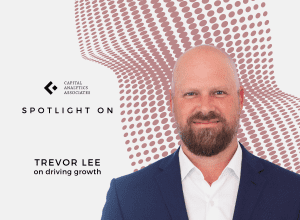 October 2024 — In an interview with Invest:, Trevor Lee, managing partner at Hoefer Welker, a full service architecture and engineering firm, emphasized community involvement and a seamless, interdisciplinary approach to architecture and design. Jacksonville’s low cost of living and high quality of life make it a prime location for both economic growth and an ideal base to serve the broader southeast region.
What have been some of the overall contributions or impact of Hoefer Welker in Jacksonville in the past year?
We are an architecture, interior design, and engineering firm with three offices, headquartered and founded in Kansas City. The Jacksonville office is the most recent location for the firm, having only opened three years ago. We grew from just two people in August 2021 to now having 22 people working in both the healthcare and general commercial markets. We located our office downtown intentionally because we want to make an impact in the way we get involved in the community through volunteering in various organizations. We really want to put our money where our mouth is when it comes to supporting the community.
How would you describe your interdisciplinary approach to projects?
Our practice focuses predominantly on helping our clients fulfill their mission. When we have an integrated approach, with a strong focus on our client’s mission, it makes our work much more seamless and reduces the potential for error. It creates an overall better experience for clients that is designed to exceed their expectations.
Which of your services are the main drivers of growth?
The element that drives our business the most is our design thinking. All architects are sort of created equally after graduating from school and along the way you begin to develop market specialties, which can include health, workplace, and civic planners, among other important specializations. The way in which we drive business, say in healthcare design, is by having our best and brightest trained and mentored by expert health planners within the firm. We must be intentional about this transfer of knowledge to maintain our firmwide expertise.
What industries are the main sources of growth?
We believe that healthcare will continue to be a larger and larger part of our business as we grow and develop. That is not just because we continue to gain a deeper experience in the field with every project, but because healthcare spending continues to escalate to serve our communities. The part of our business that we think will continue to stay flat is retail, multifamily, and mixed-use, but this is a temporary condition that a strong economy will bring back. The other market we continue to pour resources into is workplace design and helping businesses create spaces that people want to come to, especially as it relates to the conversation of returning to the office after being remote.
What makes Jacksonville a great place for economic growth?
The firm’s goal was to be in Florida with a physical presence to build on the work it has already completed in the state. Jacksonville was chosen because we found the right team that fit the culture of the firm and had the market experience to match. Jacksonville also offers a lower cost of living with a great quality of life. The challenge for Jacksonville is reaching those younger graduates who don’t normally consider Jacksonville when they graduate when picking from other thriving southeast cities like Nashville, Atlanta or Charlotte. We see Florida as a strong growth market generally and see expansion to Orlando or Tampa in our near future. So much of our work is about trust and relationships and the only way to build that is to be physically present.
To what extent are you committed to innovation?
Innovation can be challenging, and I say that because architecture is first and foremost about protecting the public’s health, safety, and welfare. We create projects that protect people and create positive environments and outcomes for our clients. In some ways, we innovate very slowly because we can’t afford to take big risks at our client’s expense; so for us, innovation is done in thoughtful and iterative ways. That being said, we have a strong culture of innovating the right way and doing so responsibly that both helps our client’s achieve their goals and allows us to think differently when it leads to improved outcomes.
What are some of the biggest challenges the firm is facing?
The challenges are always about finding and retaining the right people and creating a work-life balance that allows us to meet the demanding nature of our business, but also gives our people the time they need to focus on themselves and their families. This line of work makes it hard to detach completely because there is so much to think about during a project. It’s like having a box of Legos with no instructions and being tasked with creating an instruction manual from scratch. That is a much different mindset than being able to assemble a Lego set with a perfect set of instructions handy. In order to inspire young architects to create innovative projects for our clients, we need to build passion within our culture.
What are the firm’s near-term plans?
We are going to continue to focus on finding the right people. As one of the owners of this business, I consider recruiting and mentoring to be critical to the long term success of our firm. I often attend recruiting events and conferences personally to make sure everyone we are considering for our team knows the importance of this part of the business to us. If we recruit and mentor well, everything else comes easier.
For more information, please visit: