
Spotlight on: Edmund Malkoon, Mayor, Lauderdale-by-the-Sea
Key points:
- • Lauderdale-by-the-Sea is investing in infrastructure, resilience, and public safety while preserving its small-town character.
- • Mayor Edmund Malkoon says a strong public realm is essential to supporting residents, visitors, and local businesses.
- • The town is focused on thoughtful reinvestment that protects its unique identity and long-term competitiveness.
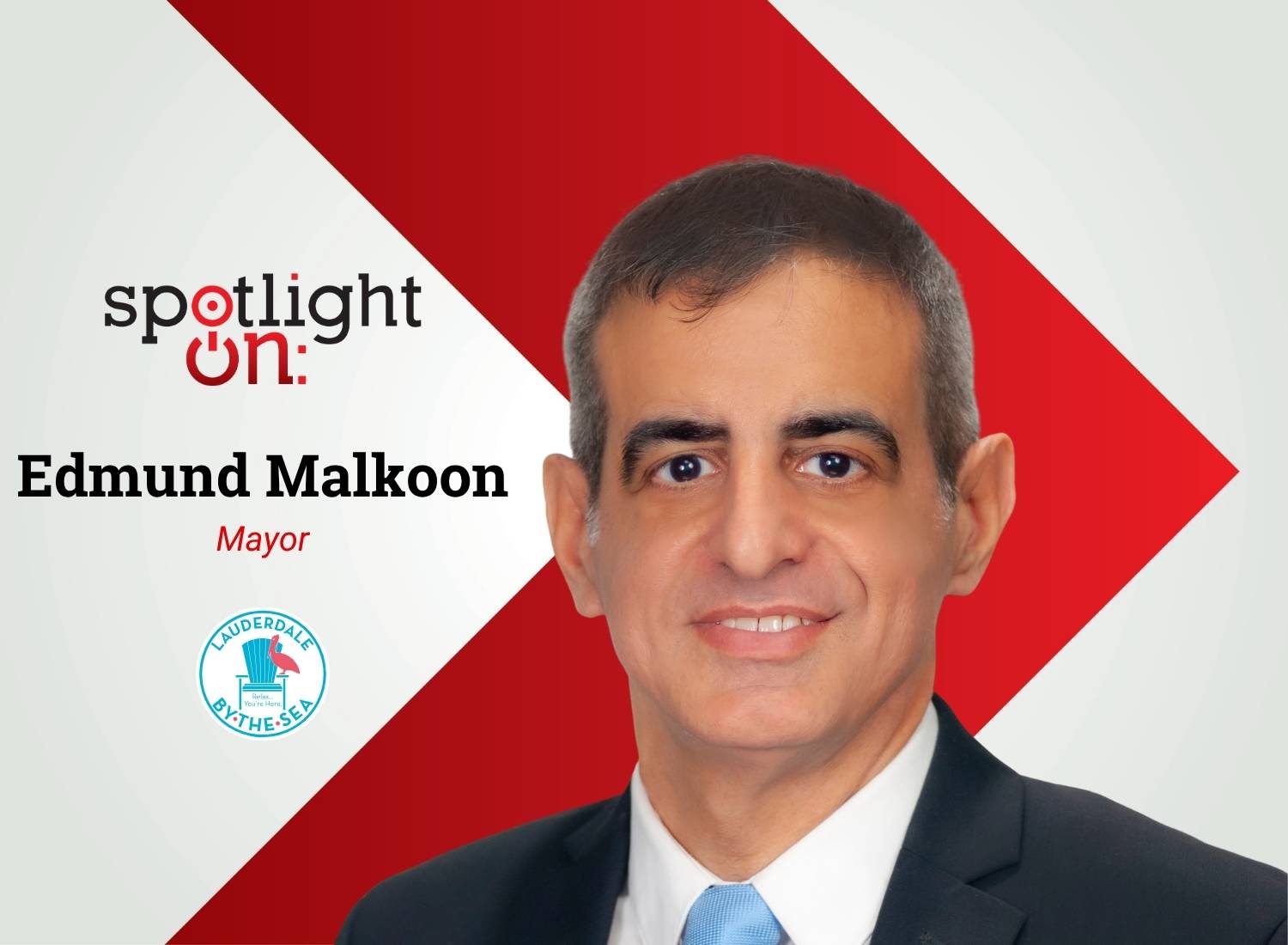 June 2026 — Invest: sat down with Edmund Malkoon, mayor of Lauderdale-by-the-Sea, to discuss how the town is protecting its character while planning for rising costs, infrastructure demands, and a changing regional landscape. “Our public realm is our economic engine, and when it’s well-run, everybody benefits,” Mayor Malkoon said.
Join us at the Invest: Greater Fort Lauderdale 8th Edition Leadership Summit! This premier event brings together hundreds of Greater Fort Lauderdale’s business and regional leaders to discuss the challenges and opportunities for businesses and investors. Buy your ticket now!
What have been some of the changes that have had the biggest impact on Lauderdale-by-the-Sea over the last year or so?
Public safety has been a big one, and that’s true across South Florida, especially in coastal communities. That includes visible coverage, investment in technology, proactive community policing, and prevention-focused work that helps maintain resident confidence and supports the visitor economy. At the same time, residents are dealing with significant increases in costs, including insurance.
We’re also focused on resilience planning, stormwater, and roadway priorities — core infrastructure needs that support long-term stability. For us specifically, we stay focused on service delivery and communication. We want to make it easier for residents and business owners to get answers, navigate processes, and see follow-through.
Those are some of the biggest areas we’ve been working on and trying to improve.
What public-private partnerships are you exploring?
We are evaluating a public-private partnership model for a modern public safety facility and potential town hall complex. As an older community, some of our facilities — including our fire station — are past their economic life.
We have engaged financial advisory support to assess feasibility, risk allocation, and long-term value to taxpayers as we explore more detailed plans and designs.
Lauderdale-by-the-Sea has a strong mid-century modern identity. How does preserving that character show up in your approach to planning and development?
That’s something I was pushing for even before I became mayor. We want the town to respect the history and uniqueness of that architecture. We made it our preferred architectural style for individuals and businesses coming in who are renovating and updating properties, generally limiting new construction to a maximum of four stories. We’re proud of that. Which preserves our low-rise, human-scale character. The goal is to protect the look and feel, while still allowing reinvestment that keeps buildings functional and modern.
How are tourism trends and visitor expectations influencing how beachfront communities think about local business support and public investment?
There’s higher demand in general for South Florida right now. People moving down here are still something we’re looking at, and that affects everything, including the costs and pressures on infrastructure.
At the local level, we’re trying to be disciplined about what we can control: protecting the neighborhood character, keeping our business areas vibrant and pedestrian-friendly, and planning infrastructure in a way that’s realistic and phased.
And when you talk about the visitor economy, you get into the details that directly affect local businesses: parking, traffic flows, beach conditions, cleanliness, and safety above all. Those things shape the experience for visitors and residents, and they influence whether businesses thrive. Our public realm is our economic engine, and when it’s well-run, everybody benefits.
We’re also proud that you don’t need a car when you come here. Our Circuit-by-the-Sea on-demand electric shuttle service has now surpassed 250,000 cumulative riders, helping reduce parking pressure and vehicle trips. You park, you visit, you enjoy the beach. I take Circuit all the time, even just to go to the grocery store.
How do those mobility solutions tie into broader county support and the way the town functions day-to-day?
We’re happy with that Circuit partnership, for sure. The county has made it easier because we have a penny surtax that was approved for use of microtransit, like Circuit. Now there’s funding that municipalities can use for that, and I think that’s a really good thing that the county has done.
Microtransit supports the walkable nature of our town. It keeps the visitor experience simple and reduces friction around parking and traffic. It also helps residents move around without feeling like every errand requires getting in the car.
How are you working with small businesses to help ensure they have the right environment to thrive?
Businesses thrive when you have clear, established rules, efficiency, expectations, and public safety. Predictability matters. And the public realm matters, such as cleanliness, modern infrastructure, and the basics of the experience that people feel when they’re in town.
What’s best for residents is also good for businesses, and we try to cover all areas for all people. We recently underwent a $3.1 million downtown enhancement project featuring permanently expanded outdoor restaurant seating, wider sidewalks, new signage, lighting, and landscaping.which strengthened pedestrian flow and expanded year-round outdoor dining capacity. When the town is safe, clean, and easy to navigate, that supports the customer experience and it supports business owners as well.
From an investment and development standpoint, what type of reinvestment makes sense for a community like yours, and what are you seeing in the market right now?
We’ve been looking at redevelopment and improvements in properties. We’ve seen hospitality expand in our town, including a small-scale hotel that was developed.
We want to keep the characteristics that make us unique. We have height caps, and that’s part of what makes us attractive. We’ve seen projects planned within our limits, and we’re continuing to focus on improving what we have, while making it feasible for people to renovate and reinvest.
In Lauderdale-by-the-Sea, we like to focus on the neighborhood feel and the small beach town community. That’s what makes the visitor experience here different within the Greater Fort Lauderdale area. We try to keep the mid-century style, the low-rise character, and still keep it modern.
Why does authenticity matter so much for Lauderdale-by-the-Sea and its long-term competitiveness?
When you travel, a lot of places look the same. It’s the same brands and the same experience. There are fewer places that feel truly unique. People want that authentic experience where they feel they’re somewhere new, somewhere they can relax.
That’s our motto: “Relax, you’re here.” We want to have that kind of environment. When you maintain the uniqueness, it becomes a true destination. The only way to experience it is to go there.
Looking ahead, what are your priorities over the next three to five years?
I don’t want to sound like a broken record, but my outlook is optimistic and practical. The priorities are resilience and infrastructure — stormwater, roads, and the systems residents rely on.
Public safety and community confidence are also key, including visible, responsive coverage and smart prevention.
Then it comes back to strong communication and service delivery: being accessible, transparent, and consistent. And, of course, maintaining a healthy small business environment by keeping the town clean, safe, and easy to navigate for customers and operators.
If we do those well, we’ll preserve the character that makes Lauderdale-by-the-Sea desirable and stay resilient in a changing region.
Want more? Read the Invest: Greater Fort Lauderdale report.