
Houston business news today: Energy capital expands
Key points:
- • Houston keeps its rank as the top exporting metropolitan area in the US.
- • Large-scale carbon capture deployment is attracting massive global private equity.
- • Regional job growth remains highly resilient, driven by health services and civil construction.
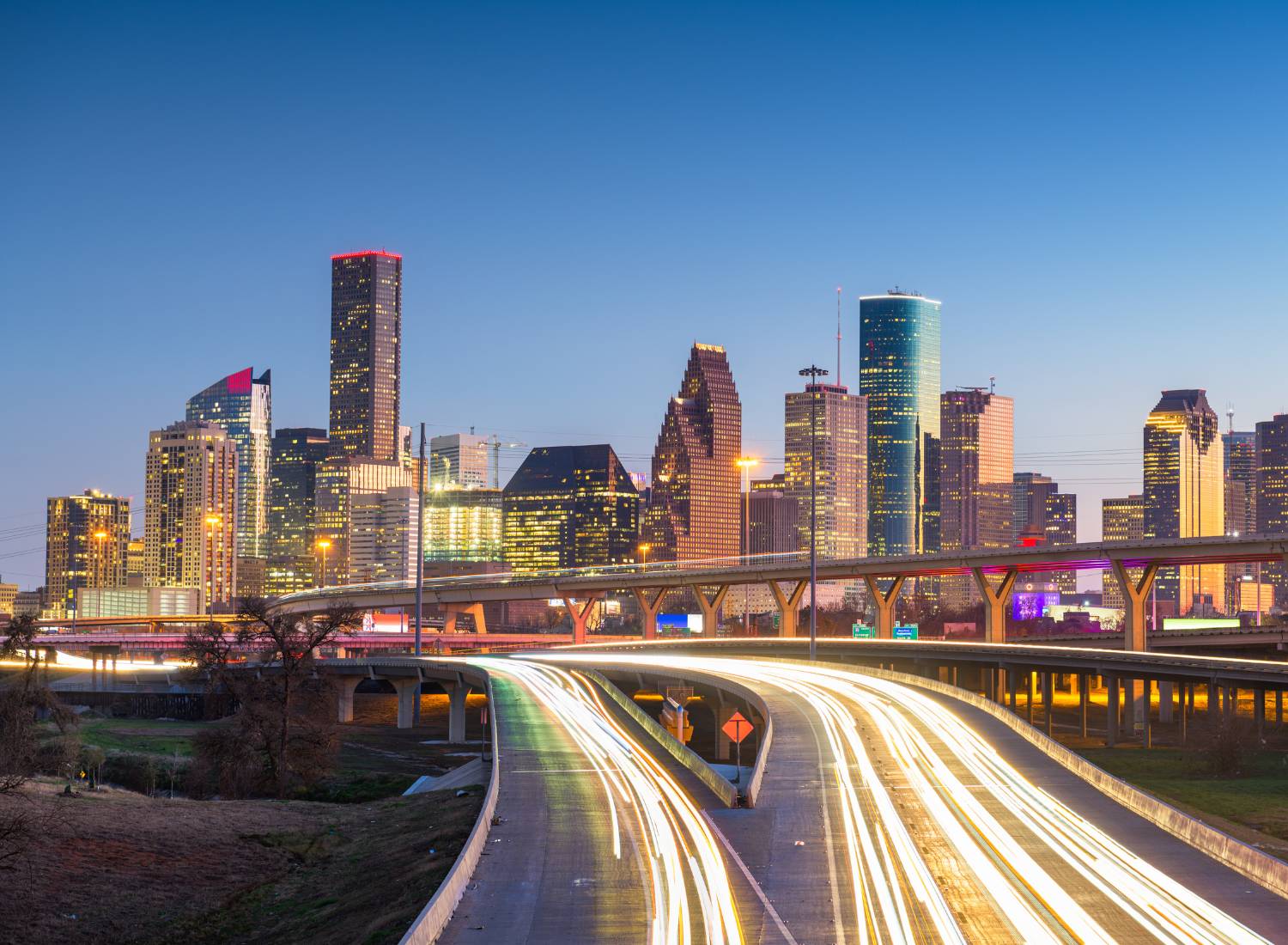 May 2026 — The global energy transition is sparking a massive wave of industrial recapitalization along the Gulf Coast, and the most vital information tracking Houston business news today centers on the region’s unmatched dual dominance in both traditional fuels and next-generation carbon management.
Join us at caa’s upcoming leadership summits! These premier events bring together hundreds of public and private sector leaders to discuss the challenges and opportunities for businesses and investors. Find the next summit in a city near you!
As international markets experience profound trade rebalancings, Houston is leveraging its massive maritime infrastructure and dense engineering talent to anchor multibillion-dollar low-carbon infrastructure projects. This systematic deployment of capital reinforces the metro area’s status as a critical engine for global commerce and industrial innovation.
Global export supremacy
The macroeconomic fundamentals supporting the region’s trade network remain completely unrivaled on the national stage. According to the latest data from the Greater Houston Partnership Economic Outlook, Houston successfully defended its title as the top exporting metropolitan area in the United States, moving $177.3 billion in exported goods and commodities through its customs district. Even when facing complex global tariff adjustments and maritime route realignments, Port Houston shattered previous operations records by handling over 4.3 million twenty-foot equivalent unit containers, proving the sheer structural resilience of the Texas industrial base.
This staggering export performance is providing local corporations with an immense cushion against domestic consumer spending fluctuations. Executives reading Houston business news today recognize that more than 1 in 8 local jobs are directly tied to this international trade infrastructure. This profound global integration ensures that even as upstream drilling activity experiences minor, price-driven moderations, the region’s massive downstream processing, distribution, and logistics sectors continue to operate at near-maximum capacity, attracting unprecedented levels of international foreign direct investment.
Carbon management demands capital
Simultaneously, the region is rapidly scaling its operational capabilities to become the undisputed low-carbon energy capital of the world. According to technical investment parameters detailed by the Wood Mackenzie Carbon Capture, Utilization, and Storage Conference, the Texas Gulf Coast has become the primary destination for private equity funds targeting large-scale industrial decarbonization. Massive consortiums, including the Gulf Coast CCS Alliance, previously the Houston CCS Alliance, are actively advancing large-scale carbon capture and subterranean storage networks across the historic East End and the Energy Corridor, ensuring that existing heavy manufacturing complexes can remain hyper-competitive in an increasingly carbon-conscious global marketplace.
This green infrastructure wave is generating an unprecedented hiring boom across specialized engineering, environmental consulting, and advanced civil construction sectors. The local labor market is on track to add over 30,900 new jobs over the course of the year, pushing total regional employment to a record-breaking 3.5 million positions, according the Greater Houston Partnership.
While healthcare and population-serving social services account for a large portion of this hiring momentum, the highly complex engineering requirements of multimegawatt carbon capture systems and clean hydrogen hubs are drawing in premier engineering and technical talent from coastal technology markets nationwide.
Institutional investment trajectories
This massive convergence of global export supremacy and structural energy adaptation has effectively rewritten the traditional capital allocation playbook for the state. Instead of relying purely on cyclical commodity price movements, Houston’s corporate ecosystem has successfully matured into a highly diversified industrial operating platform where technology, logistics, and carbon infrastructure reinforce one another.
Backed by a high density of international banking institutions, foreign chambers of commerce, and corporate global headquarters, the regional marketplace continues to deploy capital with unprecedented speed, executing complex infrastructure projects that alternative metros lack the physical scale or regulatory framework to support.
Looking forward, corporate executives and energy market analysts tracking updates in Houston business news today should focus on three decisive market developments over the coming months. First, monitor whether upcoming federal adjustments to carbon tax credit monetization speed up the final investment decisions for secondary pipeline networks along the ship channel. Second, track the absorption rate of newly delivered industrial facilities across the southeast submarket to see if international trade restrictions alter warehouse demand. Third, analyze the upcoming long-term power grid reliability assessments from state regulators to ensure local transmission expansion can accommodate the massive energy requirements of new carbon processing plants.
Capitalizing on these infrastructure crosscurrents will define market leadership in the evolving global economy.
Want more? Read the Invest: Houston report.