

Here’s why data center expansion is dividing the US
Key points:
- • Opposition to data centers is growing rapidly, delaying projects across the country.
- • Data centers are creating new political divides over growth, water, and energy.
- • AI-driven investment is transforming local economies while fueling community resistance.
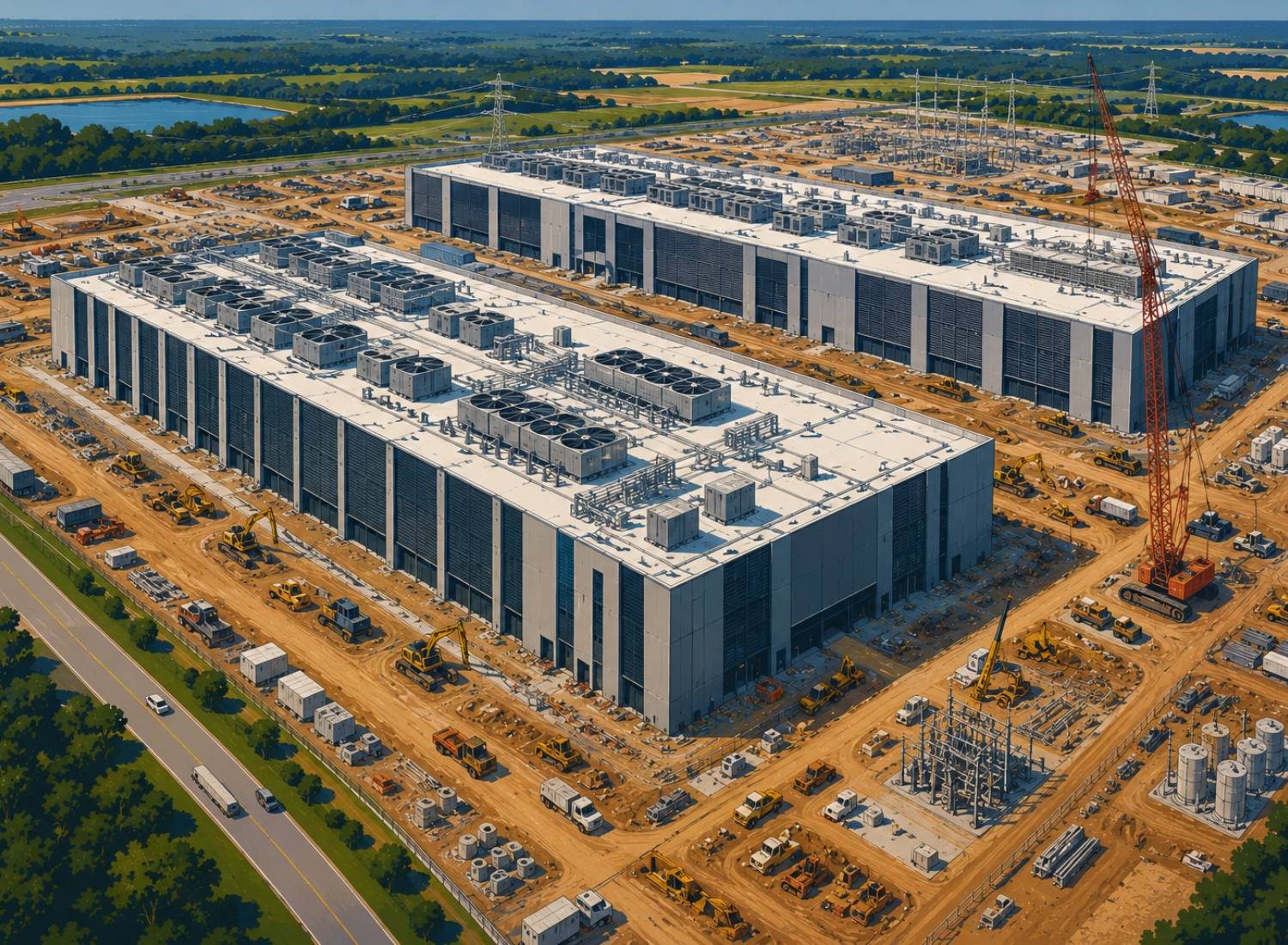 July 2026 — Data center expansion is dividing the United States along fault lines that don’t match the usual partisan map, and 10 distinct storylines from the past few months show why. Grassroots opposition groups have more than doubled since December, tribal councils are split over whether to lease their own land, and even the Federal Reserve now describes a two-speed economy built partly on server farms. The fight has moved well past zoning boards and into the center of national politics.
Join us at caa’s upcoming leadership summits! These premier events bring together hundreds of public and private sector leaders to discuss the challenges and opportunities for businesses and investors. Find the next summit in a city near you!
Grassroots muscle
The clearest evidence of how fast this has moved is the opposition itself. Data Center Watch found that active grassroots groups grew from 396 at the end of 2025 to 833 by March, spanning 49 states, and blocked or delayed at least 75 projects worth roughly $130 billion in the first quarter alone — matching all of 2025’s totals in three months.
Public opinion backs that momentum. A CBS News poll found more Americans oppose than favor a new data center in their area by better than two to one, even though most admit they know little about how the facilities actually work. That combination of unfamiliarity and distrust is fueling the backlash as much as any specific grievance.
The mechanics of opposition are also spreading community to community. Prism Reports documented how residents object not only to noise, water use, and pollution but to the secrecy around approvals — nondisclosure agreements that keep basic project details from the public. Monterey Park, California, became the first U.S. city to pass an outright ban, with 86.3% voter approval in June.
A scrambled map
Nowhere is the divide stranger than inside the Republican Party. The Washington Post has tracked a split on the right between a White House courting tech titans and a growing bloc of GOP candidates who see anti-data center messaging as a winning midterm issue.
Democratic governors are navigating their own version of that fight. Reporting from Politico shows Govs. Josh Shapiro and Mikie Sherrill rolling out new ratepayer protections while Gretchen Whitmer and Abigail Spanberger face internal party pressure, and Maine’s Janet Mills vetoed the country’s first statewide moratorium bill over the objections of her own legislature.
Those partisan cracks coexist with a genuinely bipartisan backlash. The New York Times reported that a Marquette Law School poll found “stunningly little difference” between Wisconsin’s conservative and liberal voters on the issue, and that Sen. Bernie Sanders and Sen. Josh Hawley — rarely allies — have separately pushed near-identical moratorium proposals.
Water, not just politics, is splitting communities too. The Guardian‘s reporting on Utah’s Stratos project — backed by investor Kevin O’Leary near the drought-stressed Great Salt Lake — captures how conservative, rural Utah voters have turned against a project once pitched as an economic win.
Stakes beyond politics
Money is dividing the industry’s own allies. Brookings detailed how the pro-AI super PAC Leading the Future, launched with $140 million from backers including Andreessen Horowitz and OpenAI’s Greg Brockman, is facing off against the smaller, employee-funded Guardrails Alliance — with Sen. Josh Hawley and Sen. Elizabeth Warren both warning of unchecked corporate power.
The split even shows up in macroeconomic data. Yahoo Finance‘s read of the Fed’s Beige Book found a “two-speed economy,” with data center-driven manufacturing growth in districts like Cleveland and Chicago offsetting weak consumer demand elsewhere — evidence that data centers are dividing the United States economically, not just politically.
And the divide reaches sovereign nations within U.S. borders. The New York Times‘ coverage of tribal lands shows tribal councils weighing leasing revenue against the risk of repeating past resource-extraction harms, a debate playing out from Oklahoma to the Pacific Northwest as developers court sovereign land largely outside state zoning authority.
Taken together, these storylines point to grassroots numbers, polling, partisan defections, tribal deliberations and Fed data all moving in the same direction at once, which is rare for any single issue in a country this fractured. That convergence is precisely what makes the moment risky for developers who assumed local resistance would stay local. A project that clears state permitting can still stall at a tribal council vote, a county commission, or a ballot box, and the same demographic swing that once seemed like an asset — jobs, tax base, rural investment — is now just as likely to be the line an opponent uses against it.
Want more? Read the Invest: reports.