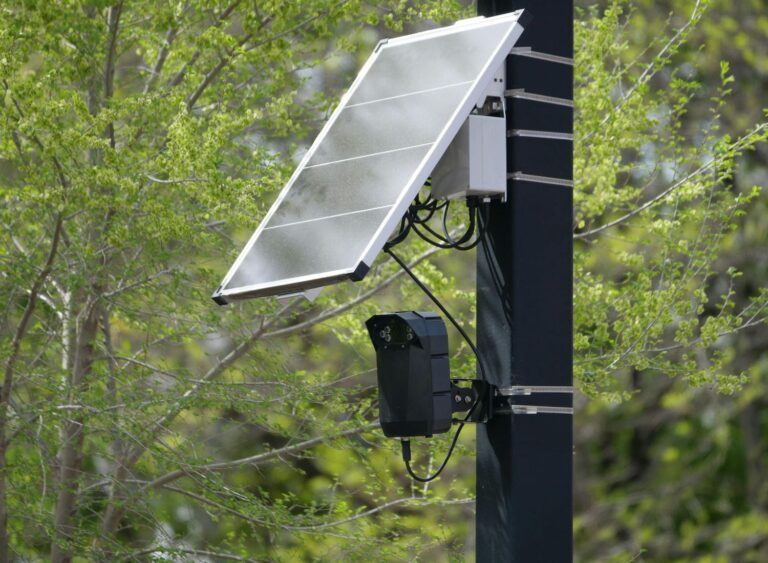







Flock cameras, public safety and use of AI
Key points:
- • Flock camera surveillance now spans more than 7,000 U.S. organizations.
- • Documented misuse has turned both conservatives and progressives against the technology.
- • Flock’s response signals the company sees regulation, not vandalism, as the real threat to its growth.
 August 2026 — Flock camera surveillance has a bipartisan problem. The company’s automated license plate readers sit in more than 7,000 U.S. organizations, yet city councils in Colorado, Oregon, Wisconsin, Tennessee, New York, and Washington canceled contracts this year. For a company valued at $8.4 billion in April 2026, the exodus is not noise. It is a signal.
Join us at caa’s upcoming leadership summits! These premier events bring together hundreds of public and private sector leaders to discuss the challenges and opportunities for businesses and investors. Find the next summit in a city near you!
Two sides, one target
Flock camera surveillance draws fire from both ends of the political spectrum. Conservatives frame it as government overreach, while progressives cite the risk to over-policed communities. Both land on the same conclusion, according to the American Civil Liberties Union: mass surveillance needs limits.
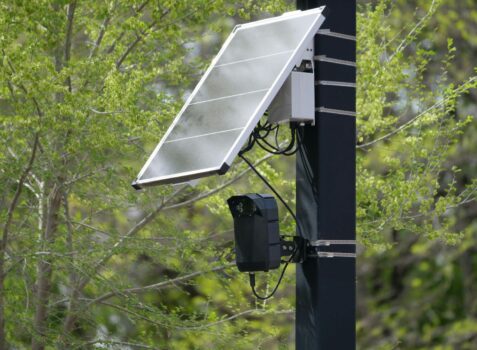
The company operates roughly 120,000 cameras nationwide, capturing tens of billions of data points a month. Every plate read feeds a searchable, connected database, and a police officer in one state can flag a vehicle and alert counterparts a thousand miles away. That reach is the pitch to law enforcement, and the trigger for critics.
Enforcement records back the sales pitch. Flock says its technology supported more than 1 million criminal investigations in 2025 and helped locate over 10,000 missing people. Police chiefs in Connecticut and Illinois call it indispensable. But the Institute for Justice has tracked 39 cases of officers using the cameras to stalk spouses or ex-partners, including a Virginia deputy who allegedly ran searches on one woman 1,639 times.
For some cities, however, the pros outweigh the cons. Sugarloaf, near Atlanta, has 35 Flock cameras.
“That has been transformational in helping prevent and solve crimes in our district,” said Alyssa Davis, executive director at the Sugarloaf CID, in an interview with Focus: Atlanta. “We also hold quarterly security meetings with the Gwinnett Police and local businesses to discuss trends, concerns, and available resources. Prevention is a major focus, including helping property owners identify improvements such as better lighting and visibility. We are encouraging properties throughout the district to connect their cameras to the Real-Time Crime Center because it allows law enforcement to respond to incidents in real time rather than days later.”
Misuse moves the market
False positives compound the misuse problem. Police in Sherwood, Arkansas, held a couple and their infant at gunpoint after a Flock camera misread a plate. A San Diego man spent nearly a month in jail on a similar error. An internal review in Roseville, California, found that 71% of theft alerts contained misread plates. For municipal buyers, that error rate is now a budget line, not a footnote.
Immigration enforcement adds a second front. Flock says it does not share data with ICE by default, but an audit in Columbus, Ohio, found the city’s Flock data was searched more than 15,000 times for immigration-related purposes since 2024. Border Patrol had access to at least seven Washington State police networks last year.
But for many cities, the cameras provide a necessary layer of security.
“We leverage technology, using flock cameras to identify threats or incidents involving people entering our city with nefarious intent. We’ve created a community supportive of public safety, keeping this a safe place, and will continue doing so,” said Jim Gilvin, mayor of the city of Alpharetta, Georgia, in an interview with Focus: Atlanta.
Surveillance moving forward
The company is not standing still. On Aug. 13, Flock cut default data retention from 30 days to seven and rolled out automated flagging for abnormal searches. Chief Executive Officer Garrett Langley has said publicly that safety and privacy are not a trade-off, a position the market has not fully accepted. More than 20 communities cut ties with Flock in July alone, and cameras have been vandalized in at least 23 states.
For investors and municipal leaders, the calculus is shifting from adoption to governance. California’s Senate Bill 1013 would mandate officer training, annual audits, and search logs, while a federal proposal from Kentucky Rep. Thomas Massie would strip funding from jurisdictions using the cameras at all.
Want more? Read the Invest: reports.