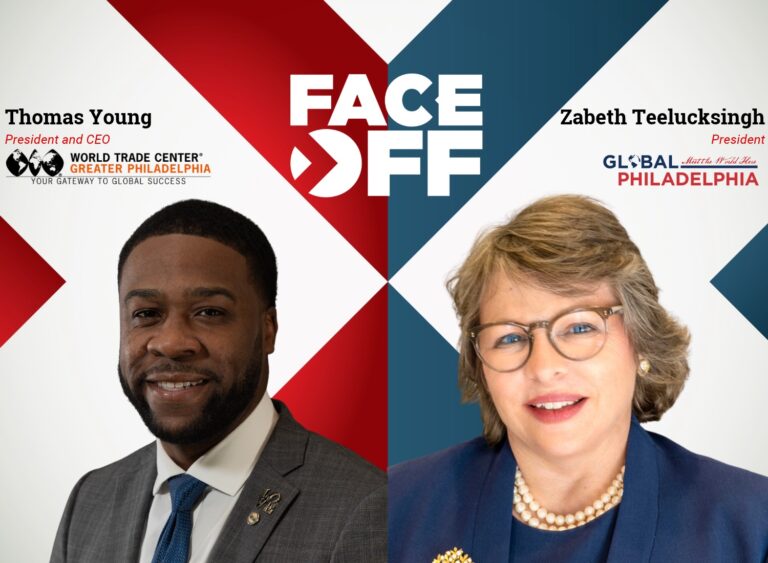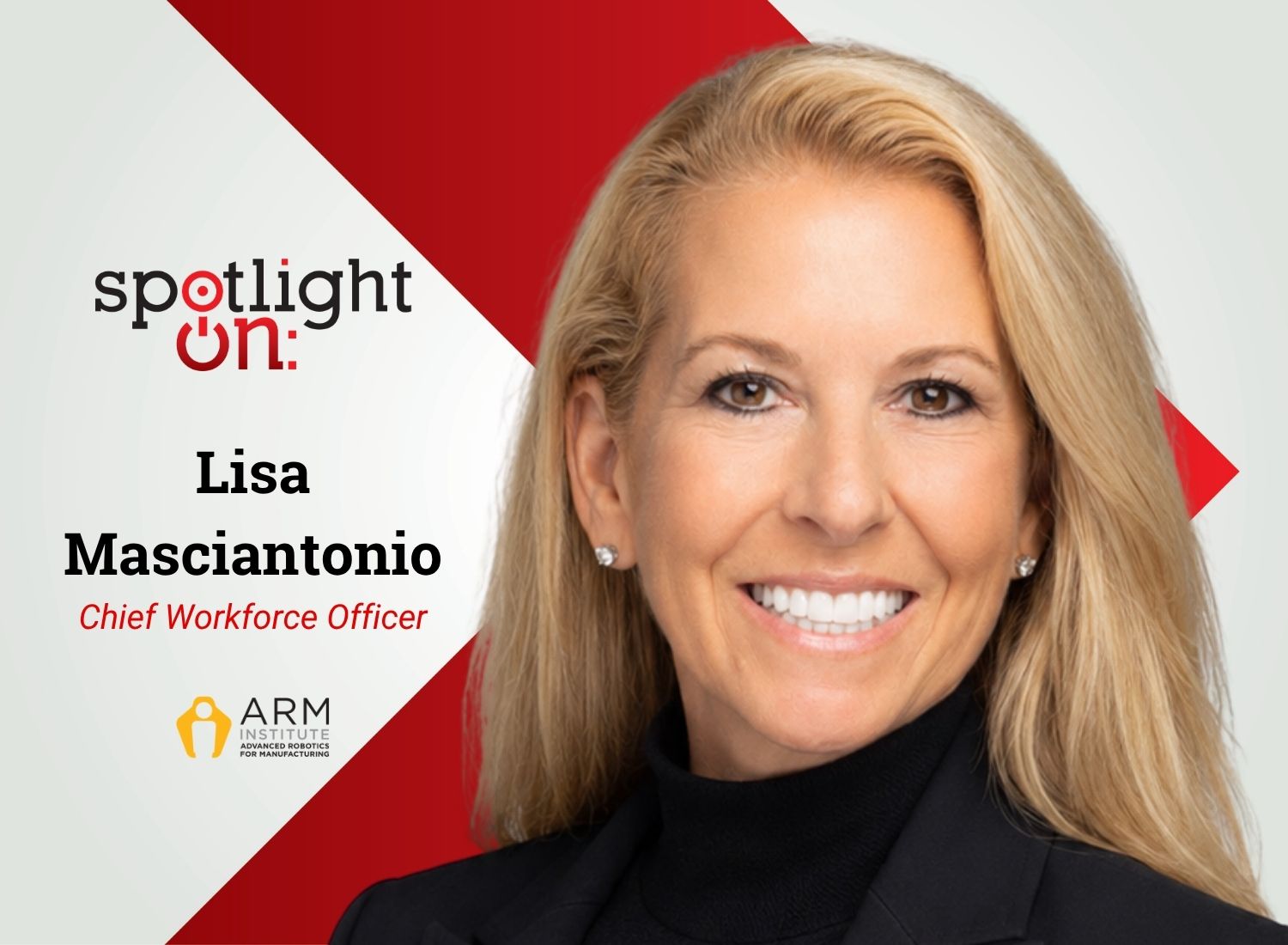

Zabeth Teelucksingh, President, Global Philadelphia Association
 Zabeth Teelucksingh, president of the Global Philadelphia Association, spoke with Invest: about Philadelphia’s international profile, cultural economy, connectivity, and opportunities created by global events and communities. “The international side doesn’t replace Philadelphia’s local character; it adds another dimension to how the city brings people together,” Teelucksingh said.
What has the past year shown you about Philadelphia’s position as a global city?
It has been a very busy year, largely because of Philadelphia’s 2026 positioning. We expanded our usual World Heritage Week into World Heritage Month in May, with more than 200 events and 80 civic partners. It served as a lead-up to the World Cup and other summer activities, and many people told us it positioned the city well for what followed. It was an early, coordinated effort to focus attention on Philadelphia’s international identity before the summer’s largest events.
World Heritage also made news for difficult reasons. In the past, these sites were more protected, but they have become targets of war and face threats from climate change and reduced funding. That fragility shows why the designation matters. UNESCO isn’t always top of mind in the United States, but our work underscores the value of international connections. Philadelphia’s status as the first World Heritage City in the United States was important to the FIFA World Cup representatives and demonstrated the city’s intentional international focus.
What has increased awareness of Philadelphia’s global connections?
There has been a growing recognition of why international positioning matters. Philadelphia has strong local touchstones — Rocky, cheesesteaks, and the Eagles — that bring people together. It also has an international dimension we’ve discussed for 15 years, and we can no longer overlook it.
The World Cup made that visible. Philadelphia matches involved countries such as Côte d’Ivoire, Brazil, Haiti, France, Iraq, Croatia, and Ghana. Understanding the region’s different population groups became more important. Those communities and their connections are assets that people may previously have missed. The international side doesn’t replace Philadelphia’s local character; it adds another dimension to how the city brings people together.
Where are the strongest economic and business opportunities emerging?
There is broad momentum in the city, and real estate is particularly active. Large developers are building rental apartments, while the housing market remains robust for individuals. The range of housing creates opportunity at different levels. Affluent residents are moving from New York to places such as Chestnut Hill, where they can live comfortably and commute by Amtrak. Early trains to New York are packed daily.
We’re also seeing communities relocate from the New York metropolitan area. One example is the Dominican population. Philadelphia offers Dominican restaurants, grocery stores, and an honorary consul, and that movement can affect demand for direct air connections from Philadelphia. People recognize that they can build a comfortable life here without giving up those cultural ties.
I’ve also met representatives from Colombia who recognize that Philadelphians are traveling to Medellín and building business interests there. Colombian government representatives are paying attention to the city in response. Those are two vibrant examples of international communities generating connections in both directions.
How can Philadelphia connect its institutional and cultural assets more effectively to development?
This summer drew attention to sports, but another conversation was building around culture. I serve on the board of the Greater Philadelphia Cultural Alliance, where there is a push to be more intentional about presenting Philadelphia as a cultural city.
The city has orchestras, museums, theaters, and many kinds of makers, yet, outsiders may not immediately view it through that lens. That is a missed opportunity. People who live here know Philadelphia as a deeply cultural place, but the city still has work to do to make that message coherent and visible.
The Philadelphia Orchestra is widely known, but the Curtis Institute is another world-class institution. Young musicians leave their families to study there from about age 9 into early adulthood. Within music, it is regarded as highly as institutions such as Juilliard, but many people outside that world don’t know it.
Philadelphia has many assets like that. The cultural sector is having a moment of awareness, and stronger positioning could connect it more directly to economic development.
What gaps remain between Philadelphia’s global potential and its international perception?
The city’s reputation has evolved. It’s increasingly seen as welcoming and attractive, but connectivity remains a gap. Philadelphia International Airport has strong service to Europe and many excellent destinations there.
There is momentum to add service farther afield, particularly to Asia and Africa. Those connections would better serve the region’s Asian and African communities. Adding them is part of the work still needed to make Philadelphia a confirmed international hub.
How can the city turn this year’s exposure into lasting relationships and investment?
Major milestones created terrific collaboration among Philadelphia organizations. Collaboration generates momentum, new ideas, and opportunities for future positioning. Civic leaders saw the value of the city’s international profile, and there is considerable thought going into how to establish it as a lasting asset. The relationships built while preparing for major events can continue producing ideas after the events themselves are over.
The effort has two sides. Major civic leaders and institutions can and should drive the conversation, while individuals, communities, and other organizations also advance it organically. Both matter because international positioning is not solely a top-down campaign. Visitors are consistently inspired by Philadelphia and want to experience more. That response can sustain the momentum beyond a single year.
What will be the Association’s most important priorities over the next two or three years?
Our priorities include telling the stories of Philadelphia as an international city and strengthening the visibility of its arts and culture. We’ll also continue emphasizing World Heritage.
Pennsylvania now has three World Heritage sites, which is a significant asset. World Heritage attracts tourism, investment, and business travelers, and it signals the state’s international outlook. Looking ahead, we want to extend our work through a stronger statewide position rather than limiting the message to Philadelphia alone.
What additional developments illustrate the region’s international momentum?
It’s useful to reflect on how far Philadelphia has come in a relatively short time. Seeing that evolution through the perspective of people who have followed the city for years can help local leaders understand the progress. For years, Philadelphia was seen mainly as sitting between New York and Washington. Hearing that it is no longer viewed only that way is gratifying, and it’s exciting to help shape where the momentum goes next.
Pope Leo’s connection to Villanova University is another element of the region’s international profile. This fall, Notre Dame and Villanova will play an unprecedented college basketball matchup in Rome. Developments like that strengthen the international positioning of both Pennsylvania and the Philadelphia region.