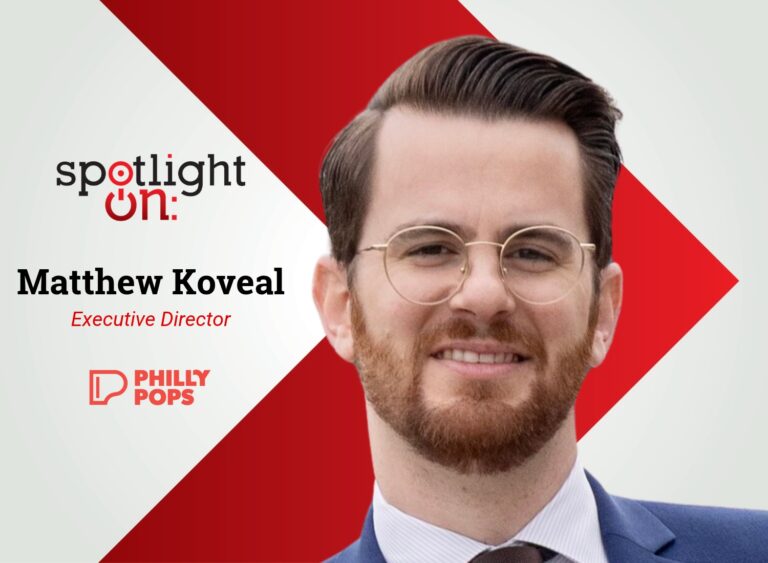

Spotlight On: Matthew Koveal, Executive Director, Philly Pops
Key points:
- • The Philly Pops reclaimed its name in 2025, capping a four-year rebirth.
- • The orchestra generated over $10 million in regional economic impact last year.
- • Diverse genres, venues, and ensembles are expanding access to live music.
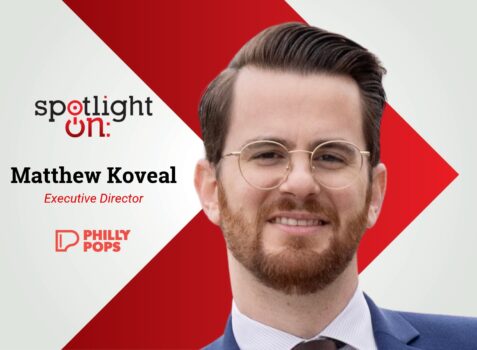 November 2026 — In an interview with Invest:, Matthew Koveal, executive director of the Philly Pops, discussed the orchestra’s rebirth, expanding access to high-quality live music, community programming, and sustainable audience development. “At the end of the day, building audiences is about building relationships,” Koveal said.
Join us at caa’s upcoming leadership summits! These premier events bring together hundreds of public and private sector leaders to discuss the challenges and opportunities for businesses and investors. Find the next summit in a city near you!
How has the past year shaped the Philly Pops’ priorities and role in Philadelphia’s cultural landscape?
Over the past four years, the Philly Pops has been through a complete rebirth, culminating in this past year in July of 2025 with the reclamation of the rights to the historic Philly Pops naming trademark.
Regaining the rights to our name, among many other things – rebuilding trust with our community, playing at venues where we might not have performed before, and building new partnerships — made this past year one for the books.
We’ve been very fortunate to take advantage of our unique opportunity to create a modern orchestra that is invested in the community, listens to the people it serves, and responds to the world around it.
What have recent performances and audience responses shown about demand for live music?
The response has been clear: People want more live music. We are a community-responsive organization, so if people keep asking for more, we are going to keep giving them more. That means creating diversity in our programming, where we perform, and the kinds of ensembles that perform so that we can reach our audiences where they are.
This summer, we performed with Idina Menzel in front of Independence Hall for 12,000 people in a free performance. We also had three performances at the Highmark Mann Center for the Performing Arts, including collaborations with Gregory Alan Isakov, a Jerry Garcia symphonic celebration, and Boyz II Men. Meanwhile, we’ve launched partnerships that have allowed us to offer dozens of shows at community centers and accessible locations across the region. All of these performances — both big and small — demonstrate what the Philly Pops is about: bringing quality, genre-spanning music to people across the entire region. We strive each and every day to become the region’s most accessible cultural institution.
How can the Philly Pops contribute to Philadelphia’s tourism and economic activity?
Last year, the Philly Pops created more than $10 million in economic impact in the Philadelphia region, and we expect that contribution to continue growing. We understand that when someone comes to a concert, they pay for parking, go shopping, make reservations, and engage with the local business community.
We serve as a conduit to the rest of the community.
Recently, I spoke with one of our audience members who lives three and a half hours away. Yet, they shared that they take the train to Philadelphia for the weekend, come to see the Philly Pops, and enjoy all Philadelphia has to offer while they are here. This is an example of how the vibrancy of our arts and culture ecosystem can truly serve as a tourism and economic driver.
How are you making the orchestra more accessible to different audiences?
Live music is crucial to our community’s cultural well-being, and at the Pops we believe everyone deserves high-quality live music. However, we also understand that not everyone consumes music the same way. Some people love traditional venues, while others may feel uncomfortable in them. Some people may love jazz, while others prefer folk.
It’s our goal to meet all types of audiences where they are, and to do that, we are constantly striving to diversify what we perform, where we perform, and which ensemble performs. We take the word “popular” literally. Our music includes jazz, Broadway, movie scores, Motown, soul, R&B, hip-hop, rap, rock, folk, country, and Americana. When the community changes and wants something different, we aim to listen.
We perform at large venues such as the Met, the Mann, and the Kimmel Center, at universities, and at community centers, places of worship, street corners, and other small or nontraditional venues. Our ensembles range from the full 65-piece orchestra to a big band, string ensemble, brass ensemble, jazz combo, and string quartet. By diversifying the music, ensemble, and venue, we create an orchestra that is resilient and responsive to more people in Philadelphia.
How are changing audience expectations affecting programming and partnerships?
Change is great. When people tell us they want change, they are giving us valuable information that informs our programming. I want to learn what the audience wants, rather than what I think it wants. Feedback, both positive and negative, is the only way we get better.
The arts scene — locally, nationally and internationally — is going through a major shift. People are ready to go out, enjoy a night on the town, and gather again. The challenge is that arts organizations might not be changing as quickly as the audiences are.
What I’ve come to understand is that people have many choices on a Friday night. But we live in a time when money may be tight for many families, so what we provide needs to be worth it in their minds, not just ours. Across Philadelphia, arts organizations are rethinking how they work to meet these needs. Opera Philadelphia is experimenting with daring programming and ticketing initiatives, while our partner Artcinia is bringing performances directly into communities and breaking down barriers to cultural activities. The Philly Pops is also reimagining how an orchestra can serve the city by showing up anywhere and everywhere.
What are the biggest challenges to building a sustainable arts organization?
The biggest challenge is always funding. Sustainable funding allows us to continue what we do. Building audiences in Philadelphia also depends on providing choice and caring for our community. We diversify what we play, where we play, and which ensemble plays it, but the most important aspect is creating a sense of community where people feel welcome and want to continue to engage with us.
When people arrive at a Philly Pops concert, our staff welcomes them. I am personally at the front door, our musicians go into the house before the performance to shake hands and thank people for coming, and our board is in the lobby hearing what is working and what could be better. Patrons now arrive early because they want that connection. At the end of the day, building audiences is about building relationships. People come and stay for the music, but they also stay for the people and the relationships they build. We want people to feel that they belong at the Philly Pops and can experience music in a way that makes them happy.
What are the Philly Pops’ priorities over the next two years?
The future is extremely bright for the Philly Pops. We will continue to focus on people: our performers, and the people coming for the music and staying for the relationships. We strive to continue providing choices while listening to our community, and building a modern orchestra for a modern world.
We are in our fourth season of our rebirth and our second season back as the Philly Pops. The programming has taken off, so we are building the staff, infrastructure, and processes needed to support that growth responsibly. We are also determining what cruising altitude looks like for the organization. Growth cannot continue indefinitely without the right foundation, so we are placing an emphasis on building that.
Who made the Philly Pops’ rebirth possible?
This rebirth would not have happened without many people volunteering their time and working tirelessly to keep the Pops alive. The musicians donated their time and efforts for a year and a half, and community members contributed in executive leadership, grant writing, public relations, marketing, production, and many other areas.
In the arts, when an organization is in financial trouble, that is the end of the story. Yet, the Philly Pops reflects the grit and fight Philadelphia is known for. We kept working and showing up, and the organization kept growing. What we have now is a stress-tested organization shaped by what the city desires. Because we have been through this crisis and come out on the other side, we understand the pain points, where to put our energy, and where to go next.
Want more? Read the Invest: Philadelphia report.