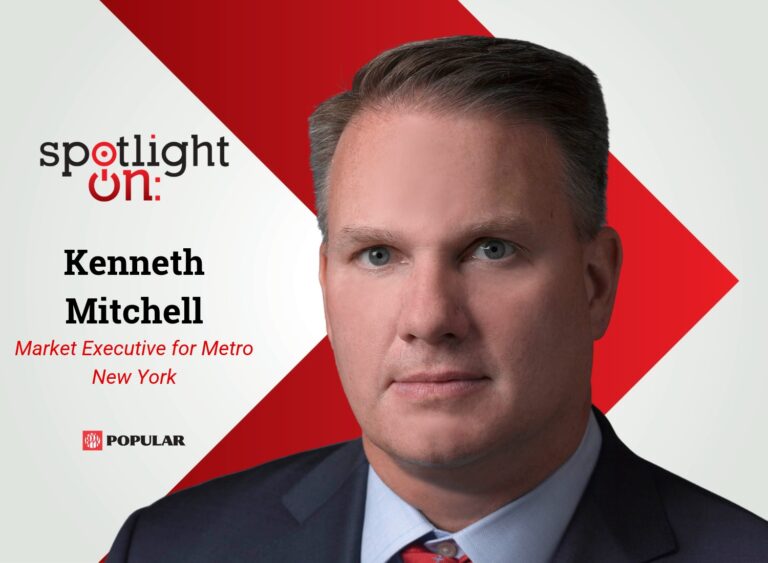

Spotlight On: Kenneth Mitchell, Market Executive for Metro New York, Popular Bank
Key points:
- • Popular Bank is prioritizing client relationships, efficiency, and stronger performance.
- • Healthcare and affordable housing remain key growth areas for financing.
- • The bank is using AI in a closed environment to streamline credit underwriting.
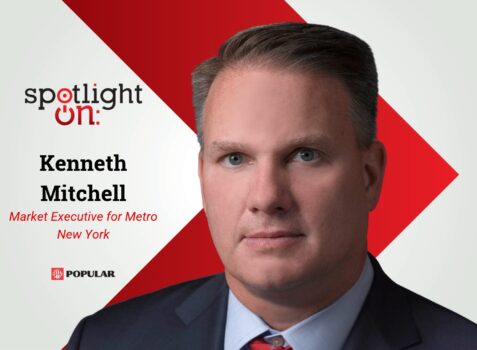 November 2026 — Kenneth Mitchell, market executive for Metro New York at Popular Bank, spoke with Invest: about the bank’s operating priorities, demand for healthcare and housing financing, and its approach to AI. Mitchell emphasized continuity and a consultative approach to lending. “We’re looking for long-term, deep relationships,” Mitchell said.
Join us at caa’s upcoming leadership summits! These premier events bring together hundreds of public and private sector leaders to discuss the challenges and opportunities for businesses and investors. Find the next summit in a city near you!
What changes are shaping Popular Bank’s strategy and client service?
We’ve shifted toward three strategic priorities: being the No. 1 bank for our customers, being simple and efficient, and being a top-performing bank. The first means taking a consultative approach to every relationship and continuing to deepen it. We’ve been thoughtful about hiring the right talent and providing training at all levels. We’ve changed the structure of some divisions to equip people to respond to client needs and to be proactive. We want every employee to succeed and improve what we deliver to clients.
Being simple and efficient means continually examining how we work and eliminating red tape where possible. I meet with people throughout the organization, including new hires once they’ve settled in, to ask what worked at their previous institutions, what didn’t, and what they see here. Everyone has a voice. We meet weekly to examine the market and how we can accelerate underwriting. Faster funding benefits clients and helps us earn interest income sooner.
We’ve stuck to our core values — ; service and constant communication differentiate us. We recently celebrated 133 years in business. Popular. Inc a publicly traded financial institution, among the country’s Top 50 by assets, and our focus on key strategic initiatives has produced better financial results for the corporation and our clients.
How do you maintain continuity for clients amid changes across the banking industry?
Mergers, acquisitions, and personnel changes can disrupt the client experience. Clients may not know whether they’ll have a different banker next week. We celebrate employee milestones at 5, 10, 15, 20, 25, 30, and 35 years of service. That longevity speaks to our culture and resonates with clients. There will always be some attrition, but we haven’t had business hiccups when people leave because others step in. A team manages each relationship, and we always have a central quarterback.
How do you weigh the effects of strategic change on employees and customers?
I recently interviewed a relationship manager who wanted to leave another bank. He’d had six managers in three years and four major changes in strategic objectives in two years. We approach change thoughtfully. We have two clients: our internal clients, the employees, and our external customers. Before moving in a new direction, we consider the positive and negative effects and whether the positives outweigh the negatives.
Where are you seeing financing demand, and how are you positioning the bank to respond?
Rising rates and tariffs on imported goods have created challenges across several sectors, including real estate development. We’re heavily involved in construction, with specialties such as affordable housing, where demand continues. We’ve built long-term relationships with experienced developers who understand their markets and have networks that allow them to adjust supply chains as conditions change.
Healthcare financing is another major growth area, with an aging population that needs more care. One strategic initiative is to concentrate on niche businesses where we have brand recognition and depth of knowledge. We’ve expanded our healthcare team, hiring outside of our brick-and-mortar footprint to cover other markets and work with strong regional players. We’re diligent about new business, and we put considerable effort into the upfront work. That has helped us facilitate clients’ growth and wealth building.
One healthcare client started with one facility and now employs 45,000 people. They have become one of our largest clients, and our relationship has helped facilitate that growth. Seeing the tangible results, including the people reached through its healthcare delivery, makes the work rewarding.
How does your housing financing connect with broader community needs?
There’s always a need for affordable housing. We help meet some of it through construction financing, supporting projects that give families a home to raise children and providing an opportunity for them to become a part of the community.
Shelter financing is another niche in our real estate division. Between 70% and 80% of people in shelters are displaced families. We provide property owners and non-profit shelter operators access to capital to help families in difficult situations. To further support the communities we serve, all teams give back through volunteerism.
How do you help clients manage borrowing costs while maintaining credit discipline?
We don’t take a cookie-cutter approach, drawing on our credit discipline and leveraging our institutional knowledge. We look at every customer relationship holistically. Treasury management partners provide guidance on cash cycles and whether a client needs a working capital line at certain times, or when inventory needs to increase.
Rising rates challenge everyone; how we respond matters, especially when other banks curtail lending. Being there when clients need us builds loyalty and trust; some of our relationships extend beyond 20 years. When we provide a term sheet and commit to a structure, clients know we’ll execute 100% of the time, which helps them move to the next phase.
How are you using AI, and what safeguards and workforce impacts do you consider?
We’ve adopted AI within a closed environment. Data integrity is paramount because we’re a regulated institution. We’re incorporating AI into credit underwriting to improve efficiency. In some cases, it can reduce human error. We also have a team monitoring developments inside and outside the bank daily, and we’re diligent about the integrity of client data.
I believe AI will bring greater productivity and thus create more employment opportunities. I remember when spreadsheets similarly raised concerns about reducing staffing needs, yet they increased productivity and opportunities for people to use technology to produce more.
How are you approaching the continuing demand for digital banking improvements?
We continue to invest in technology and digital platforms. Bringing customer expectations into our business solutions. Sometimes it’s better to learn from the mistakes of others and come out stronger. We have a continuous pipeline of updates and enhancements with a focus on better service and simpler processes.
What are your priorities for the next two to three years?
We remain focused on long-term opportunities to grow with clients and deepen our relationships. Our bankers get to know the people behind businesses, but our team approach extends beyond the business to its principals and employees. This cross-functional collaboration brings together commercial, retail, and private banking to help customers with business growth, wealth preservation, personal wealth growth, and trust and estate work. That broader approach has added considerable value to our customers and made us a true long-term banking partner.
Want more? Read the Invest: New Jersey report.