Foreign buyers invest Miami as office market proves resilient
Key points:
- • While total sales volume eased 13%, buyers targeted prime office and industrial spaces.
- • International migration gains help offset domestic shifts across Miami-Dade.
- • Top Latin American buyers command a dominant share of foreign purchases.
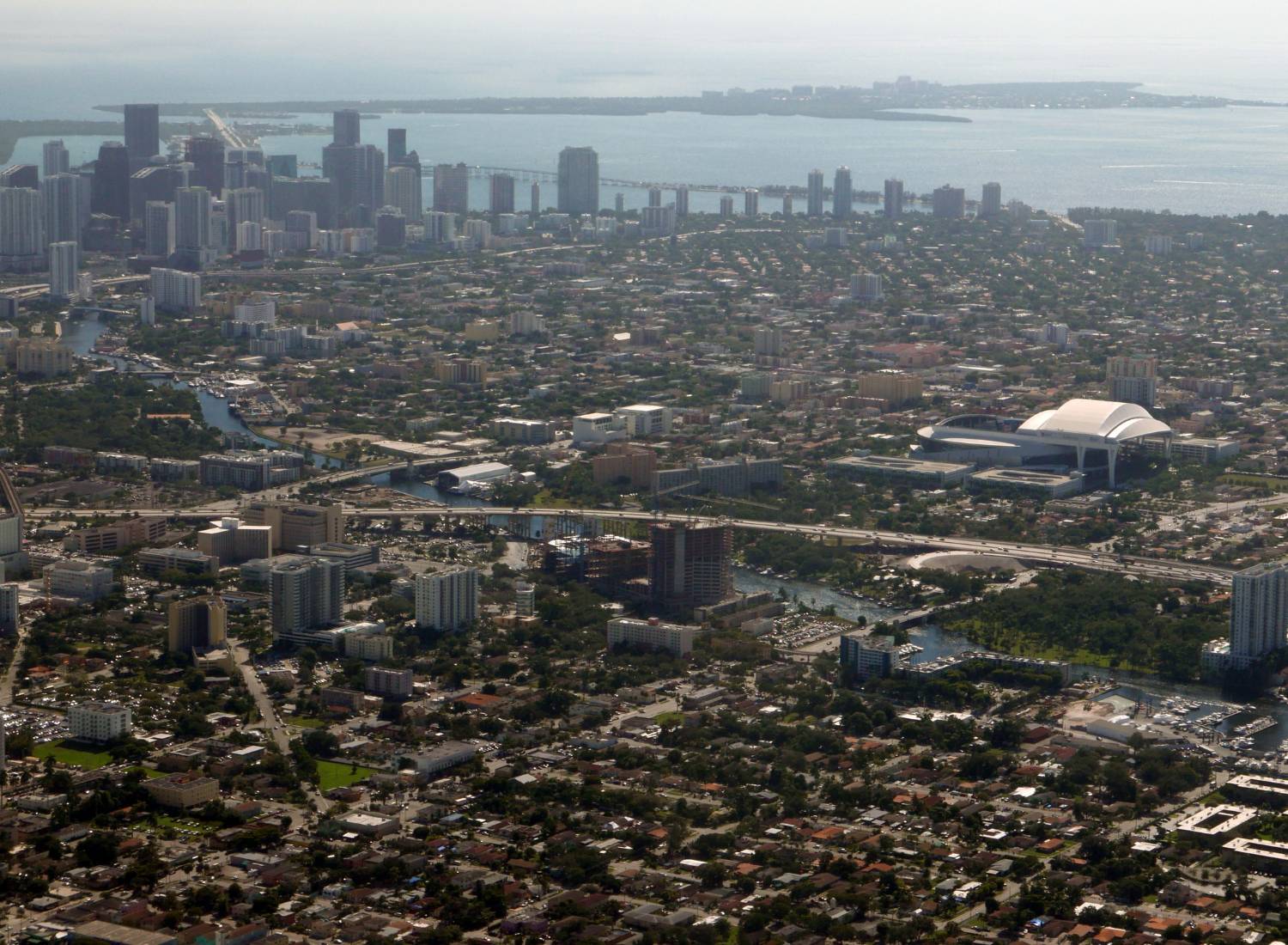 May 2026 — Foreign capital is flowing back into Miami commercial real estate, and the timing matters. With the Federal Reserve holding its benchmark rate steady through the first half of 2026 and the dollar softening against major currencies, Latin American, European, and Middle Eastern investors are again finding reasons to invest Miami — a market that weathered the 2024 to 2025 rate cycle better than nearly every other major US metro.
Join us at caa’s upcoming leadership summits! These premier events bring together hundreds of public and private sector leaders to discuss the challenges and opportunities for businesses and investors. Find the next summit in a city near you!
While the overall Miami-Dade commercial market saw total transaction volume ease by 13% year-over-year to $1.16 billion in 1Q26 due to broader macro constraints, institutional allocators and family offices remained aggressively focused on prime assets. Brickell and downtown office occupancy remained resilient, proving the stability of the urban core as financial services tenants — many relocated from New York and Chicago in recent years — expanded footprints rather than subleased them.
Industrial vacancy in Miami stood at 7.0% to 7.2% in the year’s first quarter. That is a five-year but as Ware CRE points out, the rise is driven by supply and not a drop in demand. Multifamily, the bellwether of the South Florida cycle, has steadied: asking rent growth was 0.7% year over year, the highest among the largest South Region meteor areas, according to Miami Realtors.
For long-cycle investors looking to invest Miami, the question is how to position for the next phase.
Foreign buyers reengage
What sets this cycle apart is the return of cross-border capital. The AFIRE International Investor Survey Report ranks Miami within the Top 5 most-preferred US markets for foreign capital, trailing New York, Dallas, and San Francisco, but cementing its position ahead of traditional global gateways. Argentine, Brazilian, and Colombian buyers are among the leaders in terms of property purchase in South Florida, according to the Miami Association of Realtors Local Market Reports. Miami-Dade has the biggest share of foreign buyers in the South Florida market at 73%.
When domestic institutional appetite cooled in 2023 and 2024, foreign buyers stepped away as well, leaving the market thin. The current cycle features broader investor participation, which tends to dampen volatility and sustain pricing through interest-rate uncertainty. According to the Cushman & Wakefield Miami CRE MarketBeat Reports, cap rate compression has resumed in industrial and class-A multifamily, while office cap rates have stabilized after two years of expansion.
Risks to monitor
Risks remain. Florida’s property insurance market continues to pressure operating expenses, particularly for coastal assets, and a meaningful share of new construction is wrestling with cost inflation in materials and skilled labor.
The condominium reform legislation passed after the 2021 Surfside collapse has driven a wave of forced sales in older buildings, presenting both opportunity and execution risk for value-add investors who can underwrite the assessment and reserve obligations. The pipeline of new office supply, while modest by historical standards, will be tested if any major tenant pulls back, and the multifamily delivery schedule for late 2026 in Doral and Allapattah merits close monitoring across submarkets.
Looking forward, the Miami CRE story for the rest of 2026 will hinge on three variables: the trajectory of Federal Reserve policy, the pace of corporate relocations from higher-tax states, and the willingness of foreign sponsors to commit equity at current pricing.
Local executives should watch the second-quarter earnings cycle for South Florida-exposed REITs and financial firms — Citadel, Goldman Sachs, and Microsoft all expanded local headcount in 2025 — for signals on hiring and space demand. Investors who choose to invest Miami in this cycle are betting on a structurally different city than the one that emerged from the 2008 downturn: a deeper capital base, broader employer mix, and a financial-services anchor that has shifted from cyclical bystander to primary growth engine.
Want more? Read the Invest: Miami report.