Investment flows shift as Coral Gables draws firms, wealth

Writer: Mirella Franzese
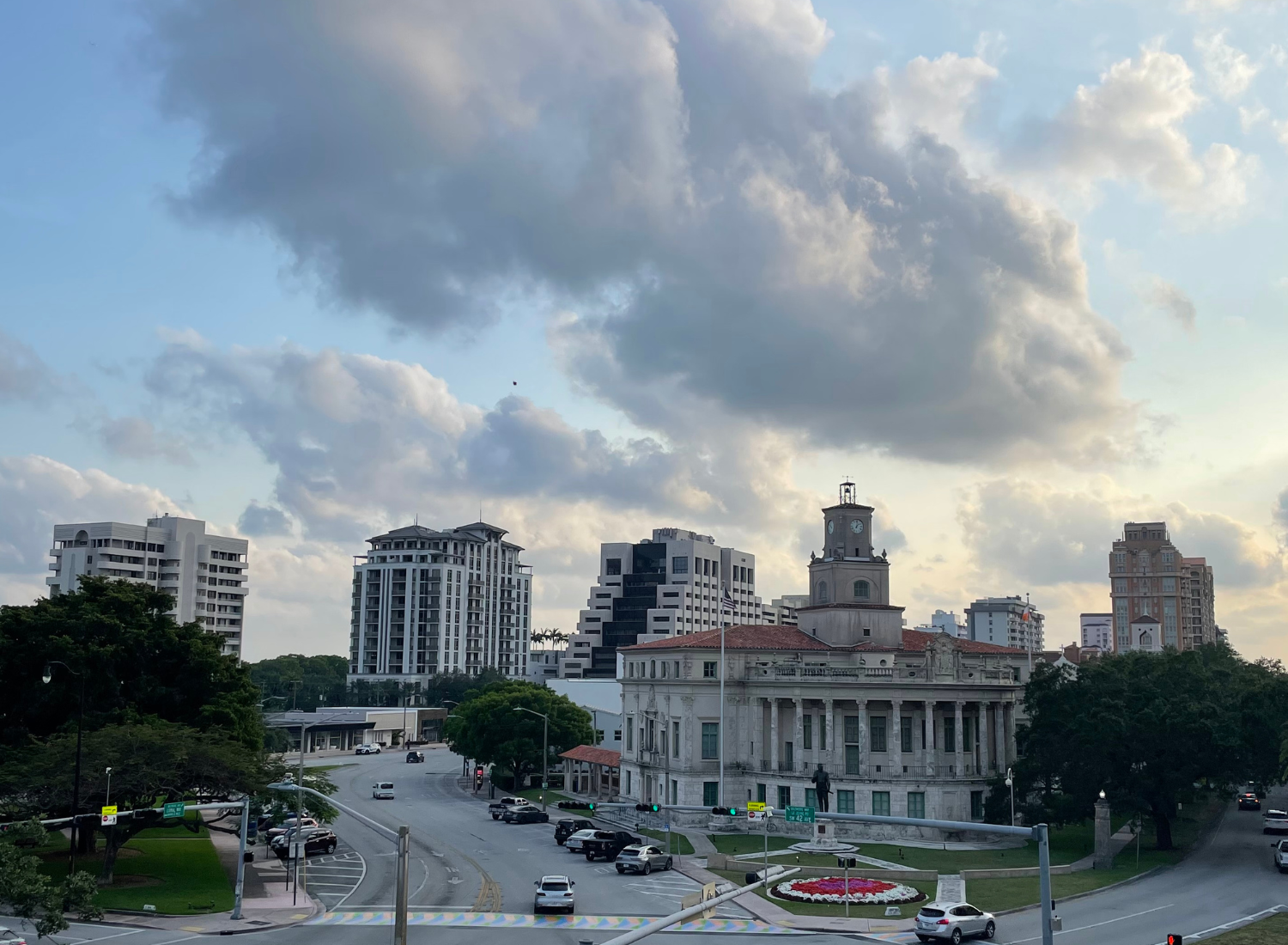
March 2025 — As the Miami metro area develops into one of the leading business hubs in the United States, Coral Gables has emerged as an attractive destination for businesses, investors, and students suited for a fast-paced workforce.
With an influx of wealthy families and leading corporations relocating to the area in recent years, Coral Gables’ has experienced industry growth from banking and wealth management to real estate.
“One trend we’re seeing is the expansion of our client base, with individuals moving to Florida from the Northeast, California, and internationally,” Donald Kress, president and CEO of Coral Gables Trust (CGT), told Invest:. In 2024, the 20-year-old trust and wealth management firm reached $2.5 billion in assets under management — driven by expansion in South Florida and its presence in Coral Gables.
On the real estate front, the city has been a high performer in the greater Miami area. “In the real estate cycle, our region is clearly outperforming the national markets because of the demographics and level of investment entering the area daily,” Jeff Watts, Valley Bank’s East Florida chief banking officer told Invest:. Valley has five branches in Miami-Dade County, including one in Coral Gable’s downtown central business district.
While Miami’s financial sector has traditionally been centered around Brickell, the escalating cost of office space in the downtown core has driven companies to suburban markets. “We’re seeing buildings on Brickell Avenue where rents have literally doubled over the past two or three years,” said Robert Orban, CEO of international CRE firm Cresa, in an interview with Invest:. “Tenants who are currently paying $52 per square foot are now facing renewal quotes of $100 per square foot. That kind of increase forces companies to look at alternative markets like Coral Gables, Kendall, and West Miami-Dade.”
Coral Gables residential market has benefited from a broader luxury housing home across Miami-Dade, with the city’s median household income reaching $125,959 — 59% higher than the national average, according to the Miami-Dade Beacon Council.
Despite strong demand, recent data suggests a cooling period. The median sales price of a home fell 26.1% year over year to $1.2 million after peaking at $1.7 million in October 2024. Housing inventory in Coral Gables saw a 10.7% increase in housing inventory from January 2025 to February 2025, reflecting more balanced market conditions.
The decline in home sales follows a highly active pandemic-era buying period. “Covid-19 brought this whole new group of buyers that realized they could live wherever they wanted to live,” said Ron Shuffield, president and CEO of Berkshire Hathaway HomeServices EWM Realty, as cited by the Miami Herald.
But with elevated interest rates and price growth slowing, momentum in the real estate market could see more tapering off in the long run.
While Coral Gables’ trajectory remains strong, Miami-Dade has seen mixed signals, particularly in retaining talent amid rising housing and insurance costs and increased traffic congestion, among other concerns. “Companies are most worried about talent,” said Paul Pavlou, dean of Coral Gables-based University of Miami’s Patti and Allan Herbert Business School, to Invest:. “Traffic and real estate costs are concerns, but talent is the top priority. Companies want highly skilled employees in fields like finance, technology, analytics, AI, and healthcare. Miami is now competing with Wall Street for finance jobs and Silicon Valley for tech jobs.”
Despite the challenges, corporate migration to Miami-Dade shows no significant signs of slowing. Coral Gables’ predominantly bilingual and international workforce offers a major benefit for multinational corporations looking to hire local talent — FIFA and Apple being among some of the most recent big-name businesses to open offices in the region. In September 2024, FIFA joined big-name tenants Citibank and Mondelez International in the Alhambra building, a 273,000-square-foot corporate office in downtown Coral Gables. The move brought around 100 jobs from Switzerland to Florida.
“We’re fortunate to be in Florida. A lot of what’s happening locally is not happening nationally. When you look at the growth in South Florida, we’re in a very enviable position,” said Watts.
Top image via Ryan Gandolfo/caa
For more information, please visit:
https://www.ewm.com/