
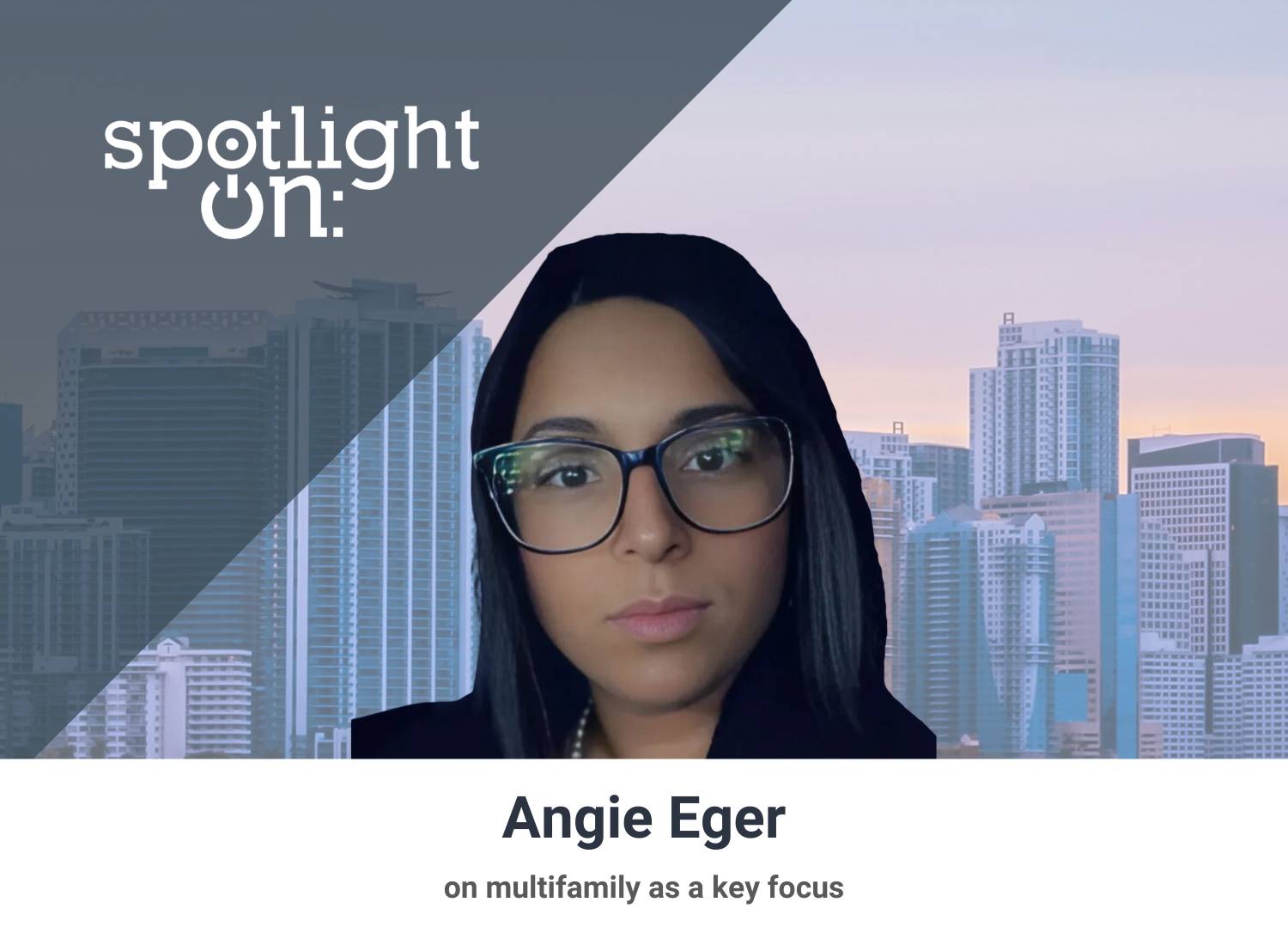
Spotlight On: Angie Eger, Owner, TRE Construction

Angie_Eger_Spotlight_OnOctober 2025 — In an interview with Invest:, Angie Eger, owner of TRE Construction, said that strategic growth, talent development, and diversification have been key drivers of the company’s rapid success. “We went from just the two of us working out of our home office to a team of eight in the office and around 75 in the field,” said Eger.

What developments over the past year have impacted TRE Construction, and how have they shaped your business?

From an economic standpoint, the multifamily sector has had a big impact. We’ve completed several of those types of projects, and we’ve expanded significantly. We went from just two of us working out of our home office to a team of eight in the office and around 75 in the field. We’re a commercial union contractor and signatory with both the Carpenters Union and the Drywall Finishers Union.

In our first year, we hit about $2 million in revenue. Last year, that grew to $5.8 million, and this year we’re on track to reach $10 million. Because of this rapid growth and the opportunities we’ve taken on, we’ve had to strengthen our internal operations, building out the right field crews and hiring the right office staff. We’ve established departments for estimating, project management, business administration, and field operations. It’s been a lot of moving parts, but all necessary as we scale.

Additionally, we’re now doing more owner-direct work. We’ve been selected as an authorized builder for the Western Pennsylvania region by Federal Steel Systems to construct pre-engineered steel buildings, where we act as the general contractor.

In the past year, we’ve also branched into other service areas, including doors, frames, hardware, and commercial siding. We’re partnering with suppliers to become one of their key installers. This is especially valuable for our multifamily projects in Pittsburgh, which are often prevailing wage and union-required.

Recently, we completed two buildings in Oakland and continue to diversify while also focusing on specialized niche services that set us apart from the competition.

What factors have contributed to recent recognition and growth?

Being ranked was a big honor. I believe we were recognized in more than one category in the Pittsburgh Business Times. We’re very opportunity-driven, but we also know we have to bid on the right jobs and be extremely strategic so we can maintain sustainable, long-term growth.

We’re now competing with mid-sized subcontractors and even some of the top players in the region, companies that have been around for 75 to 80 years. One of our biggest priorities is making sure we have the right people in the right roles, both in the field and in the office, to keep growing successfully. What worked in 2023 won’t necessarily work in 2024 or 2025. Each stage of growth requires a new strategy.

How are you attracting and retaining skilled talent in Pittsburgh’s construction market?

Hiring for the office side has been a bit easier except when it comes to estimators. For that role, most of our hires have come through word-of-mouth, from either current employees or industry partners. Luckily, the right people were looking at the right time.

Estimating and project management were the two hardest departments to staff. While posting jobs online can help, what really made a difference was partnering with the Master Builders Association and the unions. The Carpenters Union, in particular, has been a core partner since day one and played a huge role in our success.

Also, my husband, who’s a co-owner, spent 15 years in the Carpenters Union and worked as a superintendent for the last eight. That gave us an advantage when it came to building strong field crews. He understands construction and has deep relationships with people in the field.

We let prospective hires know: we’re growing, and there’s a real career path here. A lot of companies stick you in one role and leave you there for years. We focus on career development, both through the union and internally, to help employees grow into roles like foreman or superintendent.

That mindset comes from our own backgrounds. I was an HR leader for 15 years and started my career at 19. I worked for large corporations and benefited from strong career development. The same goes for my husband. We know firsthand how important it is. If you invest in your people, the company grows stronger. That’s why we always say: teamwork makes the dream work. And if the company does well, so do the people in it.

What trends are you paying the most attention to, and how are you adapting?

Definitely multifamily continues to be a key focus. We follow what’s happening locally through sources like DevelopingPittsburgh and BreakingGround. Data centers are also expected to become a bigger opportunity in our region.

We’ve built our strategy around services that our competitors aren’t offering, finding niche areas we can dominate. This includes commercial work, healthcare, and federal contracts.

We’re WBE-certified, which has opened doors for us in federal work. For example, we completed a major nine-month project with the Naval Academy in the Washington D.C. area. While that wasn’t local, it was a huge success. Federal opportunities are also emerging here, and we’re ready to pursue them.

Healthcare is another big one. We’re currently working on UPMC Presbyterian Hospital in Oakland. We’ve also had success with schools like Carnegie Mellon University and the University of Pittsburgh, and even hospitality projects. For example, we worked at Nemacolin Resort for two years in a row on $1 million projects during our early years.

We’re also eyeing real estate-driven work like commercial siding for multifamily buildings, as I mentioned earlier. Other growth areas are upcoming data centers, power plants, and industries that we have already been working in.

But above all, what drives our business is delivering high-quality work and excellent client service. Our WBE certification is valuable, but we win jobs by proving our capabilities and staying adaptable to changing trends.

What are the biggest challenges you face as a young construction company, and where do you see the most opportunity?

The biggest challenge in commercial construction is cash flow as it takes a long time to get paid. Our payroll alone is around $100,000 per week. On top of that, we pay union fringe benefits and regular overhead, and we front all the materials on jobs. Suppliers expect payment in 30 to 45 days, but we often don’t get paid for 60 to 90 days. Some clients pay sooner, but not all.

When we started, banks didn’t want to work with us. We launched with a $100,000 business loan and tried to avoid large debt. Now we have a sizable business line of credit, but it took time to build that.

Even if you generate $10 million in revenue, profit margins in this industry are typically only 3% to 8% after overhead. That’s why choosing the right clients is so important — clients who will pay on time and allow us to sustain growth.

These challenges were especially tough in the beginning and will likely continue to show up in different ways as we grow. But some things have become easier: if your financials are strong and you deliver quality work, you get repeat business. You don’t have to hustle as hard to build brand awareness. Your relationship with your bank strengthens, and you build trust with accountants and other partners.

Now that we’re stabilizing at the $10 million to $12 million mark, our next step is planning for the next level. Our goal is to become a leading name in commercial interiors in Western PA and to keep growing in West Virginia, Washington D.C., and in other exterior markets we’ve entered. There will always be challenges, but often, those challenges become new opportunities.

How do you engage with the community, and why is that important to TRE?

Community is a huge part of our mission. We didn’t start TRE just to become wealthy, although yes, we did want to improve our lives. But our deeper goal is to make an impact. That includes our clients, our employees, and the communities where we build.

When we work on multifamily projects, we’re providing high-quality housing. When we do an office fit-out, we’re creating workspaces for businesses. Even though the demand for office space dipped post-COVID, it’s slowly picking up again.

Pittsburgh is a tight-knit city. A lot of people know each other, and word travels fast. We believe in giving back, whether it’s through sponsorships or partnerships, even with organizations we haven’t worked with directly.

The community is also important because not everyone understands what we’re building or why it matters. By aligning ourselves with people and organizations who do understand, we build stronger relationships — and in turn, a stronger company.

What are TRE’s top goals and priorities over the next two to three years?

Our focus is on continuing to build strong crews in the field and growing our internal team with the right talent. We’re currently working on standard operating procedures (SOPs) to create structure and consistency, which will allow us to take on larger jobs.

When we started, most of our projects were in the $250,000 to $500,000 range. Now, in the next two to three years, our goal is to grow to around $18 million to $20 million in revenue. That will require more talent, additional internal support, and continued diversification into our niche service offerings.

We don’t claim to do everything. We focus on the services we do well and deliver top-quality work. We’re also looking to expand our owner-direct work, rather than only working for general contractors.

Yes, there will be hurdles, but we’re also confident that more doors will open, especially with federal work in DC and new opportunities here locally. Our ultimate goal is to be one of the most well-known commercial interior subcontractors in Western PA, while continuing to grow in our other service areas.

Want more? Read the Invest: Pittsburgh report.

Subscribe to Our Newsletters

"*" indicates required fields
Address*
Would You Like To Receive Our National Newsletter?*
Interests
Markets
This field is hidden when viewing the form

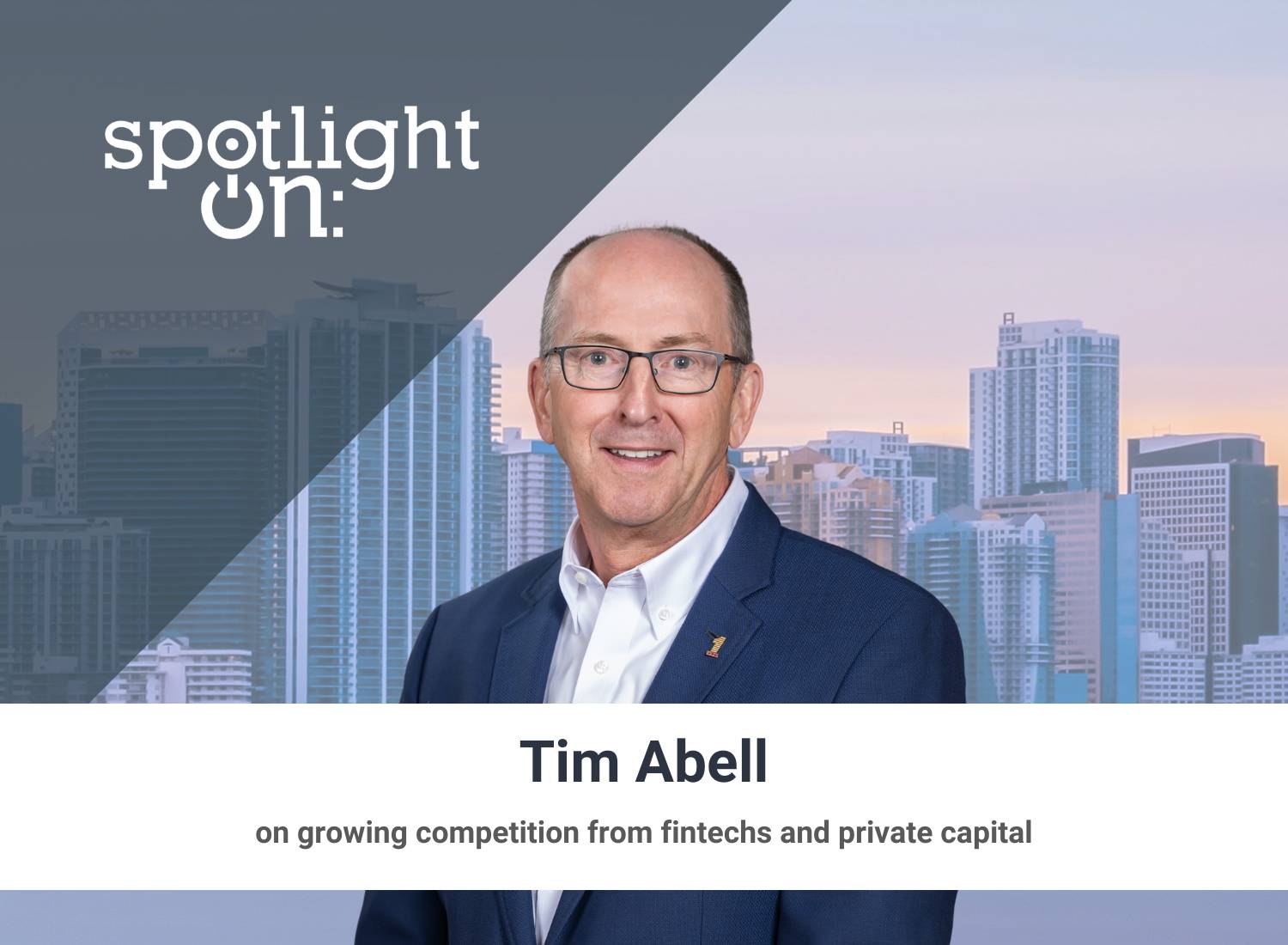
Spotlight On: Tim Abell, CEO & President, Firstrust Bank

Tim_Abell_Spotlight_OnOctober 2025 — In an interview with Invest:, Tim Abell, CEO and president of Firstrust Bank, emphasized its unique position as a $5 billion, family-owned institution rooted in Philadelphia. “We pride ourselves on delivering personalized service,” Abell said. “At its core, Firstrust’s mission is about cultivating prosperity for customers, employees, and the community.”

What ongoing shifts in the banking sector have influenced Firstrust’s strategy, and how have you responded?

One of the most significant developments has been consolidation among community banks. The number has dropped — down from around 16,000 when I started to about 4,000 today — that only heightens the importance of our value proposition. At the same time, we face growing competition from fintechs, private credit groups, and even tax-exempt credit unions. These shifts encourage us to stay sharply focused on the strengths that set us apart. 

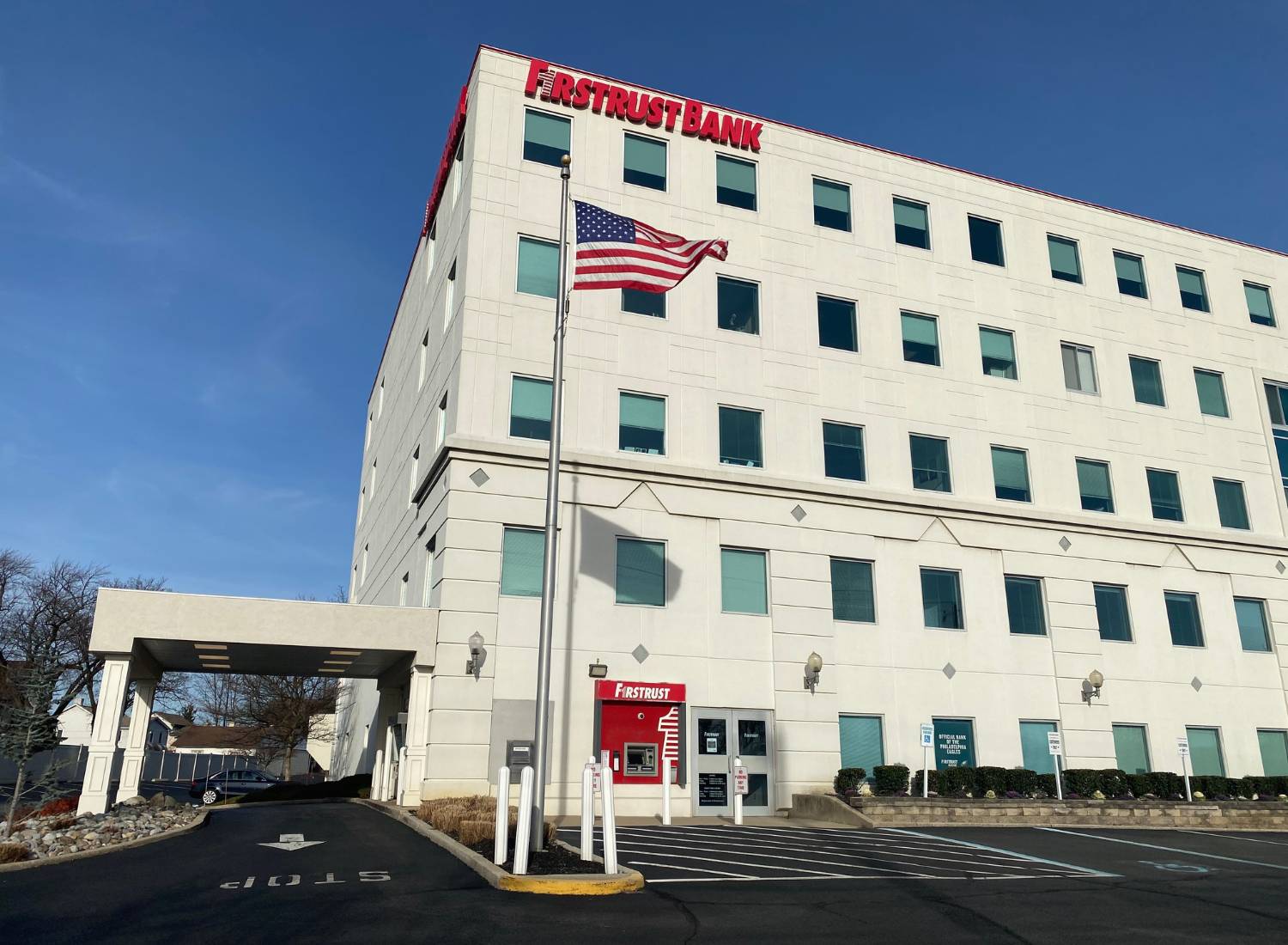
As the official bank of the Philadelphia Eagles and Philadelphia’s Hometown Bank, we’re uniquely positioned to attract strong talent while continuing to build long-term customer relationships through consistent, personalized service.


Join us at the Philadelphia 6th Edition Leadership Summit! This premier event brings together hundreds of Southeast Pennsylvania and South Jersey’s regional leaders to discuss the challenges and opportunities for businesses and investors. This year’s theme centers on the regional strengths of the eds and meds. Click here to learn more.


How does Philadelphia’s unique culture, economy, and growth trajectory support Firstrust’s vision and positioning?

Philadelphia is home for us, not just a city where we operate. The bank was founded here, in South Philadelphia, by our owner’s (Richard J. Green) grandfather, Samuel A. Green in 1934, and has been deeply connected to the community ever since. The region has a diverse economy: strong “eds and meds,” vibrant sports culture, and excellent transportation links that make it a great place to live, work, and grow. Major events like next year’s semiquincentennial celebration, the MLB All-Star Game and multiple FIFA World Cup matches, will only showcase the city further. I’m inspired by Mayor Cherelle L. Parker’s energy and her focus on housing, all of which reinforce our belief that Philadelphia remains a community with immense potential.

Whitemarsh_2021

How is Firstrust uniquely positioned to navigate today’s complex financial landscape?

Firstrust is over a $5 billion bank, and family-owned. That combination allows us to execute sophisticated financial transactions, like a $1 billion lending facility we syndicated last year for one of our customers, while retaining our unique culture and commitment to long-term relationships. We are driven by personal connection, long-term vision, and a strong culture, qualities that make our bank stand out in a complex and fluctuating financial landscape.

What services and sectors are you prioritizing for small- and midsized businesses, and how are you tailoring your operations to serve them better?

We’re placing a strong emphasis on digital products that make it easier and faster to do business with Firstrust. We’ve invested in tools that offer insights to help entrepreneurs manage their business such as seamlessly integrating customers’ data with their accounting systems. Business owners need a banker who knows the market, understands their needs, and answers the phone. We also connect clients with partners who can help them grow, and nothing satisfies us more than seeing our customers succeed. At its core, Firstrust’s mission is about cultivating prosperity for customers, employees, and the community. We show that by acting quickly, offering insights, and providing service with a human touch even as we build additional digital capabilities.

Are there specific sectors where you’re seeing strong growth or focusing your client development in the region?

Our construction lending team has always been a strength of our organization, and we continue to see robust growth. We handle financing for multifamily conversions, single-family developments and various commercial real estate projects. This real estate sector has tremendous opportunity, and our client base continues to expand. At the same time, our strength in business banking, including SBA and commercial lending, is growing. We’re attracting new talent, focusing on expertise, and investing in services to support these areas. In my first 20 years in banking, I worked at five institutions that later merged. Having now been with Firstrust for 21 years, I’ve seen the value of stable ownership and leadership. At Firstrust, being family-owned means we run the bank with a multi-year vision, which resonates with customers who appreciate our consistency. They know that when they call, they connect with someone who understands their business and the market, which is rare in today’s landscape.

What’s your approach to attracting and developing talent to support your strategic vision?

One clear strength of Firstrust is the stability and consistency of our executive leadership. We’ve been fortunate to retain leaders over the long term while also bringing in new professionals who expand our capabilities. We offer a meaningful career path which is a strong draw for talent, especially for people who are coming from public companies or banks that have merged.. We foster a strong culture, and we’re mindful about protecting it. We hire carefully, invest in our people, and make sure everyone has opportunities to grow, learn and build a strong career in a dynamic industry.

How are you leveraging technology and innovation to enhance efficiency and client service?

Digital transformation and AI are reshaping banking. We’re at the early stages, testing various AI-type initiatives to increase efficiency and improve customer experience. What I think is unique about Firstrust is our ability to blend innovation with personal service. We work with technology vendors to deliver advanced tools, like streamlined online account opening, spending insights, and software integrations that are especially valuable for entrepreneurs and businesses. Our investments let us share insights, speed decision-making, and simplify financial management for clients — all without sacrificing the personal touch that defines us.

In what ways is Firstrust engaging with the broader community, and how does that align with your business goals?

We support several longstanding community organizations. For instance, City Year benefits from our support in education and youth development, which contributes to long-term community strength. We partner with Variety — The Children’s Charity and the Eagles Autism Foundation, reflecting our commitment to broader social impact. Habitat for Humanity holds a special place for me — our partnership supports stable housing, which resonates deeply with our mission. The Green Family Foundation supports initiatives across education, food security, healthcare, safety, and more, reinforcing our focus on foundational community needs. We also engage with organizations like the African American Chamber of Commerce and the Enterprise Center to support entrepreneurship and inclusive economic growth. By embedding ourselves in the community, we build goodwill and trust that naturally support business opportunities.

What are your top priorities for the next two to three years, and what makes you optimistic about the future?

My outlook is optimistic. First, I believe Firstrust has exceptional talent, committed people who genuinely care about our customers and their success. We’re making smart investments in technology that enhance efficiency and client experience while maintaining a personal touch. Second, we’re exploring new geographic and niche market opportunities where we hold expertise. We want to grow these areas thoughtfully. Third, we plan to collaborate with fintechs and other innovators and leverage those partnerships for strategic expansion. All of this ties into our broader strategy, which is grounded in a long-term vision rather than short-term gains. Our culture, adaptability, and financial stability position us well for the years ahead. Being prepared for change is critical. Our industry is always evolving, and our owner, Richard J. Green, has instilled a forward-looking mindset. One of the most important lessons is that when challenges arise, whether in tech or the economy, firms that remain strong are those that are consistently there for their clients, and have strong capital, liquidity, and governance. For us, maintaining that financial conservatism while embracing innovation ensures we can support our customers and community through various economic cycles.

Want more? Read the Invest: Philadelphia report.

Subscribe to Our Newsletters

"*" indicates required fields
Address*
Would You Like To Receive Our National Newsletter?*
Interests
Markets
This field is hidden when viewing the form

Spotlight On: Kenneth Mitchell, Division Manager, New York Metro Commercial Banking, Popular Bank

Kenneth_Mitchell_Spotlight_OnOctober 2025 — Popular Bank’s Division Manager of New York Metro Commercial Banking Kenneth Mitchell sat down with Invest: to discuss how the bank’s relationship-driven, collaborative approach and geographically diversified commercial platform have empowered it to seize lending opportunities, manage interest-rate volatility, and drive sustainable growth.

What distinguishes Popular Bank in the Tri-State region in comparison to the broader banking landscape?

Popular Bank is the mainland U.S. subsidiary of Popular, Inc., a 132-year-old financial institution headquartered in Puerto Rico. We offer a wide range of commercial and retail banking products backed by our longstanding commitment to our customers and communities.

On the commercial side, we offer lending, depository services, and treasury management, meeting a wide range of the needs of our commercial clients. We have fostered great collaboration across all lines of business, including the commercial world and private banking. Popular Bank is a relationship-driven institution, with some of our client relationships going back more than 40 years. 

As a division manager of commercial banking in the New York Metro, I focus on commercial real estate, including multifamily, shelter financing, and construction opportunities in the tri-state area. We are heavily concentrated in metropolitan New York, where the housing market is resilient and strong. 

Another area of focus is the Middle Market, also sometimes known as C&I (commercial & industrial) lending. We define this part of the market as anything outside of healthcare and real estate, including, for example, owner-occupied real estate, manufacturing companies, or professional services providers such as law firms.   

Our healthcare division covers ambulatory centers, skilled nursing facilities, senior housing, and other asset classes that may fall under the category. We’ve grown this specialty business into a national platform, currently serving customers in 28 states. To further meet the needs of our healthcare customers, we expanded through the acquisition of a leasing company that specializes in healthcare equipment. 

How have commercial banking priorities in the New York–New Jersey region evolved over the past year?

Five years ago, when the world shut down, a lot of banks pulled away from lending. We also reduced the volume of lending we did, but maintained around $1 billion. That was a conscious effort to support our clients and help them with their capital needs. We ultimately benefited from banks sitting on the sidelines. We identified opportunities with clients that we had been looking to serve for years. It was a unique opportunity to step in and start building a relationship.  

Today’s higher interest rate environment has created challenges for clients, as it has become expensive to borrow. Nevertheless, we continue to see a steady flow of activity in part due to our longstanding client relationships. And it looks like a rate reduction is on the horizon, which will be good for our borrowers and should be good for us as well. 

In some ways, COVID forced our clients to take a closer look at their supply chains, and this is also true today, as they have not seen a material impact from the increased costs related to tariffs. There are certain supplies that can only come from other countries, so there is definitely inflationary pressure, but otherwise, they are pivoting nicely. 

Healthcare Financing continues to be a strong commercial segment for us. If you look at 2023 data, healthcare spend from GDP is approaching 18%. That is almost $5 trillion, and that number continues to grow year after year. There is no cyclicality in the healthcare business, as people will always need medical care. In addition, there is a growing demand for senior housing, and we are seeing a surge in that sector of the industry.  

How have interest rate fluctuations and economic uncertainty impacted your lending strategies and risk assessments?

As a bank, we see our commercial offering as our biggest differentiator. We operate branches in New York and New Jersey and are continuously assessing our strategy to win in the market. That is one of the reasons why we have reinvigorated our Middle Market and C&I spaces. We are looking to grow in those areas. We also have strong growth objectives in the healthcare segment. 

Our commercial real estate business is one of the sources of our strong reputation. We may not be the cheapest, but we are fair. It is an equitable client-banker relationship. We are always looking at our product suite, focusing on what makes the most sense for us, our clients, and our shareholders, as well as what best meets the demands of the market in totality. 

What are the biggest challenges Popular Bank is facing, and how are you addressing them?

Talent recruitment is always tough. It is challenging to identify a talented person and attract them. Popular Bank’s culture is second to none, and it has been instrumental in how we approach our clients, both externally and internally. We are a people-centric company with people at the center of progress. The resilience we have in this market has a lot to do with our culture. We are tuned in to how individuals will fit into our teams, and we always aim to maintain good synergy. 

Which customer shifts in habit have had a higher impact on your branch strategy, and how is Popular Bank planning to target the generational shift? 

We started Popular Direct, an online banking platform that aims to attract people who do not need a brick-and-mortar branch. Our physical branch footprint is a connection to the communities that we serve, including local businesses and economies. We serve a multigenerational customer base, which is why our omnichannel approach is key. It allows us to meet the customers where they are. 

For our commercial lines of business, such as healthcare, for example, we are hiring people in different geographic markets to strategically expand our platforms. 

Our “one bank approach” promotes collaboration across all lines of business. Bigger banks may have a lot of verticals, but our approach is much more collaborative and personalized. 

What are the top three priorities and business goals for Popular Bank over the next few years, and how do they align with the broader banking and financial landscape?

We are looking to diversify the overall portfolio for metro New York and grow it exponentially. One goal is to expand Middle-Market C&I to better complement investor real estate. When it comes to healthcare, we want to double that business in the coming years. We are also continuously looking for ways to improve operationally in all lines of business. In terms of talent, I love hiring people who bring unique perspectives because we all have our blind spots. 

Want more? Read the Invest: New Jersey report.

Subscribe to Our Newsletters

"*" indicates required fields

Address*
Would You Like To Receive Our National Newsletter?*
Interests
Markets
This field is hidden when viewing the form

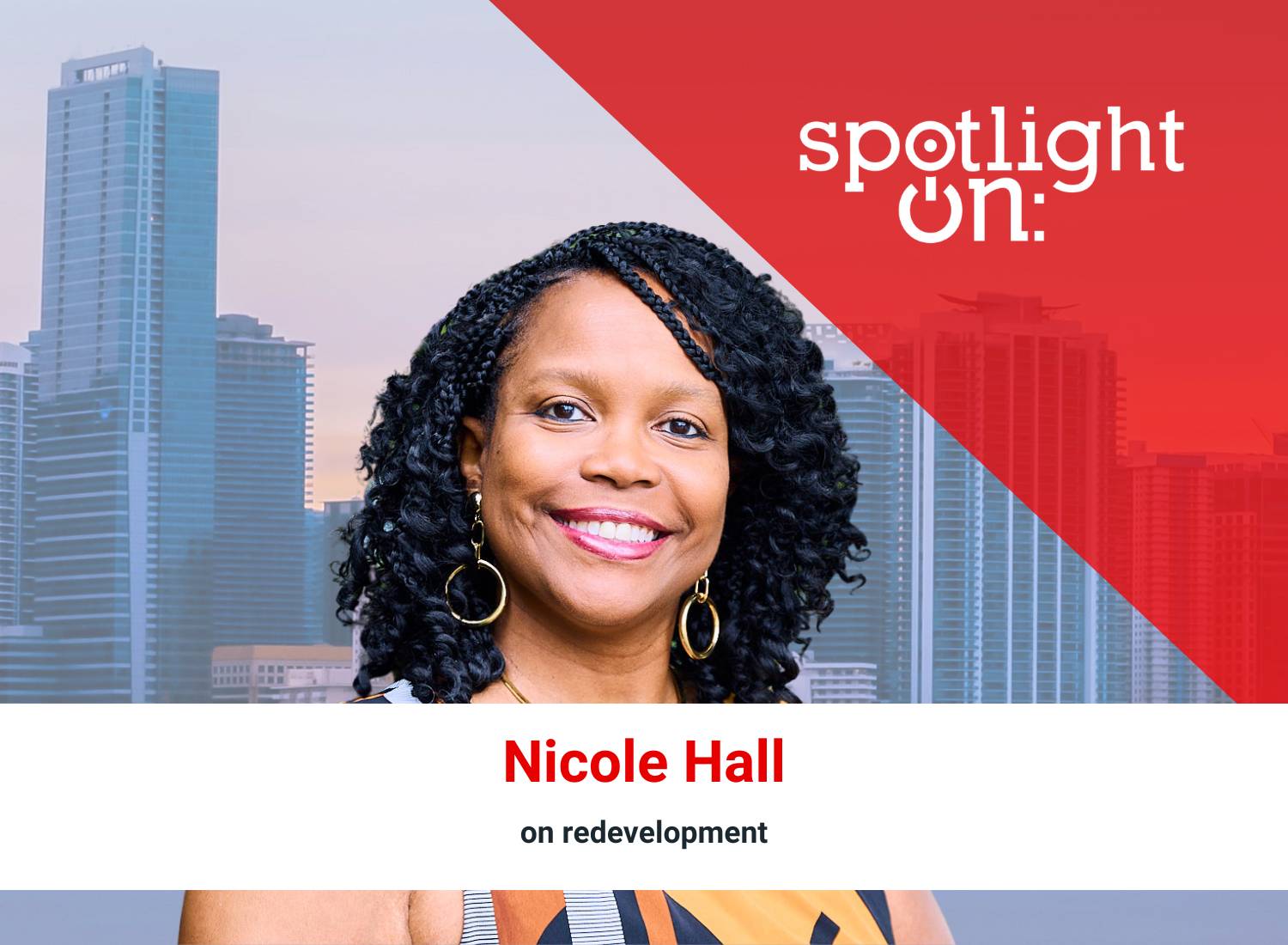
Spotlight On: Nicole Hall, Administrator, Assembly CID

Nicole_Hall_Spotlight_OnOctober 2025 — In an interview with Focus:, Nicole Hall, administrator for the Assembly CID, discussed the transformative developments in both the West End and Assembly districts of Atlanta. She highlighted the long-awaited sale and redevelopment of the West End Mall as a major catalyst for growth, alongside the booming film industry at Assembly Studios. “The redevelopment, alongside the Lee + White development and the Beltline, is transforming the area,” Hall noted.

Reflecting on the past year, what would you identify as the most significant milestones for Downtown West Chester and the Business Improvement District?

Over the last year, the biggest accomplishment was the sale of the West End Mall, a process spanning five to seven years. This sale, with redevelopment now imminent, is a catalyst for Southwest Atlanta. The redevelopment, alongside the Lee + White development and the Beltline, is transforming the area. The mall, previously all commercial, will become mixed-use, introducing housing that can’t be part of the CID’s taxable portion. This shift will drive more business, boosting property values, which have already risen. The area near Metropolitan is also changing, revitalizing Southwest Atlanta along I-20.

For Assembly CID, the film studios in DeKalb have exploded. Located at Spaghetti Junction, the site saw little progress under its first developer. When Gray Media took over, development surged within two years, with studios opening and more shows filmed, gaining national attention. The CID focused on infrastructure, enabling hotels, housing, restaurants, and commercial growth. Assembly Studios is just part of the site, with more development planned. Working with Gray Media to build something unique from the ground up is exciting and unique to our CID.

How would you describe the business climate in the West End, particularly in terms of foot traffic, business growth and consumer spending?

We’re collaborating with partners to maintain the West End CID, enhancing sidewalks to boost foot traffic for businesses. With Mercedes-Benz Stadium, new hotels and restaurants, foot traffic has surged. Castleberry Hill, an artsy area adjacent to the stadium and part of the West End CID, sees heavy filming activity. The business climate, previously weakened by closures, is rebounding, especially with the 2026 FIFA World Cup preparations. For Assembly CID in Doraville, the isolated film studios are thriving, benefiting nearby Chamblee. Studio visitors frequent these cities for weekend activities, bolstering local commerce. To support this, food trucks are brought in, and more commercial construction, like hotels, is planned, creating a self-contained city. Currently, the studio is gated, but its workforce boosts Doraville and Chamblee’s economies.

In relation to that growth, which industries or sectors are experiencing the most momentum within the local business community?

In the West End CID, restaurants and retail are the most prominent businesses, particularly near downtown. The area’s unique draw lies in its diverse eateries, offering vegan, African, barbecue and more, attracting a wide crowd. Retail will likely continue to see the most growth due to the mall redevelopment. Some stores were shut down but relocated, as closing them would’ve harmed the community, where these are often the only stores available. Over five years, we’ve done surveys, and residents want quality stores with items they need, not necessarily big brands. The mall developers are listening to the community and business owners, thoughtfully choosing retail to supplement, not replace, small businesses. This will bring a good mix, including grocery and higher-end shopping we don’t have now. That’s the opportunity, and it’s going to be really good for the area.

How are you positioning the West End as a destination to attract interest from broader regional markets?

We’re working closely with the Beltline — not exactly the economic development arm, but like Invest Atlanta. Our community improvement district is smaller, but we have great partners. They offer programs for small businesses to be seen on a higher platform, attracting people. With the World Cup coming, it’s an opportunity for them to put their businesses out front, to draw folks to the West End and Castleberry Hill. It’s the West End CID, but we don’t want to forget Castleberry Hill is part of it, especially since it’s closer to Mercedes-Benz Stadium. Visitors will hit Castleberry Hill before the West End. The partnership with the city of Atlanta, the Atlanta Beltline, and Invest Atlanta is helping. They have a website and link for visitors to see these businesses. The diversity in this African-American community is an attraction, offering a unique mix you might not get elsewhere. We’re working with these partners to lift up those businesses right now.

What are some of the main challenges facing the region and the business community?

The West End Merchants Coalition surveyed small businesses to understand their needs. A key challenge is finding and retaining qualified staff, with high turnover in restaurants and retail. Public safety is another concern, including loitering by unhoused individuals and increased theft in stores. The CID supports businesses with security patrols to assist existing store security and improves landscaping to deter crime. Small businesses face general challenges, but some, like Slutty Vegan, a well-known vegan spot that started in the West End/West View area and expanded to New York, thrive as destinations. Other businesses are still finding their footing. With the World Cup approaching, businesses are preparing to capitalize on the opportunity. Partners are providing extra support, and meetings are underway to discuss whether businesses will stay in their locations or vend near Mercedes-Benz Stadium. These efforts aim to help businesses overcome challenges and take advantage of the upcoming boost from the World Cup.

What is your outlook for the Assembly CID and the region as the World Cup approaches?

I believe this is a truly pivotal moment for both CIDs. The timing for the West End, with the mall, is somewhat unfortunate as it will be under construction and not open for the World Cup, limiting activity there. However, both areas are experiencing significant development. Over the next two to four years, we anticipate substantial transformations in both areas, making this an exciting time for us and for the communities involved.

Want more? Read the Focus: Atlanta report.

Subscribe to Our Newsletters

"*" indicates required fields
Address*
Would You Like To Receive Our National Newsletter?*
Interests
Markets
This field is hidden when viewing the form

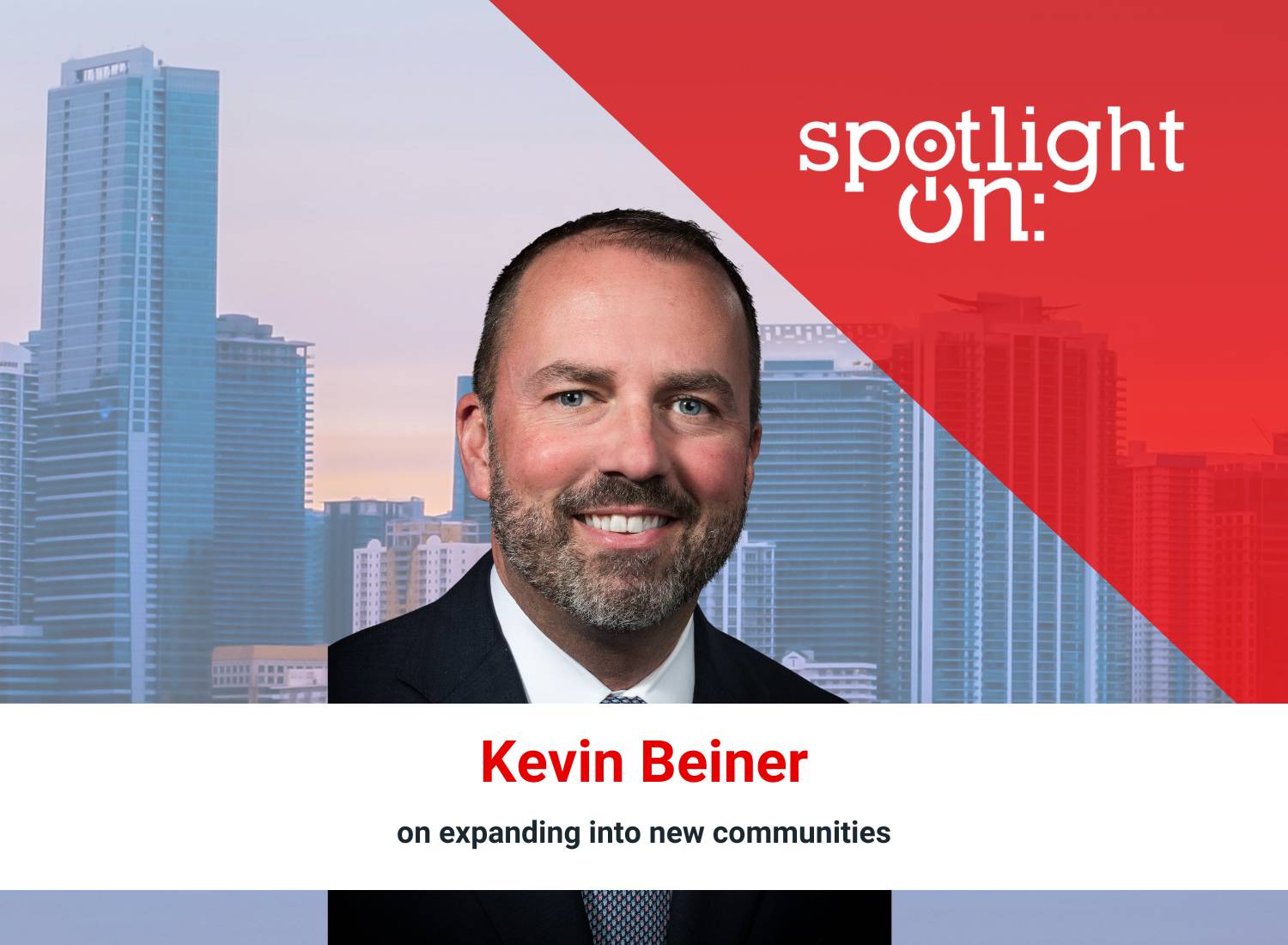
Spotlight On: Kevin Beiner, Chief Operating Officer-elect, Northwell Health

Kevin_Beiner_Spotlight_OnOctober 2025 — Kevin Beiner, chief operating officer-elect of Northwell Health, spoke with Invest: about bringing world-class healthcare into new communities. “It is our job to make the big feel small. Patients and their physicians don’t need to experience the magnitude of large systems, they just want to receive great care,” Beiner said.

What are your top priorities as you step into your new role, and how do you plan to balance continuity with innovation?

No matter what, we have to maintain a focus on providing great care to our patients. With this new role, my first priority is to navigate the transition. The current CEO and COO and other senior leaders are retiring. We are in the final stages of putting together the new team, mostly an internal group, and ensuring everybody is organized, rowing in the same direction, and able to take the organization to the next level. Our second priority is converting electronic medical records, a fairly comprehensive, consuming transformation. While it may seem like a tech initiative, it is actually an operational change. We are changing our workflows and improving the physician-patient experience. Lastly, we recently acquired seven new hospitals in Upstate New York and Connecticut. The work of merging those facilities is a meticulous, methodical, and slow process.

How do you maintain or improve operational efficiency without sacrificing patient quality of care?

We continue to grow and like to expand into new communities and fill clinical gaps. We are very big and, if we are successful, we take the value of our size to export our high quality care. We have great thought leadership in our organization and can standardize care across that continuum. At the same time, we like to be locally adept. It is our job to make the big feel small. Patients and their physicians don’t need to experience the magnitude of large systems, they just want to receive great care.

How do you envision integrating new technologies into Northwell’s operations to improve patient outcomes?

Digital transformation is front and center. To some extent, it is the basics like redoing electronic medical records. We are working with Salesforce to provide a better patient and physician access experience. We have very innovative physicians and professionals across Northwell who push us to gain traction in the areas of AI. We are being thoughtful and careful. We want to ensure we are responsible with the use of technology and are doing it in a way in which our physicians are comfortable.

In your view, what are the most critical elements of the patient experience in today’s healthcare environment, and how does Northwell plan to enhance those areas in the coming years?

Patients want convenience, and care where they are at. This is why Northwell, a New York-based provider, is in Florida now. Our constituents want us there because they want continuity of care. When they go back and forth during the seasons, they can see a familiar provider with the same records. We go into communities to listen and learn. It’s about meeting them where they are rather than telling them to meet us where we are.

How are you addressing workforce challenges?

The answer is culture. When we got over the pandemic, the healthcare workforce across the country became very challenging. People left their roles or went part-time. We saw staffing shortages. We did better than most and recovered a lot faster because of years of investing in our workforce and taking the time to provide opportunities for education and growth. We celebrate our diversity. We do things that others aspire to do and we never saw our culture as a luxury, but rather as a basic requirement. We’ve developed accredited programs in New York where we train people to become professionals. On the other side of that training is a job offer, and we’ve been very successful in filling roles. We started our own medical school and nursing school, both of which have been successful. We partnered with New York City to open a high school in fall 2025 for young people interested in careers in healthcare, particularly nursing, radiology, and physical therapy.

How are you navigating Northwell’s strategic growth?

We are growing no matter what we do, and it’s a matter of cultivating leadership and clinical teams that fit the culture, share our values, and then we empower them. We like to hold people accountable, then get out of the way. We are too big to operate as a command-and-control operation, so we ensure we have the right leadership in place. We have a responsibility to maintain our mission while having a margin. We have programs working with faith-based groups across our entire network. We understand that underserved communities have great trust with their church, synagogue, mosque, or other place of worship. We want to be seen as trusted partners in these communities without being heavy-handed. We have to treat every community differently.

What strategies will you pursue to ensure Northwell remains financially healthy while continuing to provide high-quality care?

The economics of healthcare are going to get more difficult, but we don’t use that as an excuse. We like to be optimistic and think differently. We like to diversify our businesses and ensure we are staying profitable, so that on the other side of the ledger we can maintain our mission as a community-based not-for-profit. Hospitals across the country will have greater challenges as a result of the overall economic environment, but we sometimes see opportunity in that rather than a threat. We strive to protect quality, our core, and patient care no matter what.

Where do you see the biggest opportunities for growth and development within the healthcare industry in Palm Beach?

I see a shift in the ambulatory community-based space. There are many things we can do better and safer outside of the four walls of the hospital, and that’s an area we are leaning into. Geographically, there is growth in the Northeast and Florida. We try to stay where our communities want us to be. We will see growth in tech innovations and in the ways that our patients seek access to care.

How do you see the role of data analytics in shaping Northwell’s operational strategies?

We focus on metrics that align with our goals to provide the safest care with outcomes people expect, in the way that they want it. We measure safety across the continuum. We measure outcomes in terms of how people with chronic diseases get better in our care. We are respectful of their expectations, families, and unique situations, and try to provide a high-quality experience.

How is Northwell Health adapting to clients’ evolving expectations?

It starts with listening. We have family and patient councils in many of our communities. We go out into the communities and ask pointed questions about how we are doing. One of the friction points was how people access us. Some people want to pick up the phone and others want to use a smartphone app. This is where our digital transformation comes in. We have to understand where the patient wants us to go, and invest and take the initiative to get there.

Want more? Read the Invest: Palm Beach report.

Subscribe to Our Newsletters

"*" indicates required fields
Address*
Would You Like To Receive Our National Newsletter?*
Interests
Markets
This field is hidden when viewing the form

Northern business sentiment shows resilience with rising optimism

IMSPe3_Banner_Visit_Owatona

Writer: Mirella Franzese

CAA25_IBSS_Q3_North_BannerOctober 2025 — In the third quarter of 2025, business sentiment across major Northern metro areas showed signs of modest recovery, buoyed by growing optimism in the regional economy and corporate performance. However, economic sentiment and perceptions of government support continued to lag, according to the latest Invest: Business Sentiment Survey (I:BSS).

“There’s a bit of uncertainty right now. We have good news and bad news economically, and we aren’t quite sure where we are landing,” a New Jersey hospitality leader told Invest:.

Confidence across regional economies grew by 5% this quarter, with 63% of surveyed executives rating current conditions as “strong.” (Respondents rated various economic factors on a scale of 1 to 5, with 5 being the highest). Despite improving expectations, regional market sentiment remains down 12% year-over-year, reflecting continued instability and an unclear economic outlook.

CAA25_IBSS_North_2Q25_3

“Over the last year, the primary challenge has been the economy’s uncertainty,” explained a New Jersey-based bank CEO to Invest:. “The unpredictability of factors such as tariffs and regulatory changes emerging from Washington, D.C., made it a worrisome period.” 

Economic sentiment among Northern business leaders (3.73) trailed the national average of 3.95 in 3Q25, which was largely buoyed by a strong 4.17 average in Southern markets like Atlanta, Charlotte, and Houston. 

While national and Southern average scores remained mostly unchanged from the previous quarter, Northern economic sentiment rose by 0.12 points, indicating growing optimism. The uptick is partly attributed to the region’s key industries and upcoming economic drivers, including the 2026 FIFA World Cup, which is expected to boost infrastructure, tourism, and hospitality.

CAA25_IBSS_North_2Q25_2

“Philadelphia remains a community with immense potential,” a Pennsylvania-based banking executive told Invest:. “The region has a diverse economy: strong “eds and meds,” vibrant sports culture, and excellent transportation links that make it a great place to live, work, and grow. Major events like next year’s semiquincentennial celebration, the MLB All-Star Game, and multiple FIFA fixtures will further showcase the city.”

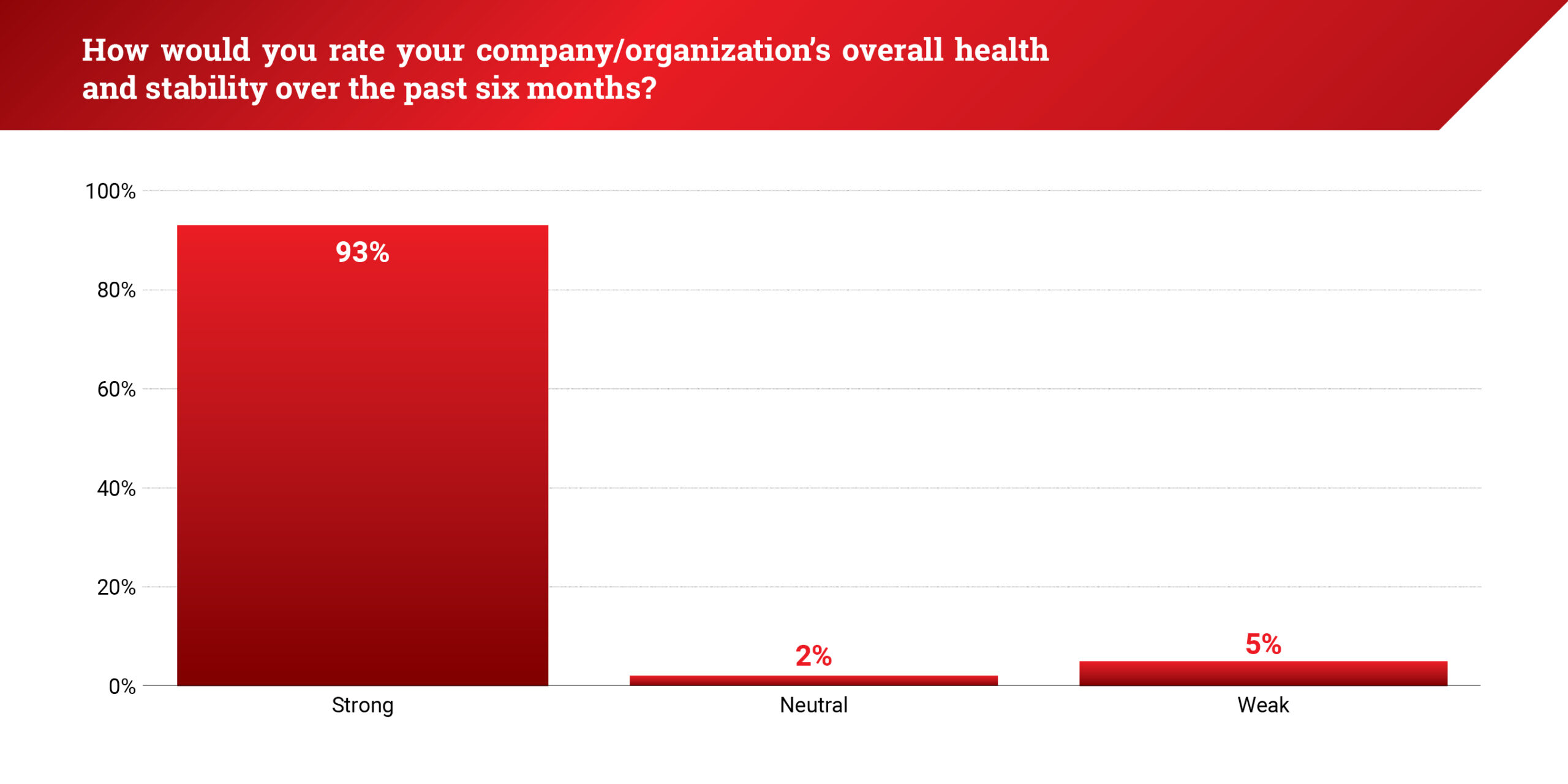
Positivity extended to perceptions of company health and stability despite shifting market conditions. Corporate sentiment skewed positive, with 93% of respondents in the North rating their company’s performance as “strong,” compared to just 90% in the previous quarter and 88% a year earlier.

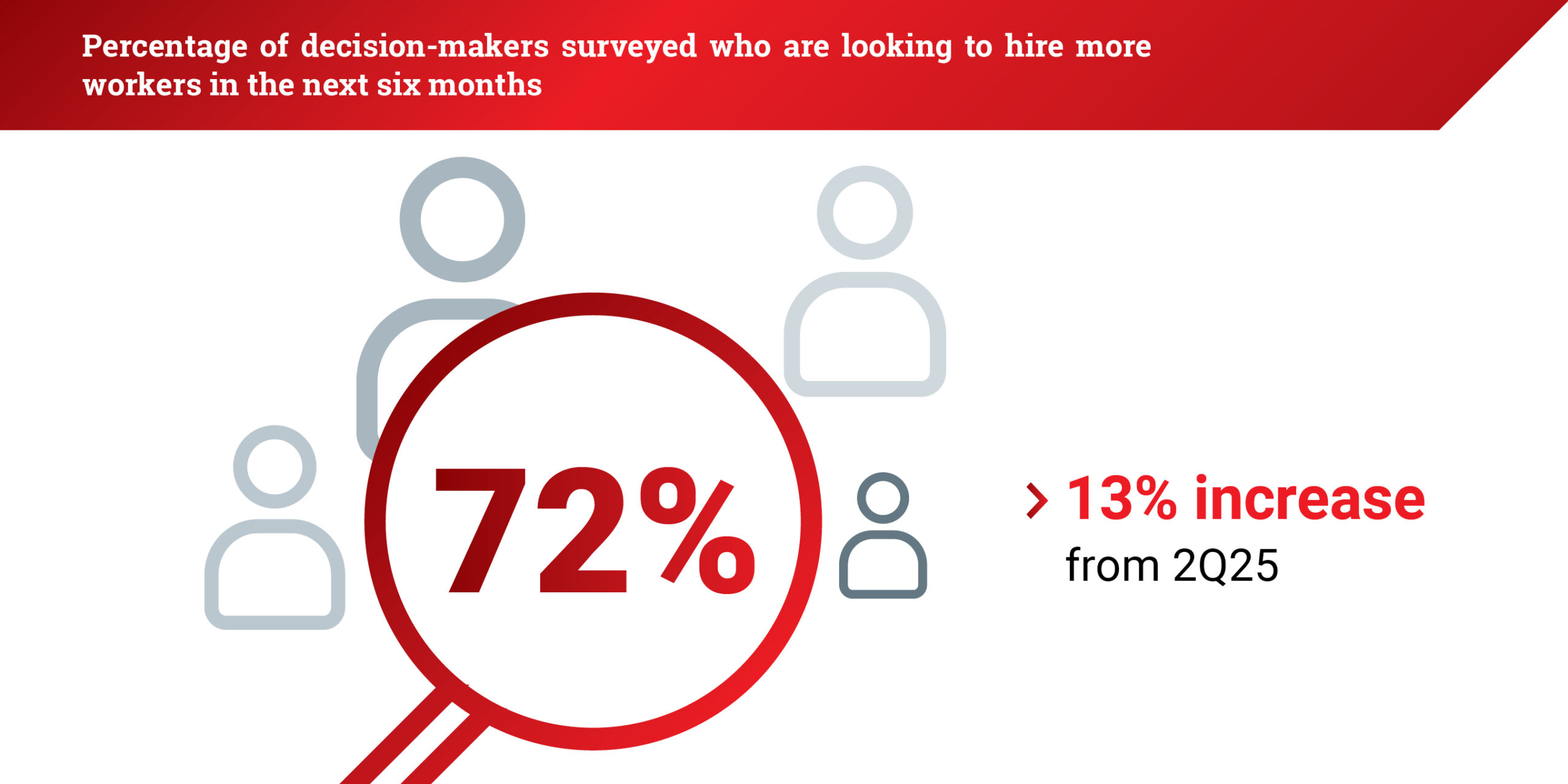
In Northern markets, hiring intent remains steady despite a cooling labor market. About 79% of decision-makers plan to hire in the next six months, a 6% increase from the previous quarter (73% in 2Q25) and a 4% rise year over year (75% in 3Q24). Nationally, 75% of businesses are planning to increase their headcount. 

As companies continue investing in technology and AI, demand for tech-specific roles has emerged as a regional bright spot, particularly in professional services, contributing to the hiring momentum across the North.

“The timeline for hiring technology positions happens faster than in construction,” a Pennsylvania contractor CEO told Invest:. “We’ve seen a lot of growth in the technology sector, and companies are coming here to set up shop and utilize the talent pool.”

“Leveraging the tech stacks would enable us to reach economies of scale,” said the managing director of a New Jersey accounting firm. “A lot of CPA firms.. are hiring  accountants or ….more non-accountants who are focused on information systems, data analytics, and technology capable of producing data links and data mining, which is necessary for our consulting services.”

Despite a moderate hiring appetite, market conditions remain uneven across sectors, with 68% of leaders in the South and North reporting favorable performance. Sectors such as construction continue to face the effects of elevated interest rates, making development harder to finance and further affecting housing costs, affordability, and workforce development in the region.

CAA25_IBSS_North_2Q25_4

“Many private development projects are highly sensitive to interest rates,” a Philadelphia builder told Invest:. “Over the past two years, there’s been a lot of waiting and hoping for meaningful rate reductions, which haven’t materialized.”

CAA25_IBSS_North_2Q25_5

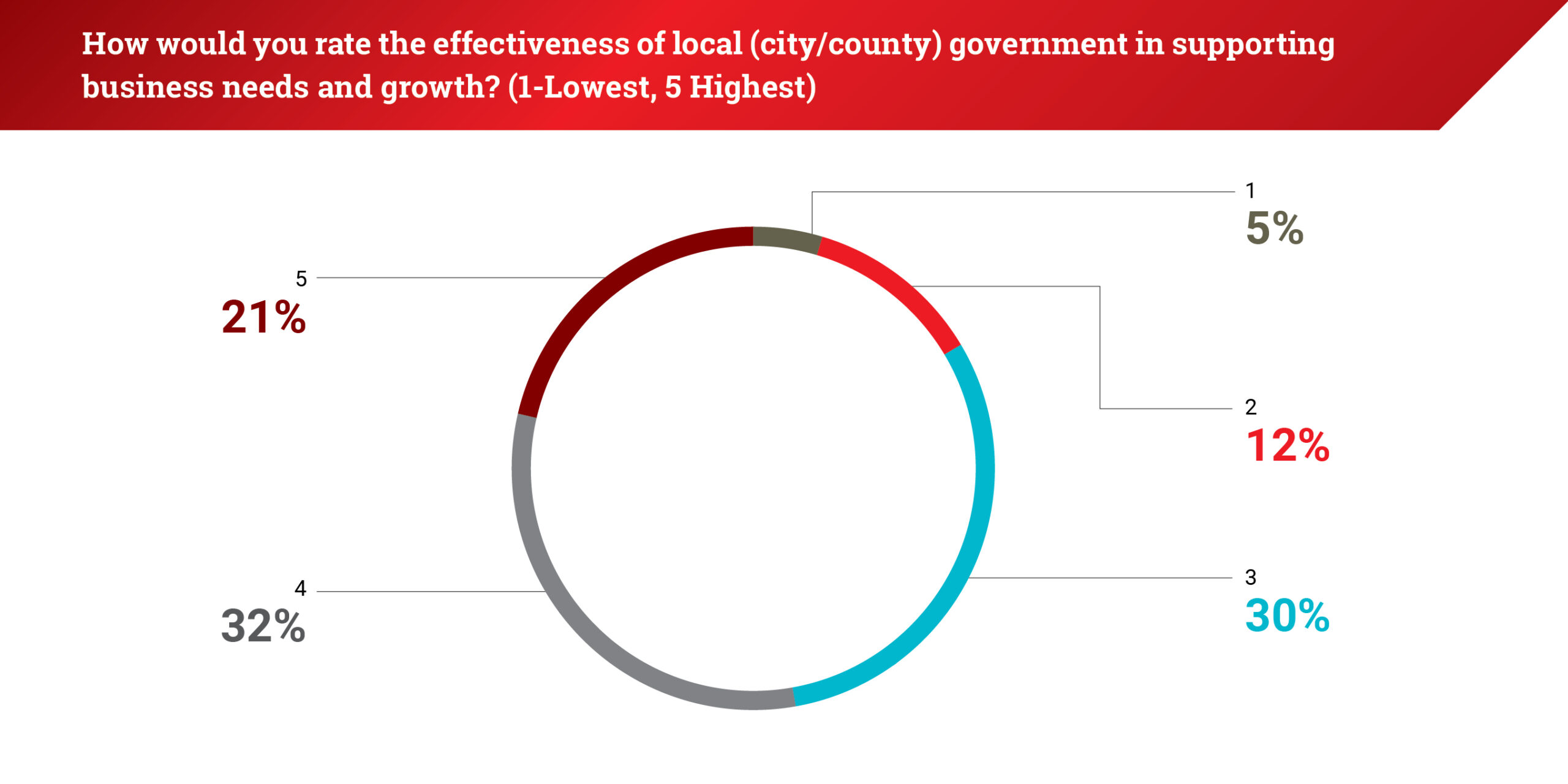
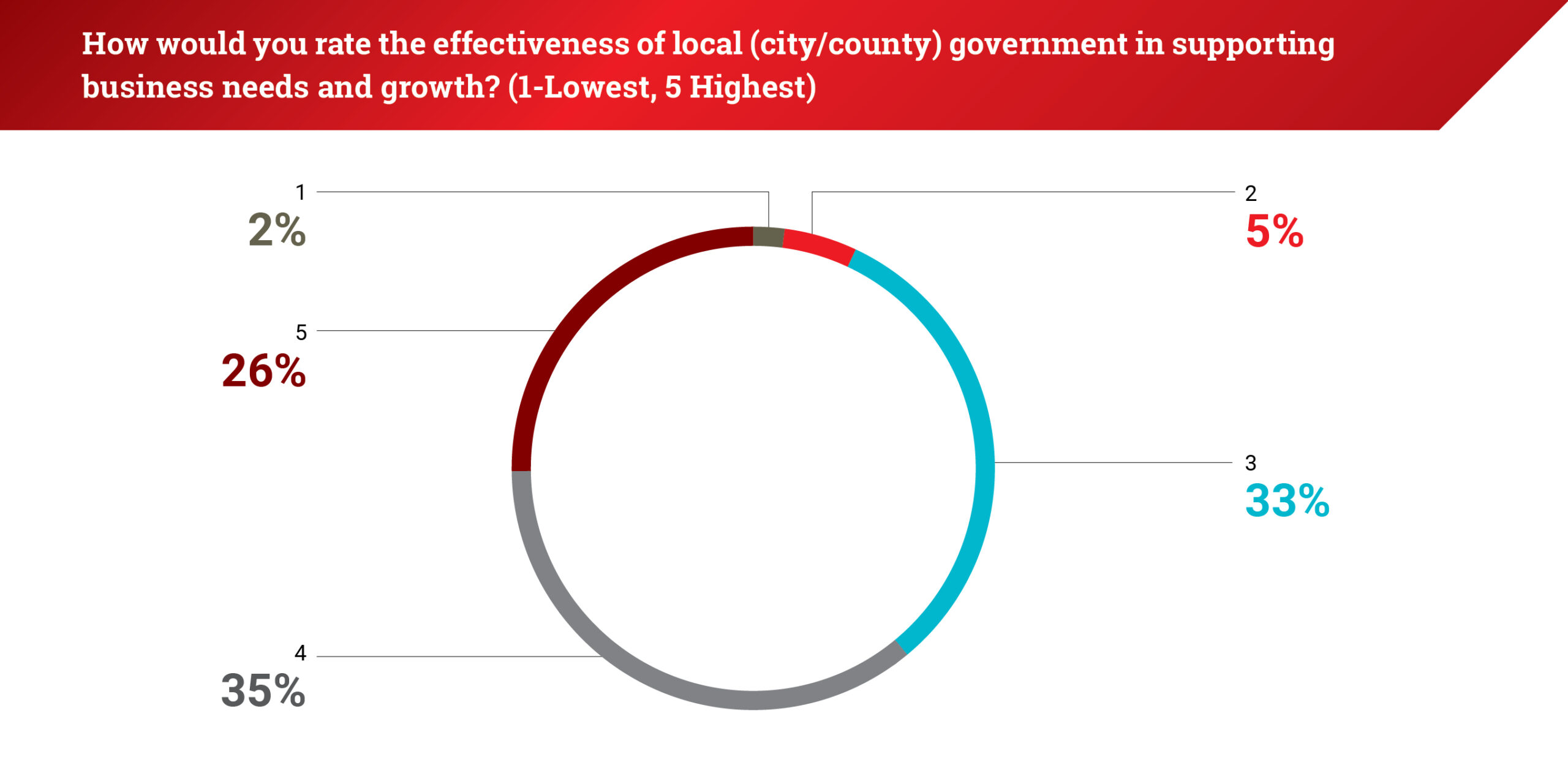
At the same time, perceptions of local government performance diverge significantly between regions. Just under half of Northern executives (46%) rated their local government’s ability to support businesses as “strong,” showing little change quarter over quarter. In the South, by comparison, 70% of respondents expressed a positive view of local government support.

For more I:BSS reports, click here.

Subscribe to Our Newsletters

"*" indicates required fields
Address*
Would You Like To Receive Our National Newsletter?*
Interests
Markets
This field is hidden when viewing the form

Economic sentiment remains unchanged in Q3, Invest: Biz Survey finds

IPITe3_Banner_Liberty_Energy

Writer: Ryan Gandolfo

CAA25_IBSS_Q3_BannerOctober 2025 — Business and economic sentiment changed little in the third quarter of 2025 as leaders pointed to market strength despite ongoing uncertainty, according to a new survey from caa.

In September, the Federal Reserve cut interest rates for the first time in nearly a year, slightly moving the needle in a positive direction, but business leaders still see a murky overall picture.

“The cost of capital is just higher now,” a Tennessee-based commercial real estate investment firm managing partner told Invest:. “Investors are efficient and they’ll go where the best risk-adjusted return is. If you can’t offer that, they’ll put their money elsewhere.”

The survey of public- and private-sector leaders was conducted from July 1 through Sept. 30 and compiled in the Invest: Business Sentiment Survey (I:BSS). On average, respondents rated the strength of their regional economy at 3.95 out of 5, with 5 being the highest. The figure is virtually unchanged from the previous quarter.

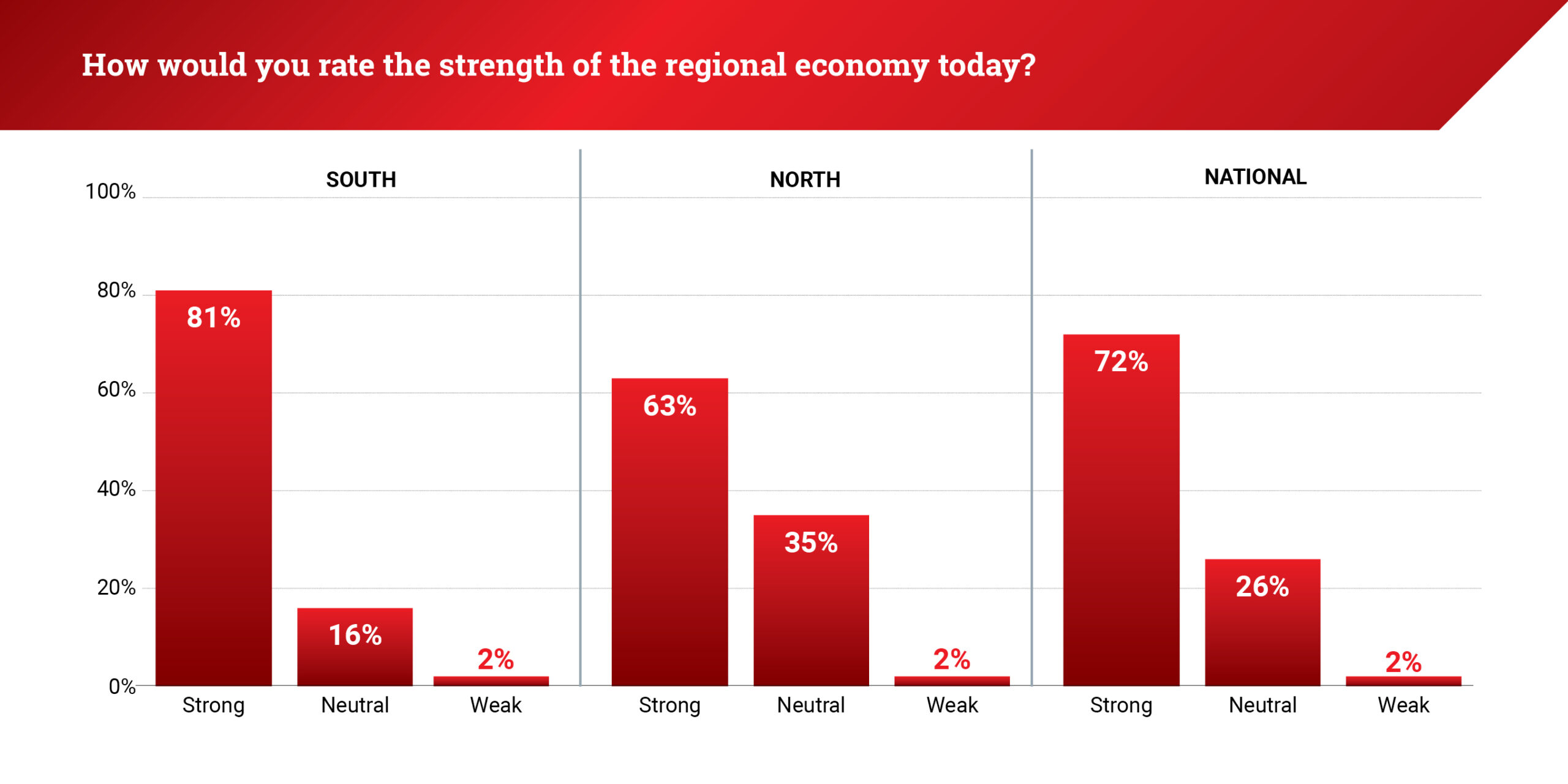
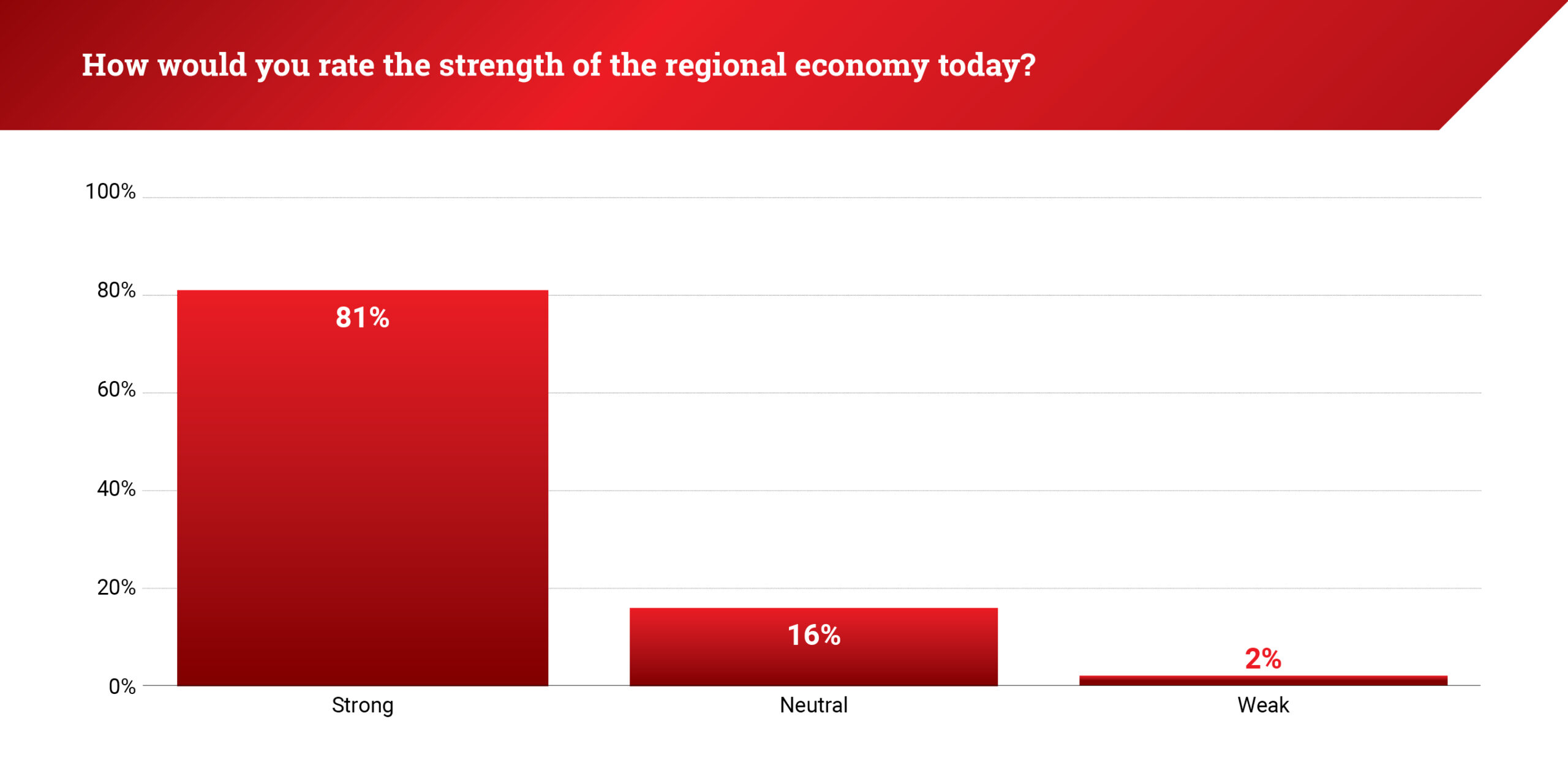
Just under three-quarters (72%) of respondents viewed their regional economy as strong (4 or 5 out of 5). Southern market leaders were the most optimistic at 81%, while their Northern counterparts were less convinced, with only 63% rating their regional economy as strong.

CAA25_IBSS_National_3Q25_1

The latest I:BSS findings come as the U.S. government endures an ongoing shutdown, halting key economic data releases on the job market, inflation, consumer spending, and business investment, Reuters reported. The 3Q I:BSS responses do not reflect the shutdown, which began on Oct. 1 and could impact sentiment in the final quarter of the year. 

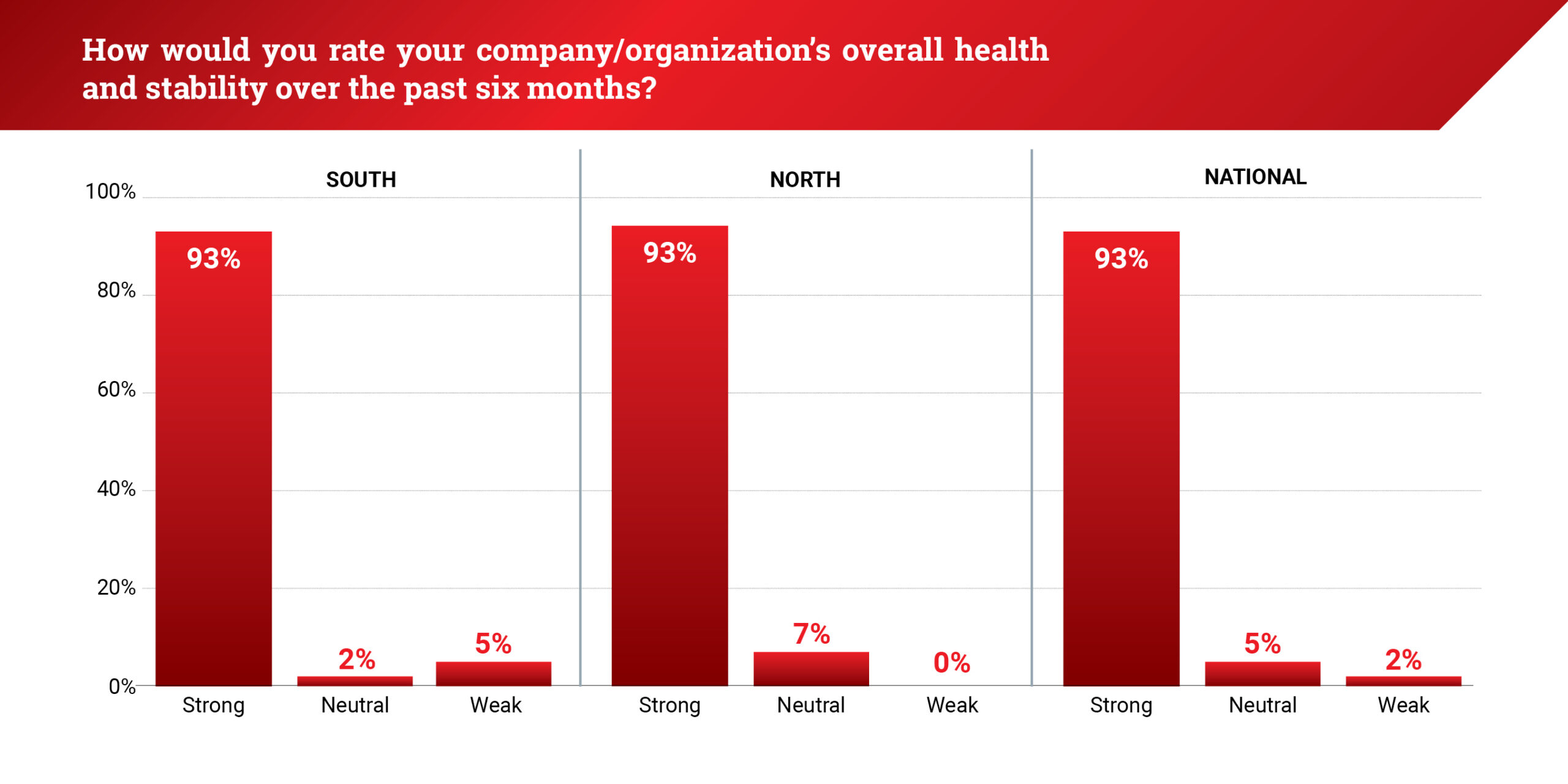
Regarding organizational health and stability, 93% of Northern and Southern market leaders held favorable views, rating their firm’s performance over the past six months at 4 or higher.

CAA25_IBSS_National_3Q25_2

In the third quarter, leaders attributed sustained business activity to the strength of key markets.

“Markets in Dallas and the Atlanta area have maintained some activities that allowed us to keep moving forward,” an Atlanta-based construction firm CEO told Focus:. “Those are some of the most resilient markets across the country.”

Total U.S. construction spending reached a record $2.21 trillion in May 2024, on a seasonally adjusted annual basis, but has stagnated over the past 15 months following a 13-year upward trend. As of Oct. 7, the latest monthly report has yet to be released.

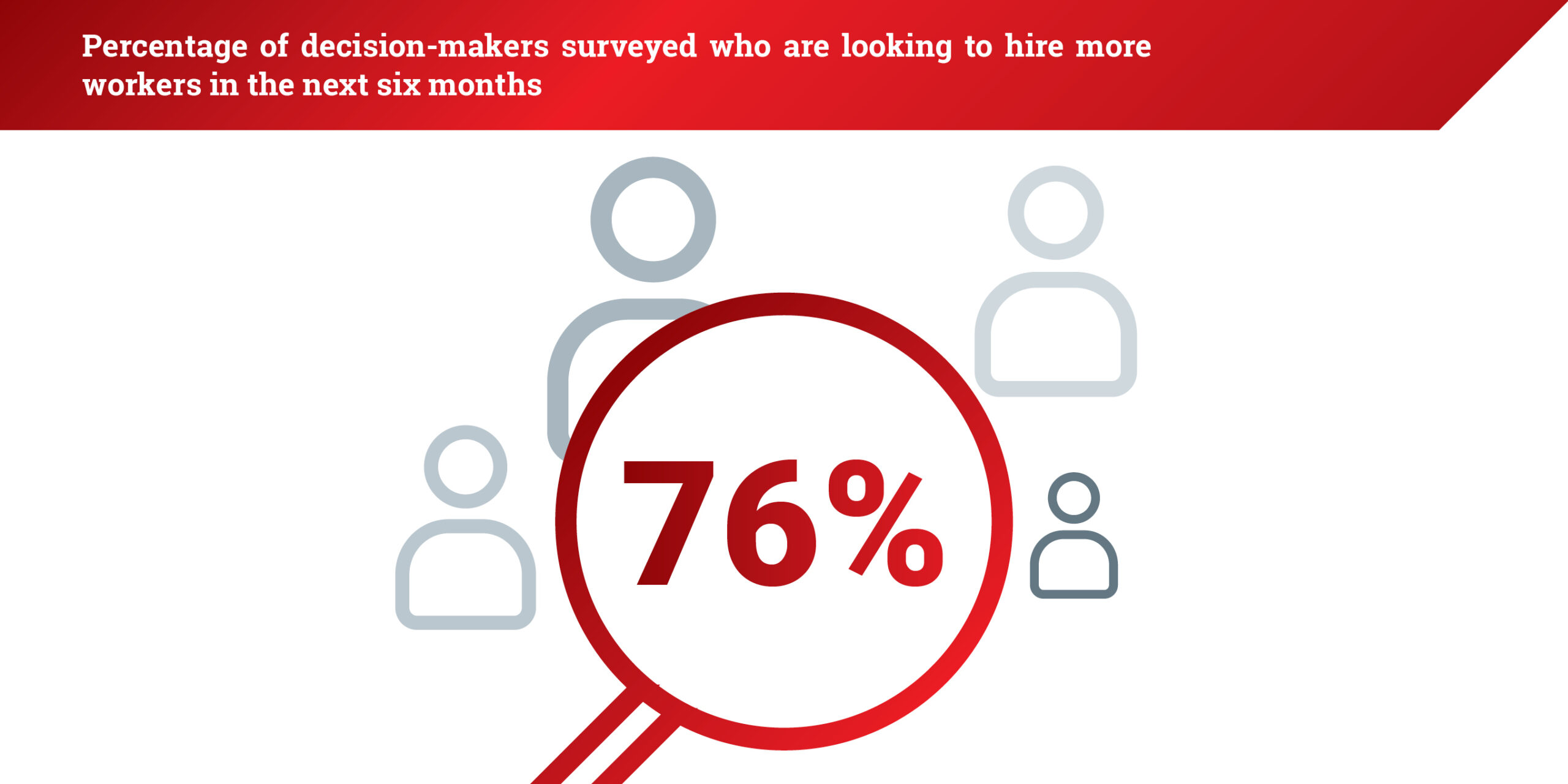
While confidence in company health and stability remained strong, labor market optimism has been more restrained throughout 2025. In 3Q25, 76% of survey respondents rated hiring expectations over the next six months at 4 or higher, compared to 79% in the third quarter of 2024.

CAA25_IBSS_National_3Q25_3

Nationally, job openings remained unchanged at 7.2 million in August, according to the Bureau of Labor Statistics. However, Google Trends data shows searches for “hiring” falling to one of their lowest points in 2025 at the end of Q3.

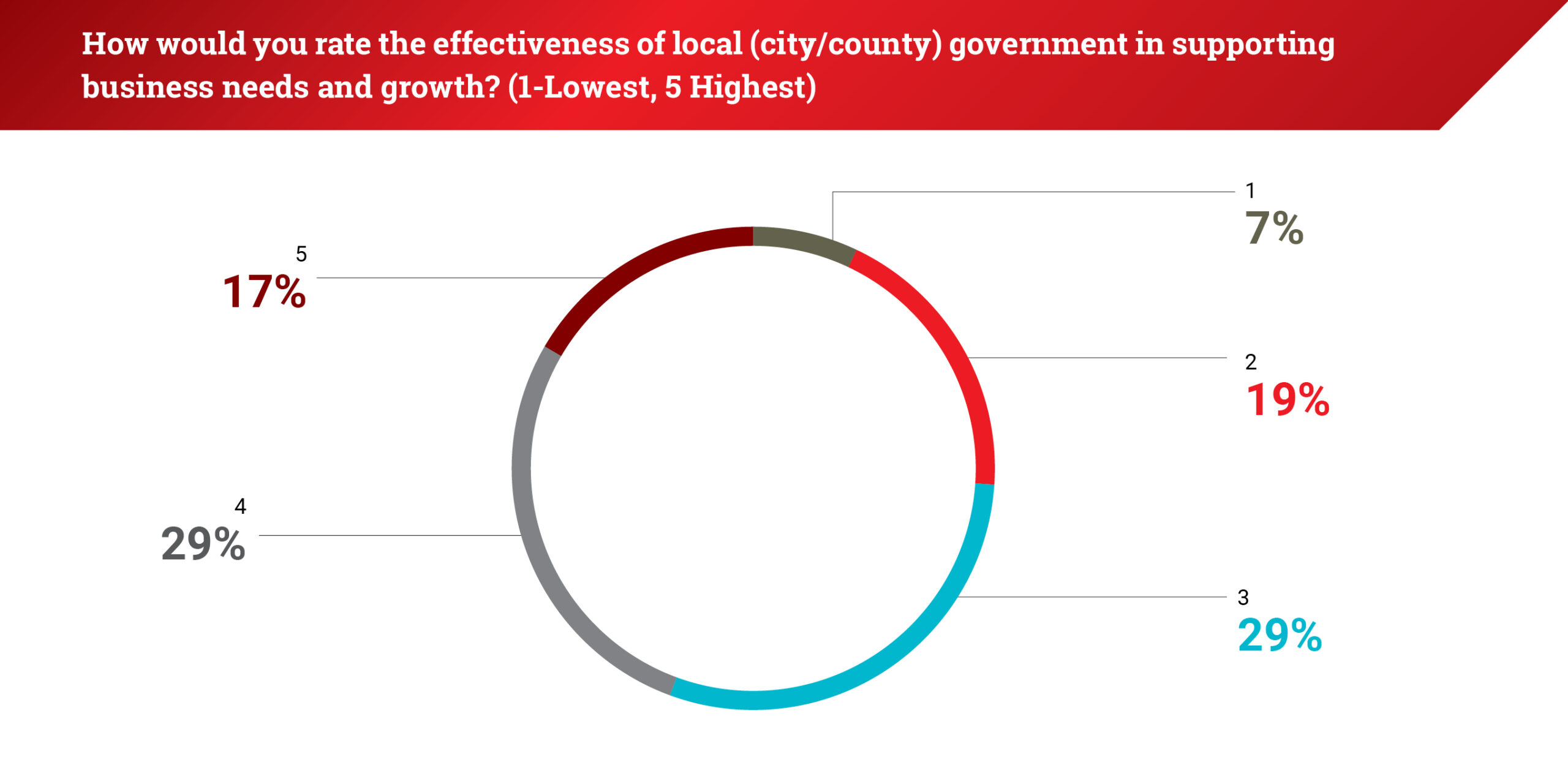
Just over half (53%) of respondents rated local government support for businesses as strong (4 or 5 out of 5), while 47% held neutral or negative views.

CAA25_IBSS_National_3Q25_5

Continued growth across U.S. metro areas will depend on public and private sector collaboration, particularly in key areas like affordable housing.

“I don’t like mixing government with the private sector, but sometimes it’s necessary,” said a Tennessee-based entrepreneur to Invest:.

For more I:BSS reports, click here.

Subscribe to Our Newsletters

"*" indicates required fields

Address*
Would You Like To Receive Our National Newsletter?*
Interests
Markets
This field is hidden when viewing the form

Southern business leaders report growth despite hiring, cost pressures: I:BSS survey shows

ISATe4_Banner_Marmon_Mok_Architecture

Writer: Andrea Teran

CAA25_IBSS_Q3_South_BannerOctober 2025 — Southern ​​business leaders report continued strength in company performance and demand, but confidence has cooled slightly in the face of persistent cost volatility and policy uncertainty.

According to caa’s latest Invest: Business Sentiment Survey (I:BSS), 81% of U.S.-based Southern executives rated their regional economy as “strong” (scores of 4 or 5), down from 86% in 2Q25 and 89% in 3Q24.

“We’re fortunate to be in Texas, where the economy has been more insulated than in other regions,” a San Antonio-based engineering executive told caa. “Even if growth slows, we can continue moving forward without significant setbacks because of the diversity of our markets.”

Southern markets continue to outperform the U.S. overall, with an average rating of 4.17 in 3Q25, compared to 3.95 nationally and 3.73 in the North. But the 5-point quarterly drop in strong responses reflects declining optimism as tariffs, rate uncertainty, and rising costs lower economic sentiment.

CAA25_IBSS_South_3Q25_1This resilience stands out amid greater turbulence in the world economy. According to the OECD’s September 2025 Economic Outlook, global GDP growth is projected to slow from 3.3% in 2024 to 2.9% this year and next, with global output expected to rise by just 2.5% through the fourth quarter of 2025. The slowdown is particularly pronounced in the U.S., where GDP is projected to grow by only 1.1% over the year.

In a bid to support slowing growth, the Federal Reserve cut its benchmark interest rate by 25 basis points in mid-September — the first rate cut since December 2024. This brought the federal funds target to a range of 4.00% to 4.25%. The Fed signaled two additional cuts may follow by year-end. While the move could ease borrowing costs, many executives remain concerned that tariffs, supply chain challenges, and overall volatility may temper any near-term relief.

CAA25_IBSS_South_3Q25_2

When asked to rate their organization’s overall health over the past six months, 93% of Southern leaders gave a strong rating; up 2 points from the previous quarter and 6 points year over year. This aligns with leaders’ insights from construction, finance, and technology firms.

“Even when clients hesitate due to tariffs or macro uncertainty, we continue to see new project activity almost immediately,” said a Palm Beach-based construction executive. “The market resets and moves forward quickly.”

Perceptions of market strength in the South, however, declined sharply in 3Q25, with 74% of leaders rating current industry conditions positively, down from 94% the prior quarter. Just 2% indicated weakening conditions this quarter.

“We’ve adjusted by staying close to our clients, regularly updating budgets and offering flexible planning,” added a Houston-based engineering and consulting executive.

Inflation expectations have been revised upward by the CBO economic projections, driven largely by tariffs. The PCE price index — the Federal Reserve’s preferred inflation measure — is projected to rise 3.1% in 2025, before easing to 2.4% in 2026 and 2.0% in 2027. Elevated input costs are expected to persist through the near term, aligning with Southern executives’ concerns about pricing volatility. A Houston-based consultant noted, “We’re frequently updating project budgets to reflect material and labor cost shifts; flexibility has become a core part of our client engagement model.”

The U.S. labor market continues to cool. Unemployment rose to 4.3% in September, from 4.1% at the end of 2024, according to the latest figures from the Bureau of Labor Statistics. The CBO anticipates the unemployment rate will continue to rise to 4.5% in 2025 before briefly easing to 4.2% in 2026.

Despite this, 72% of Southern executives say they plan to hire — an increase from the previous quarter, but still 8 points below the same period in 2024 — suggesting businesses remain responsive to labor market tightness while navigating potential softening ahead. Reduced immigration levels are also expected to further limit labor supply, compounding hiring challenges in sectors already facing talent shortages.

CAA25_IBSS_South_3Q25_3

“Talent shortages are especially pronounced in the accounting field,” said a Florida-based accounting executive. “We’re working to reframe the profession as one that’s strategic, tech-forward, and deeply client-facing to appeal to the next generation.”

A Houston-based staffing leader echoed the competitive nature of the labor market: “Most small and midsize firms we work with are either backfilling roles or expanding teams. Employers are leaning on hybrid flexibility and mission-driven messaging to stay competitive.”

Southern executives remain more satisfied with local government support than their Northern peers. Seventy percent rated local government support as favorable — down from 78% last quarter, but unchanged from the same period in 2024. In contrast, only 46% of Northern respondents rated their local government positively.

CAA25_IBSS_South_3Q25_5

“We encourage all our clients, especially small businesses, to engage more directly with local governments,” said a South Florida-based financial services executive. “That dialogue helps ensure policies remain aligned with business needs and market realities.”

Sectors such as energy infrastructure, logistics, and advanced manufacturing remain active. For example, Swiss firm ABB announced a $110 million U.S. manufacturing investment, expanding capacity in Texas to support grid modernization and power-intensive sectors like data centers.

For more I:BSS reports, click here.

Subscribe to Our Newsletters

"*" indicates required fields

Address*
Would You Like To Receive Our National Newsletter?*
Interests
Markets
This field is hidden when viewing the form

The untapped trillion-dollar opportunity in women’s health

IPITe3_Banner_Magee_Womens

Writer: Mirella Franzese

Doctor_and_patientOctober 2025 — Women’s health remains one of the most underinvested areas in medicine, a social, public, and economic imperative that also represents a missed opportunity for investors, especially as the U.S. scales back health funding.

“Women’s health research has always been underfunded, and federal funding cuts over this past year only deepen the gap,” said Michael Annichine, CEO of Magee-Womens Research Institute & Foundation.

Key segments of the healthcare market remain largely untapped, despite sizable potential returns. For context, just 1% of healthcare research and innovation is invested in female-specific conditions beyond oncology, according to a McKinsey study.

Opportunities in pharmaceuticals are significant, as sex-based differences affect how drugs are processed and how they act on the body — influencing treatment outcomes and efficacy. This is seen particularly with cardiovascular medicines and antidepressants.

Yet, capital invested in women’s health and research can unlock major financial returns through spillover benefits. These include better outcomes for children, more productive workforces, fewer caregiving burdens, and less strain on public resources, all of which translate into stronger economies.

“When women’s health is viewed as capital rather than cost, results appear in laboratories, workplaces and households over time,” wrote Amira Ghouaibi, head of the Global Alliance for Women’s Health at the World Economic Forum (WEF).

In general, women live 25% more of their lives in poor health compared to men, according to a WEF report.

Closing this gap would add seven healthy days per year for each woman, generating an estimated $1 trillion to annual global GDP by 2040 — a $3 return for every $1 invested.

Similarly, investing in treatments for endometriosis — a condition that affects only women — has a market potential of $180 billion to $250 billion, comparable to markets for high-cost conditions such as diabetes.

The problem is that investments in women’s health research are lower now than in the past two decades. For example, the National Institutes of Health (NIH) — the U.S. government’s primary medical research agency — cut its budget allocation for women’s health from 13.5% in 2005 to just 10% this year, according to reproductive health research firm The Guttmacher Institute.

According to Annichine, fields that have historically received little attention — such as maternal health, menopause, endometriosis, and pelvic floor disorders — are at even greater risk now.

“The areas that were under-resourced before are even more so today, ” he told Invest:. “This limits our ability to move discoveries forward, train the next generation of scientists, and ultimately improve care for women and their families… There will be inefficiencies in our care delivery system.”

More specifically, the recent federal funding cuts are expected to have a disproportionate impact on the delivery of sexual and reproductive health and HIV services. Planned Parenthood, which supports U.S. women’s health services and abortions, could lose nearly $700 million in federal funding, leading to the closure of as many as 200 facilities nationwide.

Shutdowns at this scale could be devastating for women. Maternity deaths in the U.S. are already double, if not triple, the rate for most other high-income countries, including Australia, the U.K., Canada, France, and Germany, according to a 2024 Commonwealth Fund study. Of the 14 countries surveyed in the study, the U.S. was the only one without mandated maternity leave and without pregnancy costs covered by medical insurance. 

“The health of our society depends on ensuring women are healthy, not just during reproductive years, but across their lifespans,” said Annichine.

Despite systematic underfunding, women’s health initiatives are gaining momentum in the U.S. Leading organizations like Magee-Womens Research Institute & Foundation are reframing women’s health beyond reproductive biology to address some of these critical gaps and improve outcomes for women at every stage of life.

Industries outside of medicine are taking notice as well.  Anywhere Real Estate (formerly Realogy) and 84 Lumber — a leading supply builder — partnered with Magee to contribute to women’s health research.

More recently, the Gates Foundation announced a $2.5 billion commitment to accelerate R&D focused on enhancing women’s health in five high-impact areas: Obstetric care and maternal immunization, maternal health and nutrition, gynecological and menstrual health, contraceptive, and sexually transmitted infections.

“Women’s health is not just a philanthropic cause — it’s an investable opportunity with immense potential for scientific breakthroughs that could help millions of women,” said Anita Zaidi, president of the Gates Foundation’s Gender Equality Division, in a press release.

“What’s needed is the will to pursue and follow through.”

Want more? Read the Invest: reports.

Subscribe to Our Newsletters

"*" indicates required fields

Address*
Would You Like To Receive Our National Newsletter?*
Interests
Markets
This field is hidden when viewing the form

Small businesses adapt to inflation and access to capital pressures

Writer: Mirella Franzese

RetailOctober 2025 — Small businesses contribute nearly half of the U.S. GDP, but in 3Q25 they were tested by significant barriers to growth. Inflation, tariffs, and a tight labor market have hindered expansion, while access to capital remains a major obstacle.

“Most small businesses fail for lack of capital,” Daniel Sheehan, president of Vista Bank, told Invest:.

According to the U.S. Chamber of Commerce’s Q3 2025 Small Business Index, inflation is the primary concern for 46% of small businesses. In the past year, 75% of small businesses said they were impacted by inflation, with many raising prices to offset higher costs.

In general, one in three U.S. firms is planning to increase prices by the end of the year as supplier costs and tariffs squeeze bottom lines. Among small businesses, twice as many (65%) are expected to hike prices, led by the retail sector.

A 2024 report by Boston Consulting Group noted that in an uncertain economy even the smallest price increases can discourage low-to-middle-income consumers from making discretionary purchases. For small businesses, which already tend to operate with slimmer profit margins, this could cause companies to close, Todd McCracken, president and CEO of the National Small Business Association advocacy group, told CNBC.

Beyond inflation and supply chain issues, small business owners are facing three core challenges: attracting talent, affording employee benefits, and revenue.

Nearly half of small business owners say they can’t find qualified applicants in the current labor market, according to NFIB’s 2025 Jobs Report. In addition to the lack of skilled workers, small enterprises are having to compete with larger employers on pay and benefits, as well as increase labor costs.

Access to capital is a big part of the equation, especially for corporations with less than 20 employees and in retail and service sectors. “Small businesses are the backbone of the U.S. economy,” said Rory Ritrievi, president and CEO of Mid Penn Bank, in an interview with Invest:. But he pointed out they “can’t get the financing they need from large institutions.”

Forty percent of small businesses are in debt of $100,000 or more, according to the Federal Reserve, but more than half cannot afford to take out a loan given current interest rates. At the same time, the number of small businesses seeking financing at big banks continues to decline — down from 44% in 2023 to 39% in 2024 — due to tighter credit requirements and growing dissatisfaction with lenders.

Community banks and smaller financial organizations like Georgia United Credit Union (GUCU) are doubling down on the small business segment, as a result.

“We focus on filling gaps that traditional banks often overlook,” said GUCU President Laura King to Invest: reporters. “While banks lean heavily on large commercial lending, we don’t … We’ve introduced products that big banks rarely offer to these groups.”

“For example, our high-earning savings account doesn’t require the typical $25,000 minimum. Members can open it with any amount and earn the full rate if they deposit at least $100 net each month,” she added.

King noted that many members wouldn’t have qualified for such products before expansion.

For Ritrievi, the relationship between small banks and small business owners could help stabilize the economy. “That relationship helped the country recover quickly after the 2007-2008 crisis. Whether starting, expanding, or transitioning ownership, (small businesses) rely on banks like us,” Ritrievi said.

In fact, small and midcap banks provide the majority of small business credit, according to Vista Bank’s Sheehan. Additionally, small business owners report easier access to capital than two years ago — a step in the right direction.

Despite concerns, the outlook for this quarter remains strong. The MetLife & U.S. Chamber of Commerce Small Business Index hit an all-time high of 72 — up from 65.2 last quarter — showing the resilience of small business owners amid economic whirlwinds.

“Small business owners are resilient,” said Ritrievi. “They make personal sacrifices and push through tough periods. Their dedication often drives the broader economy forward.”

Want more? Read the Invest: reports.

Subscribe to Our Newsletters

"*" indicates required fields

Address*
Would You Like To Receive Our National Newsletter?*
Interests
Markets
This field is hidden when viewing the form