

Tommy Byrd, Partner-in-Charge of the Houston Office, Whitley Penn

In an interview with Invest:, Tommy Byrd of Whitley Penn emphasized the firm’s responsive, relationship-driven client approach and partner-owned stability amid industry consolidation. “Whitley Penn is still partner-owned, which allows us to grow organically and maintain continuity,” he said.

Why is Houston a strong market for Whitley Penn?

First, it’s in Texas, which is a great environment for business. Historically, the cost of living has been good, though that’s starting to change. Overall, it’s a place where people want to live and work. Houston is also more international than other Texas markets. As a port city, there’s natural global interaction, and you can feel that in the culture. Energy has always been central — when oil prices were high, Houston thrived. But over the past 20 years, the city has diversified into healthcare, technology, and renewables, which makes it more resilient.

How does Whitley Penn stand out in client service?

Client service is part of our DNA. We often hear from prospective clients that they couldn’t get their previous CPA to return a call or follow up. We emphasize responsiveness — if a client calls or emails in the morning, we respond by the end of the day or within 24 hours at the latest. It’s about being available. Beyond that, we work on building real relationships. We don’t want to be the firm clients hear from only during tax season. We want to know their business, their family, and develop genuine friendships. That trust helps us navigate challenges when they arise.

What industry trends are shaping Whitley Penn’s strategy?

Consolidation is huge. Many firm owners nearing retirement are selling to larger firms or private equity. That creates uncertainty for both staff and clients. Whitley Penn is still partner-owned, which allows us to grow organically and maintain continuity. That’s appealing to professionals and clients looking for stability and long-term relationships.

How is Whitley Penn helping clients with cybersecurity?

We have a full cybersecurity team that helps clients assess their networks for vulnerabilities. We identify risks and guide them on remediation. Internally, we run phishing tests, ongoing staff training, and closely monitor our systems. Public accounting firms handle a lot of sensitive data, so we take information security seriously.

What recent milestones has the Houston Whitley Penn office achieved?

Last November, we acquired Travis Property Management, a mineral and asset management group. They help clients manage oil and gas royalties, like a wealth manager for those assets. That complements our oil and gas accounting team and allows us to offer more consultative, value-added services, in addition to compliance work.

How is Whitley Penn using technology to boost efficiency?

All our software, from tax to audit to internal systems, allows us to be more efficient and reduces manual data entry. For example, instead of staff typing in information, it auto-uploads. That frees up time for more valuable client interaction. The goal is to spend less time inputting data and more time helping clients use that information to grow their business.

What is your outlook for Whitley Penn in Houston?

This year might be a bit odd with economic uncertainty, tax law changes, and tariffs. But overall, we’re positioned well. We’ve filled all our internship spots — about 90 firmwide — which shows that the tide might be turning on the accountant shortage. On the other end, firm consolidation continues, so there are opportunities to attract both clients and talent looking for a different kind of firm.


Ken Bullock, Partner-in-Charge, Frost Brown Todd

In an interview with Invest:, Ken Bullock, partner-in-charge of Frost Brown Todd, highlighted the firm’s dual-track growth amid energy sector volatility — expanding in traditional oil and gas while advancing renewables, AI, and carbon solutions. “Diversification and staying nimble are essential,” he said.

What changes over the past year have had the greatest impact on your firm and your strategy?

The last six months have been fascinating, full of ups and downs in a short span. In the energy sector, we’ve seen renewed interest and development in traditional oil and gas, especially in Texas. Upstream and midstream activity is strong, and we’re hearing similar reports from other states.

At the same time, the change in federal administration introduced some uncertainty around green energy incentives. While a few large renewable projects have faced funding pauses, many land-based wind and solar initiatives continue to advance, and Texas remains at the forefront of that growth. 

From a firm perspective, it’s also been a period of expansion and opportunity. Frost Brown Todd LLP and Gibbons P.C. have agreed to combine, effective January 1, 2026. The new firm, to be named FBT Gibbons LLP, will create a mid-market legal powerhouse with approximately 800 attorneys across 25 offices nationwide. This year, we also opened a new office in Denver, grew our presence in California, and welcomed several talented attorneys to our Houston energy team. The year ahead looks promising, and all indicators suggest our momentum will continue.

What makes Houston and Texas attractive locations for business growth and expansion?

Houston is an incredibly dynamic and diverse city, both in terms of population and industry. Besides being globally recognized as the energy capital, the region boasts a rich mix of industries — energy (both traditional and renewable), aerospace, biotechnology, real estate, manufacturing, healthcare, and beyond. High-tech innovation is becoming integral to energy development, whether in hydrogen storage, process chemistry, or carbon management. Proximity to institutions like NASA and Space Force HQ strengthens this innovation ecosystem. Add to that a vibrant, multicultural workforce and competitive cost structure, and Houston emerges as a compelling choice for firms like ours and clients alike.

How are you advising clients during this time of volatility and energy transition?

Volatility is the main challenge, especially around tariffs. We counsel clients to maintain active risk management strategies across their supply chains, especially given geopolitical shifts that affect both imports and exports.

On the energy front, our guidance is dual track. We reinforce confidence in traditional oil and gas projects, especially those tied to U.S. and Texas development. Simultaneously, we support clients in navigating the nuances of renewable projects like wind, solar, and innovative angles such as CCS, hydrogen, and carbon capture. The overarching message is that diversification and staying nimble are essential in this transitional period. We frequently hold policy briefings to keep clients up to date on federal incentive changes and regional infrastructure developments.

How are you approaching talent acquisition and retention in such a competitive legal market?

The legal space here is aggressively competitive. To stand out, we emphasize differentiation — showing candidates a strong mix of meaningful work, client access, advanced practice areas (like data platforming and emerging energy), and clear career trajectories.

For later-stage attorneys, it’s about presenting a compelling portfolio of sophisticated work and leadership opportunities. For law students, we develop close law-school partnerships across Texas and beyond, attending career fairs, offering clinics, and providing prominent visibility at campus events. These efforts ensure a steady talent pipeline. Retention comes down to engagement: mentorship, professional growth, and working on cutting-edge projects in the energy and tech-transitional arenas.

How is your AI data platform evolving, and what has client response been like?

The response has been overwhelmingly positive. We’ve seen strong demand in data, privacy, and security services. FBT has won awards for its AI innovation in client work, and we get excited about collaborating with our clients to explore how we can streamline time-consuming tasks for mutual benefit and leverage new technology to help clients meet their business goals. We partner with clients to better understand and test the ideal use cases for Gen AI and other technologies to ensure we’re aligned with their expectations and policies.

This lets us shift from educated guessing to empirical forecasting when advising on fee structures, case strategy, or risk assessment. Clients appreciate that shift to data-based precision. Distinguished recognitions this year for our data-driven service model highlight our commitment to innovation within a confidentiality-conscious environment.

What are your top priorities and outlook for Houston over the next two to three years?

Our strategy in Houston is tightly focused on three primary industry verticals: energy, industrial and manufacturing, and financial services. These areas not only align with Houston’s core economic strengths but also reflect the broader priorities of our firm nationally.

We’ve underscored our commitment to the market by securing a long-term lease in new downtown office space, designed to accommodate our projected growth. Looking ahead, we’re investing in the expansion of our energy practice to include emerging areas like hydrogen development and carbon markets. We’re also deepening our involvement with industrial clients, especially those in advanced manufacturing and logistics. On the financial services front, we continue to support clients with needs ranging from fintech and regulatory compliance to M&A and capital markets work.

We’re optimistic about the continued growth of our Houston office. The foundation is strong, and our plan is to keep building — through strategic recruitment, deeper industry alignment, and a consistent focus on delivering sophisticated, responsive legal counsel. Success will be measured by our ability to scale with client needs and maintain a high standard of service as the regional economy evolves.

Douglas Bacon, Partner, Kirkland & Ellis LLP

Douglas Bacon, partner at Kirkland & Ellis LLP, sat down with Invest: to discuss the firm’s rapid growth across Texas, particularly in Houston, and its strategic focus on energy, infrastructure, and emerging technologies. “Houston has a deep legal market, a sophisticated client base, and attracts smart law students from prestigious schools. It is a perfect market to grow, and we have found that to be the case,” Bacon said.

How would you characterize the firm’s continued growth and strategic focus in the region today? 

Kirkland & Ellis opened its Houston office in April 2014 and has seen rapid growth, not only in Houston but all across Texas. We have 500 lawyers across Texas, with offices in Dallas and Austin as well. The principal focuses of our business are sophisticated corporate transactions and major litigation. Since the beginning, we have been focused on the energy market, given that Houston is the energy hub of the United States. That focus has also spread into adjacent markets, such as infrastructure. This now includes digital infrastructure, data centers, AI, and power generation development. We have a diverse practice; however, our core focus remains energy and infrastructure. 

What makes Houston an ideal location for your practice, and how does it support the firm’s long-term goals? 

Houston has a deep legal market, a sophisticated client base, and attracts smart law students from prestigious schools. It is a perfect market to grow, and we have found that to be the case. It is an excellent market for legal talent. 

Houston has been the energy capital for a long time, and much of the capital raising, mergers and acquisitions, litigation, and debt finance activity associated with energy has been headquartered here. It creates an excellent and advantageous legal market from a personal and professional balance standpoint. Houston also has a more desirable lifestyle than many other markets, which is attractive to law students and young attorneys. It is a great place for these individuals to grow their practices and their families. 

How are you adapting your approach to continue to attract top legal professionals as competition intensifies across the Texas legal market? 

As we have grown and the legal market has continued to grow and develop in Houston, it has become one of the biggest and most attractive markets for legal talent across the country. I grew up in Houston, and as I was looking at law firms 25 years ago, most of the people working in Houston law firms were from Texas or the Southeast. Now the talent is increasingly coming from around the country and the world. The success of the marketplace in Houston has attracted great people and has enabled this market to stay robust and grow over time. Houston is a competitive legal market, but that competition has created a great environment for lawyers to move here to begin their careers or transition to the market. 

How are major transactions influencing competition in the power and clean energy industries? 

Much of the infrastructure activity we see these days is around the space referred to as digital infrastructure, which includes data centers and other infrastructure that fuels AI development. That is closely linked with power. As an example, Constellation Energy is buying Calpine, an independent power company. The combined company will hold and develop more assets that can drive U.S. power generation for data centers, including supporting the AI revolution we are currently in the midst of. These opportunities around data and digital are fueling a lot of activity. 

Many of the biggest energy companies in the world, which happen to be headquartered in Houston, are publicly pursuing this thesis of powering the AI infrastructure story. We don’t create the investment thesis for our clients; we just follow and help them succeed to the greatest extent they can in executing on those ideas. 

How is Kirkland & Ellis incorporating AI and the evolution of technology to enhance its legal services and drive operational efficiency? 

AI is something that we look hard at on a practice-by-practice basis. I foresee it creating many opportunities for improvement in the legal industry. It will change certain ways that we practice, but it will also enable us to deliver products to our clients in a faster, more efficient way, as well as help us gain market share by leveraging these technologies. We are going to be well-positioned through the AI revolution to take advantage of the technologies and continue to provide excellent service to our clients. 

How are elevated interest rates and inflation impacting deal activity, and how are you guiding your clients in response to these economic conditions? 

Mergers and acquisitions are directly impacted by macroeconomic factors in the economy. Having higher interest rates makes it more difficult for companies to buy other assets at attractive prices for sellers who purchased the assets in a lower interest rate environment. Inflationary environments can cause concern because they introduce greater uncertainty to markets. M&A markets tend not to react as well when the environment is unpredictable. However, even though there has been a lot of volatility in the marketplace with many geopolitical factors affecting it, we have remained quite busy and gained market share over the past three years. In general, M&A transactions have been down in recent years. However, the energy and infrastructure M&A market has proven to be countercyclical because the tailwinds for those developments are so powerful. Many of those are driven by some macroeconomic factors. 

What are your firm’s top strategic priorities for the next two to three years, and how would you describe its overall outlook? 

My general outlook is positive. At Kirkland, specifically, I would like us to continue to be the market-leading firm for the transaction and litigation work that is the most important to our client base. I am looking for us to expand our client base. More broadly, for the Houston market, I want it to continue being a hub for energy, infrastructure, transactional activity, litigation, and top-tier legal advice. I am a huge believer that this is one of the top legal markets in the world and will continue to be successful.

Medicare drug price negotiations help unlock hospital resources

IPBe6_Banner_Jewish Federation of Palm Beach County

Writer: Mariana Hernández

MedicationsSeptember 2025 — The Medicare Drug Price Negotiation Program, introduced under the Inflation Reduction Act (IRA), marks one of the most significant federal efforts to address the high cost of prescription drugs. After facing multiple lawsuits from pharmaceutical companies, courts have repeatedly protected the program’s momentum despite industry opposition.

“We believe drug pricing should be evaluated in the totality of the supply chain system. We have filed comments with the Division of Consumer Affairs, stressing the need for an unbiased and confidential review by the Council, that the entire supply chain is considered, that artificial caps aren’t put in place, and that we’re not hindering innovation in our home state,” said Chrissy Buteas, president and CEO at the HealthCare Institute of New Jersey in an interview with Invest:.

The program gives the Centers for Medicare and Medicaid Services (CMS) the authority to negotiate prices for the most expensive drugs covered under Medicare Part D. In its first round, CMS identified 10 high-cost drugs, including Eliquis, Jardiance, and Xarelto, which together accounted for $56.2 billion in total Medicare spending during 2023. These negotiations are expected to significantly reduce patient costs while easing financial burdens on hospitals and health systems that rely on these treatments.

This year, another 15 drugs will be added, with the new prices taking effect in 2026. High-profile medications such as Wegovy and Ozempic, widely prescribed for obesity and diabetes, are also being targeted. Together, these negotiations represent billions of dollars in spending and affect some of the most commonly used treatments among Medicare patients.

While the discussion has focused on patients’ out-of-pocket costs, the implications for hospitals and health systems are just as relevant. Drug expenditures represent a substantial portion of hospital operating budgets, which will be covered under Medicare Part B

“It’s a real challenge. Medicare reimbursement rates are declining, and safe, quick access to healthcare is becoming harder to find. As a result, people often end up in urgent care or emergency rooms when they really should be treated through primary care,” said Usha Menon, dean at USF Health’s College of Nursing in an interview with Invest:.

Hospitals and physicians participating in Medicare have faced limits on payments for their services to ensure affordability for beneficiaries. The program offers a chance to redirect financial resources toward other health initiatives — including staffing shortages, long-delayed technology upgrades, and essential maintenance of hospital sites — or to reduce the federal deficit by lowering drug costs on budgets. With greater transparency and more predictable spending, hospitals can better plan their investments and expand services that directly benefit patients.

In addition, by lowering patient out-of-pocket costs, hospitals may experience a reduction in uncompensated care. When patients can afford their prescriptions and take them consistently, they are less likely to face complications from untreated conditions, which reduces costly emergency visits and hospitalizations in the long term. These savings enable hospitals to reallocate resources.

The combined effect of Medicare’s drug price negotiation program is therefore twofold: immediate relief for patients struggling with high drug costs and a long-term rebalancing of hospital budgets. By reducing prescription drug spending, hospitals across the country can prioritize the relocation of resources toward staffing, technology, and infrastructure. As the first negotiated prices take effect in 2026, hospitals will be positioned to channel these savings into strengthening the foundation of patient care.

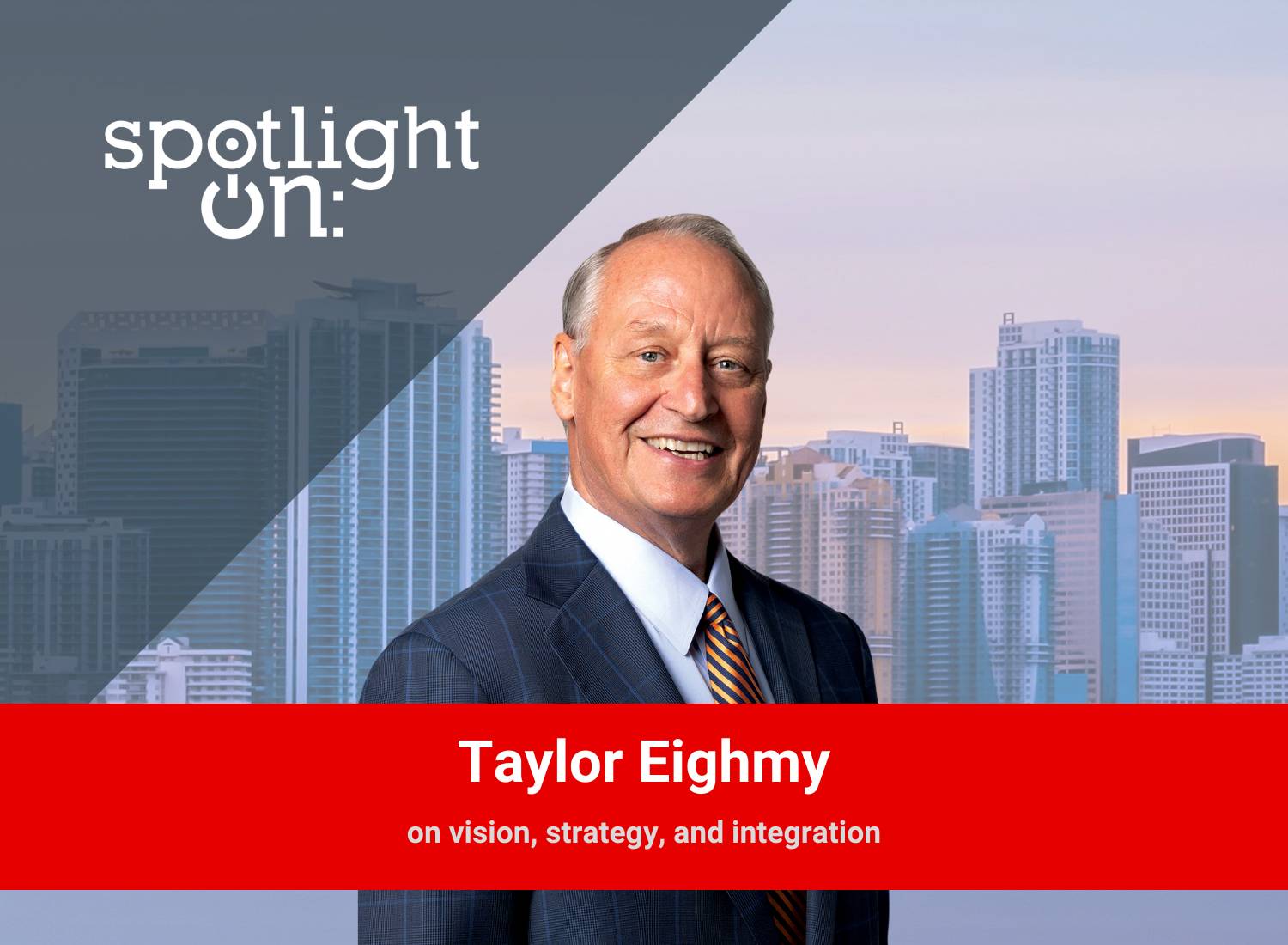
Spotlight On: Taylor Eighmy, President, The University of Texas at San Antonio (UT San Antonio)

Taylor_Eighmy_Spotlight_OnSeptember 2025 — In an interview with Invest:, Taylor Eighmy, president of The University of Texas at San Antonio (UTSA), discussed the integration of the two Tier One research institutions. “The opportunity to bring two excellent institutions together to create a new, world-class university is truly a once-in-a-lifetime moment,” Eighmy said.

What is your overarching vision in your roles at UTSA and UT Health San Antonio?

The opportunity to bring two excellent institutions together to create a new, world-class university is truly a once-in-a-lifetime moment. The caliber of this opportunity reflects the belief that our Board of Regents has in us and in our trajectories regarding the potential to create a model public research university for San Antonio, for Texas, for the nation, and for the world.

Looking ahead 10 years, we envision an infinitely impactful institution, operating at scale, dramatically changing the trajectory of our community and deeply influencing future generations of Texans. We will achieve this by educating and preparing students to join the workforce, strengthening our economy, and improving lives through our massive healthcare enterprise. These visionary goals will require significant effort, but San Antonio deserves a world-class institution of this caliber. If you think about the momentum of Texas and the rapid growth of San Antonio in particular, this is the perfect time to come together and form this premier university. We are committed to ensuring that, over the next decade, this new university becomes everything our community and the state of Texas deserve.

Why is now the right time for this integration, and what outcomes are you prioritizing in these first years?

It is truly special that our Board of Regents and our Chairman, Kevin Eltife, have been so creative in assessing the component assets of The University of Texas System and determining how to position them for maximum benefit to Texas. There have been several bold initiatives in the last five to six years that reflect this thinking.

For example, the merger of UT Tyler and UT Health Tyler, the co-location of MD Anderson and the Dell Medical School’s research and development efforts, the establishment of a West Campus in Fort Worth for UT Arlington, and the acquisition of Stephen F. Austin University are all part of this strategic realignment. Our merger is something the Board had considered for a while, and they believed that now was the right time. This decision reflects their confidence in the trajectories of our two institutions and their belief that our region deserves and needs a world-class university.

We became a world-class university on day one. With this merger, we became the third-largest public research university in Texas. We have more than 40,000 students, 17,000 faculty and staff, approximately 320 academic programs, more than 500 active clinical trials, $486 million in annual research expenditures, and an economic impact of about $7 billion per year. We’re equivalent in scale and scope to many of the nation’s AAU institutions. The University of Texas System has made many bold moves over the years, but I believe this is the boldest one yet.

What makes San Antonio a strategic location for a research university like UTSA, and how do you differentiate yourselves?

The San Antonio region already has a healthy, diversified economy and a growing workforce. San Antonio has really emerged as a preeminent hub for fields like cybersecurity, healthcare and life sciences, financial services, aerospace, and engineering. We want to build on those strengths and bring positive momentum to other components of the San Antonio workforce.

Going through this process, we have met with internal and external stakeholders, including civic leaders, political leaders, business leaders, donors, alumni, future Roadrunner families, nonprofits, and the broader business community. Their expectations, hopes, and aspirations for our institution and our city closely parallel our mission. Much of our vision revolves around the concept of excellence; excellence in opportunity, impact, investment, and partnership. Our community has repeatedly expressed that San Antonio needs, deserves, and warrants this level of excellence. As Sen. Daniel Patrick Moynihan once said, “If you want a great city, build a great university and wait 200 years.” Our motto aligns with this idea: if you want to accelerate San Antonio’s trajectory, give us 10 years to realize our vision.

How are you addressing the challenges associated with the political headwinds regarding the value proposition of higher education?

In our South Texas community, the value proposition of a four-year degree, an advanced degree, or higher education at large remains powerful. We aim to be an exemplary institution for the world. The way we advocate for access, opportunity, and excellence is something the rest of the world should observe. We are committed to doing this better here, and I believe people will gravitate toward our model. Our projected fall enrollment for this year is strong, despite broader challenges. This reflects growing recognition of our institution’s balanced commitment to access, opportunity, and excellence.

How are you attracting top-tier faculty and researchers to fill high-skilled roles?

We are planning significant institutional growth across our clinical, research, and enrollment sectors. I mentioned some of the metrics that establish UT San Antonio as a world-class university earlier, but additionally, we have a $2.8 billion enterprise with an endowment of around $1.3 billion. We also have nearly 200,000 living alumni. All of these metrics position us as a highly impactful, large-scale, Top 50 public research university from day one. Our trajectory over the next decade is even more compelling, making us attractive to students, staff, faculty, and administrators. Many are drawn to San Antonio’s unique advantages and our institutional narrative.

We face the pleasant challenge of high interest from talented individuals eager to join us. This is reflected in rising enrollment, faculty recruitment, and staff retention. People are inspired by our vision and the opportunities here.

Texas itself is a major advantage, as our economy is robust. The proximity to Mexico, our role as the gateway to the Americas, and our expanding GDP make San Antonio an ideal location. In fact, many universities nationwide recruit in San Antonio because of these strengths. We are in an enviable position, and my focus is on maximizing this potential every day. The leadership and partnerships that we have been able to build are also awe-inspiring.  

Lastly, if there is one thing I want people to take away from this conversation, it is that the merger of UTSA and UT Health San Antonio is intentional, transformational, and regionally catalytic. It is built on access, excellence, research and innovation, and a deep connection to advancing San Antonio’s future. We make lives better.


For more information, please visit:

https://www.utsa.edu

5 reasons Houston is attracting more businesses and residents

IHOUe2_Banner_Sam_Houston State_University

Writer: Ryan Gandolfo 

Allen_Parkway September 2023 — From a low-key trading post in the 19th century to an international hub of industry and innovation, Houston has developed into the fourth most populous city in the U.S., adding over 198,000 people between 2023-2024, alone — behind only the New York metro in terms of numeric growth, according to the Census Bureau. As one of the fastest-growing cities in the nation, Houston is poised to overtake Chicago as the nation’s third-largest city by 2035, according to analysis by the Illinois Policy Institute.  

With 26 Fortune 500 companies headquartered in Space City –– behind New York and Chicago — the Houston-The Woodlands-Sugar Land area saw investment in 1,368 projects in 2024, as reported by the Greater Houston Partners. Even more noteworthy for businesses, Houston is one of just a few major U.S. cities earmarked for tech and manufacturing growth, highlighted by Apple’s $500 billion investment in the region and Tesla’s expansion to Waller County. 

Houston’s claim to fame has long been as the energy capital of the world, trailblazing a path across industry segments from exploration and production to supply and technology. The city is also on a path to becoming the “energy transition capital of the world” given its diverse talent pool, infrastructure and established energy industry financiers, as cited by McKinsey. In the energy sector, oil and refined petroleum products remain key economic anchors, accounting for 52.1% of Houston’s total trade value. 

However, Houston’s energy is derived from more than just pipelines and refineries, as the city is welcoming new residents at a faster pace than the majority of U.S. cities, attributable to increasing job opportunities, an underrated quality of place and much more. Invest: explores five reasons why Houston is climbing the list of landing spots for businesses and residents alike.

HOUSING AFFORDABILITY

Despite being the fourth largest U.S. metro area by population, Houston’s housing is surprisingly affordable. Housing costs in Space City are the second lowest among the most populous U.S. metros at 21.9% below the national urban average, according to the C2ER Cost of Living Index 2025. And while inventory continues to be a problem for many cities across the country, Houston’s housing market is the national leader: more homes are being built in Houston than any other U.S. city in 2025, as per a Consumer Affairs report. Houston’s reputation as a city without zoning has drawn developers and is part of the reason the city builds housing faster than many other U.S. cities.

EDUCATED WORKFORCE

With 14 premier public and private research universities in town, Houston’s talent pipeline remains steady for a large industry cluster. More than 315,000 students are currently enrolled in 500-plus degree and certification programs across the region, as  reported by Visit Houston. Further, the University of Houston achieved a No. 42 among public universities in The Princeton Review’s “Best Value Colleges” for 2025, raising UH’s national profile and attracting more prospective students to the Houston area for studies at a time when the value of a higher education degree is being questioned. Among degree holders in the University of Houston’s College of Natural Sciences and Mathematics (NSM), more than 700 were awarded diplomas in STEM-related disciplines, such as biochemistry, biology, chemistry, computer science, geology, geophysics, mathematics, and physics.


Join us at the San Antonio 4th Edition Leadership Conference! This premier event brings together hundreds of San Antonio’s business and regional leaders to discuss the challenges and opportunities for businesses and investors. This year’s theme centers on how the region is balancing economic growth and authenticity. Buy your ticket now!


INDUSTRY LEADER

Houston is home to a robust grouping of sectors from energy and advanced manufacturing to aviation and life sciences. According to the Greater Houston Partnership, nearly one in three manufacturers are based in the city, while its location –– equidistant from the east and west coasts, makes it ideal for national distribution. Its status as a global trade hub is cemented by its No. 1 foreign trading port in terms of tonnage. And while trade and tariff fears are lingering across the nation, the Greater Houston area is well positioned to overcome headwinds given its economic sector diversity and strong export demand.  As per the Greater Houston Partnership’s newly released 2025 Global Houston report, the Houston area led the U.S. in exports last year, shipping $180.9 billion in goods — the largest value of any other metro area. Additionally, the Perryman Group, a Waco-based economic analysis firm, estimated that 318,400 jobs will be added in the Greater Houston area by 2027 through the energy, life sciences and aerospace industries, as cited by Houston Public Media.

EMERGING INTERNATIONAL SPORTS CITY

Houston sports teams and events are having a moment. From the buzz generated with the 2024 CFP National Championship, CONMEBOL Copa America tournament and the Texas Bowl, Houston is garnering attention from the sports world. The economic impact of Houston’s sports industry is ever-growing, with an estimated $330 million in economic impact generated from major sporting teams and events in 2024, according to the Houston Business Journal. Building on the recent spectacle of the PGA’s Houston Open, which took place in March 2024, a number of exciting events are in the pipeline. From the upcoming FIFA World Cup to the World Baseball Classic in 2026, Houston is expected to continue to expand as a noteworthy sports town, driving growth in tourism, transportation, infrastructure, and beyond. 


Update Date: This article was originally published in September 2023, and it has been updated in September 2025.

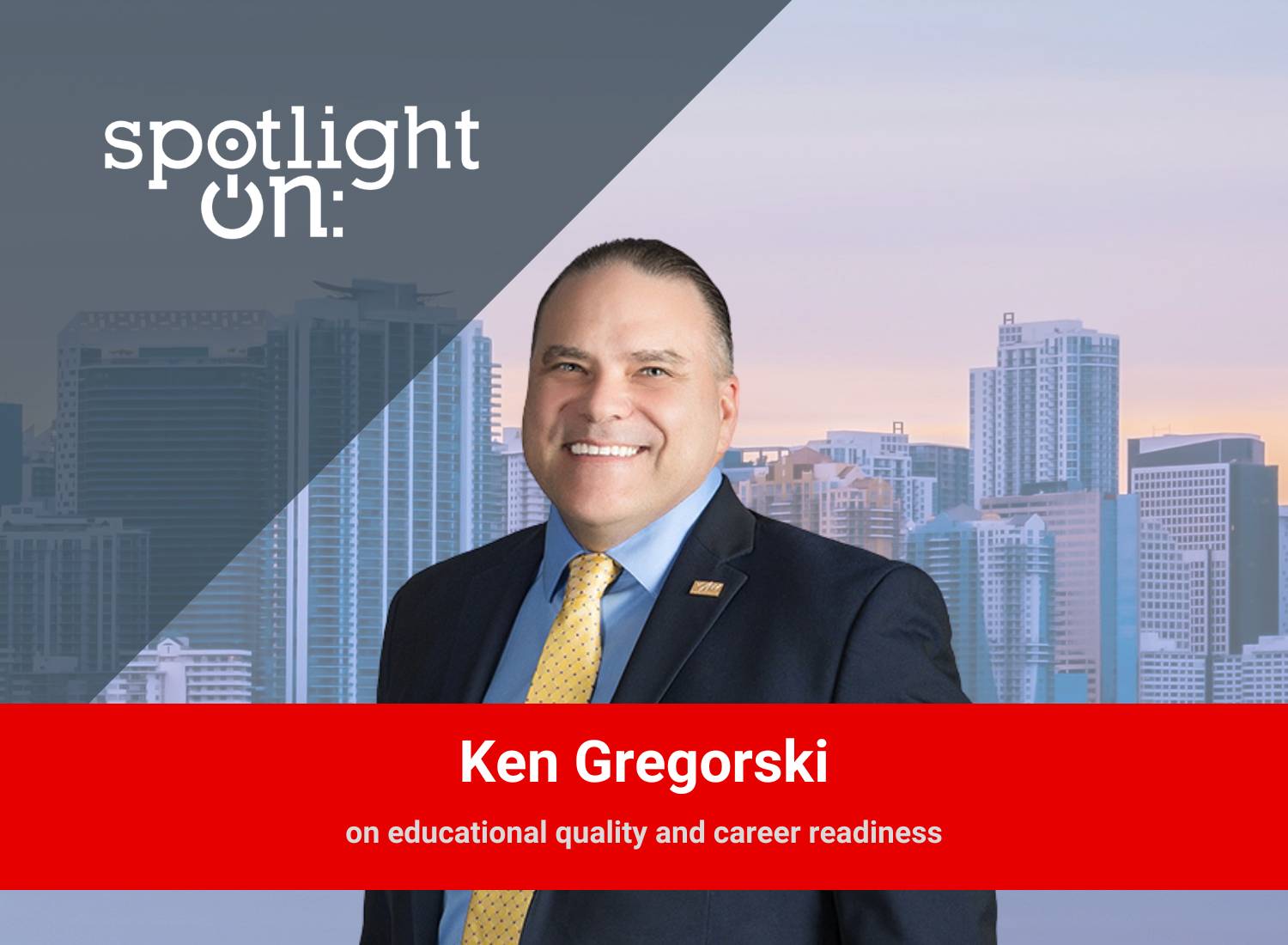
Spotlight On: Ken Gregorski Superintendent, Katy Independent School District (ISD)

Ken_Gregorski_Spotlight_OnSeptember 2025 — In an interview with Invest:, Ken Gregorski, superintendent of Katy ISD, emphasized the district’s commitment to academic excellence, career readiness, and managing rapid growth while maintaining educational quality. He highlighted Katy ISD’s top rankings, financial stewardship, and innovative programs that prepare students for college and careers. “These elements — academic success, student preparation, and financial stewardship — are central to our goals,” Gregorski said.

What have been the key highlights for Katy ISD in the past year?

Let’s start with our mission: delivering educational excellence and unparalleled learning for over 97,000 students, with nearly 15,000 employees across 80 schools. We’re proud of our Niche ranking as Houston’s top district for five consecutive years, reflecting our academic strength. We outperform state and regional benchmarks, as highlighted in recent Texas STAAR outcomes, though I prefer to emphasize continuous growth and self-improvement over single-point assessments. Nationally, our SAT scores exceed averages, and we lead in National Merit semifinalists and finalists. Financially, Katy ISD earns A-plus ratings from the Texas Education Agency’s Financial Integrity Rating System and has a nine-year Gold Star Award from the comptroller’s office. 

As a taxpayer-funded public institution, we make sure all students have access to the resources they need to learn and succeed, while also using those resources responsibly. These elements — academic success, student preparation, and financial stewardship — are central to our goals.

What is the role of public education in attracting businesses and investment to the Greater Houston area, and especially to Katy?

We could point to the state’s 60x30TX program, which aims to ensure 60% of 24- to 35-year-olds have college degrees or certifications by 2030. So, how do we participate and get kids ready for this? I’ll drop that into three buckets: academics, career readiness, and military readiness, aligning with the Texas Education Agency’s CCMR (College, Career, and Military Readiness) component of the TEA’s accountability system. For college-bound students, we prepare them well, with 70% of Katy ISD students attending colleges and universities versus 60% nationally. For the 30% not going to college, and that is higher in some districts, we offer career and technology programs related to our analysis of workforce needs. New programs in our district this school year include a water operations licensing certification in partnership with Inframark, a private company that manages water and infrastructure services across Texas. The program engages students in classroom and field training. Water management is an area that offers starting wages of $45,000. We’ve also launched a CDL (commercial driver’s license) program for high school seniors, and we offer real estate licensing. With 40-plus career clusters, 45% of Katy ISD graduates earn certifications, from automotive to pharmacy and tech. Military enrollment across our campuses is currently around 1%. This past year, we introduced a dedicated spring reception to formally recognize and honor students who choose to serve. While these students have always been acknowledged during our annual graduation ceremonies, the spring event offered a more focused opportunity to celebrate their commitment.

How is Katy aligning its resources to maintain educational quality while meeting the community’s evolving needs?

It’s always going to be a challenge to maintain rigor amid rapid growth. What keeps me up at night is ensuring we uphold our world-class education standards — academics, career and technology programs, and more — without sacrificing quality, despite limited resources and rising needs. These gold-standard programs aren’t cheap; educating students is expensive, particularly in an inflationary era, and focusing only on basics would leave them behind. Our mission emphasizes unparalleled learning experiences, supported by a strategic plan prioritizing personalized learning. As Katy ISD grows larger and more complex, balancing this vision with available funding becomes increasingly difficult. Delivering a world-class education while managing financial constraints is a growing challenge.

How are you attracting great teachers and enticing them to stay in the district?

There is nothing more important in a school than a quality teacher. And second to that is a quality principal. But I’ll take the quality teacher first. They’re the ones in front of our students every day. To do that, we need to ensure we have a pipeline of quality teachers. Recent data suggests the national teacher pipeline has shrunk by about 35% over the last 10 years as fewer young people choose to go into teaching. This is affecting Texas, too. Everyone’s searching for teachers, especially specialists, and it’s getting harder. We also need to be market-competitive, with adequate salaries. The state has allocated funds to boost teacher pay and enhance the Teacher Incentive Allotment, rewarding teachers who show student growth. In Katy, we’ve launched an alternative certification program. This past school year, we trained about 80 individuals who already held bachelor’s degrees, all of whom were placed in Katy ISD classrooms for the fall semester. This is helping to address the teacher shortage. Collaboration with the state’s teacher vacancy task force and colleges is also crucial as demand outpaces supply.

What specific projects or developments is Katy ISD excited about?

Our technology initiatives are near the top of the list. One factor that helps Katy ISD, even though finances are tough, is our community’s support for school bonds. We’ve been blessed to pass bonds, enabling deliverables such as technology, despite the financial landscape. With that, we launched a one-to-one initiative last year, ensuring every kid has the same standardized, customizable Chromebook device for learning. With nearly 45% of students economically disadvantaged, our previous bring-your-own-device program showed gaps. As a result, we outlined a new program, supported by bonds, to put devices in every hand. From third grade up, devices are pre-populated with grade-specific content, which is a huge initiative that improves workforce and college readiness. The passage of Senate Bill 569 this past legislative session, a virtual school bill, has also opened possibilities. We plan to expand virtual and hybrid learning options for Katy ISD’s students, homeschoolers, and even private school students in our community over the next year. 

Looking ahead, what are your top priorities for Katy ISD?

A real challenge for Katy ISD, which has been ongoing for years, is keeping up with growth, though that is not unique to us. We’re adding thousands of kids on an annual basis. As an organization grows, quality control becomes harder, which is a concern of mine. How do I manage this district, open new schools, build programs, welcome new families, and ensure every kid receives a world-class education without sacrificing quality as we expand? That’s always on my mind.

Another focus is innovation. Public schools can’t operate as they did 10, 15, or even three years ago because information changes too fast. The skills students need today differ from the skills we needed in my youth. Are we recognizing this challenge in public education? How do we personalize experiences and move beyond traditional methods to meet all kids’ needs? It’s getting harder, but that’s our focus. Our team, which is dedicated to students and families, remains committed to this goal.

What is the importance of partnership and collaboration as you look at the future of public school districts?

We need to look toward the future, and in particular, for public school districts like Katy ISD, we must improve public-private partnerships. How do we collaborate with our community, businesses, and industry to leverage local resources? The best example is our Katy Area Economic Development Council, which secures grant money to collaborate with public schools and colleges, offers paid apprenticeships, internships, and also journeyman opportunities for our kids. We try to do this independently, but this resource boosts our efforts. When public schools, private industry, and communities align on goals, we can meet community demands through increased dialogue.


For more information, please visit:

https://www.katyisd.org

Real estate leaders on challenges and opportunities in San Antonio

Writer: Mirella Franzese

ConstructionSeptember 2025 — Real estate activity is strong in San Antonio as development continues to attract sizable investment across sectors. However, recent shifts in national policy, combined with increasingly complex financial and labor markets, have introduced new challenges for investors. 

Major firms such as JBGoodwin Realtors, San Antonio Board of Realtors, Realty San Antonio, and Escalera Capital are actively reassessing demand and adjusting expectations. While development activity and growth continues, confidence levels are fluctuating in line with broader economic uncertainty.

High-growth sectors such as semiconductors, healthcare, financial services, and cybersecurity are drawing capital to San Antonio, but industry experts warn that ongoing uncertainty could threaten future inflows, especially as tariffs, inflation, and interest rate decisions cause project delays and cost overruns on key projects.

In interviews with Invest:, leaders shaping San Antonio’s real estate landscape, including Erin Cestero, president of JBGoodwin Realtors’s San Antonio Division, Gilbert Gonzalez, president and CEO of the San Antonio Board of Realtors, Marisa Jackson, agent success manager of Realty San Antonio, and Bobby Magee, managing partner of the Escalera Capital, discussed ongoing challenges, and opportunities to attract investors, affordable housing initiatives and more.

Erin_Cestero_Quote_StackErin Cestero, President – San Antonio Division, JBGoodwin Realtors

There’s a unique opportunity here. San Antonio caught the nation’s attention from 2020 to 2022, with builders and investors moving here. We have a lot of inventory — more than we have seen since the housing crisis. It’s a more balanced market, but sellers must adjust to slower sales. Buyers have more choices and better negotiation power. With experienced agents, buyers can find incredible opportunities, such as builders covering closing costs and offering 2020-level interest rates. This competition creates unique affordability unseen in most of the nation. (Although) affordability remains better here than elsewhere, it’s slightly more challenging today than it was just a few years ago. As a result, many are choosing to rent, creating excellent investment potential, especially with our strong military presence driving rental demand. Interestingly, we see more millionaire military members than in many other professions because they invest in San Antonio real estate, often accidentally building portfolios that create long-term wealth. San Antonio’s consistent, predictable growth has reliably built generational wealth for families over time.

Gilbert_Gonzalez_Quote_StackGilbert Gonzalez, President & CEO, San Antonio Board of Realtors

San Antonio loves its single-family homes, and that’s paramount to our community. The interesting part is figuring out what other types of housing are appropriate for San Antonio. Would San Antonio embrace condos, more multifamily housing, row housing, duplexes, or similar options? That’s something we’re exploring. It’s a compelling market because of the quality of life that the community has built. San Antonio has attractive educational opportunities, employment opportunities, and entertainment opportunities. We invest a lot in making sure that it’s one of the best places for people to want to move to and live. The city itself is (also) working to develop downtown and make it more attractive. Some people want that quality of life; being able to walk to dinner, walk to the grocery store, and live in a more walkable city. But even in the suburbs, development is happening all over town: north, south, east, and west. Depending on where people work, they generally try to live nearby. 

Marisa_Jackson_Quote_StackMarisa Jackson, Agent Success Manager, Realty San Antonio

I would say that interest rates, the election, and the economic uncertainty have been the biggest factors impacting our business. First, it was the interest rates, then came the election. People were waiting to see if rates would go down, and they didn’t. In the past, there were seasonal trends we could track. Now things are more unpredictable. Those are the main factors. We’re in a buyer’s market with significant inventory available. Locally, our housing remains relatively affordable compared to other major metros, though affordability concerns persist due to interest rates. Many hesitate to make the leap. However, new construction presents strong opportunities — builders are offering incentives and lower interest rates, attracting first-time homebuyers. Buyers now have more options and can be selective. We advise sellers to make necessary updates for move-in-ready homes, as these still sell quickly. Market conditions vary by neighborhood, emphasizing the need to work with locally knowledgeable partners (Additionally,) the city has initiated new affordable housing programs. We’ll need more such efforts to address homelessness, which affects all major cities. Developing low-income housing for unhoused residents remains crucial. The city is actively working on this, even studying approaches from other municipalities. Maintaining this focus will be vital as San Antonio grows over the next decade. 

Bobby_Magee_Quote_StackBobby Magee, Managing Partner, Escalera Capital

We face some broader challenges that are unique and dynamic, especially as they relate to the ongoing tariff situation. We are monitoring material costs closely as well. As we acquire a hotel and begin to perform renovations, a lot of the materials are sourced through overseas vendors. With those costs increasing, it makes it even more challenging to get new hospitality developed or just acquisitions to underwrite. Combined with this factor, there are cost pressures on every line item of the operating statement. Insurance costs are increasing materially. Also, continually advancing systems and software, while they get more robust and beneficial, are getting increasingly expensive. There is cost pressure all the way around. In forecasting this out over the next year or two, for example, it gets hard to predict what will happen given how dynamic our economy is currently.We are seeing the community rallying toward investing in the Downtown area. Escalera Capital has several projects happening in Downtown San Antonio. This is a main area of focus, and there is a ton of support for Downtown. It is more than just new development and skyscrapers. What I love about the nascent opportunities in the Downtown area is the renovation of historic buildings. It is pouring love and investments into the same structures that made San Antonio, while also combining this with new growth through large partnerships like Hemisphere Park, the minor league baseball stadium, and other incredibly large projects happening Downtown.


Join us at the San Antonio 4th Edition Leadership Conference! This premier event brings together hundreds of San Antonio’s business and regional leaders to discuss the challenges and opportunities for businesses and investors. Buy your ticket now!

Yessica Perez, Tax Partner, Calvetti Ferguson

In an interview with Invest:, Yessica Perez, tax partner at Calvetti Ferguson, noted renewed client confidence in 2025, driven by legislative changes and economic incentives. The firm remains focused on manufacturing, private equity, and maintaining independence amid industry consolidation. “We’re proud to say we’re not, and do not plan to be, private-equity owned. We’re committed to organic growth and building long-term relationships. That’s resonating in the market,” Perez added.

What changes in the Texas business climate have had the biggest impact on your advisory work in the past year?

2025 has been an interesting year. We saw a positive outcome right after Jan. 1. Companies began moving past the uncertainty around interest rates and were ready to grow. Many clients became more intentional about their growth strategies, and we focused on aligning our services with their goals.

Toward the end of Q1, tariffs began to take effect. This led to a significant increase in business-related questions, especially about how tariffs impact not just our clients, but their clients as well. We worked closely with them to navigate those challenges.

Eventually, the noise around tariffs began to settle. Then, on July 4, a major bill was signed into law, and we started receiving an exponential number of questions from investors about its implications: how it would impact them, benefit them, and benefit their clients. We’re currently in deep conversations with bankers because we anticipate a heavy Q4 due to all the bonus depreciation and economic incentives available to companies.

Overall, it has been a busy and optimistic year. At Calvetti Ferguson, we continue to grow. We’ve doubled our size in the past 10 years. Ten years ago, we were only in Houston. Now we’re also in San Antonio, Fort Worth, Dallas, and Nashville, our newest market, where we’ve been for two years. On Aug. 1, we acquired Randy Walker & Associates in San Antonio, doubling our presence there.

What makes Houston an ideal location for your headquarters, and how does it differ from other Texas markets?

Houston is often viewed as an oil and gas city, but it’s much more than that. With the port nearby, the city is unique. We see a significant number of foreign investors, along with local investors, conducting business related to the port.

Houston also has a strong medical community and a growing number of private equity firms investing, not just in the firms themselves but also in their portfolio companies. While energy remains central, we also see growth in alternative investments, manufacturing, and privately held businesses.

There’s also notable expansion north of Houston in areas like The Woodlands, Conroe, and Montgomery, where there’s substantial private wealth.

Where are you seeing the strongest demand, and what sectors are you targeting for future growth?

We’re focusing heavily on manufacturing companies. With the full suite of services we offer, this is a sector where we can invest and partner meaningfully to help them reach their goals.

We’re also targeting private equity firms more intentionally. While we’ve always had the capacity to perform private equity fund audits, we’re now being more proactive about it. We can implement automation and efficiencies that we believe will bring them significant value.

Given the ongoing consolidation in the industry, what is your outlook for independent firms like Calvetti Ferguson?

One of our biggest differentiators is that we remain independently owned. In recent years, private equity has actively acquired CPA firms, leading to widespread consolidation. Many clients have told us they’re seeing declining service quality despite increasing fees.

We’re proud to say we’re not, and do not plan to be, private-equity owned. We’re committed to organic growth and building long-term relationships. That’s resonating in the market; new prospects frequently ask whether we plan to sell, and hearing that we’re staying independent is a major relief for them.

We believe this commitment gives us a lasting competitive advantage, and we will maintain it.

How is your firm incorporating AI and automation to improve efficiencies while maintaining strong client relationships?

AI is a sensitive topic, especially in our field, where we handle confidential data: Social Security numbers, financial details, and more. We are using automation tools to streamline data entry, making it more cost-effective and allowing us to focus on delivering value.

We also utilize bots for process automation and global resources to improve efficiency. However, when it comes to AI, we’re cautious. We have strict policies in place: not everyone has access to AI tools, and any implementation must be approved by our CIO and management committee. We require human oversight in AI use to ensure client data is protected.

How would you assess the talent pool in Houston, and how are you attracting and retaining top professionals?

Finding CPAs has become more challenging. It’s a more limited pool now, but cities like Houston, DFW, and Nashville still offer strong talent. We actively encourage our employees to earn their CPA licenses. We provide bonuses and incentives for those who pass within their first year, along with access to learning tools and support for exam preparation.

To retain talent, we focus on making employees feel valued and invested in. We prioritize learning, growth opportunities, and recognition. Pairing that with competitive compensation helps us maintain low turnover and a strong, motivated team.

How is your firm building strategic partnerships and contributing to the community?

Relationships are at the core of what we do. We are active in many local organizations, and our partners are deeply involved in the community, whether through food banks, cultural institutions, churches, or children’s museums.

We also support educational outreach. For example, we partner with a program that brings underprivileged high school students into our firm for internships. We expose them to different departments and help them understand what it’s like to work in a CPA firm. Our goal is to inspire them to pursue college and consider a future in our industry.

What are your top priorities for the firm and the tax practice over the next few years?

Our No. 1 priority is to impact our communities and give back. Our founding partners are Christian-based and strongly committed to community service. We believe that what goes around comes around.

We’re also focused on investing in our people. Happy employees provide better service, so we want to continue showing our team they’re valued. And of course, we remain committed to helping our clients meet their goals and get there faster with our support.

Ryan Wheless, CEO & Founder, Allied Wealth

In an interview with Invest:, Ryan Wheless, CEO and founder of Allied Wealth, discussed navigating market volatility, Houston’s economic evolution, and the firm’s client-focused growth strategy. “The Houston market is wildly underserved, and there is a tremendous opportunity for a good wealth management firm in this space,” Wheless said.

What significant changes over the past 18 months have impacted your operations in Houston?

It has been an incredible year of growth, and a substantial part of that growth has resulted from adapting quickly to a rapidly changing landscape. We have witnessed considerable market volatility, especially in February of this year. We refer to that period as the “tariff tantrum,” when the market was down approximately 23% early on. We also navigated elevated interest rates, new tax policies, and a new administration in the White House. Many things were happening all at once, and for numerous families here in Houston and The Woodlands in the Greater Houston area, that created significant uncertainty. At Allied Wealth, our response was to double down on proactive planning, which is our specialty. We continued to refine our Summit System, which is our proprietary system used to help individuals develop a financial plan that brings them to and through retirement. We further refined our process to stress test every client plan against multiple market and tax scenarios. This ensures that, with increased market volatility and ongoing legislative changes, our clients’ plans will hold up under new tax laws. That agility, the ability to adapt their plans quickly to a rapidly changing environment, has helped our clients maintain confidence. It has fueled our growth and is profoundly important to us. As more families seek a nimble and forward-thinking firm, we intend to remain at the forefront.

What makes Houston an ideal location for your work, and how does it differ from other markets within the industry?

Houston is an incredibly diverse city of industry. For years, we have described Houston as the Hollywood of oil, and that identity remains. The oil market can be resilient in many ways, but it is also subject to economic forces and trends. Historically, as goes oil, so goes the Houston economy. That is not so much the case anymore because we have become technical. There are many technical businesses here in Houston, a great deal of healthcare, and a number of financial businesses. We have developed a more diverse economy. We are one of the largest cities in America, but many professionals are underserved in the discipline we provide.

How are you converting newcomers to Greater Houston into future clients?

We maintain a prominent presence in the markets we need to serve through a radio show, a television show, a prolific YouTube channel, and a podcast. In addition to that, we conduct outreach programs where we teach investing, retirement, estate planning, tax planning, and financial planning classes at local community colleges, universities, high schools, and community centers. This allows us to connect with people on a one-on-one basis and provide them with the education to empower them to make excellent financial decisions when it comes to being smart with their money.

What specific wealth industry trends or dynamics should people be aware of? 

The wealth management industry as a whole is undergoing many changes. We are seeing a major shift from accumulation-based thinking to outcome-based planning. Individuals are no longer solely asking how large they can grow their portfolio. There is more to it than that. They are asking how to turn what they have built into a sustainable income stream that allows them to live the life they have imagined, the one they have worked for all these years. Especially here in Houston, where we have many executives and business owners as clients, they want strategies that blend tax efficiency, reliable cash flow, and risk management. It is less about chasing returns these days than it was in the past and more about designing their ideal lifestyle and then reverse engineering the financial plan to support that. I will also note that the rising and lowering tides in various industries create a need to serve people experiencing layoffs. When people go through layoffs, they lose a job, their 401(k) plans become portable, and their pensions become portable in many cases. They need help navigating that space. We help people on the successful side of the spectrum and those going through transitions, such as layoffs. The Houston market is wildly underserved, and there is a tremendous opportunity for a good wealth management firm in this space.

From your vantage point, are there any specific solutions or tailored products that have had the highest demand among your clients? 

There are a few areas that stand out. One of those areas is tax strategy, which is huge. Taxes will likely be an individual’s largest expense in retirement, potentially even more than healthcare costs. Income planning is also huge. It involves taking retirement assets and cash assets and using them to replace a paycheck. That is what must be done to finance an ideal lifestyle in retirement. We also utilize many risk management investment designs. Another important caveat is that the private equity, private credit, and private real estate space is a vastly growing sector in wealth management. What is really interesting is that previously, there were 7,000 publicly traded companies, and now there are 35,000 publicly traded companies. The average retail investor only has access to those 35,000 companies. Consider OpenAI, a privately held company worth billions upon billions of dollars. The average person cannot invest in a company like that, yet they should be able to. The plumbing for more average retail investors is now available, making these options accessible in private equity, private credit, and private real estate funds. We are seeing a massive shift into the alternative investment space in wealth management in Houston, and we are implementing that with our clients tremendously. Private credit has been a great way to generate outsized yields for income generation. Private equity has been a great way to generate outsized returns while lowering risk dynamics and volatility in a client portfolio. That is a big space. Additionally, with taxes likely to rise in the coming years, we are helping many families execute proactive tax planning strategies. These include estate planning strategies, Roth conversion strategies, and building tax-diversified income plans. We are also designing strategies that are more resilient to market volatility, which aligns with the private equity and private credit strategies. When in retirement, the order of returns matters more than the average market return, and we call it sequence of returns risk. The solutions we provide resonate with families who want peace of mind, especially in a market as fast-paced as Houston’s and the broader economy.

What is your outlook for the next two to three years, and what are your top two or three priorities for the firm?

Looking ahead, we are incredibly optimistic about the future. Houston is a wildly underserved market, and we are here to serve it in a big way. Our focus is on expanding our footprint throughout Greater Houston. We already have a solid footprint, but we are continuing to expand that footprint. We stay committed to the Woodlands because it is where we are from. It is where we live, where we dwell, where we work, and where we play. We want to serve more families who are approaching retirement and looking for that next-level guidance, not just a financial plan, but a life plan. What are you going to do in retirement? Who are you with? Where are you? Are you retiring to something? We are strong believers that you do not retire to a La-Z-Boy chair. Over the next few years, we will continue to scale our Summit System and grow our team of world-class advisers and support staff. We will invest in technology that keeps up with our client experience, that grows it to continue to be second to none. Our vision is simple: to help people stop worrying about money and start living the life they work so hard to build. That is what redefining retirement is all about.