





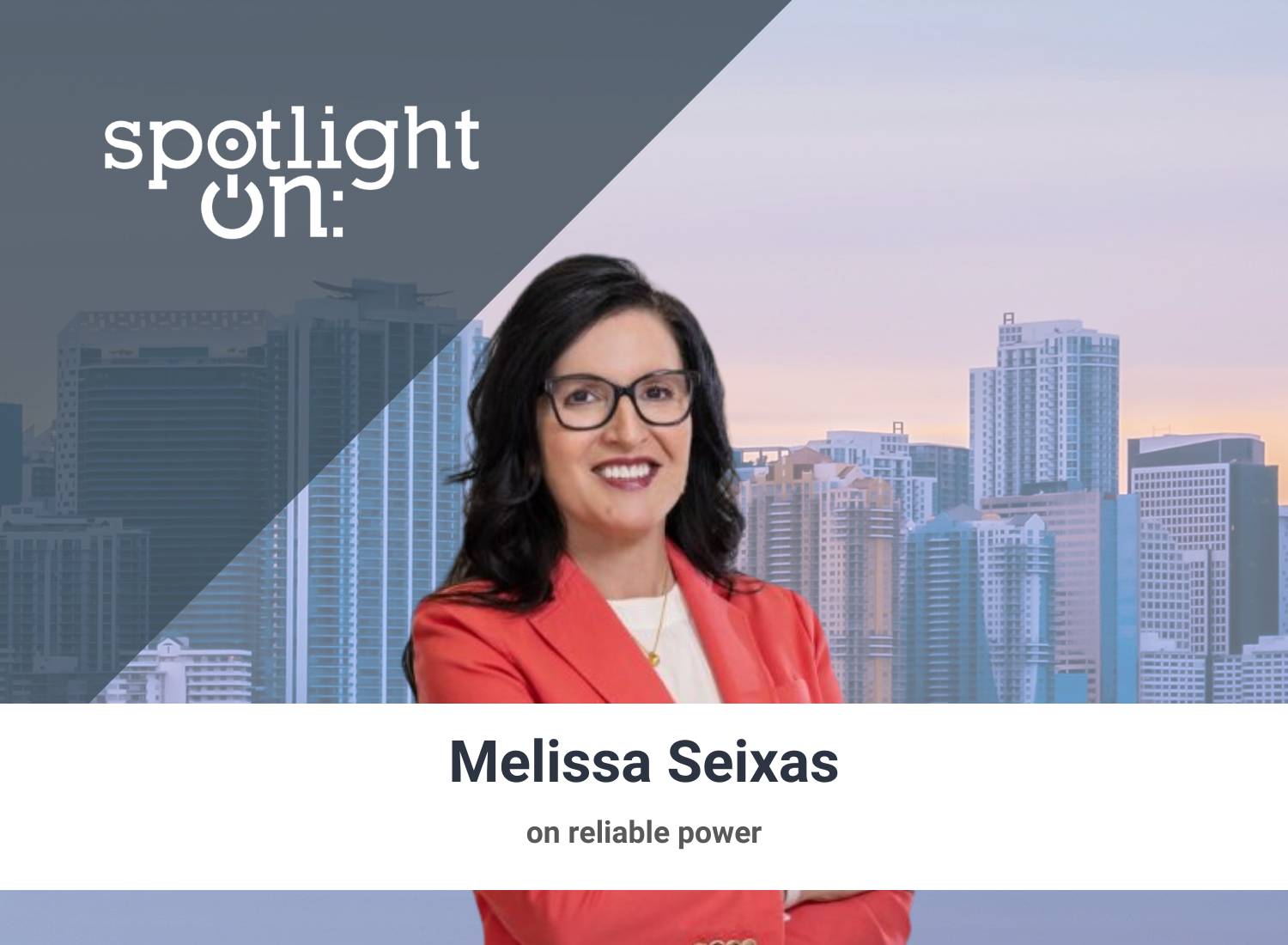
 November 2025 — In an interview with Invest:, Melissa Seixas, state president of Duke Energy Florida, shared how storm recovery and rate stability defined 2024, with $1 billion in storm costs offset by projected 2026 bill reductions. Investments in renewable energy and grid hardening, such as smart, self-healing technology, are key to affordability and resilience. “Whatever comes, we want to ensure that the power remains reliable and that we’re ready for whatever Mother Nature throws our way,” Seixas said.
Join us at caa’s upcoming leadership summits! These premier events bring together hundreds of public and private sector leaders to discuss the challenges and opportunities for businesses and investors. Find the next summit in a city near you!
What have been Duke Energy’s key priorities this past year in Florida?
Two priorities really shaped the past year for us. The first was storm recovery. After a tough hurricane season, our focus was standing side by side with customers and communities during the rebuilding process.
That meant being transparent about the cost. We filed for about $1 billion in storm cost recovery, which temporarily increased bills for customers. We brought in 27,000 resources from across the country to support our response. That level of readiness requires investment.
We filed our projected price changes for 2026 on Sept. 1, and we’re happy to say that beginning in March, customers should see about a 22% decrease in bills as the storm recovery charges roll off and other adjustments take effect.
The second priority was executing our settlement agreement with the Florida Public Service Commission. That provided clarity on base rates and future investments in our infrastructure — everything from improving fuel efficiency at our plants to expanding our solar generation.
How is Duke Energy working to keep energy affordable while continuing to modernize its infrastructure?
Affordability is always top of mind. It starts with running our generation fleet as efficiently as possible. To date, we’ve completed upgrades at three natural gas plants across Florida, translating into more than 315 megawatts of capacity added to the electric grid (roughly the output of a small power plant) and an estimated $340 million in annual fuel savings for customers. We’re also investing heavily in solar, with roughly 30 utility-scale plants so far and more coming online every year. Our plan is to generate around 6,100 megawatts of clean energy by the end of 2033.
That directly reduces fuel costs for customers. In fact, for every 300 megawatts of solar, we save about $1 billion in fuel costs (over the sites’ service lifetimes). We also pass on savings from federal tax credits, which total around $65 million annually from the Inflation Reduction Act (IRA).
Beyond that, we provide customers with tools and programs to help them manage their usage. Whether it’s budget billing or business-specific programs for small and medium businesses, we’re constantly working to give customers control over their energy costs.
Grid resilience and safety are major issues, especially in storm-prone regions like Tampa Bay. How do you cultivate a strong safety culture at Duke Energy?
Safety is woven into everything we do: physically, mentally, operationally. We have workers in hazardous conditions every day, whether it’s energized lines, roadside work, or storm restoration. Thousands of our employees drive tens of thousands of miles a year.
We start every meeting with a safety moment. We talk about emergency exits, AED locations, and how to respond to medical events, whether there are four people in the room or 400.
We also train with public safety agencies — fire, police, emergency management — especially before storm season. When first responders come to our facilities and see how seriously we treat safety, it resonates.
We’re also expanding the definition of safety to include mental wellness. Providing resources for mental health is becoming just as important as traditional physical health. It’s all part of making sure our people are supported, which in turn strengthens how we serve our communities.
What role is technology playing in how you deliver power and interact with customers?
Technology is transforming every part of our operation. One of our biggest advancements is self-healing grid technology. It automatically detects outages, reroutes power to other lines, and restores service usually in less than a minute – sometimes before customers even realize there was a problem.
In Pinellas County, about 90% of customers are already benefiting from it. Think of it like GPS in your car: if there’s an accident, it reroutes you. That’s what our system does when there’s an outage.
We also use drones for infrastructure inspections, especially for high-voltage transmission lines. AI is helping with training, creating realistic simulations that prepare new and existing employees for complex scenarios.
Even with all these advances, we still have people physically climbing poles and maintaining the grid. The goal is to combine hands-on expertise with new tools that make our workforce safer and more effective.
What are you doing to develop future talent for the utility industry?
We’ve built strong partnerships with state colleges — St. Petersburg College, Valencia College, Lake-Sumter State College, Seminole State College — to train the next generation of lineworkers. These programs blend traditional skills with new technology, creating a pipeline of talent ready for the evolving energy landscape.
I recently spoke at a graduation at St. Petersburg College. I told the graduates that whether you end up working for us or for another utility, we’ll all be helping each other. That’s how this industry works. We show up for one another.
And we have internships. These young people really seem to crave – and actually enjoy – an atmosphere of teamwork and collaboration, which is something we demonstrate in our culture every day.
I’m proud to share that we’ve successfully transitioned dozens of interns to full-time roles within just the past three years. They represent a range of engineering and technical disciplines and come from the University of South Florida, University of Central Florida, the University of Florida, Florida State University and Florida Polytechnic University, among others.
Youth Energy Academies are another exciting program we sponsor. They’re two-day events, geared towards middle and high school students, providing them hands-on opportunities to learn about the energy industry.
This summer, Duke Energy Florida helped facilitate Youth Energy Academies across the state. Hundreds of students participated in workshops, listened to panel discussions with lineworkers and other professionals, and got to learn more about the careers offered within our industry. They seemed to have a really great time and learn a lot.
Looking ahead, what are Duke Energy’s top priorities in Florida over the next few years?
We’ll keep focusing on reliability, resilience, safety, and innovation. Florida is growing fast, and we’re preparing for that, whether it’s from residential growth or large-scale energy users like data centers starting to look at the state.
We’re making strategic, forward-looking investments today to meet the evolving needs of tomorrow.
We’re modernizing and diversifying our infrastructure, creating a more efficient, resilient grid and strengthening our workforce – the foundation of everything we do – so we can continue to power our customers’ lives for generations.
Whatever comes, we want to ensure that the power remains reliable and that we’re ready for whatever Mother Nature throws our way. Thankfully, she gave us a bit of a break this season.
Want more? Read the Invest: Tampa Bay report.
Subscribe to Our Newsletters
"*" indicates required fields