
Spotlight On: Adam Tiktin, Founder & CEO, United Capital
Key points:
- • United Capital targets underperforming assets with strong value-add potential.
- • South Florida’s growth and limited supply support real estate fundamentals.
- • Disciplined investing and investor alignment are central to long-term growth.
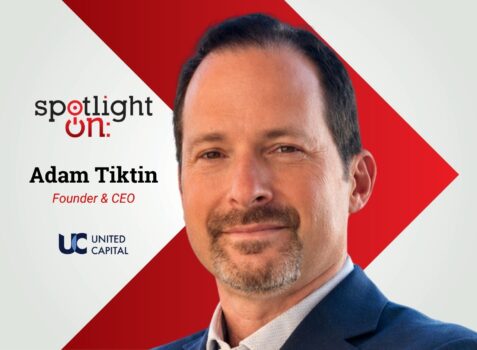 September 2026 — In an interview with Invest:, Adam Tiktin, founder and CEO of United Capital, discussed his transition from a long career in brokerage to building a commercial real estate private equity platform focused on value creation. He highlighted the firm’s strategy of acquiring underperforming assets, the strength of South Florida’s market fundamentals, and the importance of aligning investments with long-term growth trends. “By carefully matching investors with the right opportunities, the company aims to create win-win outcomes that support long-term relationships,” Tiktin said.
Join us at caa’s upcoming leadership summits! These premier events bring together hundreds of public and private sector leaders to discuss the challenges and opportunities for businesses and investors. Find the next summit in a city near you!
How would you describe United Capital’s core investment strategy, and what differentiates your approach from other operators?
United Capital was founded in 2022 after more than two decades in brokerage, and its focus is on commercial real estate private equity. The company primarily targets shopping centers, mixed-use properties, and medical office assets, with a strategy centered on acquiring and improving properties.
Rather than pursuing stabilized assets, the company looks for opportunities where it can actively create value. That includes redeveloping properties, improving tenant mix, increasing rents, and enhancing overall operations. This hands-on approach is rooted in years of experience advising clients on how to maximize the value of their assets, now applied directly within the company’s own portfolio.
The goal is not only to improve financial performance but also to contribute positively to the surrounding communities by revitalizing properties and elevating their overall quality.
What characteristics make a deal attractive to your team?
The company prioritizes properties where there is a clear path to adding value. That often means identifying underperforming or neglected assets that can be repositioned through strategic improvements.
This can include upgrading physical infrastructure, enhancing tenant quality, increasing occupancy, and ultimately driving higher net operating income. The focus is on opportunities where active management and investment can significantly improve performance over time.
Experience plays a key role in this process. Having evaluated thousands of deals over the years, the company applies a disciplined approach, reviewing a large volume of opportunities to identify the few that meet its criteria. Once a strong opportunity is identified, the team moves decisively to execute.
How do you approach due diligence and risk mitigation across market cycles?
Having been active in the Miami real estate market since the late 1990s, the company has navigated multiple economic cycles, including the dot-com downturn, the global financial crisis, and the COVID-19 pandemic. These experiences have shaped a disciplined and consistent investment approach.
Miami has evolved into a more mature and stable market, with less volatility than in previous decades. While external shocks still occur, the overall trend has been toward greater consistency.
The due diligence process involves evaluating a large number of opportunities to identify those with the strongest fundamentals. When a compelling opportunity is found, the team acts quickly. For example, recent acquisitions have involved tight due diligence timelines and expedited closings, supported by strong relationships with investors and partners who have worked with the company for many years.
What trends are you seeing across retail, medical, and service-oriented assets?
The company’s investment focus reflects both market demand and long-term fundamentals. Retail properties, particularly in high-growth areas, continue to perform well due to limited new development and strong tenant demand.
Construction costs have risen significantly, making it difficult to develop new retail assets. As a result, existing properties have become more valuable, particularly those that can be improved or repositioned. Low vacancy rates and rising rents have further strengthened performance in this segment.
Medical office and service-oriented assets also remain attractive due to their stability and consistent demand. Across all asset types, the emphasis remains on identifying opportunities where value can be created through active management and strategic investment.
How does your approach to property management contribute to value creation?
The company takes a flexible approach to property management, depending on the asset type. For multitenant properties, it typically partners with experienced third-party management and leasing firms with whom it has long-standing relationships. These partners bring local expertise and operational efficiency to each asset.
For single-tenant properties, management may be handled internally, allowing for more direct oversight. This hybrid approach ensures that each property is managed in a way that maximizes performance while maintaining operational efficiency.
Strong relationships with management partners are a key component of this strategy, enabling consistent execution across the portfolio.
How do you structure investments to align with high-net-worth investors and family offices?
The company takes a personalized approach to working with investors, recognizing that each investor has unique goals and risk preferences. Understanding these factors is critical to structuring investments that align with expectations.
Some investors prioritize stable, income-generating assets, while others are more focused on long-term appreciation through development or value-add opportunities. By carefully matching investors with the right opportunities, the company aims to create win-win outcomes that support long-term relationships.
This approach is informed by years of experience in investment advisory roles, where aligning the right opportunity with the right investor was essential to achieving successful outcomes.
How do you evaluate expansion opportunities beyond your core markets?
While the company has investments in multiple markets, its primary focus remains South Florida, particularly Miami-Dade County. The region’s strong fundamentals, including population growth, capital inflows, and international appeal, make it a highly attractive market.
Within South Florida, Miami Gardens stands out as an emerging opportunity. As one of the largest municipalities in the county, it has historically been overlooked but is now experiencing significant growth and development. Major investments in infrastructure and entertainment, including events and large-scale developments, are driving increased attention to the area.
The company is actively engaged in this market, working closely with local stakeholders and identifying opportunities to participate in its growth. The broader strategy is to remain focused on high-potential markets while selectively pursuing opportunities in other regions.
How are you adjusting your strategy in the current economic environment?
Rising interest rates have significantly impacted the commercial real estate market, requiring adjustments in underwriting and investment strategy. While financing costs have increased, rising rents have helped offset these pressures in many cases.
In markets like Miami, strong demand and low vacancy rates have supported continued property performance. Limited new development, driven by high construction costs, has further reinforced the value of existing assets.
The company maintains open communication with investors, ensuring they understand market dynamics and how these factors influence returns. By adapting to changing conditions and focusing on fundamentals, it continues to identify opportunities that meet its investment criteria.
What is your vision for United Capital’s growth in the coming years?
The company is focused on continued growth, both in terms of its portfolio and its team. It is actively hiring across key functions, including acquisitions and analysis, to support expansion.
Strong relationships with brokers and industry partners provide access to a steady pipeline of opportunities, allowing the company to evaluate new deals on an ongoing basis. This network, built over decades, is a key driver of future growth.
Looking ahead, the company remains highly optimistic about the South Florida market and expects continued capital inflows and development activity. By maintaining its disciplined, value-driven approach, it aims to expand its portfolio while continuing to deliver strong results for investors.
Want more? Read the Invest: Miami report.