


Spotlight On: Bob Meyn, Division President, Mattamy Homes
Key points:
- • Tampa Bay’s housing market remains strong, but affordability continues to challenge first-time buyers.
- • Mattamy Homes is expanding with a mix of infill communities and more attainable housing options.
- • Long-term population growth and infrastructure investment continue to drive confidence in the region.
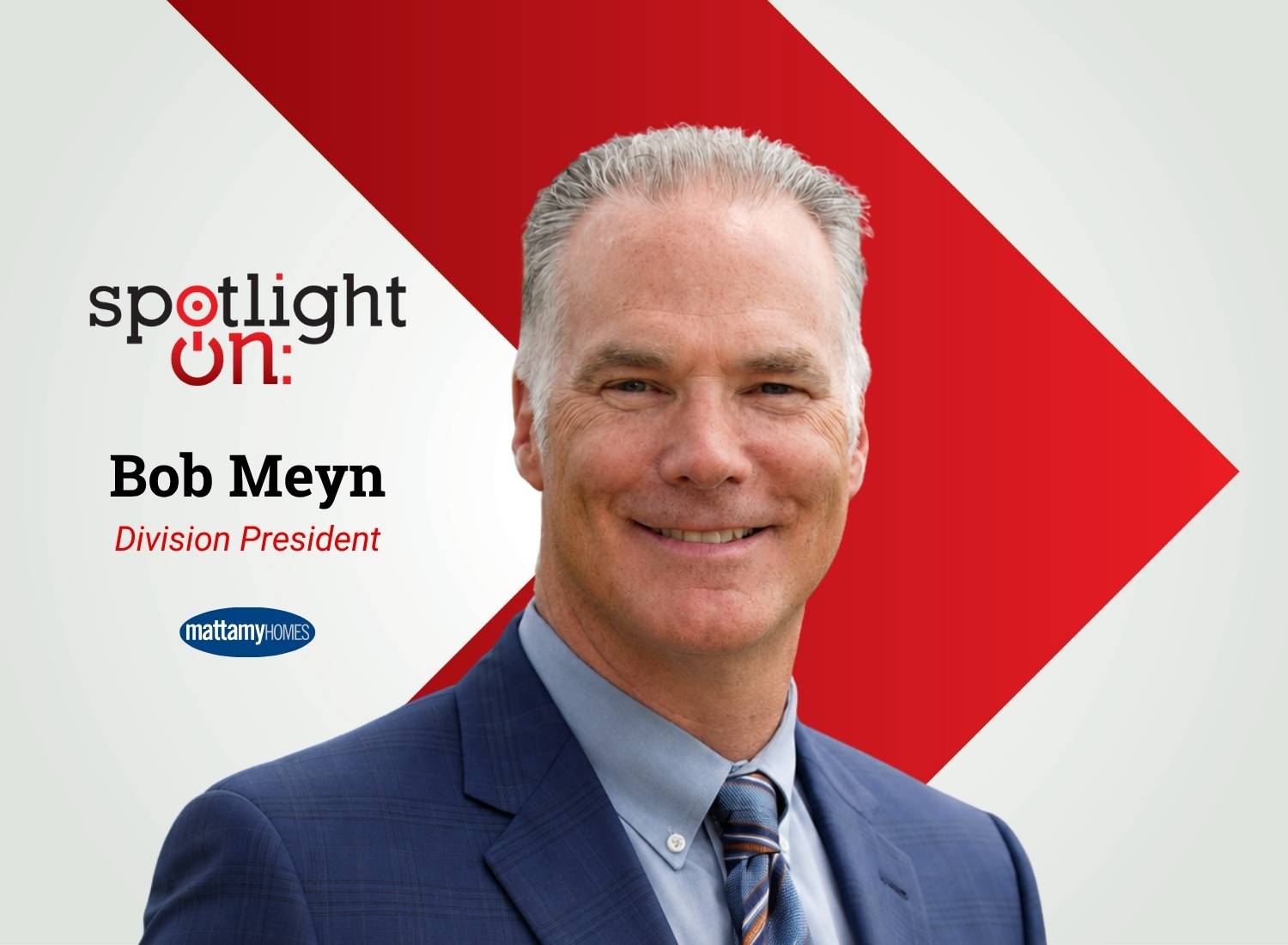 July 2026 — Bob Meyn, division president of Mattamy Homes, spoke with Invest: about Tampa Bay’s housing market, affordability pressures, and the company’s growth strategy across the region. “The high end is having success, while the first-time homebuyer market has been compressed,” Meyn said.
Join us at the Invest: Tampa Bay 7th Edition Leadership Summit! This premier event brings together hundreds of Tampa Bay’s business and regional leaders to discuss the challenges and opportunities for businesses and investors. Buy your ticket now!
How would you describe the current state of the Tampa Bay housing market, and what trends are having the biggest impact on the industry?
I moved to Florida in 2019 after spending most of my professional career in the Midwest, primarily in the Chicago market. I came down seeking warmer weather and better economic opportunity.
In Tampa specifically, and Florida more broadly, our company experienced massive growth during the post-COVID rebound. From 2021 through 2024, demand far exceeded supply, interest rates were at extremely low levels, and Tampa Bay really took off. That did not happen just because of COVID. A lot of the infrastructure was already going into Tampa.
Back in the late 1980s, when I was in college, my rowing team would spend a few weeks training here every winter. The difference between Tampa then and now is hard to put into words. Downtown is vibrant. There is so much activity with apartments, condos, the Riverwalk, countless opportunities for recreation, and the investment the city and private owners have made. That has set Tampa Bay up for long-term success and growth.
With that said, the market is seeking equilibrium. All that growth and price appreciation put a strain on affordability, and Tampa Bay is experiencing that now. The first-time homebuyer market, particularly under a $500,000 purchase price, has been compressed. Young families buying their first or second home are under incredible strain because of higher interest rates and prices that have nearly doubled since I moved here in 2019.
Prices have adjusted somewhat and leveled off. The resale market has held, with limited price growth in those tiers. As you move into the higher end, over $700,000 or over $1 million, that market continues to be successful. It is a dichotomy. The high end is having success, while the first-time homebuyer market has been more challenging.
Given the pressure on affordability, does the industry need to rethink entry-level housing?
As builders, we are challenged with bringing affordable housing to buyers and serving their needs. That is something we spend a lot of energy on: how we can deliver a more value-oriented product.
One thing we have done consistently is provide multifamily-style housing, though I do not mean apartments. Mattamy has had a lot of success building townhomes as part of our product offering. We were one of the few larger-scale homebuilders where about 50% of our products were attached units, whether paired villas or townhomes.
That is one way we can reach an affordability level that provides value for first-time homebuyers. Younger buyers have been squeezed out in Tampa and in many markets across the country. Attached product has been one way we provide a more affordable alternative here.
How are rising insurance costs, interest rates, and construction expenses affecting buyers and builders?
As a large builder in North America, we get leverage through our buying power. We are not as large as Lennar or D.R. Horton, but we build about 5,000 homes per year throughout the United States. Across North America, including Canada, we are closer to 8,000 or 9,000 homes per year. That gives us buying leverage on materials.
Coming out of the massive growth we saw through 2024, residential starts have been down nationally and in Florida. Suppliers and vendors had costs that were overinflated during the run-up. With starts down, we have seen some of those costs come down.
Our relationships with suppliers and labor pools have helped us bring costs down and deliver lower costs to consumers. That has been a focus for us.
What are you seeing around labor availability and workforce challenges in homebuilding?
The availability of labor is fundamental to homebuilding. The construction workforce was strained during the COVID and the post-COVID period through 2024 and 2025. With the reduction in starts, the labor force has become much more available and able to service current demand.
That has not been an issue for us in Florida as of late. As the market starts to heat up again, which I anticipate it will happen soon, labor availability may become a future challenge, but today it is not.
Which parts of Tampa Bay do you see as having the strongest long-term growth potential?
We see opportunity in the markets we are in today or will be in shortly. From our entry to this market over 10 years ago to spring 2025, our division oversaw a larger geography from Tampa Bay down to Naples. With the division’s growth, we split off from the southern area and started focusing solely on Tampa.
Through that transition, we started branching into areas where we had not been before. South Tampa is one. We have a new parcel under construction which will open for sales later this year. We also have two communties in St. Pete where construction has already started, and we will be delivering homes in early 2027. Those are new areas for Mattamy, and we will continue to invest in them.
Those opportunities are typically smaller enclaves because there is not much land available, but there is high demand from consumers who want to be in those markets. We will be delivering townhomes between $600,000 and $700,000 in those submarkets, which is a value compared with what is available today. In St. Pete, we will have single-family homes starting under $1 million, and there is not much of that in new construction today.
We will also continue to be in areas with a lot of building activity today, including northern Manatee County. We currently have three communities operating there and will continue to be in that market because it allows us to provide value to first-time and move-up buyers.
As you move north, eastern and southern Hillsborough County will remain important for us. North of Tampa, into northern Hillsborough County and throughout Pasco County up to Dade City, is another area we will be developing. We recently opened a community in Pasadena Ridge in the Pasadena Hills area of southern Dade City and will be building homes in the master-planned community Verona in Land O’Lakes.
Broadly, we are looking at infill opportunities in South Tampa, Tampa proper, and St. Pete, along with growth areas in the counties surrounding Tampa.
What infrastructure is needed to support that growth?
Infrastructure is generally ahead of where we build. We build along corridors where transportation allows our buyers to commute to job centers as conveniently as possible. It is no surprise that developments are located around major highways or state routes.
I-75 and the Veterans corridor are two examples as you head into Pasco County. There are major east-west roads such as Routes 54, 56, and 52. Those roads have been developed and expanded over the last number of years. The state has done a good job growing those transportation routes in order to serve growth.
If you drive into those areas and see the new interchanges built along I-75, it is stunning to see the investment the state has made to provide transportation opportunities for that growth. Has traffic gotten better? Probably not. But with the growth, it has not gotten worse.
Housing comes first, and then as new neighborhoods take shape, retail, dining and services follow, creating vibrant, well rounded communities. That is what we see today in newer communities in emerging markets.
What gives you the most confidence about Tampa Bay’s future, and what are Mattamy’s priorities in the market?
Florida is a tremendous destination for future homebuyers and companies looking to relocate to a tax-friendly area. You can see how much corporate relocation is happening today. Florida and Texas are common themes, and the amount of investment in Florida by new companies is significant. That brings billions of dollars of investment and job growth.
When companies and jobs come in, housing and development follow. Tampa stands out because of the infrastructure that has been built here, the vibrancy of downtown, professional sports, the culture downtown with theaters and so many other amenities.
There is so much opportunity and so many reasons for people to come here for economic and lifestyle benefits, that I think that momentum will continue long into the future.
For Mattamy, we strategically pivoted to have a smaller division focused on the Tampa Bay area, and now we are poised for growth. In FY27, we are planning to grow by about 60%, and in FY28, we are planning nearly triple-digit growth. That refocus on the Tampa market has positioned us well, and our planned growth here will be an important part of our story going forward.
Want more? Read the Invest: Tampa Bay report.






