
Spotlight On: James Sills, President & CEO, M&F Bank
Key point:
- • M&F Bank is combining relationship banking with digital innovation to stay competitive.
- • The bank is expanding lending and support for small businesses across North Carolina.
- • Growth plans focus on technology, talent, and deeper community engagement.
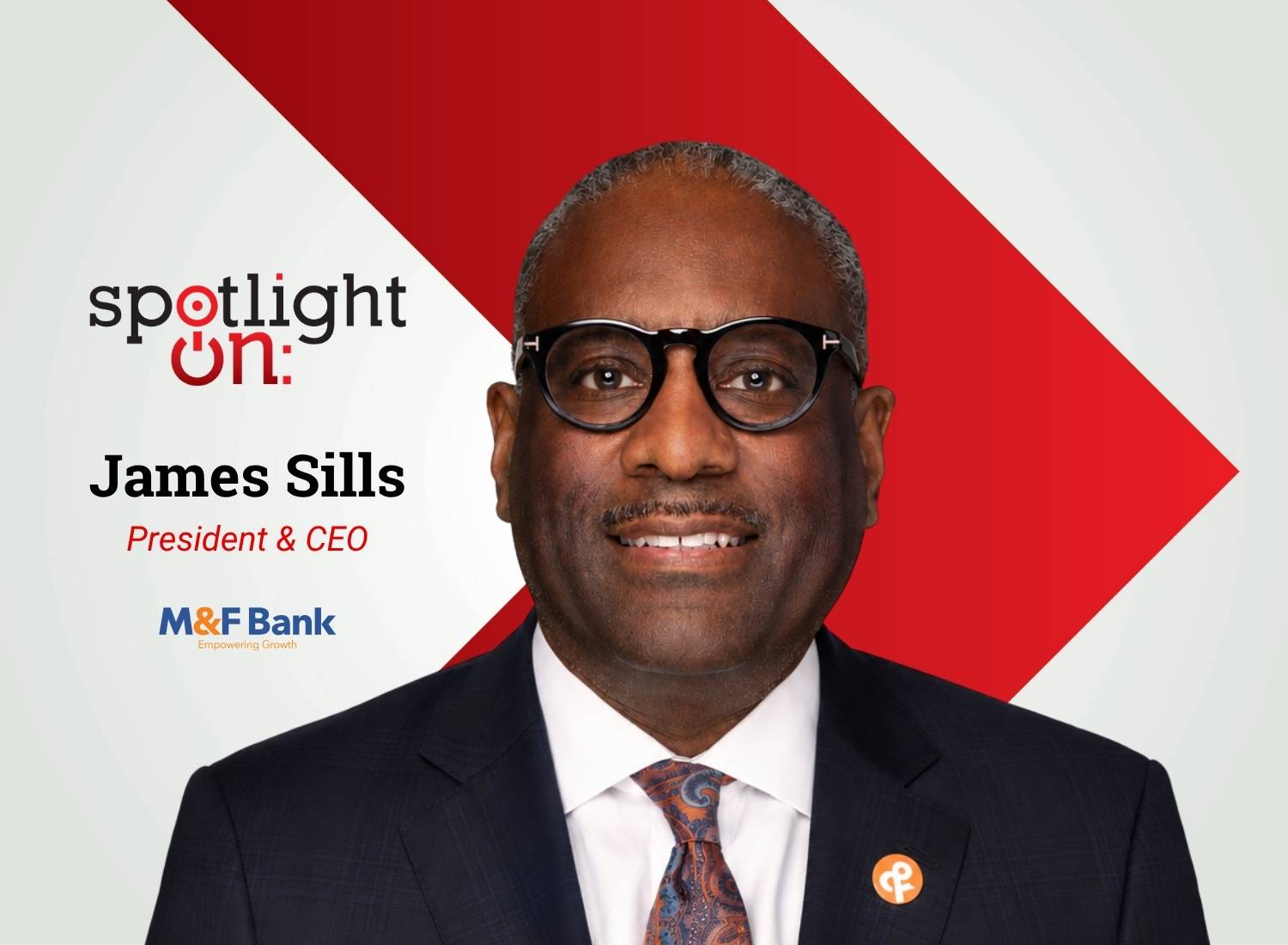 July 2026 — Invest: sat down with James Sills, president and CEO of M&F Bank, to discuss what is changing in community banking and what is staying the same. He pointed to an evolving regulatory environment, a rising focus on modern payments, and the pressure to keep pace digitally in a crowded market. “You have to be high-touch and high-tech,” Sills said.
Join us at the Invest: Raleigh-Durham 4th Edition Leadership Summit! This premier event brings together hundreds of Raleigh-Durham’s business and regional leaders to discuss the challenges and opportunities for businesses and investors. Buy your ticket now!
What major trends have shaped community banking over the past year, and how are those changes influencing your approach?
Since the beginning of 2025, the regulatory landscape has changed for community banks. I view that as positive that will allow us to do more lending and better serve the communities in North Carolina. There’s also a big focus on payments — all kinds of digital payments — more specifically, stablecoins has been a hot topic in 2026. That’s positive for our region; it’s exciting that innovators and some banks are thinking about the future of how money moves in and around the globe.
How are you positioning the institution to remain competitive while staying grounded in your original mission?
We’re a community bank. We’ve been in business for 119 years. We firmly believe in the relationship model, which means we take a holistic approach to working with our customers. We take the time to understand where they are, where they want to go, and how we can help address any challenges and capitalize on opportunities.
We understand the positive impact that entrepreneurs and their small businesses can have on a community, so we are intentional about our support of them. When small business owners are successful, they grow and provide jobs, serve more of the community, and support their local economies. This is our niche — small and medium-sized businesses. They’re the engine that keeps our economy moving, and if we can grow with those types of businesses, the bank will continue to grow.
How is your team approaching growth across North Carolina’s major metros, and what have you learned about regional market dynamics as you’ve expanded?
We’re located in the five largest markets in North Carolina, but Raleigh-Durham holds the majority of the Bank’s assets.
We’re doing more digital marketing and continuing to be active with small businesses. We’re participating in webinars, events, and various programs to get our lenders out into the community. That’s the key: actually engaging with business owners as their advocates and letting them know we’re here to serve, versus just sending them an email. The market is competitive, and you have to have the right balance between a digital presence and real-life engagement, which is the equivalent of “high-touch and high-tech”.
We’re actively working on our growth strategy, and we continue to look for ways to differentiate the bank. It’s a competitive market with all the banks here in Raleigh and Durham, but I believe the personal attention we’re able to show our customers distinguishes us in the marketplace. We want to be the bank someone comes to when they want to be seen as more than just an account number.
What are you seeing in terms of lending appetite from small and mid-sized businesses?
We originated more loans in terms of the number of loans in 2025 over 2024, but the average dollar size of those loans decreased year over year. It’s a function of the economy, inflation, and the level of interest rates for the majority of 2025.
In 2026, I think we’ll see loan volume pick up for all banks across Raleigh and Durham. If you have A1 credit, it’s a lot easier to get your deal approved. If you do not, it’s a little bit more difficult, but all the banks are chasing A1 credit deals. It’s competitive.
Beyond interest rates, what are you seeing in the current economic environment, and how is it impacting clients and the banking industry?
Inflation is impacting our clients. Many of them cannot pass on those additional costs, so it’s eating into their profit margins. Also, it’s difficult to hire for some positions at the moment.
We are anticipating that businesses are starting to see some clarity with the economy and plan to access capital to grow and expand in 2026. It’s positive that interest rates have decreased in the last three months of the year. There is a lot of growth there. We’ve had a lot of announcements of firms planning to relocate or expand here, so that’s super positive for the region. The overall unemployment rate for North Carolina is 3.8%, and the latest national rate is 4.5%, so the state still has a healthy economy. Some industries are struggling, but it’s important for us to be here to offer support and guidance to the businesses that need it.
How are you thinking about capital access and wealth-building strategies for underserved communities in this environment?
To date, we have provided $90,000 to nine small businesses, $10,000 each, with our Empowering Growth Small Business Grants. Each year, we award $10,000 to five small businesses in each of our markets to help them grow.
In addition to receiving $10,000, they receive a dedicated banker, a financial coach, and memberships to the various chambers of commerce in the markets where we’re located. That has been a big hit for us, because not a lot of banks are giving away $10,000 to small businesses in our markets, and we’re pleased with the reaction that we’ve received. It really helps us stand out.
We award these grants because small businesses are the economic engines of our communities, and they’re the innovators of the future. We think it makes sense for us to partner with growing small businesses that are also being creative in how they grow. We want to grow with them. That has worked out well for us the past 12 months or so.
How are you approaching digital banking innovation and the balance between high-touch and high-tech?
We are focused on remaining competitive by improving our digital offerings in terms of online applications, online portals, and treasury management services. This is an important topic because customers have access to these options with larger financial institutions, and we want to meet and exceed customer expectations with similar tools. We have AI embedded in a number of our applications that help improve efficiency in terms of processing loans, opening accounts, and consolidating financial data. We want to do more, but it’s an investment, and it takes time.
Looking ahead, what are your top priorities for the bank over the next three to five years?
Our top priority is deposit and loan growth. It sustains the Bank. Much of our income comes from our loan portfolio. We are planning to expand into certain markets in North Carolina. We also want to continue to attract the right talent so we can continue to grow.
We intend to do more digital marketing. We are getting the right response rates from some of those digital efforts; I’m pleased with the results so far. It was a lot of trial and error, but we’ve found some success in the last 15 months or so. Banking is not an industry where you can stand still. We have shareholders who are expecting a certain level of performance related to growth and earnings per share. That’s what it’s all about.
Want more? Read the Invest: Raleigh-Durham report.