
Spotlight On: John Riquelme, Market President, Central Texas, Hancock Whitney Bank
Key points:
- • Central Texas remains strong as Austin and San Antonio become increasingly connected.
- • Manufacturing, logistics, technology, and private equity are driving capital demand.
- • Hancock Whitney is prioritizing relationships, talent, technology, and organic growth.
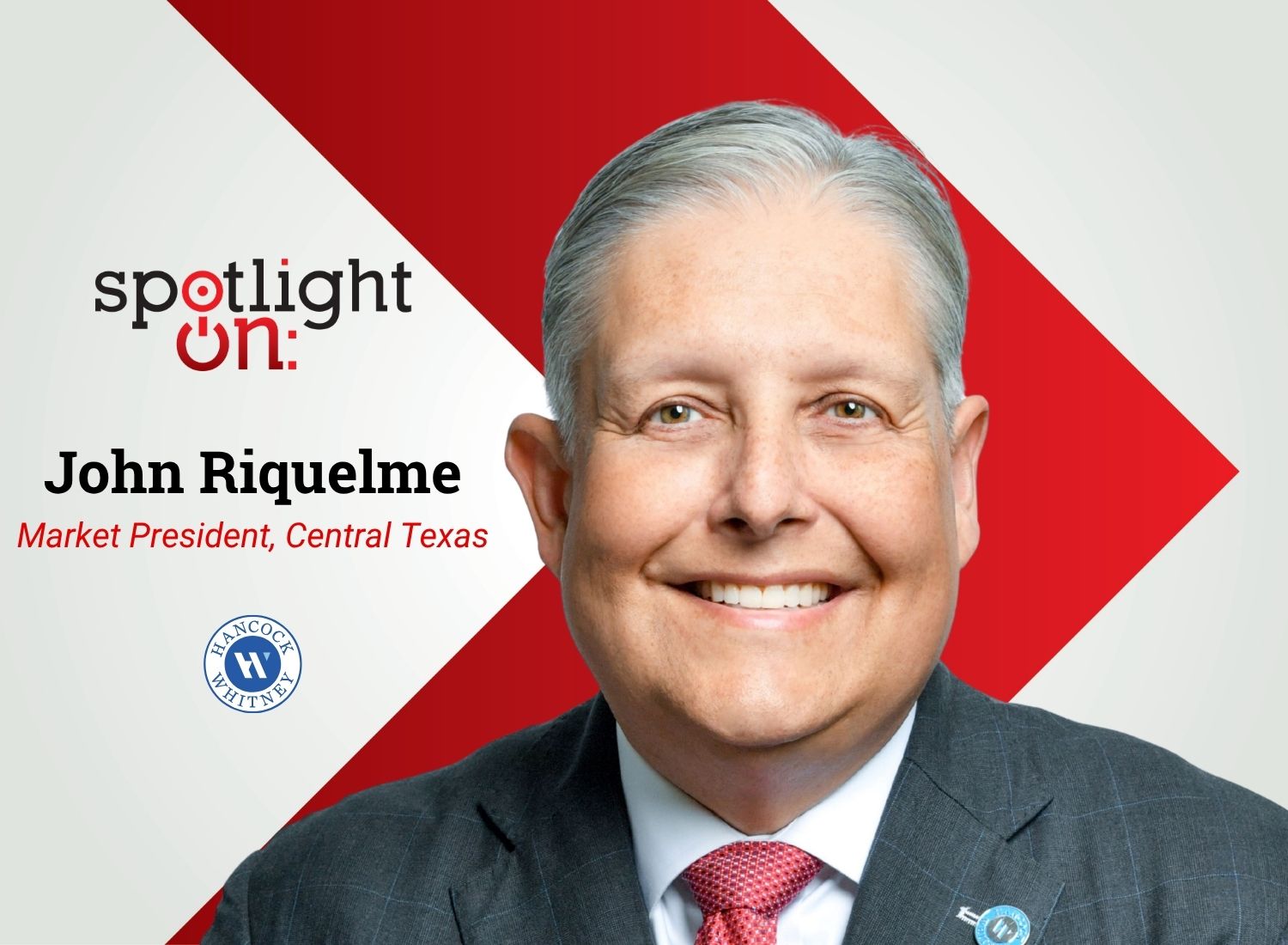 August 2026 — In an interview with Invest:, John Riquelme, market president for Central Texas of Hancock Whitney Bank, discussed the strength of the Central Texas economy, the growing integration of the Austin-San Antonio corridor, and the bank’s focus on talent, technology, and relationship-driven banking. “We remain focused on building relationships and supporting the long-term success of our clients and communities,” Riquelme said.
Join us at caa’s upcoming leadership summits! These premier events bring together hundreds of public and private sector leaders to discuss the challenges and opportunities for businesses and investors. Find the next summit in a city near you!
How would you describe the business climate in Central Texas, and what trends have shifted over the past year?
We had a very strong first half of the year, with a lot of loan demand. Then, with oil prices jumping, things became a little more tentative. People are watching the market, but we are seeing oil prices come down some, while interest rates continue to fluctuate, creating some uncertainty around long-term purchases of real estate and equipment.
Overall, I feel like the economy is good. There are a lot of transactions and private equity flowing into the market for acquisitions of smaller companies. That continues to be a trend in both San Antonio and Austin.
Since taking responsibility for both Austin and San Antonio, what similarities and differences are you seeing between the two markets?
San Antonio continues to attract businesses, and one reason is that there is a lot of cohesion between the public and private sectors when it comes to welcoming companies. We have seen major investments such as JCB and expansion activity at Toyota.
San Antonio remains a great place to raise a family, and investments such as the airport expansion are important because accessibility and direct flights matter to companies considering the region. Expanding the terminals reflects the city’s commitment to meeting those needs.
Austin, meanwhile, remains more technology-focused and home to larger corporate names. The two markets are increasingly connected, and both continue to benefit from strong population and business growth.
What opportunities are being created as San Antonio and Austin become more connected as an economic region?
Over the last 25 years, the corridor between San Antonio and Austin has transformed. Development now stretches across communities such as New Braunfels, San Marcos, and Kyle, creating a much more connected region.
That connectivity is one reason we established a unified Central Texas market. Austin and San Antonio were once managed separately within the bank, but today it makes sense to operate as one region because of the shared growth, resources, and business activity.
If transportation connectivity continues to improve, the region will increasingly resemble a major metroplex similar to Dallas-Fort Worth.
Which industries are driving the most growth, and where are you seeing the strongest demand for capital?
We are seeing demand across real estate, equipment financing, and operating lines. Manufacturing appears stronger than it has been in previous years, particularly when it comes to capital needs.
Private equity activity remains significant. Firms continue targeting trades, such as HVAC, plumbing, and electrical services. For many business owners, that creates opportunities to monetize businesses they have built over decades, especially when there is not a clear family succession plan.
We are also seeing opportunities through SBA programs and have recently financed equipment for a startup manufacturing company. In San Antonio, logistics remain important because of the city’s location along major transportation corridors. That is driving demand for light industrial development and warehouse facilities.
What opportunities do you see emerging from data centers, cybersecurity, and other technology-driven sectors?
We recently brought on a client with a cybersecurity background, and they are seeing growing demand from both government and private-sector clients.
Data centers are also becoming a significant topic. We hear about them frequently through our construction clients and across our broader footprint. While there is currently more activity in Austin than in San Antonio, data centers are in demand across the southeast region.
How would you assess the commercial real estate market today?
Commercial real estate remains mixed. Multifamily housing continues to be needed, although many developers are finding strong opportunities in other markets around the country as well.
Within San Antonio, light industrial properties remain in high demand. Warehousing and distribution facilities continue to see substantial activity. Office space is a different story. Since COVID, many companies have reduced their office footprints, and demand for traditional office space is not what it once was.
How has the workforce landscape evolved, and how are you attracting, retaining, and developing employees?
We are continuing to hire and grow organically. I believe strongly in helping bankers become active in economic development organizations, trade groups, and business associations because those relationships help them grow professionally and support their clients.
Training has become much more developed over the last two years. We have internal training, online learning opportunities, and in-person development programs. We want employees to understand that if they want to grow their careers, there are opportunities to do so within the organization.
Investing in our people builds fulfillment, strong leadership, trust, and communication. We also strive to be a nimble organization that is easy to do business with. Those qualities are important when it comes to attracting and retaining talent.
How is the bank leveraging technology and artificial intelligence to improve efficiency and client service?
Over the last year and a half, we have looked carefully at every client touchpoint to identify ways to improve the experience. We have a dedicated client experience team whose primary responsibility is evaluating technology and improving interactions with clients.
How are macroeconomic conditions affecting the Central Texas environment?
Texas continues to benefit from a strong economy and a business-friendly environment. We see companies and people relocating from higher-cost regions, and we continue to see financial institutions seeking opportunities within the state.
That environment extends beyond Central Texas and can be seen throughout major markets across the state. The overall business climate remains attractive for companies looking to grow.
With competition and consolidation in banking, what differentiates Hancock Whitney?
Being nimble is important. We focus on listening to clients and providing solutions across the full spectrum of their needs, from lending and treasury management to wealth management and trust services.
One area where we differentiate ourselves is in helping business owners think through long-term planning. Many entrepreneurs reach a point where they are considering succession, estate planning, or the eventual sale of their business. Having specialized trust and wealth management capabilities allows us to support those conversations in a meaningful way.
Looking ahead three to five years, what are your top priorities for the bank?
We have added several team members in both San Antonio and Austin this year. The priority is organic growth, helping our bankers build relationships, grow their client bases, and expand their businesses.
At the same time, we are continuing to invest in technology, training, and process improvement to ensure we remain competitive and continue delivering strong service to our clients.
How is the bank positioning itself for long-term growth and success?
We maintain a strong focus on our diverse customer base. We believe the bank is well positioned, supported by a strong deposit base and recent expansion within our five-state footprint in the Gulf Coast region.
We have recently expanded in Dallas and continue growing in other markets. We have also reinvigorated our mortgage lending efforts, which we view as an important part of strengthening our consumer banking business. Overall, we remain focused on building relationships and supporting the long-term success of our clients and communities.
Want more? Read the Invest: San Antonio report.