
Spotlight On: Brenda Hicks-Sorensen, Director, City of San Antonio Economic Development Department
Key points:
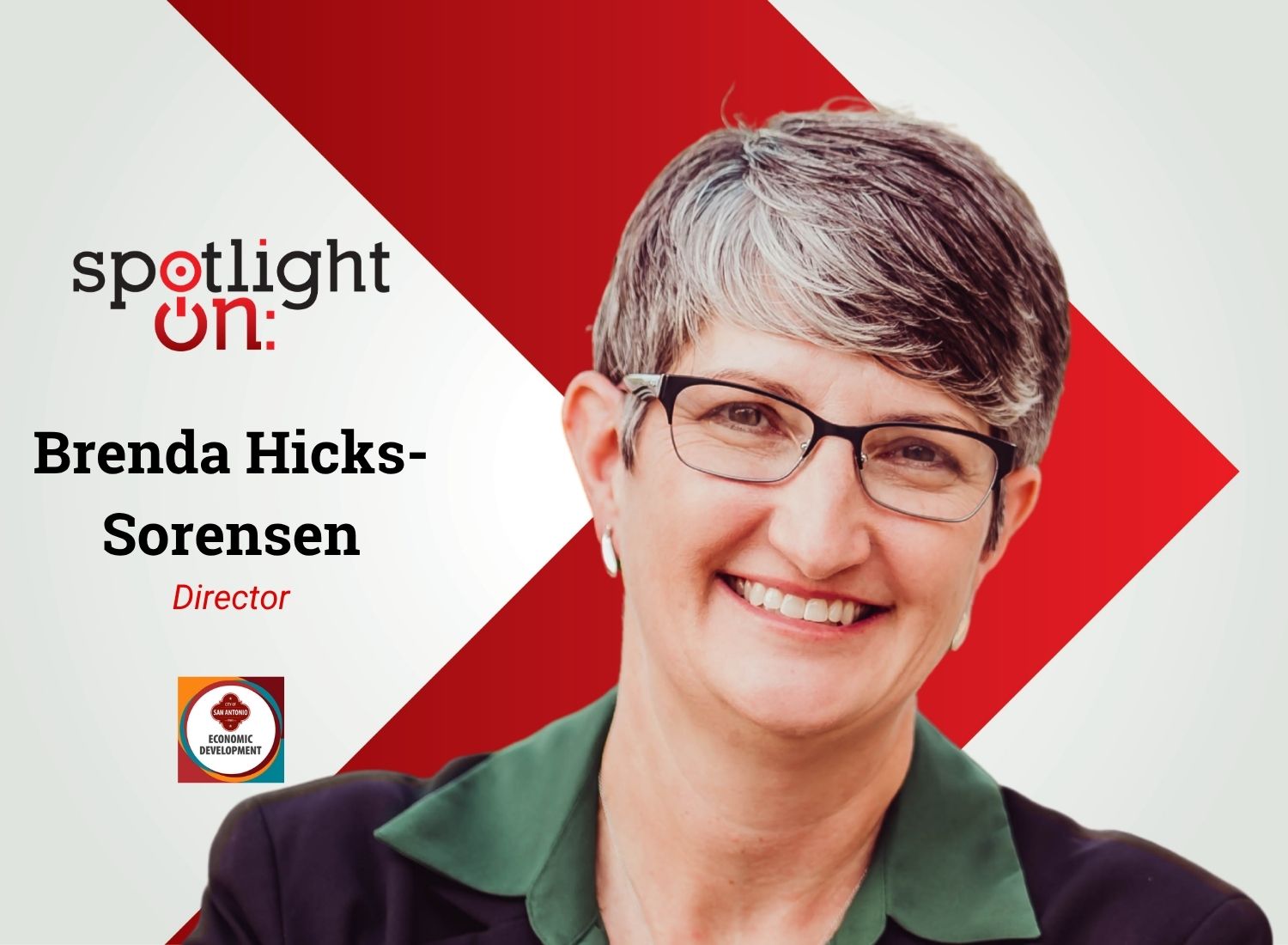 August 2026 — Brenda Hicks-Sorensen, director of the City of San Antonio Economic Development Department, discussed with Invest:, the city’s evolving competitiveness strategy, advanced manufacturing momentum, workforce investments, infrastructure priorities, and global relationships. “Many things set San Antonio apart, but relationships are among the most important,” said Hicks-Sorensen. “As a result of these strong relationships, you can feel confident picking up the phone and accessing a strong network.”
Join us at caa’s upcoming leadership summits! These premier events bring together hundreds of public and private sector leaders to discuss the challenges and opportunities for businesses and investors. Find the next summit in a city near you!
How is San Antonio’s economic development strategy evolving?
San Antonio’s economic development strategy is ever-evolving. Our Economic Development Department monitors local, national, and global events to ensure that we are addressing the community’s needs and shifting when necessary. Our Economic Development Strategic Framework was published in 2022 and is a road map for our overall strategy. This year, the framework is being updated. As we gather stakeholder feedback through roundtables, interviews, and other conversations, we are capturing insight into competitiveness and what San Antonio needs to do next.
Supporting small businesses remains absolutely critical, but the conversation has broadened to include how we stay competitive through workforce investment, placemaking, and ensuring San Antonio remains a community where people want to live and work. Competitiveness also includes site readiness. We are assessing whether we have enough properties prepared for corporate investment.
We are also reviewing our incentive policies, which expire at the end of 2026. We update those policies every two years and are evaluating how community resources should be invested. I view incentives as investments in what matters to San Antonio, so these conversations are important to determining our priorities.
How are major manufacturing investments creating opportunities for suppliers?
We are incredibly excited about the recent Toyota announcement, representing a $3.6 billion investment and more than 2,000 jobs. By the time this is published, both the JCB facility and Toyota’s axle facility are expected to be operational. These projects reinforce San Antonio’s role as an advanced manufacturing hub.
Our investments in Ready to Work and educational attainment continue to support manufacturing, particularly its continued growth. JCB has identified an area within its development as a supplier park, and we have collaborated with the company and greater:SATX Regional Economic Partnership on supplier outreach events and engagement.
Toyota already has a strong supplier base because of its long history in San Antonio. Its axle facility expansion and recent investment create additional opportunities to build on that network. Significant manufacturing investments elsewhere in the region, including in Austin, also influence the supplier landscape.
As part of our strategic framework update, we are revisiting target industries such as advanced manufacturing and mobility. We are asking how San Antonio can level up within those industries, particularly through research, development, and innovation.
How are technology and emerging industries reshaping your priorities?
When we developed our strategic framework in 2022, we intentionally defined our target industries broadly. Instead of identifying automotive or aerospace separately, we described the sector as mobility because technology changes rapidly, and new opportunities continue to emerge.
For example, we have had many conversations this past year about electric vertical takeoff and landing (eVTOL) aircraft, which we were not contemplating in 2022. Artificial intelligence is another major area of focus, especially because of its relationship to San Antonio’s strong cybersecurity infrastructure.
We also continue to examine how we can leverage our military assets. San Antonio is Military City USA, and there is tremendous activity across our bases. Although there have been shifts at the federal level, those assets remain incredibly valuable. We are focused on drawing more private-sector participation into supporting the military and considering what the future of Military City USA should look like.
Much of that conversation involves space, including space propulsion, cybersecurity for space-related activity, and other emerging technologies. The Texas Space Summit coming to San Antonio in 2027 is another opportunity to highlight those assets while advancing research and technology.
How are trade policy and cross-border relationships affecting the outlook?
We continue to emphasize that San Antonio is a global city. As federal policies change, communities and companies must be prepared to pivot. Our focus has been on staying closely aligned with our partners and existing businesses.
First and foremost, we want to support companies already located in San Antonio. That means understanding how federal legislation and international opportunities are affecting them, identifying gaps in the supply chain, and finding ways to use our strengths to support their continued development.
The JCB supplier network has included trips and engagement in Mexico because the supply chain does not stop at the U.S.-Mexico border. Continuing to monitor the United States-Mexico-Canada Agreement is important. San Antonio is where the North American Free Trade Agreement was originally signed, and we often describe the city as the Texas capital of northern Mexico because of our strong relationships.
Those long-term relationships extend beyond Mexico. BlackWave, a German aerospace manufacturer, recently committed to San Antonio through a relationship connected to our sister city partnership with Darmstadt, Germany, and broader diplomatic engagement. Maintaining those relationships is essential regardless of policy changes.
What infrastructure priorities are most important to sustaining growth?
When I arrived in San Antonio in 2021, much of the conversation centered on investment in the airport, the need for more domestic and international flights, and the importance of expanding the facility. The community’s commitment to that investment has been incredible, and we are beginning to see the results.
The conversation is now shifting toward the Interstate 35 corridor as we discuss the broader megaregion. The I-35 corridor is critical as we look north, but San Antonio also looks south toward South Texas and northern Mexico.
Transportation and logistics will be increasingly important for people, cargo, and the supply chain. The airport remains a major part of that picture. It is exciting to see the new structures and visible progress as the expansion begins to take shape.
How is Ready to Work helping address employer needs?
Workforce is an incredible investment. San Antonio’s commitment to workforce development, skills enhancement, and upward mobility was one of the reasons I was interested in coming here five years ago. Employers such as JCB and Guidehouse have been strong partners, along with many other businesses.
Ready to Work is San Antonio’s education and job placement program that continues to evaluate how it must evolve to support employers. As part of the strategic framework update, we are examining what the next evolution of workforce programming should look like.
You cannot talk about economic development without talking about workforce. Our departments are in constant communication about what employers are telling us and where needs are changing. We recently reviewed data and discussed whether we should further narrow or shift the occupations being prioritized. The goal is to support employers while helping participants move successfully into available jobs.
What do companies value most about San Antonio?
Many things set San Antonio apart, but relationships are among the most important. As a result of these strong relationships, you can feel confident picking up the phone and accessing a strong network. People are open, connected, and willing to meet with companies that are new or expanding.
Businesses have told us that they immediately feel welcome and have opportunities to engage and make an impact, positioning them to become strong corporate citizens.
San Antonio is also distinctive because of its cultural heritage and the way the community protects and celebrates that identity. Major investments downtown, including the Sports and Entertainment District, the new Missions ballpark, and development in western downtown, are always discussed in terms of how these new developments will remain uniquely San Antonio.
The same is true at the airport. New restaurants and vendors reflect the community, so visitors begin experiencing San Antonio’s identity as soon as they arrive. That sense of place is something we hear about frequently from businesses and international delegations.
What are your priorities for the next three to five years?
Competitiveness will remain a central priority. San Antonio has incredible momentum, and the question is how we ensure that momentum continues while building on it.
We must also continue supporting our unique culture, local small businesses, and commercial corridors. Our RevitalizeSA: Corridor Leadership Program focuses specifically on those corridors, and we want growth and investment to reach neighborhoods throughout the community.
Downtown redevelopment will be another significant area of opportunity. As plans advance for the new Missions baseball stadium, we are also working on a master plan for the old stadium site, which will become available for redevelopment. That project provides another opportunity to ensure major investments are distributed throughout San Antonio and contribute to broader community growth.
Want more? Read the Invest: San Antonio report.