

Spotlight On: Amy Henry, CEO, Trident Energy Group
Key points:
- • AI and digital twins are reshaping next-generation power infrastructure.
- • Houston’s energy expertise supports major infrastructure and technology investment.
- • Community relationships and workforce development are critical to sustainable growth.
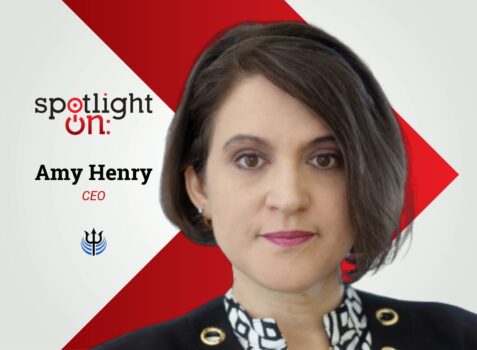 September 2026 — In an interview with Invest:, Amy Henry, CEO of Trident Energy Group, discussed next-generation power infrastructure, the convergence of energy and technology, and Houston’s role as a global energy hub. “Your license to exist as a company is really only through your relationship with the community,” Henry said.
Join us at the Invest: Houston 3rd Edition Leadership Summit! This premier event brings together hundreds of Houston’s business and regional leaders to discuss the challenges and opportunities for businesses and investors. Buy your ticket now!
How would you describe Trident Energy Group’s role and recent evolution?
Trident is essentially an energy platform focused on building power generation, particularly natural gas combined-cycle facilities. We started by focusing on purpose-built, behind-the-meter industrial power because that is our background. Then the wave of data centers came, and we began getting interest from off-takers and data centers, so we are now focused on delivering power to both industrial facilities and data centers.
I am also a co-founder of Eunike Ventures, which was created in 2016. We work with the global energy industry on a shared technology agenda and with corporate venture capital groups. Some technologies we have worked with for seven to nine years are now part of what we are bringing into Trident.
We are focused on how to build intelligent facilities of the future today. That includes artificial intelligence and digital twins. When you are building multibillion-dollar assets with a 50-year lifespan, the goal is to create digitally native assets before you physically build them.
That can help reduce the front-end engineering and design cycle, improve schedules, and reduce cost overruns. Once the asset is operating, the digital model continues receiving data, which can help us understand future options such as carbon capture or blended fuels like hydrogen.
Why is Houston such an important base for this type of service?
Houston is great when you are talking about infrastructure investment. It is a global energy corridor, and people here understand how to invest in expensive infrastructure builds. Houston and Texas also have the talent and skills needed to do that.
We are good at figuring out big problems. There are engineers here who have worked through complex challenges, understand safety, and know how to execute these projects.
I have worked with startups in Silicon Valley and on the East Coast, but as they grow and work with customers, they often end up moving to Houston or Texas or establishing another location here because they need to be close to their customers.
Houston also has an interesting level of collaboration between sectors. Energy has historically been technology-heavy, although we do not always do a good job promoting that. There is a lot happening here that people outside the ecosystem may not know about.
How are technology partnerships changing what power infrastructure can do?
We are taking a fresh approach, and it takes a community of commercialized technologies and new ideas to make these facilities better. We are also building our own internal data analytics capabilities.
We still need technical skills. We may have chemical, mechanical, or electrical engineers, but their focus is increasingly going to be on data. Part of that means bringing in younger professionals coming out of school or with three or four years of experience and building those capabilities internally.
The technologies we are using can allow facilities to communicate within milliseconds. If more power is needed, or if it is not needed at that moment, the system can respond. Right now, we are developing this primarily for private off-takers, such as data centers and industrial power users.
It can make the system more economically efficient and allow us to use less capital, which can help reduce the price of power. If we do not take new approaches, the price is going to continue going up.
How do you approach relationships with communities when developing new infrastructure?
The not-in-my-backyard challenge has always existed. People in oil and gas have a lot of scars and experience from dealing with that globally, and I think data centers are now learning some of those lessons.
Growing up professionally in an international oil company, the license to operate is ingrained in you. Your license to exist as a company is really only through your relationship with the community. It is not just about the company or its shareholders. You also have a covenant with your employees and a relationship with the communities where you operate.
You have to ask how you benefit communities instead of just taking from them. For example, when we look at building power plants, one of the first things we examine is water. A municipality may not have enough water or may have brackish water. We can look at whether there are ways to help address the community’s water needs as well. There also may be things we can do that are not a major cost for us but provide a community benefit.
You need to think about those things from the concept stage and understand the community and environment in which you are operating.
How is automation changing workforce needs in energy and data centers?
Data centers are trying to move toward lights-out operations, meaning highly automated facilities with little personnel. A power facility will never become completely lights-out, but we are moving further along the autonomous curve.
That does not mean we need fewer people. It means we need different skills and positions. We need people doing more value-added activities.
Universities are asking industry what talent we need so they can shape higher education courses and programs. The challenge is that industry itself is still trying to determine what employees will need to know five or 10 years from now as technology and AI continue changing.
That is why public-private partnerships are important. Industry and education have to work together to understand what that next phase looks like.
What are the biggest challenges as energy becomes more digital?
Capital cost is always significant. Energy companies also have enormous amounts of data, and one challenge has always been determining how to use it.
When a company pilots a technology, it may work and have a strong business case. But when you insert that technology into existing operations, there is a domino effect. It changes workflows, work processes, and incumbent relationships. That management of change is expensive.
Companies also have to ask what happens if they adopt a technology across operations and six months later something better comes along. That creates hesitancy. Energy companies are going to have to become more agile.
Cybersecurity has always been an issue, but the race toward AI is forcing companies to focus even more on it. Companies also need to decide what data they actually use to make decisions and what data is simply nice to have. Much of that information remains siloed or isolated in pockets. Technology is going to force companies to break down some of those barriers.
What do you expect the energy infrastructure and workforce of the next decade to look like?
We are already moving toward much more prescriptive management of equipment and facilities. I also hope we see a younger and more diverse workforce.
Technology has already shown how it can broaden participation. Automated drilling changed roles in the industry and created opportunities for more people to participate without necessarily working in the same difficult field environments, while still requiring them to understand the work.
I think we are going to need many more electrical engineers, but we will also see more trade schools, community colleges, and industry partnerships. Not every new energy job is going to require a traditional college degree. Education remains important, but recruitment will increasingly include trade schools and community colleges.
Everything is going to be tied to data, AI, and analytics. We need to be careful about moving too quickly and make sure safeguards are in place. As these technologies become embedded in facilities, trust has to be built.
I also think this will help create more small and medium-sized businesses and bring different kinds of talent into the industry. Different perspectives make companies and workforces better.
Energy is fundamental to economic development. Electricity and clean water help lift people, countries, and economies out of poverty. They are part of the foundation for schools, education, and broader economic opportunity. With better information and more reliable data, we can create more connected conversations among communities and industry.
Want more? Read the Invest: Houston report.