Spotlight On: Scott Campagna, Vice President of Housing, IMEG
Key points:
- • Housing demand remains strong, but uncertainty around costs, interest rates, and policy is slowing development.
- • Charlotte’s population growth and quality of life continue to support long-term housing demand.
- • IMEG is helping developers navigate local challenges while advancing workforce housing and more efficient project delivery.
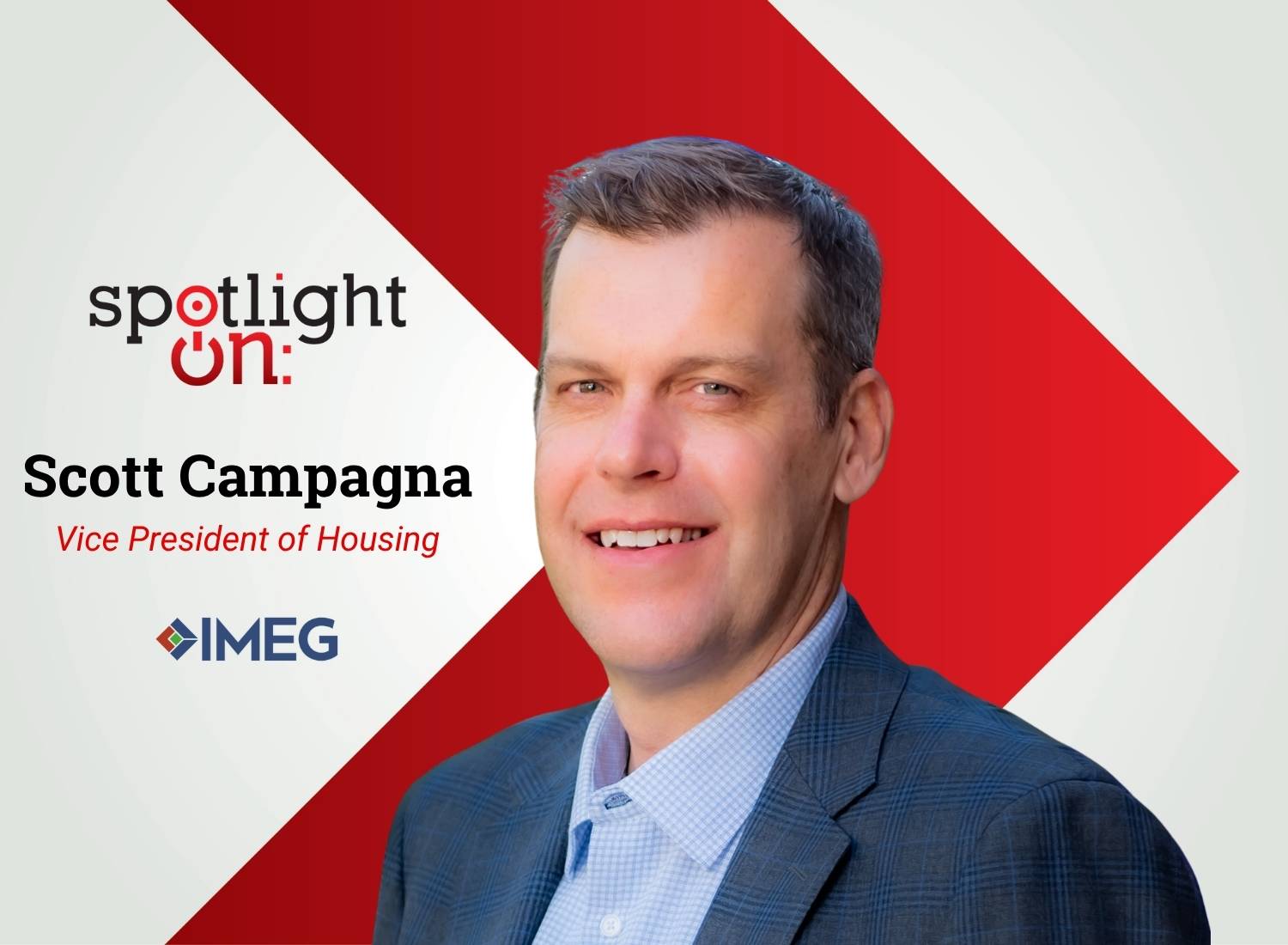 July 2026 — Invest: sat down with Scott Campagna, vice president of housing at IMEG, to discuss how uncertainty in costs, capital, and policy is influencing housing decisions nationally and in the Charlotte region. “Businesses can manage bad news as long as they know what the bad news is. The problem right now is they don’t know what’s coming,” Campagna said.
Join us at the Invest: Charlotte 6th Edition Leadership Summit! This premier event brings together hundreds of Charlotte’s business and regional leaders to discuss the challenges and opportunities for businesses and investors. Buy your ticket now!
What market forces, trends, or shifts are having the biggest impact on housing development, and how is it shaping strategy?
The biggest word, particularly last year, is uncertainty. Developers are trying to underwrite three- and four-year investments, but they’re watching shifting expectations around tariffs and construction costs, labor availability tied to immigration philosophies, and interest rates. When you can’t predict next week, it’s hard to commit millions of dollars.
Businesses can manage bad news as long as they know what the bad news is. The problem right now is they don’t know what’s coming. That uncertainty has created headaches across the country, not just in Charlotte. At the same time, the demand story has not changed. Housing affordability remains a huge need in every community. The challenge is delivering product at a cost people can afford while still meeting return requirements.
What types of housing are seeing the strongest demand, and how are developers adjusting their priorities?
We’ve seen more developers try to enter the affordable housing market, but it’s a different development process, especially if you’re using LIHTC, HUD financing, or other government and financing incentives. The compliance obligations and long-term requirements can surprise groups that have only built market-rate.
Student housing around large public universities has been steady.
Senior living is also well positioned for growth. While the sector has remained relatively flat in recent years, demographic trends are shifting rapidly. Within the next three to five years, adults age 65 and older will represent the largest population cohort in the United States. This surge will drive increased demand for senior living communities—particularly those that combine a resort-style experience with the healthcare support residents need to age comfortably and confidently.
The multifamily market-rate has been slower. It remains challenging to make the numbers pencil, particularly as the market has seen the largest supply of new units in nearly four decades over the past few years.
That supply has to be absorbed in the Carolinas and across the country. At the same time, we’re still millions of homes short of meeting demand nationally, so there’s an unusual dynamic between the need for housing and what can actually be financed and delivered at scale.
Focusing on the Charlotte region, what makes it an ideal location for development to continue, even amid headwinds elsewhere?
Some of what you’re seeing now was planned before today’s constraints, so projects already had key pieces in place. Rents have stabilized, and concessions are being used to attract residents, but the bigger driver is continued in-migration. People are still moving to Charlotte, the Carolinas, and Raleigh. As long as that trend continues, the market can absorb supply, and even pockets of overbuilding can correct.
Charlotte’s appeal is also well-rounded. There are good job opportunities and career growth. The airport gives you access to the world. There are strong sports and entertainment venues, universities, and a social environment that attracts talent. You also have quick access to both mountains and beaches. When those fundamentals and quality-of-life factors come together, it’s a compelling place for people and businesses.
How is IMEG positioning itself to remain a trusted partner to developers?
First, you have to perform. When you earn the opportunity, you deliver, regardless of project type. But Charlotte and the Carolinas are also community-driven. You can’t just show up and ask for work. You have to be present in the associations, contribute knowledge, and give back. When people see that you’re invested in the market’s success, there’s a willingness to work together.
We align ourselves to stay active and proactive in the real estate community and to share resources in ways that help projects and also help people in need. That kind of visibility and consistency matters here.
You mentioned entitlement and municipal processes as a challenge. What needs to change, and how do you help teams navigate that reality?
In housing, you often have out-of-town developers coming in who don’t understand the local process. Part of our role is being an expert and guide, helping them avoid missteps and build realistic schedules and budgets.
At a higher level, the easiest thing the government could do is make development simple. Don’t make it arduous and difficult, and you will attract investment. Housing is becoming a priority issue politically, on both sides of the aisle, but the most practical levers are local. Code changes and streamlined processes can shorten timelines, which directly improves feasibility.
If it takes a year to rezone and entitle land for a housing project in Charlotte, but it takes two months in Dallas, that’s a major delta in time to market and in the financials. Municipalities are competing, whether they call it that or not, and speed and predictability matter.
How are you approaching workforce housing and the middle of the market that often falls between traditional market-rate and subsidized affordable?
Workforce housing sits in an in-between space. On one end, you have market-rate and high-end. On the other end, you have affordable housing supported by tax credits or government financing. In the middle, a large share of the workforce needs attainable housing, but there aren’t always clear programs or enough resources to make the deals work.
That’s where private-public partnerships can help. A municipality might contribute through tax credits, abatements, or land, and a developer can deliver units that rent at workforce levels. We’re seeing more conversations and more opportunities, but feasibility still hinges on uncertainty in construction costs, labor, and interest rates. Getting projects to pencil out has been difficult.
How is IMEG approaching talent attraction and retention?
IMEG is a partial ESOP, so employees have automatic ownership. If the firm does well, employees benefit, and we try to operate with that ownership mindset.
We also focus on career growth. Because we’re a national firm, growth doesn’t have to happen in one location. People can move within IMEG to pursue new opportunities. We offer a hybrid environment and try to stay flexible for people building a career, not just filling a job.
Looking ahead, what are your top priorities for growth and impact?
One priority is bridging connections. As a national firm, we interact with a wide network, and we can bring value beyond engineering by connecting the right partners to make projects happen. If someone has a strong opportunity but needs a debt partner, we may know groups that fit and can help make those introductions. Sometimes the barrier isn’t the idea, it’s knowing who to bring to the table.
We’re also focused on innovation and efficiency, including how we use AI internally to support knowledge, resources, and production. And we’re watching growth areas like data centers, where demand is rising, and there’s an opportunity to serve clients as that sector expands.
You touched on policy. Where do you think the affordability conversation is missing the mark?
Policy will be a big driver of where commercial real estate opportunities go, and some popular ideas can be misguided. You hear proposals like rent control or broad restrictions on institutional investment in single-family housing. Those sound compelling, but when you look behind the data, they aren’t necessarily what creates affordability.
I’m hopeful communities keep the conversation going and focus on solutions that actually increase supply and improve feasibility. We should be enabling housing to be delivered and supporting the resources that make that possible, rather than reducing tools, including in the HUD environment.
Want more? Read the Invest: Charlotte report.