
Spotlight On: Sean Williams, Founder & Principal Architect, Carbon Design & Architecture
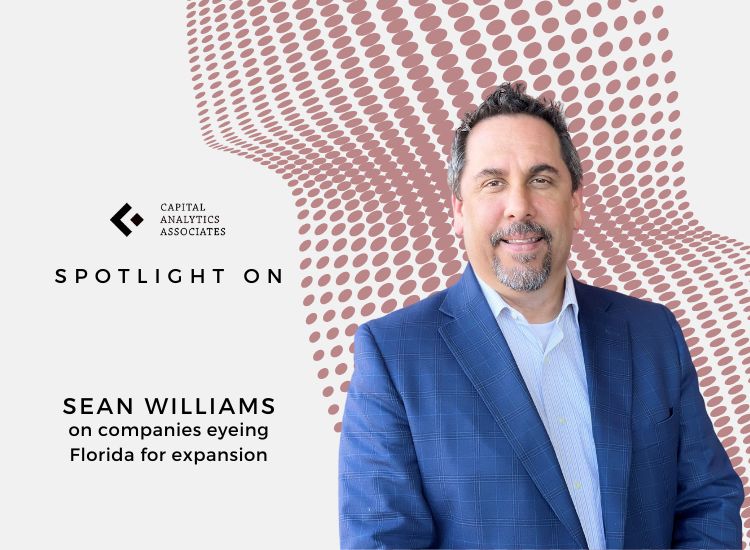 January 2025 — In an interview with Invest:, Sean Williams, founder and principal architect of Carbon Design & Architecture, said the firm has experienced a 200% increase in healthcare projects, and discussed why Tampa Bay is increasingly attracting new sectors like healthcare and marine technology.
Reflecting on the past year, what are some standout projects or milestones for your firm?
Over the past 12 months, our healthcare market has seen significant growth, with projects increasing by 200%. We have focused on diversifying within the sector, especially as it grows at an annual rate of 30-40%. This development has opened doors for us to work on more specialized projects, providing entry points into larger healthcare ecosystems. Currently, HCA is our largest client, and we are pursuing collaborations with Johns Hopkins, Orlando Health, and other major players.
Additionally, we are witnessing an interesting trend. Namely, healthcare institutions from Midwest markets like Chicago and Indiana are eyeing Florida for expansion. This shift indicates a promising future for healthcare development in the region.
Last year, we were also heads-down working on a bone marrow transplant project in Gainesville with HCA, along with smaller projects. We were also impacted by the hurricane in September 2024. Despite the challenges, we pivoted to meet community needs, such as providing resilient floor plans for residential projects. It is all about using our expertise to make an impact across sectors.
How have client demands shifted in terms of sustainability, particularly after the recent hurricane season?
Before the recent hurricanes, we were already conducting building envelope peer reviews to ensure structures were well-sealed, which is an essential component of sustainable design. Initially, this work was concentrated on the West Coast, Puerto Rico, and flood-prone areas including projects like an airport in San Francisco and others in Puerto Rico.
However, the hurricanes have drastically shifted client priorities toward resilience and flood mitigation. Ideas we have discussed for years are now gaining traction. Many clients, regardless of the extent of damage they experienced, are more receptive to these discussions. To avoid polarizing debates around climate change, we have adopted the term “climate adaptation.” This framing is less politically charged and focuses on actionable solutions.
What specific resilient design features are clients seeking now?
One focus has been on repurposing existing structures rather than completely rebuilding. For instance, instead of lifting entire buildings, we are exploring ways to salvage portions of first floors and build upward. In residential projects, some clients are opting to elevate their homes using advanced technologies.
While we are not structural experts in these lifting techniques, our role is to ensure the architectural aesthetics are preserved. We aim to make these modifications appear intentional rather than retrofitted. Currently, we are collaborating with contractors in areas like Treasure Island Beach and expect to expand to Madeira Beach.
What makes Tampa Bay an ideal location for your firm, and how does it differ from other markets?
Tampa Bay has historically lagged other major economic hubs like Atlanta, New York, and Chicago. However, this region is now gaining recognition, partially due to developments like Tropicana Field, home of the Rays. Additionally, we are seeing increased interest from Miami developers, particularly in multifamily projects.
Interestingly, land in St. Petersburg remains some of the cheapest in the Bay Area despite rising property values. In the past two years, the cost per square foot for office projects has risen from $350 to nearly $1,000, which is a significant jump. Despite this, the area offers diverse economic opportunities. Capitalizing on its unique assets, such as the bay, beaches, and a rapidly growing population, Tampa Bay presents numerous development opportunities.
Tampa Bay is also transitioning from a predominantly tourism-driven economy to one that includes healthcare, healthcare technology, and unique sectors like marine tech. Recent announcements, such as Foot Locker relocating its headquarters here, are a testament to the region’s growing appeal.
How do you see the redevelopment of the historic Gas Plant District influencing architectural opportunities and urban development in the region?
There are two significant aspects we need to consider here. First, how we are going to support the district in terms of power, water, and other essential utilities. This infrastructure challenge has not been fully addressed yet.
Second, the choice to hire Gensler is a positive step, signaling that the goal is thoughtful and innovative design rather than just functional construction. While they are technically competitors, I commend them for elevating the standard of design. This competition raises the bar for everyone and encourages better design, moving away from uninspired, generic structures.
Additionally, the benefit of active community involvement, whether in The Edge District, Southside, or even the downtown core, is that these groups demand accountability. Developers will not get away with doing the bare minimum.
If any firm can meet these expectations, it is Gensler. You also have Architectonica that has made some headway with the 400 Central project, showing what is possible. And, projects we have completed in places like Antigua and Jamaica could serve as inspiration for this area.
As affordable housing remains a key issue, you had proposed utilizing shipping containers as apartments but faced certain challenges. Can you elaborate on that?
That project was heartbreaking. It failed due to a lack of support from the city, which kept us in permit review for over 28 months. This was a $4.2 million development on a site that is nearly impossible to develop for anything else. The city’s indecision led to the developer running out of funds.
Let me clarify two points. First, what is currently called “affordable housing” is not truly affordable. At $2,300 a month for rent under the AMI (Area Median Income) model, it is unattainable for many families. To achieve genuine affordability, we need systemic changes, including addressing labor shortages in construction and architecture.
There are two potential solutions to the labor issue. One involves reopening construction jobs to immigrant workers through work visas, a politically sensitive topic. The other is leveraging technology, which also faces resistance but is less controversial. If we can ensure fair wages for immigrant workers, this could help reduce construction costs, making truly affordable housing feasible.
Currently, what we call “attainable housing” only serves a portion of the middle class. Affordable housing, on the other hand, must work for everyone and should involve mixed-market solutions.
Some architects are making strides in this area. For example, Brooks + Scarpa recently completed an 88-unit affordable housing project in Los Angeles with a strong emphasis on sustainability. It is a beautiful, functional design, but such initiatives often go unheard because political considerations overshadow practical solutions.
What are your top priorities for the next two to three years, and what is your outlook for your firm?
I am optimistic about the future. While politics and elections may impact business, our industry has a unique opportunity to grow and rebuild strong solutions. Florida’s economy is evolving, and we are addressing new challenges with innovative approaches.
We are also seeing investment in research, which opens up unique opportunities for this region. Florida could become a hub for groundbreaking architecture and urban planning. For instance, the restaurant scene here has transitioned from chains to unique, high-quality establishments. This diversification is a microcosm of what I believe the broader economy will achieve as it strikes a balanced approach that emphasizes wellness and quality of life.
We have significant healthcare projects and a unique AI Science Center coming soon. The latter uses CLT (Cross-Laminated Timber) construction, which costs just $55 per square foot compared to $600 per square foot. This innovation combines old construction techniques with modern AI and machine learning to keep costs down. It is an exciting development that could also address housing affordability.
For more information, please visit: